Emergency roof repair cost, and what genuinely cannot wait
Emergency roof repair is priced as after-hours tarping first: about $1.00 to $2.80 per square foot, an average job around $450, and a $100 to $200 call-out fee outside business hours.
Emergency roof repair costs about $1.00 to $2.80 per square foot for after-hours tarping, with an average job near $450 and an after-hours call-out fee of roughly $100 to $200 on top.
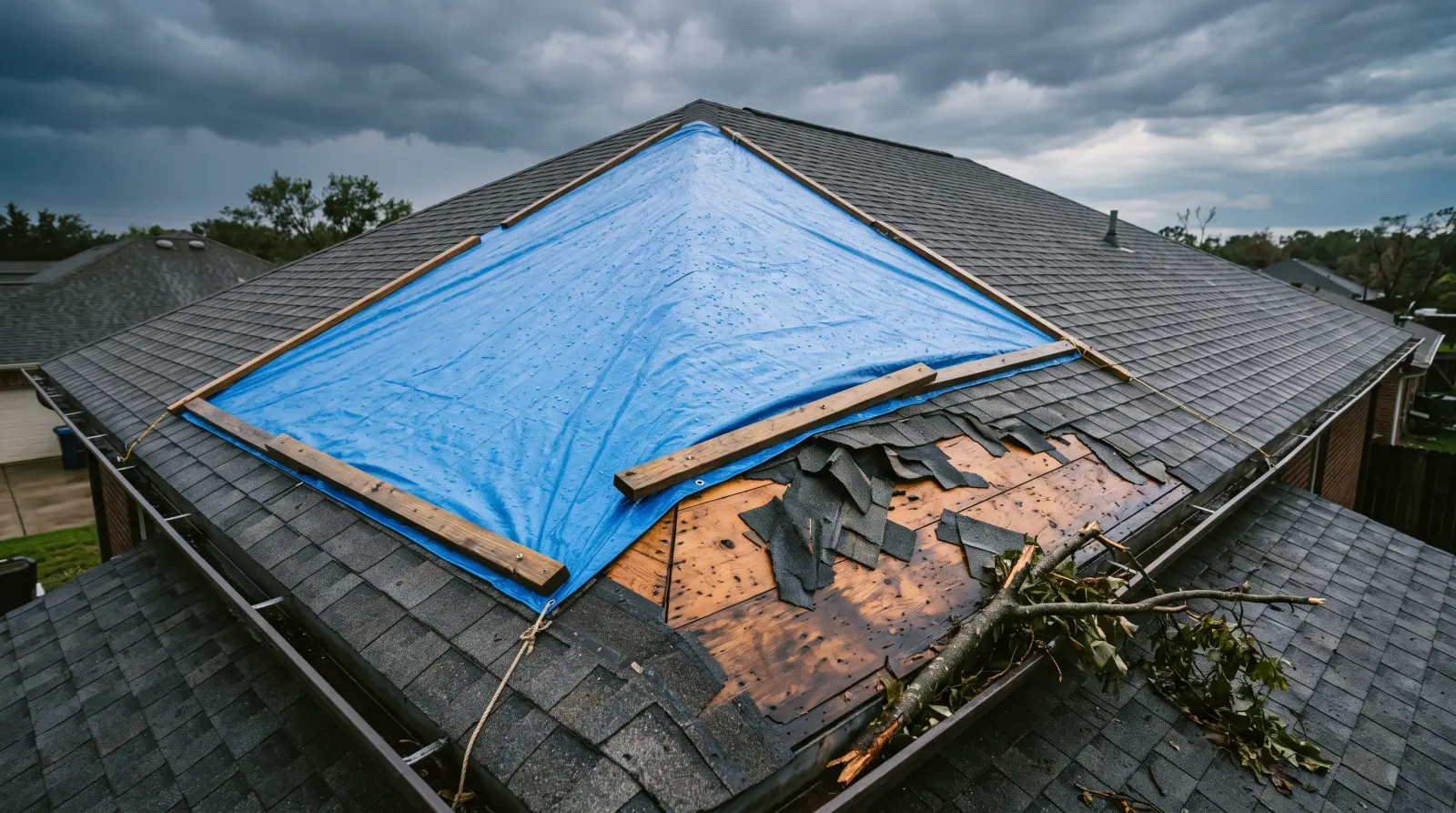
An emergency leak is stopped before it is repaired, which is why a 24-hour emergency tarp service is the first line on most invoices. The the storm and roof section covers the damage itself, tarping a roof is the same job done yourself, and Emergency Services 24H routes the call to licensed roofers nearby.
Roof damage on a flat roof costs less to tarp per square foot than a steep pitch, because the labor is safer.
Insurance claims run in parallel with the work rather than before it: photograph the damage, keep the tarp home receipt, and let the adjuster see what was done to stop the loss.
No emergency roof cost estimator online prices the access problem that decides the bill when disaster strikes at 2am.
What emergency roof work actually costs
What is the number for tonight?
Emergency after-hours tarping runs $1.00 to $2.80 per square foot, averaging around $450 per job with a typical range of $150 to $3,300, plus a call-out fee of roughly $100 to $200.
That is the answer the query asks for, and the reason it appears in the first two hundred words is that every ranking page for this term answers it with a booking form.
Before you call
Four decisions in the next ten minutes
01
Decide if it can wait
Water reaching electrics or a loaded ceiling cannot wait. A contained drip into a bucket usually can, unless more rain is forecast before morning.
02
Photograph before anyone arrives
Emergency work changes the evidence. Wide shots, close shots, the attic and the ceiling, all before a tarp goes anywhere near the roof.
03
Ask what the call-out costs separately
After-hours attendance and the work itself are usually two figures. Ask for both before anyone climbs a ladder.
04
Read what you are signing
Authorising emergency work and assigning your insurance benefits are different documents. Never sign the second one under time pressure at the door.
Cited source0:29
“Most roofing companies get paid per square foot of the tarp that they install, so they're going to be incentivized to install a larger tarp.”
SS
Steve Sims
Roofing and restoration contractor
Hail or High Water Roofing and Restoration, Lawrenceville GA, Jun 2021
An independent source we cite. Not affiliated with Emergency Services 24H, and not a network contractor.
Emergency roof repair is stabilisation, not repair
This distinction explains why you will receive two invoices and why that is not being overcharged.
Tarping and board-up stop water and secure openings. They do not fix anything.
What genuinely cannot wait until morning
Cannot wait: water reaching outlets, fittings or the panel.
Cannot wait: a ceiling visibly sagging under a load of water.
Cannot wait: an opening in the roof with more rain forecast overnight.
Usually can wait: a contained drip into a bucket in one room with clear weather behind it.
The difference between those two lists is typically the after-hours premium, which is the honest way to frame the decision.
The mitigation duty in your policy
Does emergency work count against your claim?
No, it usually counts for it. Most policies require the policyholder to take reasonable steps to prevent further damage, which makes emergency tarping expected rather than penalised. Reasonable emergency costs are normally claimable with receipts.
People delay emergency work because they think acting before the adjuster arrives will be held against them.
Standard against emergency pricing
The gap between the two rates is what urgency actually costs, and it is smaller than most people fear.
Standard tarping is $0.70 to $2.00 per square foot. Emergency after-hours work is $1.00 to $2.80, plus the call-out.
For a contained leak in settled weather, waiting until business hours is a legitimate saving.
What you can do from inside while you wait
Contain: buckets on towels to stop splash spreading the damage.
Protect: move furniture and lift what you can off wet flooring.
Relieve: a bulging ceiling gets a deliberate small hole and a bucket, after clearing the area beneath.
Isolate: circuits serving wet areas, switched off from a dry position.
Do not sign your benefits away at the door
Two documents, and only one of them is routine
Authorising emergency work is normal and necessary. An assignment of benefits transfers your right to claim proceeds to the contractor, and it is a different document with very different consequences.
Board-up and what it covers
Board-up appears alongside tarping on almost every contractor page and is explained on almost none.
It secures openings in walls, windows and doors after impact or storm damage, which is a security and weather measure rather than a repair.
Deductible arithmetic before you file
Emergency and permanent work are usually one claim rather than two, which matters for the arithmetic.
Add the likely emergency cost to a realistic permanent repair scope, then compare that total against your deductible.
Vetting a contractor at midnight
License number and proof of insurance
A verifiable local physical address
A written scope for the emergency work specifically
The call-out fee stated separately
Caution with any crew that arrived before you called
Photograph the paperwork before signing it
The trade’s own ranking of who is knocking is useful here.
A crew that arrived because of the weather is not automatically the wrong crew; a crew that will not exist next year is.
Which makes trading history the field to check rather than the reviews.
Contracts signed at your door generally carry a right to cancel within a short window, though the length and the conditions depend on federal rules and your state, so confirm the actual terms rather than a figure quoted on the step.
What people actually report paying, and why the quotes differ so much
Published cost guides give a range for emergency tarping that is close to useless on its own: the three we checked span roughly $150 to $3,300, with one putting the typical small job near $450.
The homeowner and contractor threads are more useful because they quote in the unit the trade actually prices in.
So the first question to ask is not what it costs.
The second recurring complaint in these threads is not the rate at all, it is the scope.
A caveat on all of the above, since we would rather flag it than let it read as market data.
What permanent repair costs afterwards
Nobody can price this from a phone call, and a contractor who does is guessing.
The scope depends on how much decking and underlayment is affected, the size of the opening, and whether the framing beneath it stayed dry.
Tarping tonight and repairing next week is almost always cheaper than a full emergency repair, and insurers generally reimburse the tarp.
Emergency roof work, priced
Indicative US ranges. Always get a written quote.
Job
Typical range
Notes
Emergency tarping, after hours
$1.00–$2.80 / sq ft
Average job ~$450, range $150–$3,300
Standard tarping, scheduled
$0.70–$2.00 / sq ft
Non-emergency rate
Tarp material alone
$0.10–$0.40 / sq ft
The rest is labor and working at height
After-hours call-out fee
$100–$200
Charged on top of the work
Contractor-quoted, per square foot
$2.00–$2.50 / sq ft
Reported by a contractor in a Florida storm thread (read 2026-07-22)
Tarp line added to a repair invoice
$750 reported
Owner-reported on a completed job, quoted as a single case
Permanent repair
quoted after inspection
Depends on decking and underlayment condition
Source: Angi 2026 cost to tarp a roof data for the emergency, standard and material-only figures; per-square-foot and single-invoice figures are owner- and contractor-reported in public r/Insurance and r/Roofing threads and are marked as reported, not as market rates (retrieved August 2026). Figures vary by region and timing.
Figures last checked
Row three is the one that explains the whole structure.
How the matching works, and what we do not do
Emergency Services 24H is a referral service.
Your request routes to licensed, insured contractors covering your area, and they contact you directly.
What homeowners actually ask
What people are actually asking
Drawn from real public forum threads and reported prices, summarized and attributed as patterns.
These are not reviews of this site, and no names or ratings have been invented.
“Tarping in my area is $2 to $2.50 per square foot… a small 20 square roof runs 4K typically”
SourceContractor replying in an r/Insurance thread aimed at Florida homeowners about what tarping should cost after a storm. Per-square-foot pricing is the format the trade actually quotes in, which is why a single headline number rarely matches an invoice.
“Overcharged for a tarp?”
SourceThread title in r/Roofing from a homeowner whose storm-damaged roof let water through the ceiling, posted while the invoice was still in dispute. The recurring answer in threads like this is that the price is defensible and the scope was never written down.
“The invoice lists the remaining 50% and $750 for a tarp that I asked to be…”
Sourcer/Roofing thread from a homeowner who found a separate tarp charge added to the final bill on a completed roof job. Emergency mitigation and permanent repair are two purchases, and this is what it looks like when nobody says so up front.
“Roofer told me that tarping my roof might make it leak more”
SourceThread title in r/homeowners. It is a real risk and it is entirely about method: a tarp laid on top of the shingles channels water underneath itself, while one tucked under a course above the damage does not.
“What do I do if I cannot afford to fix my roof?”
SourceA People Also Ask question on this SERP, and the one that explains why real pricing matters. People are trying to work out whether to call, and no ranking page gives them a number.
1 / 5
Three People Also Ask questions, all practical, all answered on the SERP with a call to action.
Know the line
Safe to check yourself, or call a pro now
Safe to check yourself
A contained drip into a bucket in one room
Settled weather with no rain forecast overnight
Damage confined to a single area you can see
No water anywhere near electrical fittings
A ceiling that is stained but not sagging
Call a pro now
Water reaching outlets, fittings or the panel
A ceiling visibly sagging under a load
An open roof with more rain forecast
Any structural damage from impact
Water spreading between rooms or floors
24/7 dispatch network
Get a licensed storm damage contractor moving on this
Tell us what is happening and whether it can wait until morning. Licensed, insured contractors covering your area will contact you directly. No obligation to hire.
Fire, a gas smell, or an injury? Leave the building and call 911 first, then your gas
utility or power company. Use this form once you are safe.
“We will cover your deductible” is not a discount
It is the most common offer made in a storm damaged neighborhood, and the clearest signal to end the conversation.
In Florida, a contractor who pays, waives or rebates any part of your insurance deductible commits a third degree felony, and the same statute bars offering a rebate, gift card, cash or coupon in exchange for letting them inspect the roof or for making a claim.
Fines run to ten thousand dollars per violation.
Not every state has an equivalent, so the legal exposure varies. The commercial logic does not.
What this does not say: Florida statute; many but not all states have an equivalent. The felony exposure attaches to the knowing and wilful conduct described in the statute, not to every billing error.
What does an emergency tarp service cost at night?
About $1.00 to $2.80 per square foot for the after-hours work, plus a $100 to $200 call-out fee. The average job comes in around $450.
Is a leaking roof covered by insurance?
Usually only when a covered event caused it, such as wind or hail. Gradual wear is not covered, which is why the cause matters more than the leak.
Can I tarp a small roof myself?
On a low pitch with safe access, sometimes. Material alone runs about $0.10 to $0.40 per square foot, and most of the professional price is labor and fall safety.
How long does a tarp last?
A properly fixed tarp holds for weeks to a few months. It is a stop to the loss, not a repair, and insurers expect the permanent fix to follow.
How much does emergency roof repair cost?
Emergency after-hours tarping runs about $1.00 to $2.80 per square foot, with an average job near $450 and a typical range of $150 to $3,300. An after-hours call-out fee of roughly $100 to $200 may be added on top of the work itself.
What to do if your roof starts leaking in the middle of the night?
Contain the water from inside, protect flooring and move valuables, relieve a bulging ceiling deliberately into a bucket, and isolate any circuit serving a wet area from a dry position. Photograph everything, then decide whether it needs a crew tonight or in the morning.
Can I put a tarp on my roof to stop leaks?
Only in dry, calm conditions on a low pitch roof with someone else present. Never during a storm, on a wet or icy surface, or where impact may have compromised the decking.
Will insurance pay for emergency roof repair?
Usually, because most policies require you to take reasonable steps to prevent further damage. That makes emergency tarping an expected action rather than a penalised one.
How urgent is roof repair really?
Emergency stabilisation is urgent when water is reaching electrics, when a ceiling is loaded and sagging, or when more rain is forecast overnight. A contained drip into a bucket in a single room usually waits until morning at standard rather than emergency rates.
What should I be careful of signing?
An assignment of benefits, which transfers your right to claim proceeds to the contractor. Read what authorises the emergency work and what authorises billing your insurer, and never sign either under time pressure at the door.
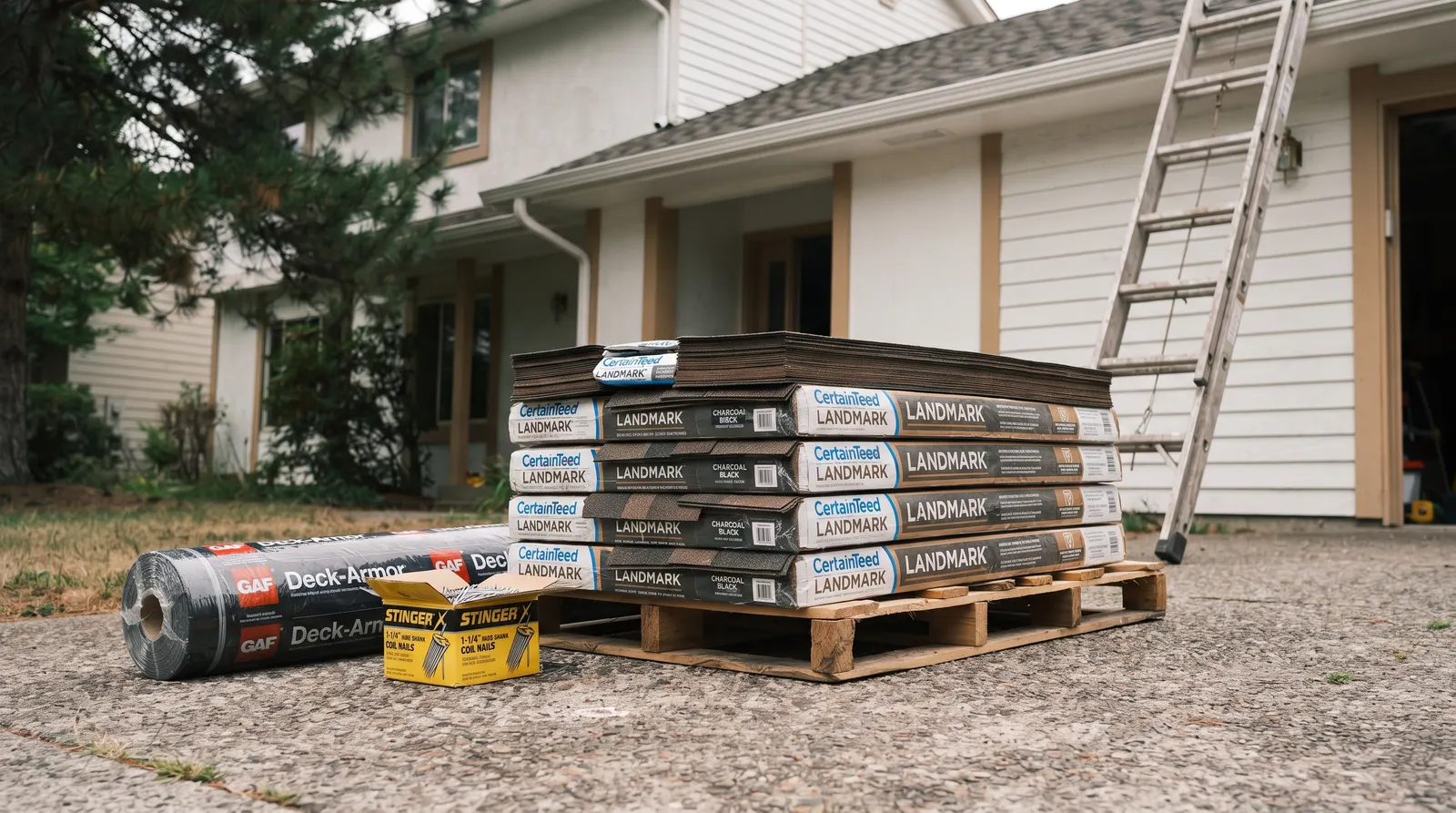
Materials on site
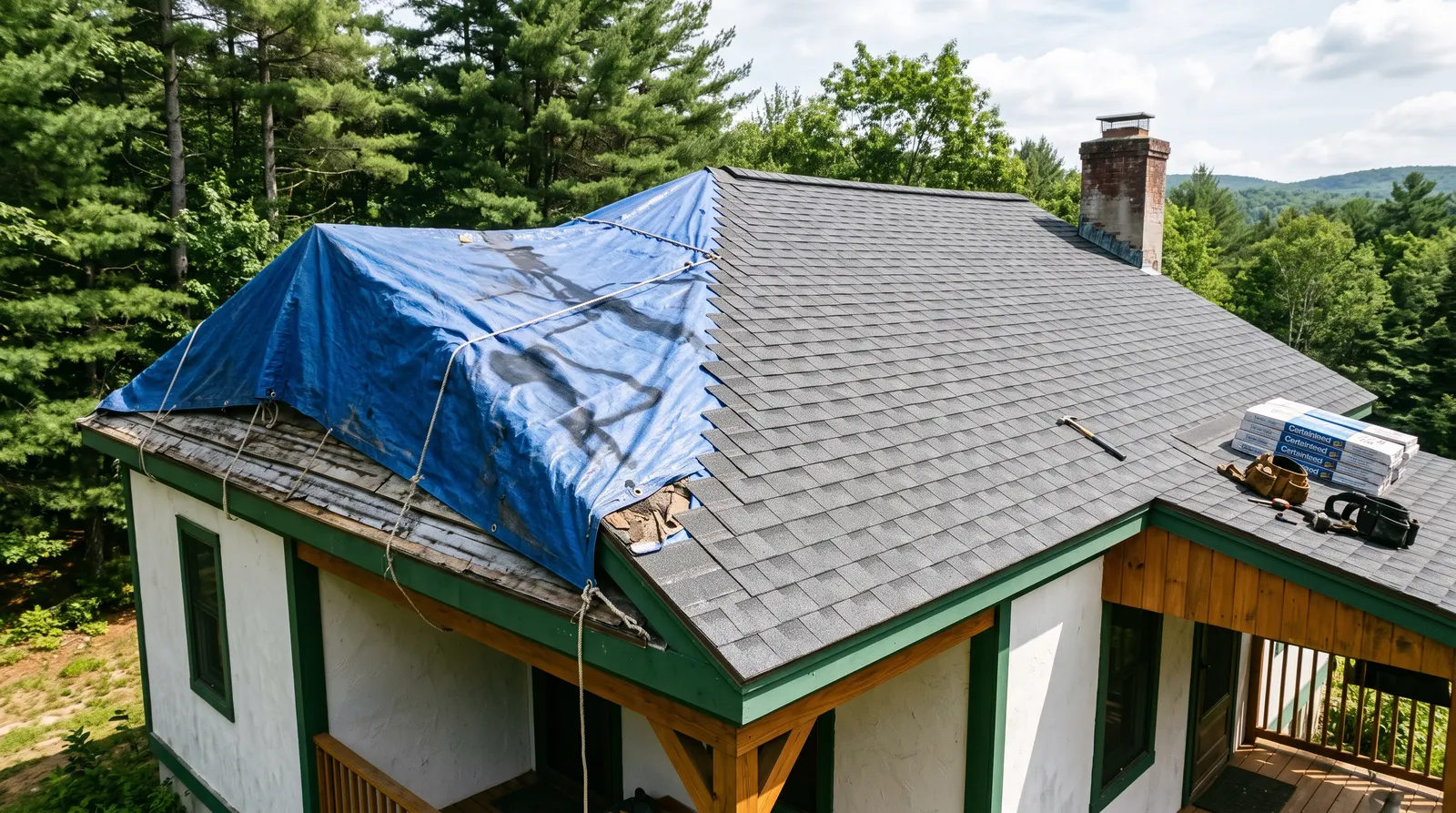
Temporary versus permanent
Compare the first two rows. Stabilising now and repairing properly later is the cheaper sequence in most storm scenarios.
Insurance Information Institute: What standard homeowners insurance covers, including storm perils and the ~$500 per-item cap on trees, shrubs and plants
Independent, publicly published sources, quoted with attribution and linked in full.
None is affiliated with Emergency Services 24H, reviewed this page, or works in the referral network.
Steve Sims: Roofing and restoration contractor, Hail or High Water Roofing and Restoration, Lawrenceville GA - “How To: Tarp a Roof” (Jun 2021)
Tell us what has failed and how soon you need someone. We route your request to licensed, insured contractors covering your area, and they contact you directly.
Fire, a gas smell, or an injury? Leave the building and call 911 first, then your gas
utility or power company. Use this form once you are safe.