Hail damage roof problems are bruising and granule loss rather than holes, which is why they get missed for months. Insurers commonly give you 12 months from the storm to file.
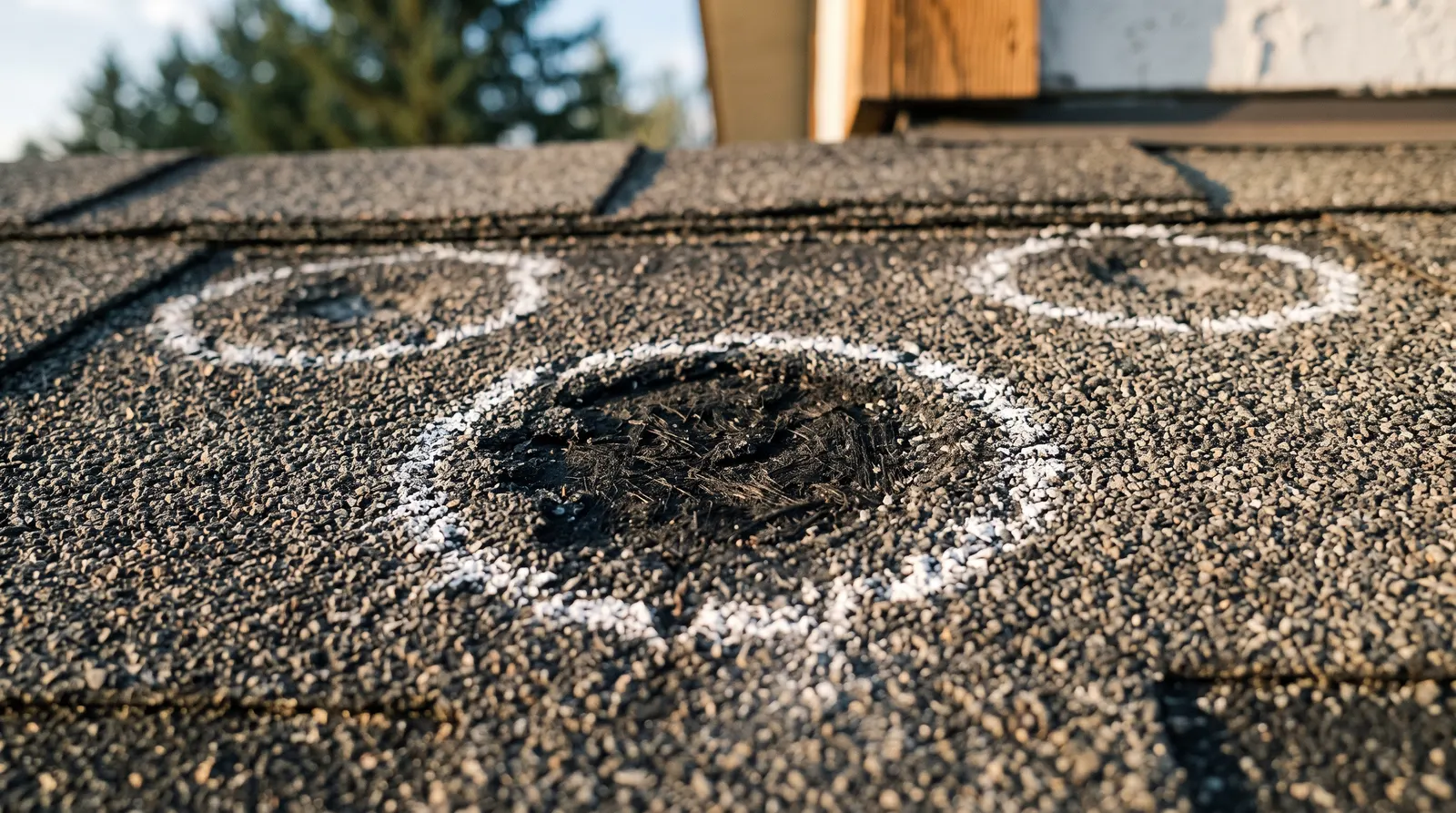
Hail damage to a roof is impact bruising of the shingle mat and loss of the granule layer, not the holes people look for, which is why it goes unnoticed for years.
A hail damage roof insurance claim turns on the cause and the clock, not on how bad it looks from the yard. The our storm damage guide covers the rest of the damage, a leak that shows up months later is the usual sequel, and Emergency Services 24H routes hail damage repair to licensed roofers nearby.
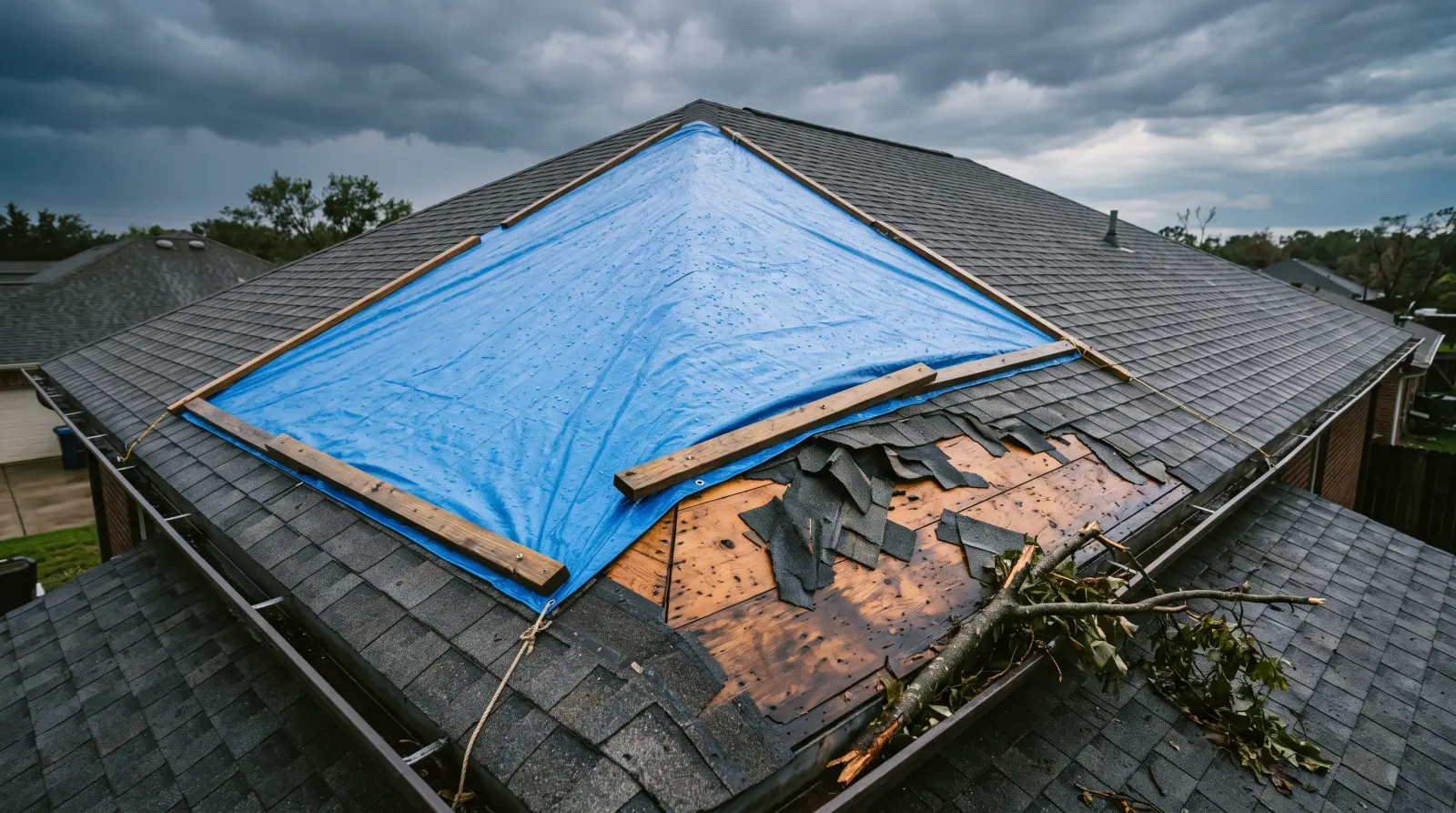
Hail damage pictures online mostly show the extreme cases.
What it looks like depends on the covering.
Hail damage roof: what you are looking for
What are you looking for after a hailstorm?
Bruising and granule loss, not punctures. Impact flattens the mat and knocks off the protective granules, exposing the asphalt to UV.
That is also why a hail damage roof claim turns on documented functional damage rather than on a photograph of a hole.
From the ground, safely
Four checks that need no ladder
01
Check the gutters
Granules washed off the shingles collect at downspout outlets and in gutter runs.
02
Look at soft metals
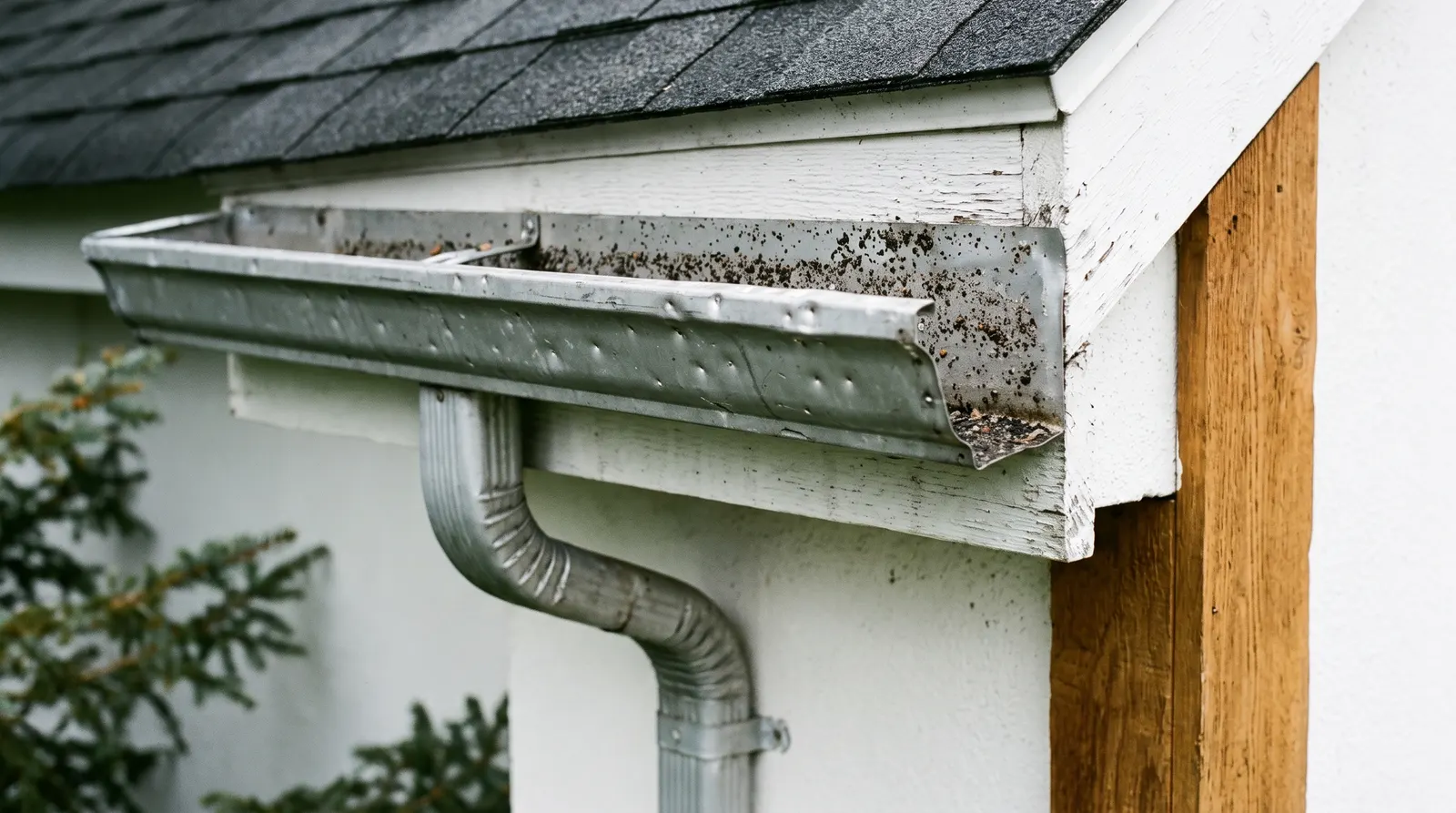
Vents, flashing, gutters and downspouts dent before shingles bruise visibly.
03
Use proxies around the property
Dents in a car roof, bent air conditioner fins or a marked mailbox all tell you what size hail actually landed here rather than nearby.
04
Run the deductible before you file
Compare a realistic repair scope against your deductible first.
Cited source3:27
On what the insurance adjuster actually does once he is on your roof.
“He's going to want to see a certain number of hail hits in every 10 foot by 10 foot square he draws.”
HR
Homestead Roofing, Inc
Roofing contractor and inspector, Colorado Springs
Homestead Roofing, Jul 2023
An independent source we cite. Not affiliated with Emergency Services 24H, and not a network contractor.
Every guide on this topic describes what bruising looks like close up, which assumes you are standing on the roof.
Granules in gutters and at downspout outlets, in quantity rather than a trace.
Dents in soft metals: roof vents, flashing, gutters, downspouts and any metal trim.
Proxies: dents in a car roof or bonnet, bent air conditioner fins, a marked mailbox or fence cap.
Debris: shattered skylight covers, damaged siding, and hail marks in soft ground or mulch.
Two of those need a caveat that stops people over-reading them.
Dents and dings are. Both look dramatic on a box vent and only one of them supports a claim.
The granule test has a specific form too.
Age matters as much as presence, and there is a visible tell.
Do not climb up to check
Walking on it makes it worse
Hail-bruised shingles are weakened, and foot traffic adds damage that a contractor and an adjuster both have to disentangle from the storm damage.
Is it worth claiming?
The pages ranking for this question belong to insurers and to roofing contractors, and both have a stake in the answer.
The neutral version is arithmetic. Estimate a realistic scope, subtract your deductible, and see what is left.
How the adjuster reaches that judgement is worth knowing before anyone visits, because it is not a count of the worst spots.
Damage to the things standing on the roof is what tips a marginal case.
There is also a sequencing point that costs people money, and it runs against instinct.
The 25 percent rule, explained
What is the 25 percent rule?
A restriction applied in some jurisdictions on how much of a roof may be repaired rather than replaced within a given period. Above that share, replacement rather than patching is required.
It appears in People Also Ask because contractors mention it and rarely explain it.
Timing: how long you have
Policies require prompt notice after the event, and the deadline varies by policy and by state.
Hail creates a specific difficulty here because the damage is not obvious immediately.
What repair or replacement costs
Storm chasers after a hail event
Hail maps are public, and crews follow them into affected areas within days.
The signal most homeowners misread is the one covering their neighbors' lawns.
Vetting one of those callers takes a few minutes and is worth doing at the door.
On the paperwork itself, contracts signed at your door are generally subject to a cooling-off period during which you can cancel, but the exact length and the conditions depend on federal rules and on your state, so check the specific terms rather than relying on a number quoted at the door.
Verify a license number, proof of insurance and a local physical address.
Be cautious with any crew that knocked on your door rather than being called.
Never sign an assignment of benefits, which hands your claim to the contractor.
Get everything in writing, including what is being claimed and what is being repaired.
Report to the insurer promptly. Most policies have a limited window after a hail event, and late claims get denied on timing alone.
What identification and repair cost
Indicative US ranges. Always get a written quote.
Job
Typical range
Notes
Ground-level inspection by you
costs nothing
Gutters, soft metals, proxies
Contractor inspection
often free locally
Ask what they are looking for
Emergency tarping if there is an opening
$1.00–$2.80 / sq ft
Only where the roof is actually breached
Targeted repair
quoted after inspection
Where bruising is localised
Full replacement
the outcome for general damage
Where functional damage is widespread
Source: Angi 2026 cost to tarp a roof data, with repair and replacement scope stated qualitatively because both depend on inspection (retrieved August 2026). Figures vary by region and timing.
Figures last checked
The first two rows cost nothing and settle most of the question.
How the matching works, and what we do not do
Emergency Services 24H is a referral service and not an insurance adviser.
Your request routes to licensed, insured contractors covering your area, and they contact you directly.
What homeowners actually ask
What people ask about hail
Drawn from real public forum threads and reported prices, summarized and attributed as patterns.
These are not reviews of this site, and no names or ratings have been invented.
“Is it worth claiming hail damage?”
SourceA People Also Ask question asked twice on this SERP, answered by pages belonging to insurers and roofing contractors, both of which have a position on the answer.
“What is the 25% rule for roofing?”
SourceAnother People Also Ask question. The rule is named on several ranking pages and explained on essentially none of them.
“Average insurance payout for hail damage roof”
SourceA related search with explicit financial intent, which is really the deductible question people are trying to answer before they pick up the phone.
1 / 3
Know the line
Safe to check yourself, or call a pro now
Safe to check yourself
Checking gutters and downspout outlets for granules
Looking at soft metals from ground level
Checking cars, AC units and fences as proxies
Photographing everything you can see safely
Noting the date of the hail event
Call a pro now
Any assessment that requires roof access
Deciding whether damage is functional or cosmetic
Estimating a realistic repair scope for the deductible maths
Anything involving a disputed adjuster estimate
Metal, tile or flat roofs, where the signs differ
24/7 dispatch network
Get a licensed storm damage contractor moving on this
Tell us when the hail event was and what you have spotted. Licensed, insured contractors covering your area will contact you directly. No obligation to hire and no obligation to claim.
Fire, a gas smell, or an injury? Leave the building and call 911 first, then your gas
utility or power company. Use this form once you are safe.
What a public adjuster may charge, and why it drops after a disaster
Hiring a public adjuster after hail can be the right call, and the fee is negotiable inside limits that most homeowners never see.
Florida caps it at twenty percent of claim payments in normal circumstances, ten percent for claims arising from an event under the Governor’s emergency declaration during the year that follows it, and one percent where the insurer had already agreed to pay before the adjuster was engaged.
That last figure is the useful one.
What this does not say: Florida only, and the caps are on the adjuster's fee, not on what the claim is worth. Other states set different caps or none.
A documented first-hand account, not a market pattern.
A roofing-industry commentator and a Colorado Springs roofing contractor describing post-storm competitors and adjuster roof inspections in their own market, in published video.
A roofing industry commentator makes an observation about storm chasing crews that sounds like score settling until you follow the incentive: a lot of them change company names almost every year. A workmanship warranty is only as durable as the entity that issued it, and an entity that dissolves each spring has issued you nothing.
A roofing contractor who inspects after hail adds the other half, describing what the insurance adjuster actually does once on the roof.
What this does not say: Industry participants characterizing competitors, which carries an obvious commercial bias and no data; the Florida statute corroborates only that a legislature considered post-storm solicitation abuses serious enough to legislate against.
How long do I have to file a hail damage insurance claim?
Commonly 12 months from the date of the storm, though the policy wording rules.
Does hail damage always mean a full replacement?
No.
What does hail damage on a roof look like?
Bruising rather than holes.
How can I check for hail damage without going on the roof?
Look at the gutters and downspout outlets for accumulated granules, check soft metals such as vents, flashing and gutters for dents, and look at cars, air conditioner fins and mailboxes as proxies.
Is it worth claiming hail damage?
It depends on your deductible against a realistic repair scope. Isolated cosmetic marks rarely justify a claim.
What is the 25 percent rule for roofing?
A rule in some jurisdictions on how much of a roof may be repaired rather than replaced. Above the threshold, replacement is required rather than patching.
How serious is hail damage on a roof?
Serious in the medium term rather than immediately. Granule loss exposes the asphalt to UV and accelerates aging, and bruised mat fails earlier than undamaged shingle.
How do I avoid a storm chaser?
Verify a license, proof of insurance and a local physical address, and be cautious with any crew that arrived by door-knocking after a hail event.
Hail bruising on a shingle
Soft metal tells the story
Many roofers inspect free after a hail event. Be wary of any who ask you to sign a contract before the insurer has assessed.
Sources for this page
Insurance Information Institute: What standard homeowners insurance covers, including storm perils and the ~$500 per-item cap on trees, shrubs and plants
Independent, publicly published sources, quoted with attribution and linked in full.
None is affiliated with Emergency Services 24H, reviewed this page, or works in the referral network.
Homestead Roofing, Inc: Roofing contractor and inspector, Colorado Springs, Homestead Roofing - “Roof Inspections After A Massive Hail Storm For Insurance Claims” (Jul 2023)
Tell us what has failed and how soon you need someone. We route your request to licensed, insured contractors covering your area, and they contact you directly.
Fire, a gas smell, or an injury? Leave the building and call 911 first, then your gas
utility or power company. Use this form once you are safe.