A rekey on sound hardware runs about $100 against a full lock replacement. Change locks after break in only once the police and the insurer have seen the door, because a forced frame is carpentry rather than a new lock, and in a rental the decision belongs to the landlord.
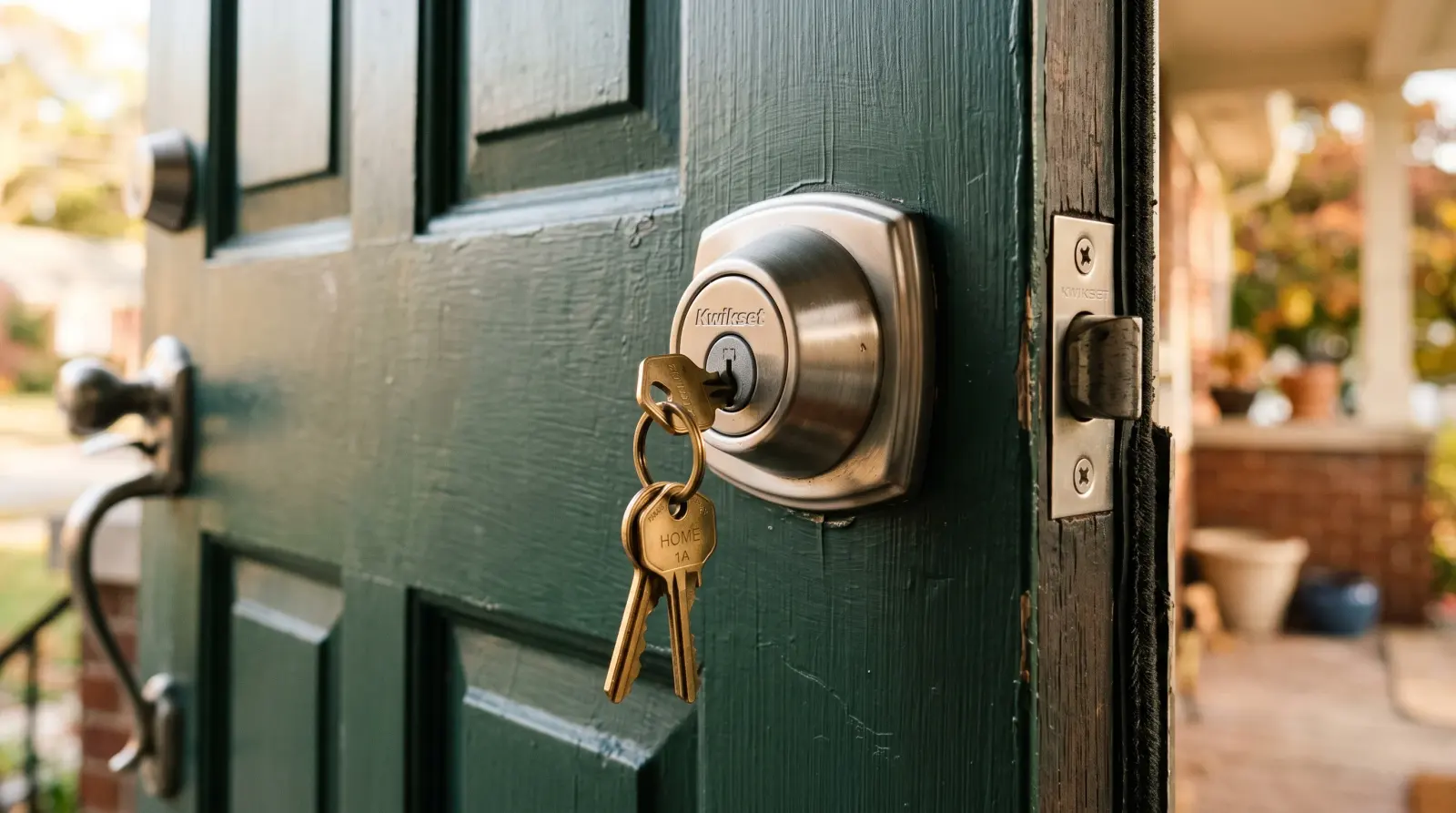
The decision to change locks after break in is usually a rekeying decision: it invalidates every existing key for $50 to $130 plus $10 to $25 per cylinder, and replacement is only needed where the hardware was forced.
Before you change locks after break in damage, there is an order of operations that no ranking page sets out, and getting it wrong costs more than the locks do.
Tonight, in this order
The order of operations after a break-in
01
Police first, and get the reference
Report it and write down the reference number.
02
Photograph before you touch anything
Every point of entry, every damaged fitting, wide and close.
03
Notify the insurer, then the landlord
A short call or an app report starts the clock.
04
Then deal with the locks
Rekey if the hardware survived and the concern is keys.
Cited source10:03
On the call-center operators behind lead-generation locksmith ads - the call you are most likely to make in a hurry after a break-in.
“Their number one goal is to get off the phone as soon as possible and to dispatch a con man to the scene.”
SO
Society of Professional Locksmiths
US locksmith trade association
SOPL, 2015
An independent source we cite. Not affiliated with Emergency Services 24H, and not a network contractor.
Change locks after break in, or just rekey? The forced-hardware rule
Do I need new locks or just a rekey?
Rekey if the hardware is intact and the worry is that keys were taken or copied.
That single rule replaces the vague rekey-versus-replace comparison every other page offers, and it is easy to apply standing in front of the door.
A third case: if the frame is damaged and the lock is fine, neither rekeying nor replacing addresses the weakness. That is a frame and strike problem.
Where the hardware survived, rekeying is the right answer rather than the cheap one.
New hardware on a door whose frame gave way is money spent on the part that held.
One caution about the call itself, because this is the worst possible moment to meet a bad operator.
If you have a locksmith’s number saved from a calm day, use it.
Securing a damaged door overnight
This is the gap in every published guide. The advice stops at call a locksmith, and says nothing about the hours between now and their arrival.
A hasp and padlock screwed into sound timber either side of the damage.
A door-security bar braced from the handle to the floor, which resists a shoulder far better than a damaged latch does.
Screw the door shut into the frame at two points if it is a door you can do without until morning.
If it cannot be made secure, do not sleep behind it. Stay with someone, and take anything irreplaceable with you.
Why the frame matters more than the lock
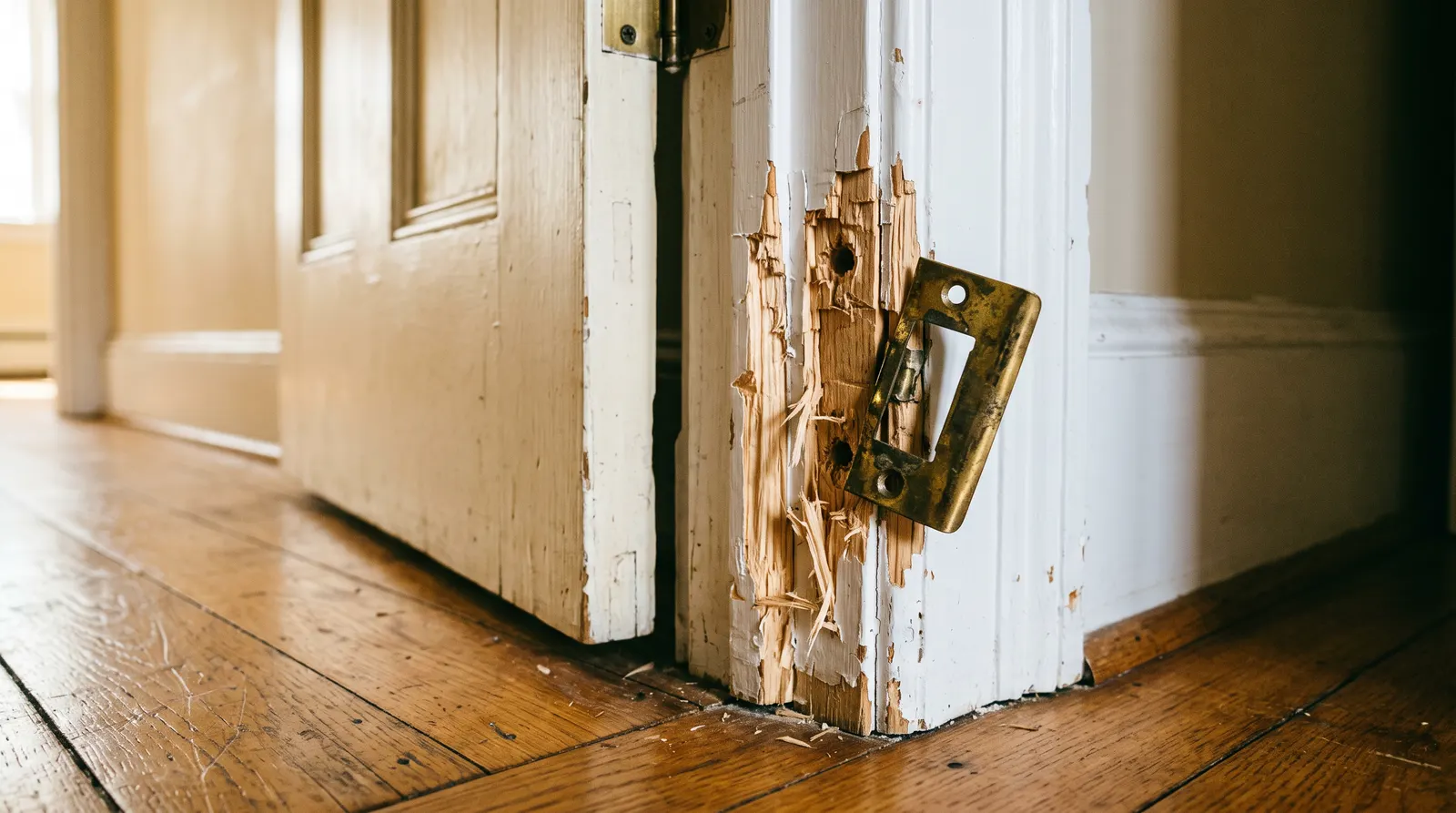
Most forced entries do not defeat the lock.
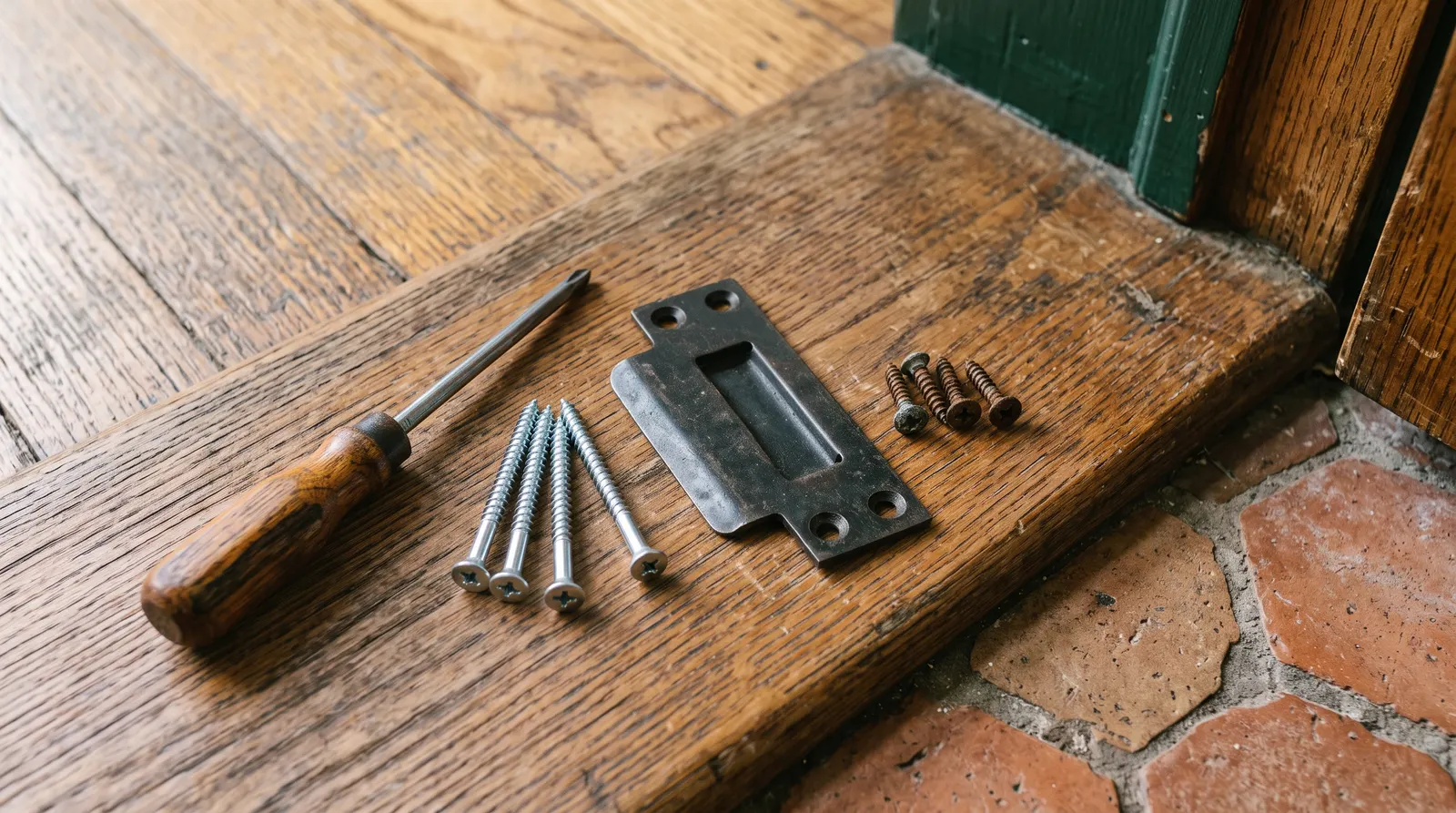
A new lock fitted to the same frame is a new lock on the same weakness. The upgrade is three-inch screws through the strike plate into the framing stud, ideally with a reinforced plate.
It costs a few dollars a door and it is the single highest-value security change most homes can make. Ask the locksmith to do it while they are there.
Do not repair anything before it is documented
Insurers generally expect a police reference number and photographs of the damage as it was found.
If you rent: who does what
A large share of people searching this are tenants, and the ranking pages are written for landlords.
The landlord is generally responsible for keeping the property secure, and will usually arrange and pay for the work after a break-in.
Tell them in writing the same evening, even if you also call. A dated message is what protects you if the response is slow.
Your tenancy agreement may restrict changing locks yourself, and doing so without permission can breach it even in good faith.
Obligations vary by state, so check your own state tenancy guidance rather than a general article, including this one.
If the landlord is unreachable and the property cannot be secured, document your attempts to contact them, arrange emergency securing work, and keep every receipt.
What the insurer usually wants first
Three things, and all of them are easier to produce on the night than a week later.
A police reference number.
Do not enter or touch anything until police have attended. Photograph the damage before any repair for both the report and the claim.
What it costs to make it secure again
Indicative US ranges. Always get a written quote.
Job
Typical range
Notes
Rekeying, professional
$50–$130
Plus $10–$25 per cylinder
Service / trip fee
$50–$100
Separate in many markets
After-hours premium
+$100–$250
Nights, weekends and holidays
Replacement lock set
hardware + labor per door
Where the lock was forced or drilled
Long strike screws and a reinforced plate
a few dollars per door
The highest-value upgrade on this page
Source: Thumbtack 2026 national locksmith price data; published 2026 locksmith cost guides (retrieved August 2026). Figures vary by region and timing.
Figures last checked
People who change locks after break in incidents rarely budget for the last line on that table. Everything above it restores the position you were in; the strike screws improve on it.
Upgrades worth making while someone is already there
Three-inch strike screws on every exterior door, not just the one that was forced.
A reinforced strike plate on the door most likely to be attacked next, which is usually the one out of sight from the street.
Keying alike, so the whole house runs on one key and you are less tempted to leave a door unlocked.
A visible deterrent at the point of entry used, because burglars returning to a property they know is a documented pattern.
How the matching works, and what we do not do
Emergency Services 24H is a referral service. We do not employ locksmiths and we do not attend properties.
Your request routes to licensed, insured contractors covering your area, and they contact you directly. If you think anyone may still be inside the property, that is a 911 call rather than a locksmith call.
Renting: who changes the locks, and when
Rekeying locks between tenants is where the legal requirements, the cost responsibilities and the liability considerations meet.
Landlord access has to survive the change, which is why key control matters. A tenant changed locks without telling anyone is a lease breach in most states, and changing locks without a court order in a domestic situation is decided locally rather than by a locksmith.
A tenant change of locks is a lease question before a locksmith one, and any rental lock replacement runs through the landlord. Most US leases require consent and a copy of the new key.
After a break-in, ask in writing and keep the reply. Landlords generally carry the duty to make the property secure, so the cost sits with them.
Tenant concerns about domestic safety come up as often as break-ins do. Tenants want a rekey for safety issues between security incidents too, and special circumstances aside, access concerns cut both ways: the landlord keeps a key, and you keep the right to ask.
When someone leaves rather than breaks in, the same logic runs on a calmer clock: long after someone has gone, a copied key is still a key.
How much do apartments charge to change locks? Usually nothing after a break-in they did not cause.
Good lock management means a rekey at every turnover, because a previous tenant with a copied key is the incident nobody reports. Keyless entry and other smart lock systems change the code rather than the cylinder: smart solutions and electronic access control still leave a keyway to rekey, and best practices treat both.
Know the line
Safe to check yourself, or call a pro now
Safe to check yourself
Photographing damage and recording the police reference
Fitting a hasp and padlock or a door-security bar overnight
Adding three-inch screws to a strike plate
Notifying the insurer and, if renting, the landlord in writing
Keeping receipts for any emergency securing work
Call a pro now
Rekeying or replacing any cylinder
Repairing or replacing a split door frame
Fitting a reinforced strike plate properly
Anything on a multi-point patio or uPVC door
Securing a property you cannot make safe yourself tonight
24/7 dispatch network
Get a licensed locksmith moving on this
Tell us what was damaged. Licensed, insured locksmiths covering your area will contact you directly, including for same-night securing work.
Fire, a gas smell, or an injury? Leave the building and call 911 first, then your gas
utility or power company. Use this form once you are safe.
Straight answers
Frequently asked questions
The questions homeowners actually search for on this problem, answered in plain language.
Usually only with the landlord’s consent, and usually with a key handed over afterwards. Ask in writing the same day: the duty to make the property secure generally sits with the landlord, so the bill does too.
Should a landlord rekey between tenancies?
Yes, and it is cheaper than the alternative: a rekey at turnover is about $100 rather than new hardware on every door.
Should I rekey or change the locks after a break-in?
Rekey if the hardware is intact and the concern is copied keys, because a rekey invalidates every existing key for $50 to $130 per cylinder. Replace where the lock was forced or drilled.
What should I do first after a break-in?
Call the police and get a reference number, then photograph every point of entry and all damage before touching anything. Notify your insurer, and your landlord if you rent.
Can a landlord change the locks?
Landlords generally have an obligation to keep a property secure and usually arrange the work, though the rules vary by state and tenancy. Put the request in writing and keep the reply.
How do I secure a damaged door overnight?
A hasp and padlock with screws long enough to reach the framing stud, or a security bar braced against the floor, holds a splintered frame until morning. If the door cannot be secured, stay somewhere else.
Is it cheaper to rekey or replace after a burglary?
Rekeying in almost every case, at $50 to $130 plus $10 to $25 per cylinder against new hardware for every door. The exception is a lock that was physically forced.
What is the cheapest security upgrade after a break-in?
Three-inch screws through the strike plate into the framing stud. Most forced entries split the jamb rather than defeat the lock, and standard strike plates are held by short screws into soft trim.
Longer screws into the stud
Forced-entry damage at the jamb
Most forced entries fail at the jamb, not the lock. Three-inch screws through the strike into the stud are the cheapest real upgrade available.
Independent, publicly published sources, quoted with attribution and linked in full.
None is affiliated with Emergency Services 24H, reviewed this page, or works in the referral network.
Society of Professional Locksmiths: US locksmith trade association, SOPL - “Locksmith Scams | What are they and How To Avoid Them” (2015)
Tell us what has failed and how soon you need someone. We route your request to licensed, insured contractors covering your area, and they contact you directly.
Fire, a gas smell, or an injury? Leave the building and call 911 first, then your gas
utility or power company. Use this form once you are safe.