A garage door won’t open for four reasons, and two of them cost nothing to rule out. A broken torsion spring, the expensive one, runs $300 to $540 installed.
A garage door won’t open for one of three reasons, and the opener tells you which within two seconds.
Work the troubleshooting guide in order: the circuit breaker, the lock button on the wall switch, the remote, then the door itself. The garage door guide covers the whole system, a door that will not close is the sensor case rather than this one, and Emergency Services 24H routes the repair to licensed technicians nearby.
An opener reset is worth trying when the motor runs and the door does not move, and a door that won’t fully open, or stops opening even though the motor keeps turning, is usually the spring rather than the opener.
The silent opener: power, lock and remotes
Listen first: three sounds, three faults
What is the fastest way to narrow this down?
Press the button and listen. Nothing at all points at power, lock mode, batteries or the board. A motor running with no movement is a disconnected trolley.
Every ranking page for this query gives an unordered list of causes. The sound sorts them in one step, and the step is free.
So before reading any further: press the button once more and note which of the three a garage door won’t open situation you actually have.
One question, three answers
Diagnose it by what you hear
01
Press the button and listen
What happens in the next two seconds sorts this faster than any checklist. Silence, a running motor, or a straining motor are three different faults.
02
Silence: power, lock, batteries
Check the breaker, check the opener is plugged in, check lock or vacation mode on the wall control, and change the remote battery before assuming worse.
03
Motor runs, door still: the trolley
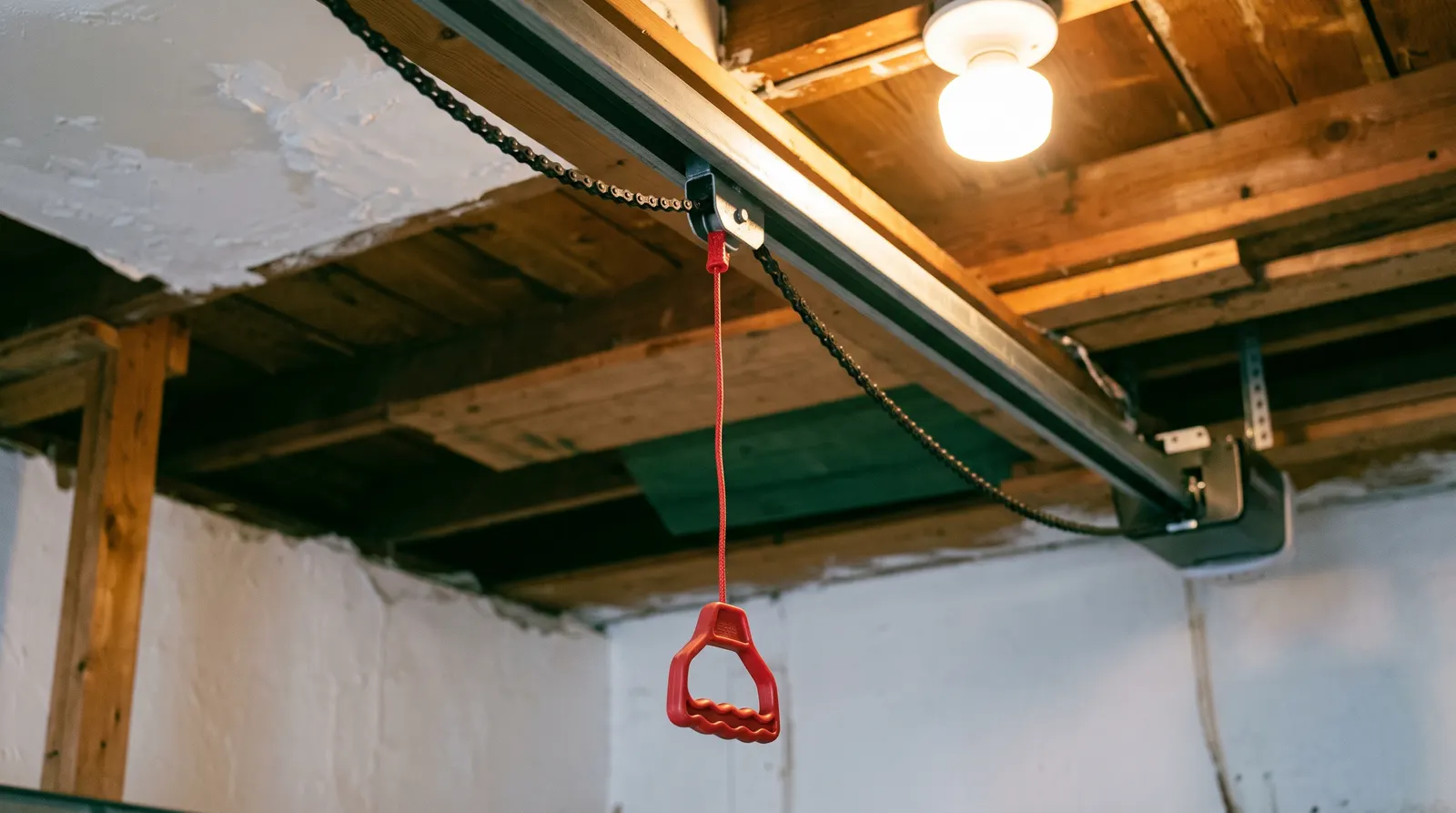
Someone pulled the red release cord, possibly months ago. Move the door fully closed and run the opener, and the carriage usually re-latches itself.
04
Motor strains, door barely lifts: stop
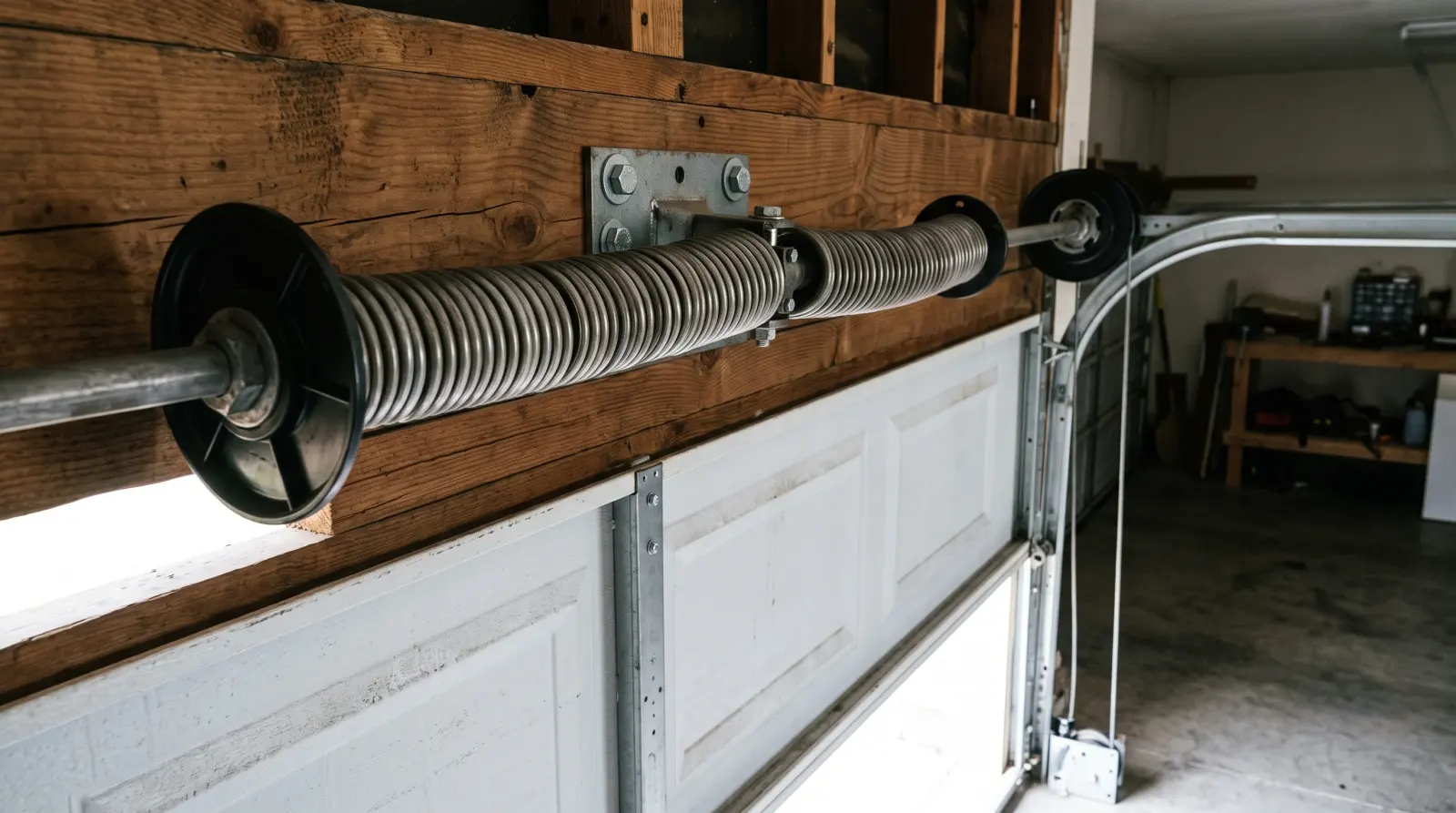
That is a broken spring. The opener is trying to lift the full weight of the door and every attempt damages it further.
If you heard a bang, stop
A torsion spring failing is loud.
Once that has happened, the door is no longer counterbalanced.
What continuing to try actually costs
Running the opener against a door with a broken spring strips the plastic gear set, burns out motors, and can pull cables off their drums. A spring replacement is a bounded cost.
Confirming it takes one look.
The damage that continued attempts cause has a documented path, too.
Silence is the best of the three outcomes and the one people over-diagnose.
Breaker and plug: openers are often on a shared circuit with a GFCI outlet that has tripped.
Lock or vacation mode: the wall control button that disables every remote, usually blinking while active.
Remote batteries: the failure mode is intermittent before it is total.
Antenna wire: the thin wire hanging from the motor unit should hang free, not be tucked away.
Motor runs, door does not move
This is the most misdiagnosed fault on the list, and it is free to fix.
The trolley is the small carriage on the rail that connects the opener to the door arm.
Move the door to the fully closed position by hand, then run the opener.
Lock mode: the button people never notice
Why do the remotes not work but the wall button does?
Because lock or vacation mode is engaged. Holding that button on the wall control for a few seconds disables every paired remote while leaving the wall button live.
Children press it, cleaners press it, and nobody reads the manual until something stops working. It takes three seconds to rule out.
Getting a car out when the door will not open
This is the practical problem behind most of these searches, and the honest answer depends on the fault.
With a working spring system and a disengaged trolley, the door lifts by hand easily and you can drive out.
Use a side door or the internal house door where one exists, and leave the garage door alone.
Never prop a partly raised door with anything that can shift or slip.
Do not stand under a door you have lifted by hand and are not certain will stay up.
If it slides back down as you release it, lower it fully and wait for a technician.
A door that only refuses in January is usually telling you about grease rather than about a fault.
Cold thickens lubricant on rollers, hinges and the rail, and metal contracts slightly.
Pull the red release cord and try lifting by hand. If it is very heavy or will not move, the spring has failed and no amount of opener troubleshooting helps.
What each outcome costs
Indicative US ranges. Always get a written quote.
Job
Typical range
Notes
Remote batteries, lock mode, trolley
no part cost
Between them, a large share of these calls
Lubrication and seasonal adjustment
no part cost
The winter-only failures
Torsion spring replacement
$300–$540 installed
Average around $420, pair recommended
Extension spring replacement
$300–$400 installed
Lighter doors, different geometry
Opener replacement
$300–$900 installed
Chain $250–$400, belt $270–$550
Source: This Old House 2026 garage door spring cost data and HomeGuide garage door opener installation cost data (retrieved August 2026). Figures vary by region and timing.
Figures last checked
The first two rows are free and they cover a real share of these calls.
How the matching works, and what we do not do
Emergency Services 24H is a referral service. We do not employ garage door technicians, we do not perform repairs, and we do not sell springs or openers.
Your request routes to licensed, insured technicians covering your area, and they contact you directly.
What homeowners actually ask
What owners report
Drawn from real public forum threads and reported prices, summarized and attributed as patterns.
These are not reviews of this site, and no names or ratings have been invented.
“Garage door spring snapped in half. Seeking advice”
SourceThread title, r/HomeImprovement. The replies land in the same two places: stop using the opener, and do not attempt the replacement yourself.
“Why is my garage door not responding to remotes and keypad?”
SourceA People Also Ask question on this SERP. Lock or vacation mode on the wall control is the answer more often than the ranking pages suggest, and it takes seconds to rule out.
“Garage door opener runs but the door does not move”
SourceA recurring pattern across home repair forums. The consensus answer is a disengaged trolley from the emergency release cord, which is free to fix and frequently misdiagnosed as a dead opener.
1 / 3
The trolley thread is the one worth remembering.
Cited source~2:40
On the lock button on the wall control, which disables every remote and reads as a dead opener.
“make sure that you didn't actually lock your garage door opener: this little button here if held down can lock this whole system so that your remotes won't work at all”
A
Adam
DIY repair channel host - states he has never worked on a torsion spring
AdamDIY, 2015
An independent source we cite. Not affiliated with Emergency Services 24H, and not a network contractor.
Get a licensed garage door technician moving on this
Tell us what the opener does when you press the button. Licensed, insured technicians covering your area will contact you directly. No obligation to hire.
Fire, a gas smell, or an injury? Leave the building and call 911 first, then your gas
utility or power company. Use this form once you are safe.
Straight answers
Frequently asked questions
The questions homeowners actually search for on this problem, answered in plain language.
The garage door will not open with remote control. What now?
Check the lock button on the wall control first, because holding it down disables every remote at once. Then the remote battery, then re-pair the remote to the opener.
The opener runs but the door does not move. Why?
Either the trolley is disconnected from the door, or the drive gear or sprocket has stripped. Pull the release cord and lift by hand: if the door is heavy, the spring has gone as well.
Why won’t my garage door open when I press the button?
Listen to what happens. Silence points at power, lock mode, remote batteries or the logic board. A motor that runs while the door stays put means the trolley is disengaged.
The opener runs but the door does not move. Why?
The trolley has been disconnected from the door carriage, almost always because someone pulled the red emergency release cord. Move the door fully closed, then run the opener and it will usually re-latch automatically as the carriage passes the trolley.
Why do my remotes work but the wall button does nothing, or the other way round?
Check for lock or vacation mode on the wall control. Held for a few seconds it disables all remote transmitters while leaving the wall button working, and most people have no idea the function exists. The wall control usually blinks while it is engaged.
Can I get my car out if the door will not open?
Sometimes, and carefully. With a broken spring the door is far heavier than it looks and lifting it manually is a genuine injury risk. If there is a side door or an internal door into the house, use that and leave the garage door alone until a technician arrives.
Why does it only fail in cold weather?
Cold stiffens the lubricant on the rollers and tracks and increases the force needed to lift. An opener already at the edge of its up force setting fails first in winter. Lubricating before the cold season resolves most of these cases without any adjustment.
What will this cost to fix?
Nothing if it is batteries, lock mode or a disengaged trolley, which together account for a lot of calls. Torsion spring replacement runs about $300 to $540 installed, and a full opener replacement about $300 to $900 installed depending on drive type.
The manual release cord
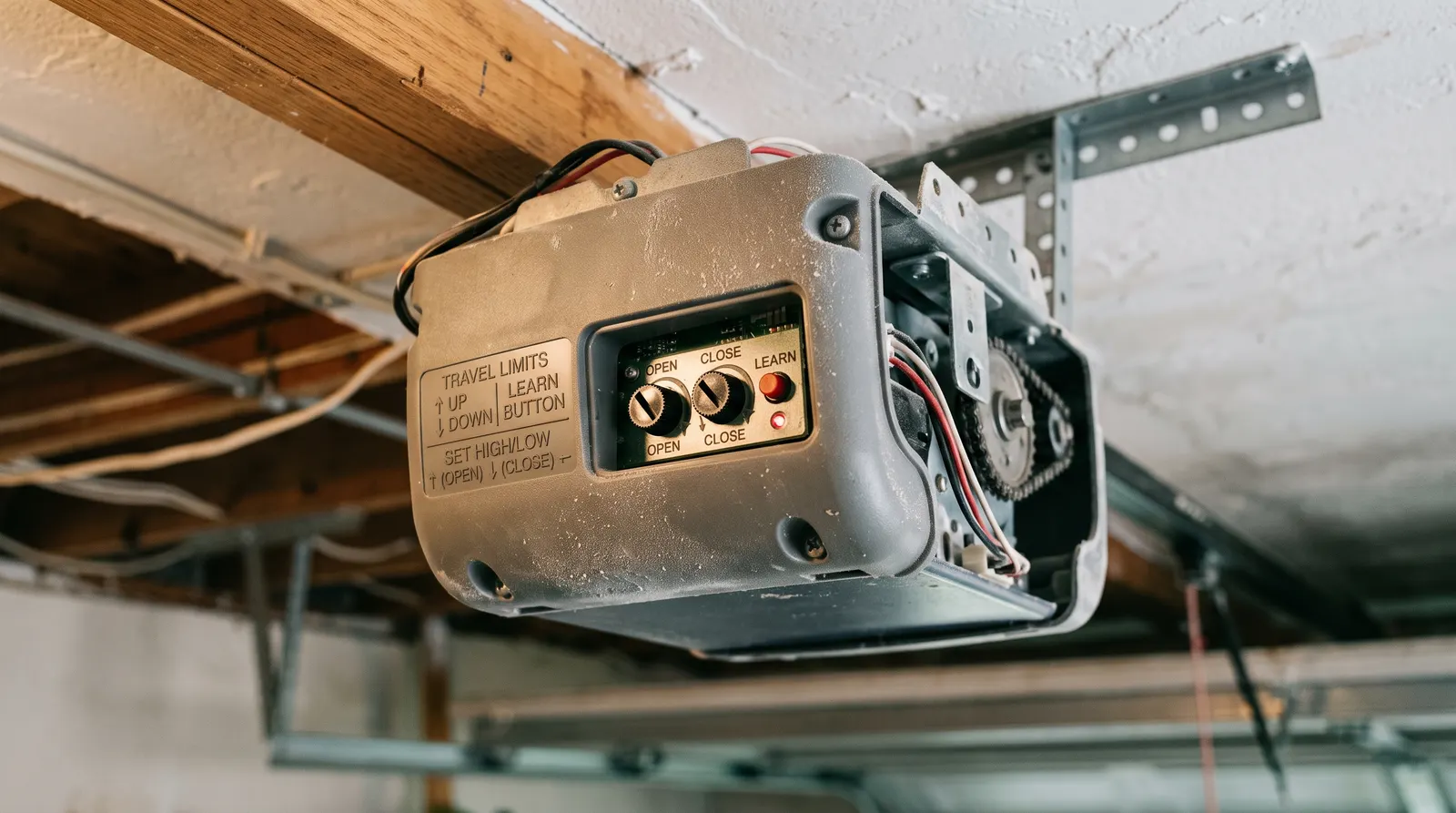
Opener motor head and limit adjustments
A stripped nylon drive gear is a common and cheap failure on older chain-drive openers, and it sounds exactly like a dead motor.
Tell us what has failed and how soon you need someone. We route your request to licensed, insured contractors covering your area, and they contact you directly.
Fire, a gas smell, or an injury? Leave the building and call 911 first, then your gas
utility or power company. Use this form once you are safe.