Garage Door
Garage Door Repair What Is Safe to Do Yourself
Garage door repair runs from a two-minute sensor alignment that costs nothing to a torsion spring at $300 to $540 installed. One line runs through every fault on this page: stored tension.
24/7 dispatch network
Request a licensed contractor now
Fire, a gas smell, or an injury? Leave the building and call 911 first, then your gas utility or power company. Use this form once you are safe.
The stakes, in real numbers
Why the first ten minutes matter
Every figure is sourced
- 51,000
- home electrical fires a year in the US
- 48h
- window before mold can start after water damage
- 200+
- US deaths a year from consumer-product carbon monoxide
- $25,000
- damage from just one inch of flood water
Source: ESFI
Source: EPA
Source: CPSC
Source: NFIP
Garage door repair splits cleanly along one line: stored tension.
Everything below is organized around that boundary, because the search results for this topic are not.
“Replacing garage door springs can be dangerous, and I recommend if you are not handy that you call someone to do it - a professional garage door company to come out and replace these springs.”
Before you call anyone
Four steps that sort almost every fault
- 01
Name the symptom
Will not close, will not open, reverses part way, or visibly off its track. Each one has a short and different list of causes.
- 02
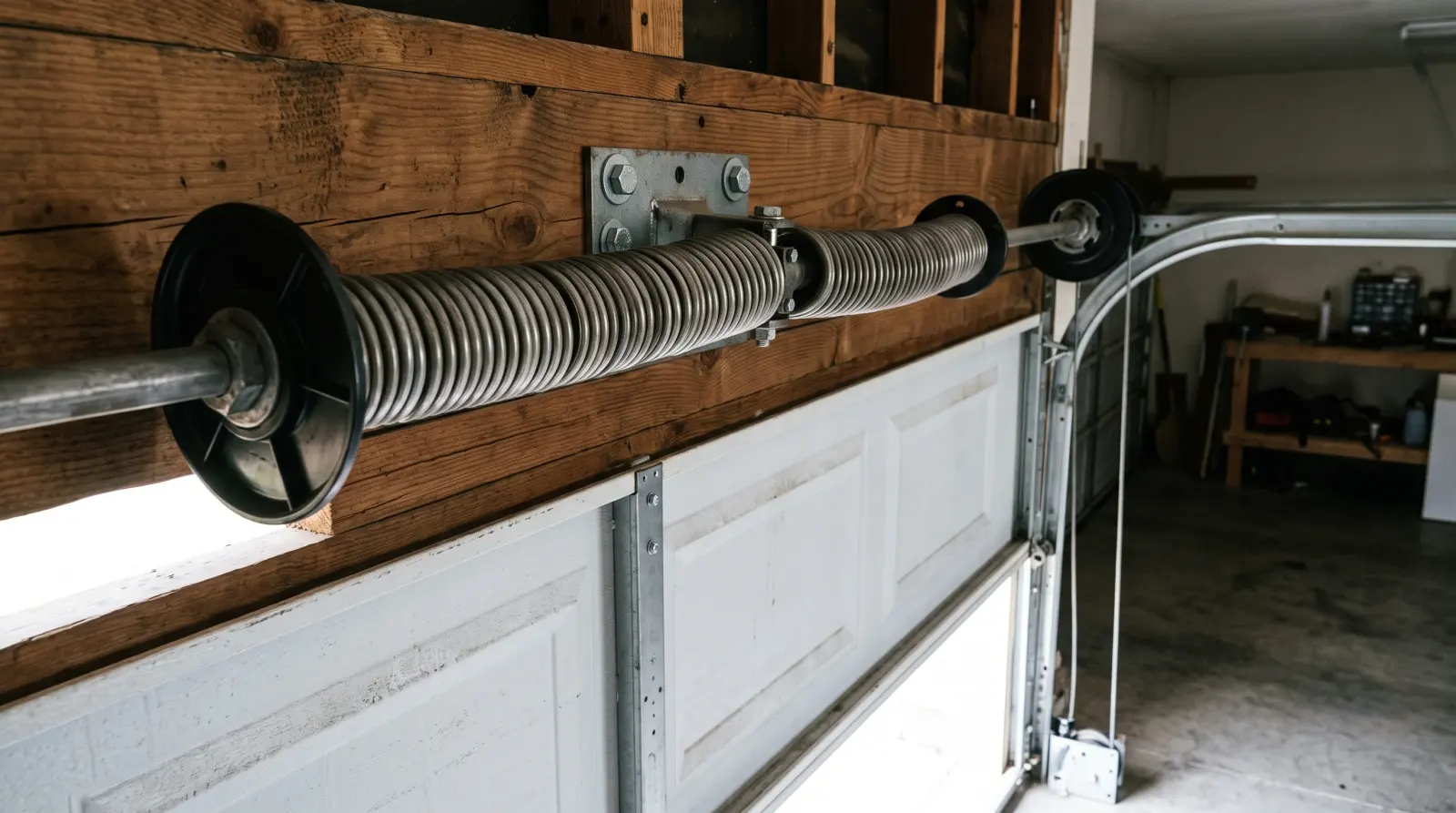
Check for stored tension
A loud bang, a visible gap in a spring coil, or a door that lifts crooked means springs. That is where the DIY line sits, and it is not negotiable.
- 03
Work the free checks
Sensor alignment, lens cleaning, remote batteries, lock mode, breaker position and lubrication. Between them they resolve a large share of calls.
- 04
Price it before you book
Ask whether a spring quote covers one or a pair, whether the service call fee is credited, and what warranty covers the part and the labor.
Searching garage door repair near me gets you adverts rather than a diagnosis, which is why this page sorts the faults first.
Emergency Services 24H routes the job to licensed technicians covering your area, and it routes the other trades the same way, including appliance repair when the failure is in the house rather than the garage. Start from the home page for every trade if the trade is not obvious.
Start here: what is the door actually doing?
The line that matters: stored tension
Which garage door repairs are safe to do yourself?
Anything that does not involve the counterbalance system. Sensor alignment, remote programming, lubrication, track cleaning and limit adjustment are homeowner tasks. Springs, cables, drums and anything holding the weight of the door are professional work.
A torsion spring is wound under enough tension to lift a door most people cannot comfortably carry.
Why this warning is stronger than most
The organic results for garage door spring repair are dominated by videos titled around saving hundreds of dollars, several of which walk viewers through torsion spring work with improvised tools. The saving is real and so is the mechanism.
Why your door will not close: sensors first
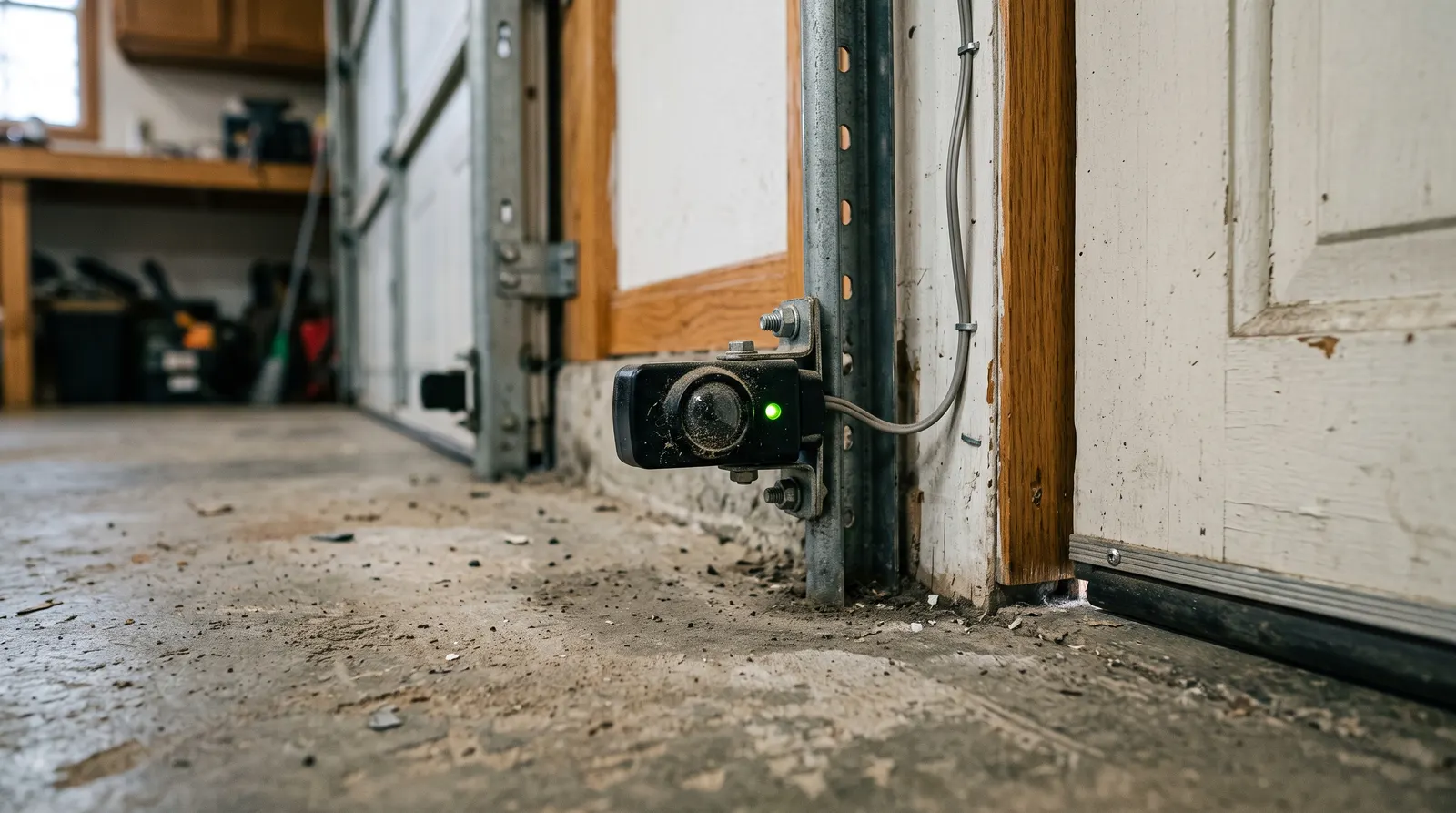
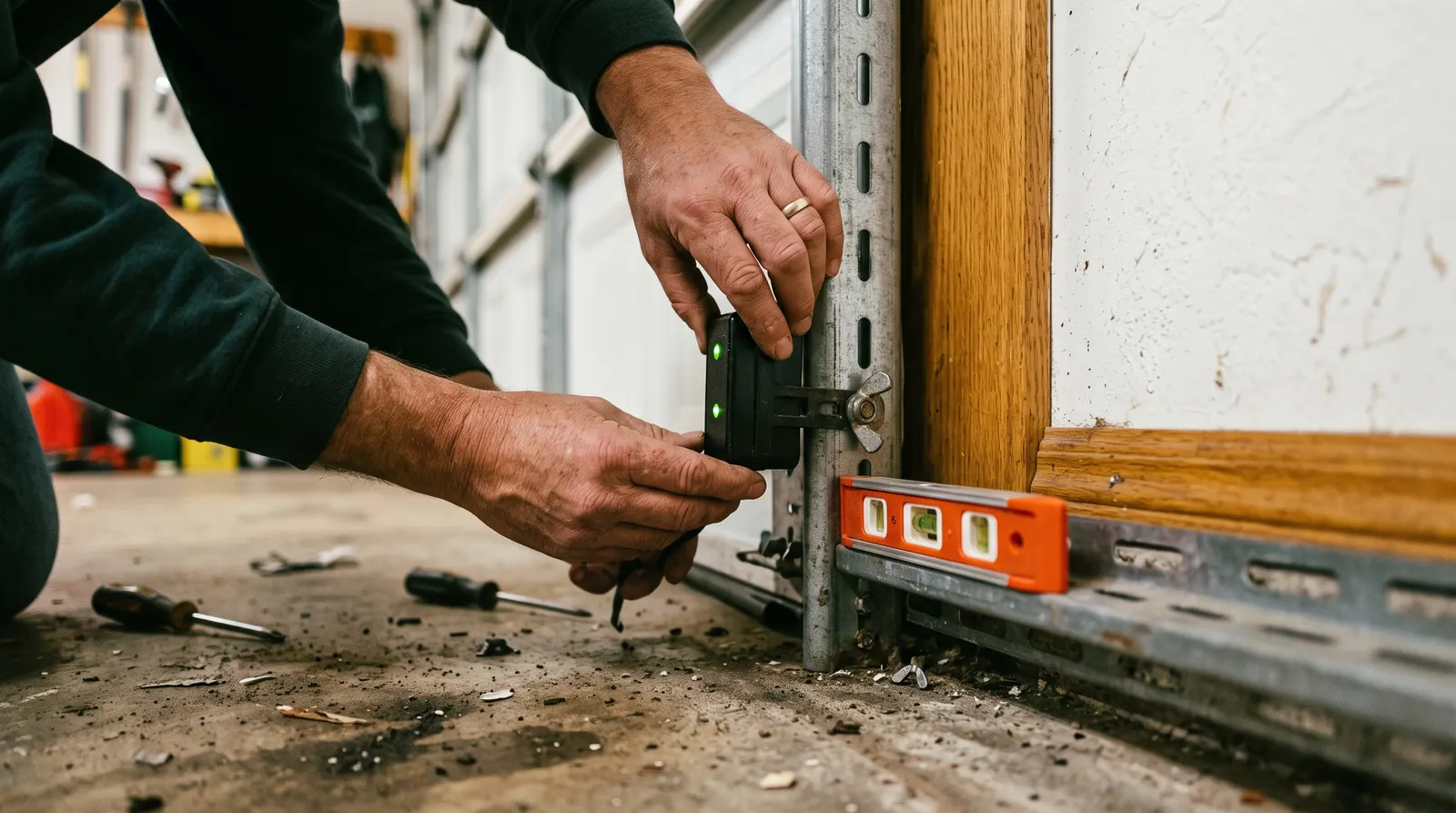
Two photoelectric sensors face each other across the opening, mounted within six inches of the floor.
A knocked bracket, a cobweb, a fogged lens or low winter sun landing on the receiver all count as breaking the beam.
Two working repairers put the same fault at the top of their lists.
Adam of AdamDIY goes further across the whole category: misaligned sensors first, misaligned tracks second, and those two together roughly 90 percent of everything he sees (AdamDIY, read 2026-07-22).
The LEDs tell you which half of the circuit to look at, and most people aim at the wrong one.
The full procedure is on our page on garage door sensor alignment, including what the LED colors mean by brand.
Why your door will not open
Listen before you look, because the sound sorts this in one step.
- Silence. Power, a tripped breaker, lock or vacation mode on the wall control, or remote batteries.
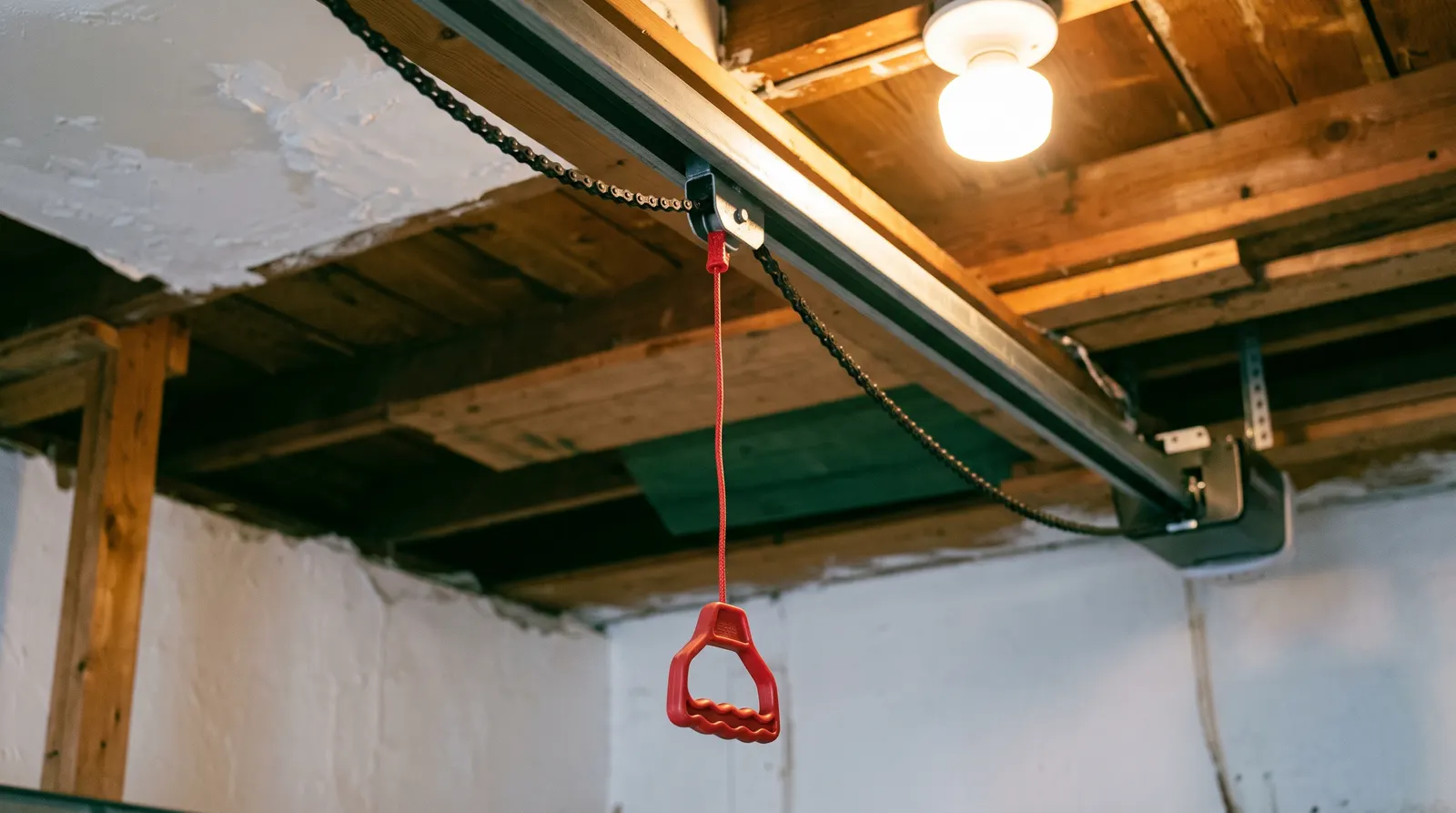
- Motor runs, door stays put. The trolley is disengaged, usually because the red release cord was pulled at some point.
- Motor strains, door lifts an inch. A broken spring. Stop, and do not keep trying.
What UL 325 and the CPSC actually require
The safety systems people find inconvenient exist because of a documented history.
CPSC records dozens of child entrapment deaths under automatic garage doors through the 1980s, which led to federal requirements that openers reverse when a closing door meets an obstruction.
That history is the reason bypassing a sensor is the wrong answer to a door that will not close, even when the fault is genuinely a dirty lens.
In this guide
Everything in the garage door guide
Garage door won’t close
Almost always the photo eyes. What the blinking opener light is telling you, and the afternoon sun case.
Garage door sensor alignment
Watch the indicator LED, not the aim. Plus the causes that look like misalignment and are not.
Garage door won’t open
Three sounds, three faults. Silence, a motor with no movement, or a strain that means stop.
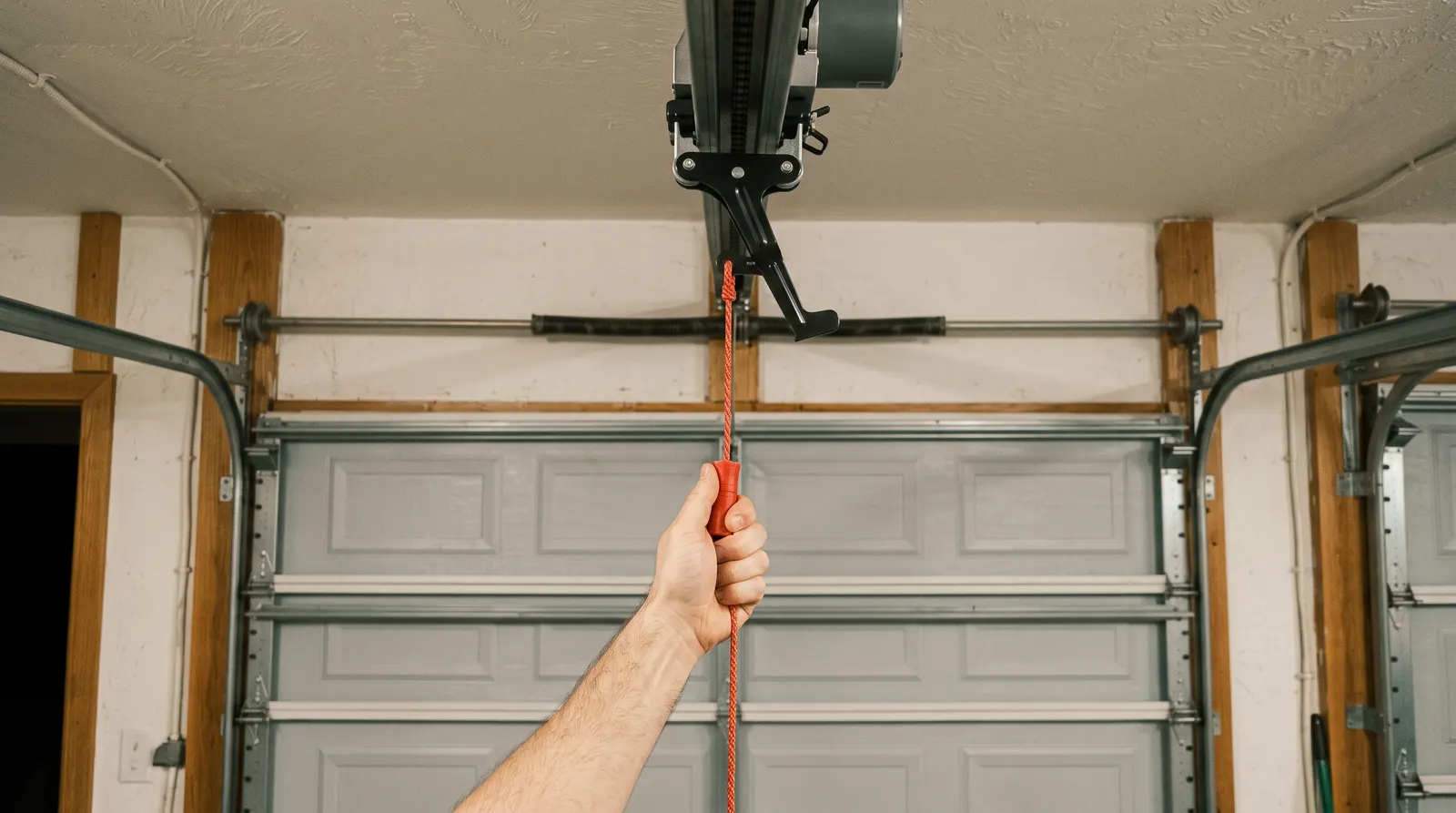
How to open a garage door manually
The emergency release done safely, the outside case answered honestly, and the one rule that prevents injury.
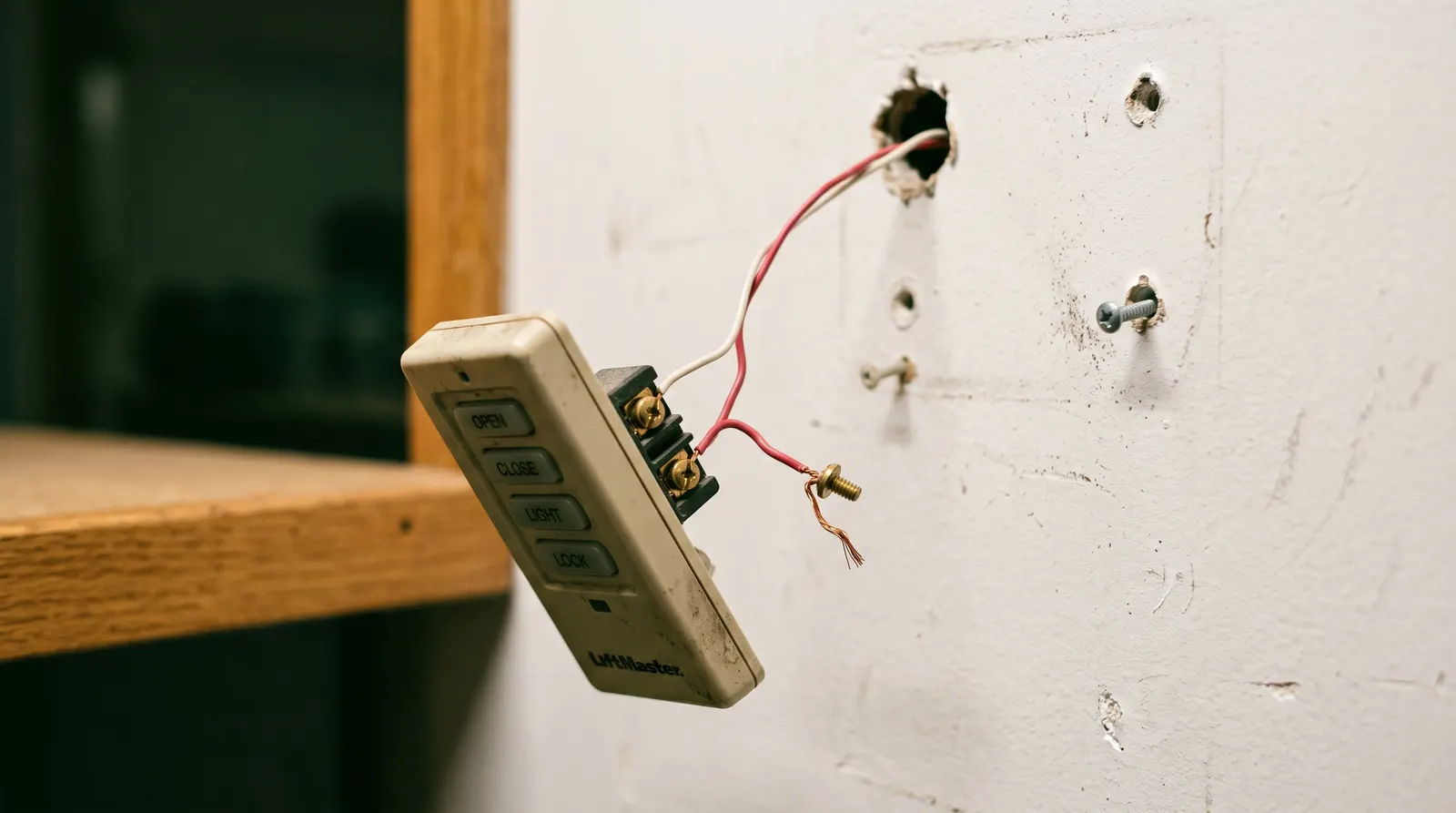
How to reset a garage door opener
What a reset fixes and what it never will. Brand differences, rolling codes and the new homeowner case.
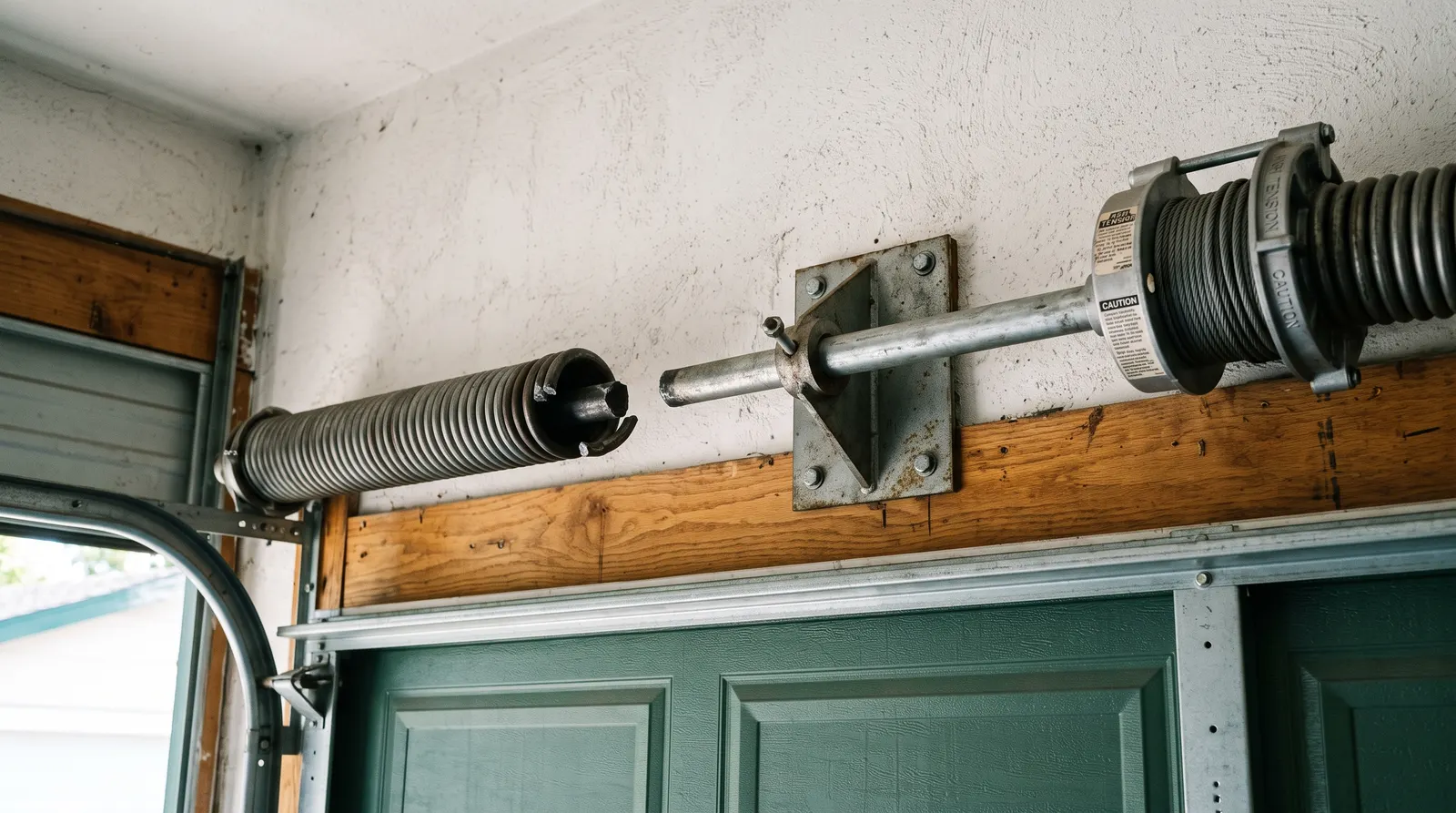
Broken garage door spring
Confirm it in ten seconds, then stop using the opener. What running it anyway actually costs.
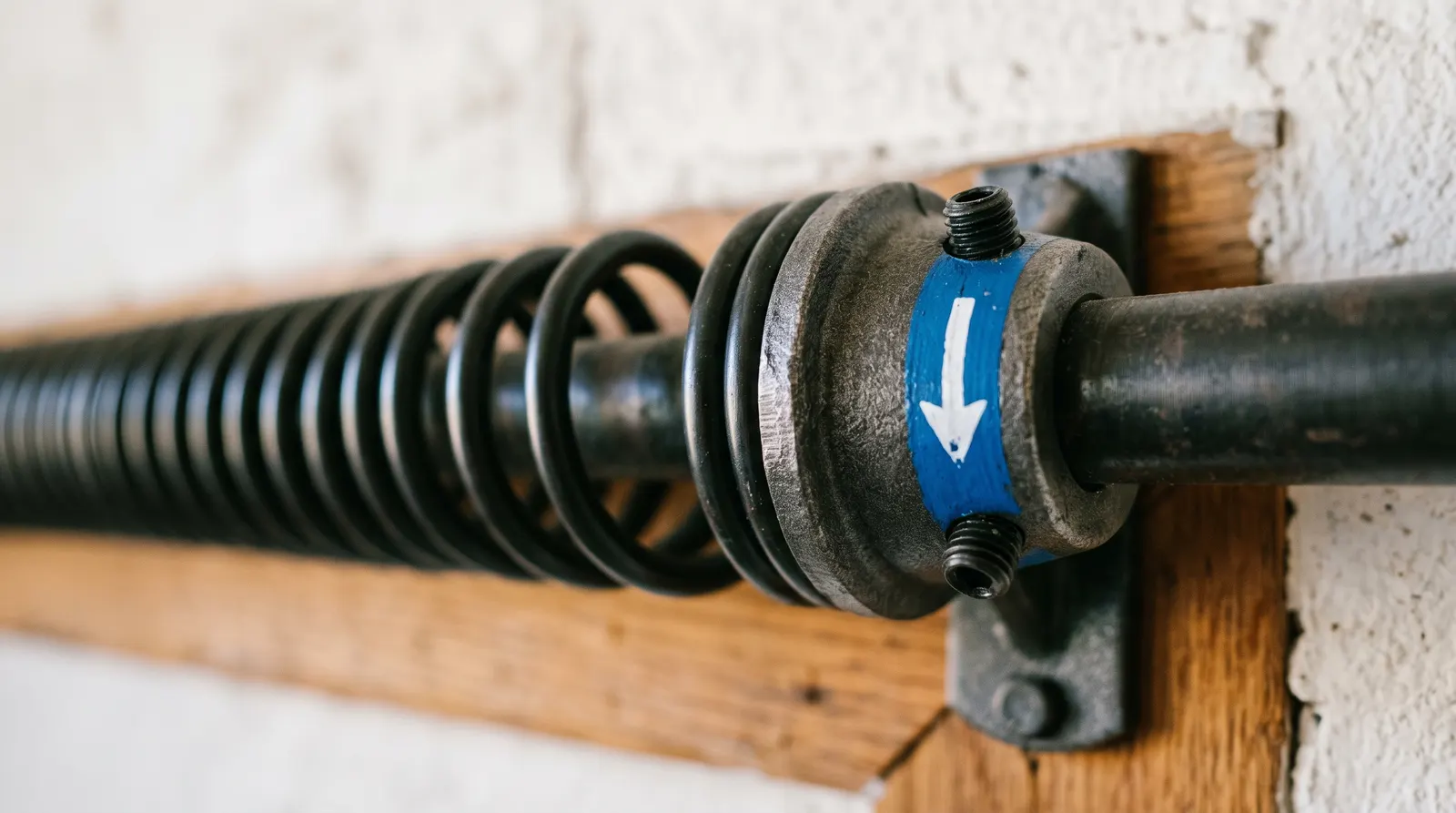
Garage door spring replacement cost
Parts against installed price, why a pair is standard, and how to read a quote that looks too cheap.
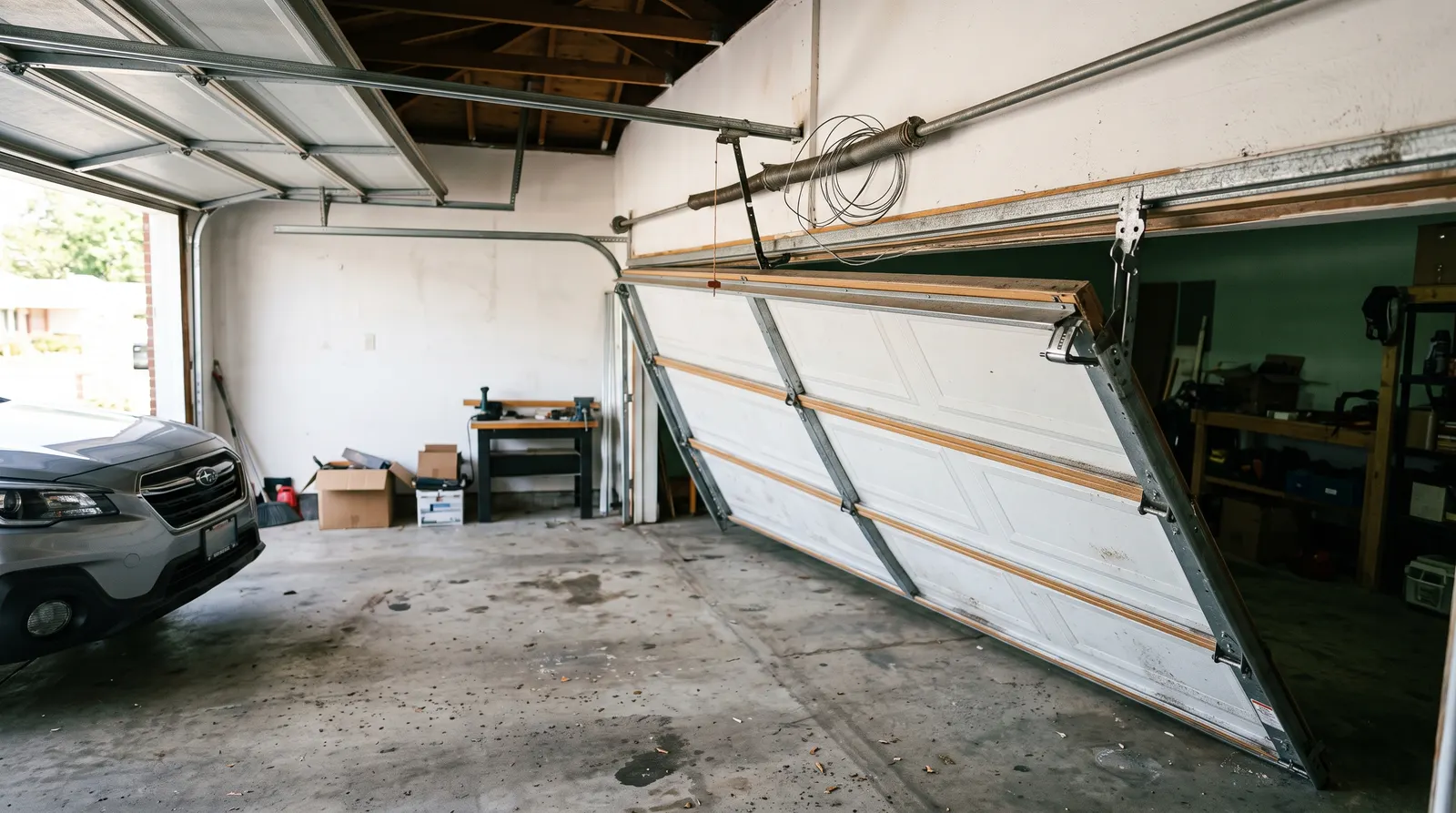
Garage door off track
Disconnect the opener first. Why an off-track door can fall, and when a cable rather than a roller is the cause.
What garage door repair actually costs
Indicative US ranges. Always get a written quote.
| Job | Typical range | Notes |
|---|---|---|
| Torsion spring replacement | $300–$540 installed | Average around $420, pair recommended |
| Extension spring replacement | $300–$400 installed | Lighter doors, different geometry |
| Spring parts alone | $80–$120 torsion | Extension springs $20–$60 |
| Opener replacement, chain drive | $250–$400 installed | The budget end of the range |
| Opener replacement, belt drive | $270–$550 installed | Quieter, common upgrade |
| Opener replacement, wall mount | $400–$700 installed | Jackshaft units, high-lift doors |
Source: This Old House 2026 garage door spring cost data and HomeGuide garage door opener installation cost data (retrieved August 2026). Figures vary by region and timing.
Figures last checked
The third row is the one installer pages leave out.
Our breakdown of spring replacement cost goes through how to read a quote, including when a cheap one is a warning.
Springs: why this one is not a DIY job
Torsion springs sit on a shaft above the door and are wound to a specific tension for that door’s weight.
Winding them requires bars of the correct diameter and a technique that keeps the energy under control at every stage.
Springs are also replaced in pairs as standard practice, for a reason that is not an upsell: both have completed the same number of cycles, so the survivor is usually close behind the one that failed.
Confirming a failure needs no tools at all.
Tracks, rollers and a door off its track
A door that has jumped its track is hanging on fewer rollers and cables than the system was designed around.
Disconnect the opener before anything else, because running it against a jammed door bends track and tears brackets. Then leave the door alone. Our page on a garage door off its track covers why a snapped cable is a different repair from a worn roller.
Cold weather and the seasonal faults
A garage door that only misbehaves in winter is usually not broken.
Cold thickens the grease on rollers and hinges, metal contracts slightly, and the force required to move the door rises.
Lubricating before the season and a small seasonal force adjustment resolve most of it. None of the ranking pages for these symptoms mention weather at all.
24/7 dispatch network
Get a licensed garage door technician moving on this
Tell us what the door is doing. Licensed, insured garage door technicians covering your area will contact you directly. Submitting costs nothing and there is no obligation to hire.
Fire, a gas smell, or an injury? Leave the building and call 911 first, then your gas utility or power company. Use this form once you are safe.
Know the line
Safe to check yourself, or call a pro now
Safe to check yourself
- Realigning safety sensors and cleaning their lenses
- Reprogramming remotes and keypads
- Lubricating rollers, hinges and the opener rail
- Checking the breaker and the lock mode
- Small travel limit adjustments, tested between each
Call a pro now
- Any torsion or extension spring work
- Lift cables, drums and the shaft
- A door that has come off its track
- A door that will not stay up when lifted by hand
- Opener logic board and receiver faults
What you can safely do yourself
The homeowner list is longer than installer pages suggest, and it resolves a real share of service calls.
Sensors, remotes, keypads, batteries, lock mode, lubrication and lens cleaning cost nothing and take minutes.
Questions worth asking before you book
- Is the service call fee credited against the repair?
- Is a spring price for one or a pair?
- What cycle rating is being fitted?
- What warranty covers the part and the labor?
- Are cables and rollers being checked at the same time?
- Is the total confirmed in writing before work starts?
How to open a stuck door in an emergency
The red cord hanging from the opener rail disengages the trolley so the door moves by hand.
Pull it only with the door fully closed. On a partly open door with a failed spring, the opener is the only thing holding the weight, and disconnecting it lets the door drop. Full detail, including the outside-access case, is on our guide to opening a garage door manually.
What homeowners actually ask
What owners report
Drawn from real public forum threads and reported prices, summarized and attributed as patterns. These are not reviews of this site, and no names or ratings have been invented.
“My garage door does not close by itself anymore. Is...”
“Garage door spring snapped in half. Seeking advice”
“CPSC has required entrapment protection devices such as photoelectric sensors on residential openers since 1992”
1 / 3
The two forum threads sit at opposite ends of this topic.
How the matching works, and what we do not do
Emergency Services 24H is a referral service. We do not employ garage door technicians, we do not perform repairs, and we do not sell springs or openers.
The request goes out to licensed, insured door technicians who cover your address, and the company that takes it gets in touch.
Check the recall list before you pay for a replacement
Garage door hardware gets recalled more often than people expect, and the notices are public, searchable and free. One from February 2023 covers a widely sold smart control panel built inside a defined manufacturing window in 2022.
Two things follow. The first is practical: before authorising a replacement opener or control panel, it is worth five minutes checking whether your date code sits inside a published window, because a covered defect is the manufacturer’s problem rather than yours.
The second is a caution about reading these notices as quality data. A recall record describes a hazard and an affected production run.
What this does not say: Recall records describe the hazard and the affected production window; they carry no denominator, and absence of a recall is not evidence a product is sound.
CPSC recall 23725 - LiftMaster myQ garage door control panels (2023-02-09)
Straight answers
Frequently asked questions
The questions homeowners actually search for on this problem, answered in plain language.
Browse all guidesWhat does a typical repair cost?
Sensor alignment costs nothing, a roller or track fix is the low end of a service call, torsion spring replacement runs $300 to $540 installed, and a new opener is $300 to $900 installed.
Is this urgent, or can it wait?
A door stuck open is a security problem tonight; a door stuck closed with a car inside is an access problem. A door that is off track or has a broken spring should not be operated at all until it is repaired.
What can I safely do myself?
Sensors, remotes, batteries, lubrication and the emergency release are homeowner work. Springs, cables and anything holding the door up are not: those carry stored tension and injure people every year.
How long does the visit take?
Most single-fault visits are an hour or less, including a spring pair on a standard door. Panel damage and bent track after an impact take longer and sometimes need parts ordered.
What is the most common garage door repair?
Sensor alignment and broken springs, in that order by frequency. Photo eyes knocked out of alignment account for a large share of doors that will not close, and they cost nothing to fix. Springs are the most common part failure and the one job that genuinely needs a professional.
What is the average cost of fixing a garage door?
Torsion spring replacement runs about $300 to $540 installed with an average near $420, extension springs about $300 to $400, and opener replacement about $300 to $900 installed depending on drive type. Sensor and remote issues are frequently free to resolve.
Can I replace a garage door spring myself?
It is strongly discouraged. Torsion springs are wound under extreme tension and releasing one without winding bars and the correct technique can cause serious injury. This is the one garage door job where the professional recommendation is close to unanimous, including from sources that otherwise favor DIY.
Why will my garage door not close when nothing is in the way?
Almost always the safety sensors. The photo eyes sit within six inches of the floor on each side, and a knocked bracket, a dirty lens, a cobweb or direct low sunlight is enough to break the beam. The opener light usually blinks a code when this is the cause.
Is it safe to use a garage door with a broken spring?
No. The spring counterbalances the weight of the door, so with one broken the opener is lifting a load it was never designed for and the door can drop. Leave it down, use the emergency release if you must move it manually, and get it looked at.
Do you employ the technicians?
No. Emergency Services 24H is a referral service. We route your request to licensed, insured garage door technicians covering your area, and they contact you directly.
Sources for this page
- U.S. Consumer Product Safety Commission: Entrapment protection and photoelectric sensors on residential garage door openers
- U.S. Federal Register: Safety Standard for Automatic Residential Garage Door Operators, 16 CFR 1211 (UL 325, 7th ed.)
- This Old House
- HomeGuide
Experts quoted on this page
Independent, publicly published sources, quoted with attribution and linked in full. None is affiliated with Emergency Services 24H, reviewed this page, or works in the referral network.
- Victor: Garage door spring supplier and repair company, Express Garage Doors Inc - “Torsion Spring DIY guide – How To Replace Garage Door Torsion Springs” (2023)Declared bias: Sells springs direct to homeowners and leans pro-DIY.
Reviewed on . If a figure here no longer matches its source, that is a bug, so tell us and we will correct it.
24/7 dispatch network
Tell us what has failed and where you are
Tell us what has failed and how soon you need someone. We route your request to licensed, insured contractors covering your area, and they contact you directly.
Fire, a gas smell, or an injury? Leave the building and call 911 first, then your gas utility or power company. Use this form once you are safe.