Bed bug treatment: what to do tonight, and why speed matters
EPA puts a female at 200 to 500 eggs in a lifetime. That single figure is the argument against waiting a fortnight to see whether it settles down.
Bed bug treatment is a race against reproduction: EPA notes a female may lay one to three eggs a day and 200 to 500 across a lifespan of six to twelve months. The same infestation treated a month later is a materially larger job, which makes speed the main variable you actually control.
What to do tonight
What are the right first moves?
Stay in the same room. Bag and heat-treat the bedding rather than carrying loose linen through the house. Leave the furniture where it is for inspection. And do not start buying and spraying consumer products, which mostly scatters the population.
Those four decisions cost nothing and they decide whether this is a one room problem or a whole floor one.
The first night matters
Four moves that keep it contained
01
Stay in the same room
Moving to a spare bed or the sofa spreads the infestation. Bed bugs navigate toward exhaled carbon dioxide and will follow you to the new location.
02
Bag and heat-treat the bedding
Strip the bed into a bag, carry the bag rather than the loose linen, and wash and dry on the highest heat the fabric allows.
03
Confirm what you are dealing with
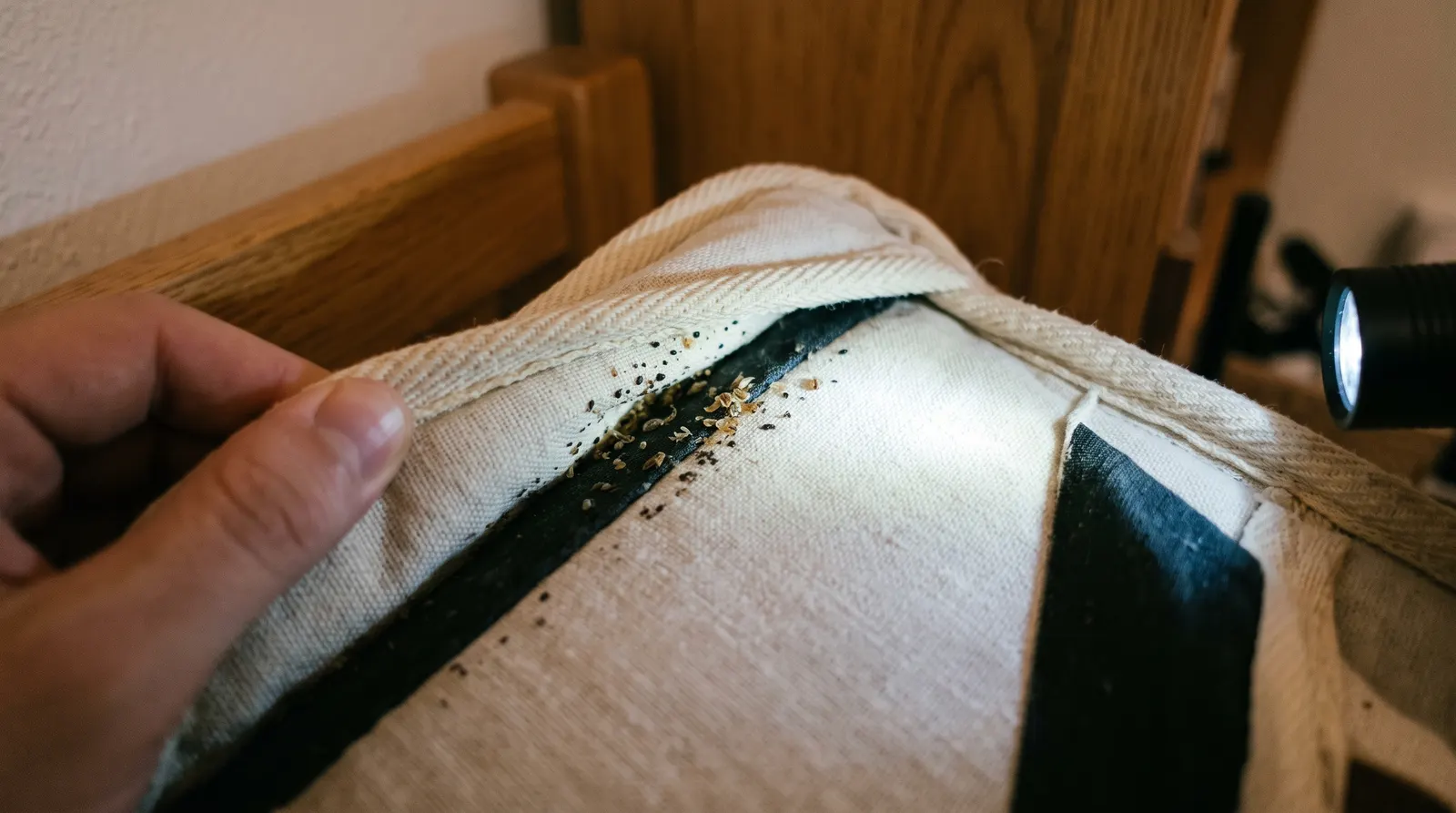
Check seams, headboard joints and the bed frame for dark spotting, shed skins and live insects before spending anything on treatment.
04
Leave the furniture where it is
Do not start discarding items. A mattress encasement traps what is inside, and dragging infested furniture through the building spreads it.
Why moving rooms makes it worse
This is the most common and most expensive mistake people make on night one.
They follow the carbon dioxide, not the room
Bed bugs locate hosts by exhaled carbon dioxide and body heat. Sleeping on the sofa or in a spare room does not escape them, it teaches them where you went and establishes a second harbourage. One treated room is far cheaper and quicker than two infested ones.
The reproduction figures that set the clock
EPA guidance on finding bed bugs carries the numbers that make urgency concrete.
A female may lay one to three eggs a day, and 200 to 500 across a lifespan of six to twelve months and possibly longer. That is not a reason to panic and it is a reason not to wait. The population you treat next month is the population you have now, compounded.
Confirm it before you treat it
Plenty of bites are not bed bugs, and treating the wrong thing is expensive in both money and time.
Look along seams of the mattress, box spring and any upholstered headboard.
Check frame joints and screw holes, which are classic harbourage.
Look for dark spotting, shed skins and live insects rather than relying on bites.
Fit interceptor traps under the bed legs and check them over about a week.
What heat treatment actually targets
What temperature kills bed bugs?
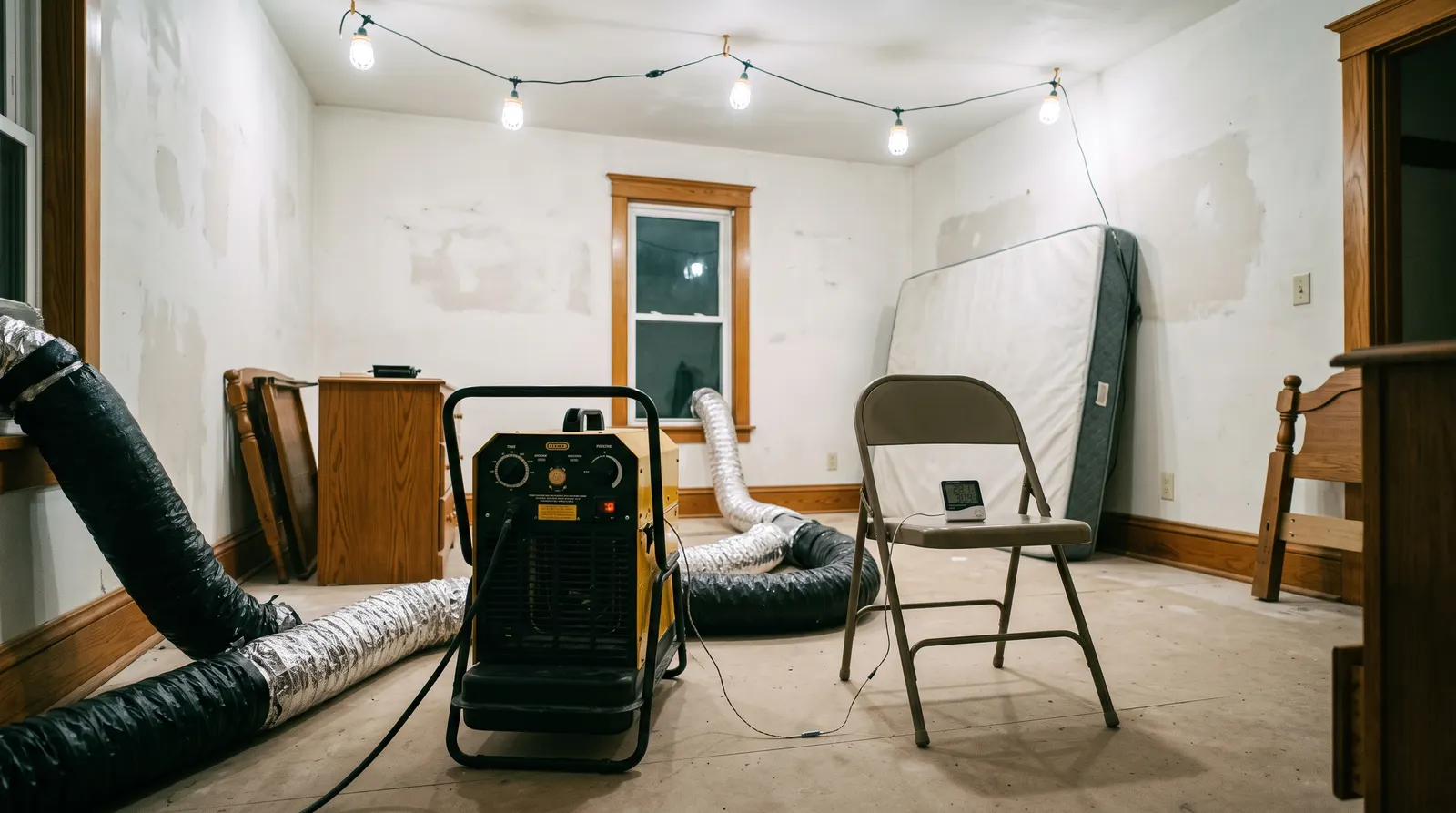
EPA notes they die when body temperature reaches 45C, which is 113F. Professional heat treatment raises an entire room above that threshold and holds it, which reaches harbourage that sprays cannot. They stay active down to about 7C, so cold is not a control method.
That specific number is why heat treatment is a whole-room operation with monitored sensors rather than something a domestic heater achieves.
Do not throw the mattress out
The instinct is understandable and it usually costs money without helping.
A quality encasement traps whatever is already inside the mattress and prevents anything else getting in, at a fraction of the price of replacement. Dragging an infested mattress through hallways, stairwells and shared spaces also spreads the problem on the way out, which is how a single unit infestation becomes a building one.
Replacing furniture before treatment simply reinfests the new item, because the population lives in the room rather than in the mattress alone.
Why DIY usually fails here
This is the honest assessment the retail-heavy search results avoid.
Consumer sprays reach surfaces and miss eggs, and they miss harbourage inside frames, skirting, electrical boxes and wall voids. Partial treatment also scatters survivors into adjacent rooms, converting a contained problem into a distributed one.
The cost of that failure is not the price of the product. It is the weeks of reproduction that happen while you find out it did not work.
Do not throw out the mattress or start moving furniture between rooms. Both spread the infestation and neither treats it.
What bed bug treatment costs
Indicative US ranges. Always get a written quote.
Job
Typical range
Notes
Professional treatment
among the most expensive pest categories
Multiple visits or whole-room heat
Single visit
$150–$500 reported
Rarely sufficient on its own for bed bugs
Mattress encasement
inexpensive DIY
Far cheaper than replacing the mattress
Interceptor traps
inexpensive DIY
Confirms activity over about a week
Failed DIY
weeks of population growth
The cost that does not appear on an invoice
Source: This Old House 2026 exterminator cost data, with bed bug pricing stated qualitatively where no reliable published figure exists (retrieved August 2026). Figures vary by region, severity and after-hours timing.
Figures last checked
The last row is the one that does not appear on any invoice, and it is frequently the largest number in the table.
Emergency Services 24H is a referral service. We do not employ pest control technicians, we do not treat properties, and we do not sell sprays, encasements or traps.
Your request routes by ZIP code to licensed, insured technicians covering your area, and they contact you directly. Ask each of them how many visits are included and what the guarantee covers, because on bed bugs those two answers matter more than the headline price.
What homeowners actually ask
What people are asking
Drawn from real public forum threads and reported prices, summarised and attributed as patterns.
These are not reviews of this site, and no names or ratings have been invented.
“What if I slept in a bed with bed bugs?”
SourceA People Also Ask question on this SERP. It is the question of someone deciding right now where to sleep tonight, and the ranking pages answer treatment options instead.
“Can I treat my home for bed bugs myself?”
SourceAnother People Also Ask question, sitting above a results page where retail listings outrank the guidance that would answer it honestly.
“EPA: a female may lay 1 to 3 eggs a day and 200 to 500 in a lifetime”
SourceU.S. Environmental Protection Agency guidance on finding bed bugs. It is the figure that makes delay expensive, and it rarely appears on commercial treatment pages.
1 / 3
The where-do-I-sleep question is the one being asked at eleven at night, and it is the one the ranking pages answer least. The answer is: here, in this bed, with the linen washed.
Know the line
Worth doing yourself, or call a professional?
Safe to check yourself
Washing and drying bedding on high heat
Fitting mattress and box spring encasements
Placing interceptor traps to confirm activity
Reducing clutter around the bed
Photographing evidence for the technician
Call a pro now
Any confirmed infestation, at any scale
Whole-room heat treatment
Any multi-unit or shared building
A second room already showing signs
An infestation you have already tried to treat
24/7 dispatch network
Get a licensed pest control technician
Tell us what you have found and where, plus your ZIP code. Licensed, insured technicians covering your area will contact you directly. No obligation to hire.
Fire, a gas smell, or an injury? Leave the building and call 911 first, then your gas
utility or power company. Use this form once you are safe.
Straight answers
Frequently asked questions
The questions homeowners actually search for on this problem, answered in plain language.
What should I do tonight if I have found bed bugs?
Stay in the same room rather than moving to a spare bed or sofa. Bag the bedding and wash and dry it on the highest heat the fabric allows. Leave the furniture where it is so a technician can inspect it, and do not start spraying anything.
Should I sleep in another room?
No. Bed bugs navigate toward exhaled carbon dioxide, so moving simply teaches the infestation where you went and seeds a second harbourage. Treating one infested room is far easier and cheaper than treating two.
Do I need to throw out my mattress?
Usually not. A good encasement traps what is inside and prevents further access, and it costs a fraction of a mattress. Discarding infested furniture also risks spreading the infestation through hallways and shared spaces on the way out.
What temperature kills bed bugs?
EPA notes that bed bugs die when their body temperature reaches 45C, which is 113F, and that is what professional heat treatment is designed to achieve throughout a room. They remain active at temperatures as low as 7C, or 46F, so cold is not a practical control method.
Can I treat bed bugs myself?
Rarely with success. Consumer sprays miss eggs and the harbourage inside frames, voids and skirting, and partial treatment scatters the population into adjacent rooms. Because a female may lay 200 to 500 eggs in a lifetime, weeks of failed DIY translate directly into a larger job.
How quickly do bed bugs multiply?
EPA figures put a female at one to three eggs a day and 200 to 500 across a lifespan of six to twelve months. That is why the same infestation costs more to treat a month later, and why speed rather than product choice is the main variable you control.
Where the evidence is
Heat treatment equipment
Heat treatment costs more up front but usually completes in one visit. Chemical programmes are cheaper per visit and need several.
Tell us what has failed and where you are. We route your request to licensed, insured contractors covering your ZIP code, and they contact you directly.
Fire, a gas smell, or an injury? Leave the building and call 911 first, then your gas
utility or power company. Use this form once you are safe.