Skip to content
Emergency Services 24H

Pest Emergencies → Rodents

Mouse traps are half the job. Sealing is the other half

The search results are almost entirely product listings. The two things that actually decide the outcome are how you clean up and how they got in.

Mouse traps handle the population currently inside, and sealing the entry points is what ends the infestation, because a mouse passes through a gap the size of a dime. Before either, there is a cleanup protocol from CDC that most pages ranking for this topic do not mention at all.

Before you clean anything: the CDC rule

Do not sweep and do not vacuum

CDC guidance is explicit that sweeping or vacuuming rodent urine, droppings or nesting material can aerosolise hantavirus. Ventilate the area for about an hour before you go in. Then spray the material until wet with disinfectant or a bleach solution, let it soak, and wipe it up with paper towels that go straight into a sealed bag.

That instruction is free, it takes no equipment, and it was missing from every commercial rodent page we crawled for this term. Mouse traps get all the attention on this SERP and none of them address it.

The order that matters

Clean safely, trap properly, then seal

  1. 01

    Do not sweep or vacuum

    CDC guidance is explicit: sweeping or vacuuming rodent urine, droppings or nesting material can aerosolise hantavirus. Ventilate the area about an hour first.

  2. 02

    Spray, soak, then wipe

    Use a disinfectant or CDC bleach dilution, let it soak about five minutes, and wipe up with paper towels that go straight into a sealed bag.

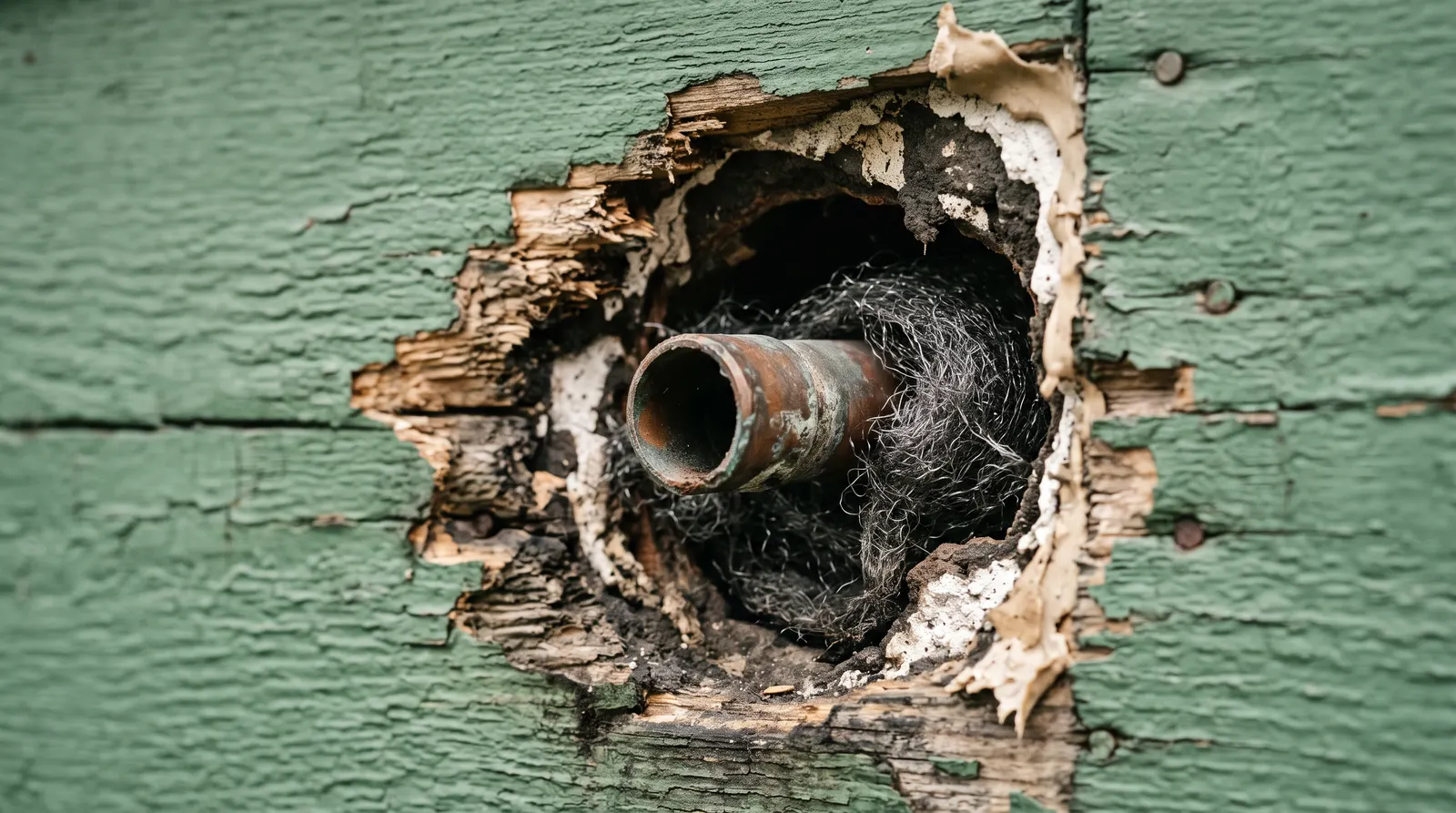
Steel wool packed into a gap around a pipe before sealing
  1. 03

    Trap properly, in numbers

    Multiple snap traps set along walls with the trigger against the wall, baited with a small smear rather than a blob. Mice run edges, not open floor.

  2. 04

    Seal the way in

    A mouse passes through a gap the size of a dime. Steel wool packed into the gap with caulk over it is what actually ends the infestation.

The bleach dilution, precisely

What strength of bleach does CDC recommend?

One and a half cups of household bleach per gallon of water, which is roughly one part bleach to nine parts water. Spray until the material is wet, leave it about five minutes to soak, then wipe up with paper towels.

Wear gloves, and never mix bleach with ammonia or any other cleaner. Dispose of the towels in a sealed bag rather than an open bin.

How many mice does one sighting mean?

More than one, and the sighting itself is the least useful evidence you have.

Mice are nocturnal and actively avoid people, so seeing one during the day generally means enough population pressure that normal caution has broken down. Droppings along a run, gnaw marks on packaging and the number of traps that fire in the first three nights map the population far better.

Mouse traps: what actually works

  • Numbers: six to twelve snap traps beats two, because a light catch rate tells you almost nothing.
  • Placement: along walls, behind appliances, in cupboards, with the trigger end against the wall.
  • Bait: a small smear of peanut butter rather than a blob a mouse can take without triggering.
  • Patience: leave unset baited traps for a night or two if catches stall, because new objects get avoided.

Glue boards and rodenticide: the honest view

Both work in the narrow sense and both carry consequences people do not always think through.

Glue boards catch and hold rather than kill, which raises welfare and disposal problems most households would rather not deal with. Rodenticide produces dead mice in inaccessible cavities, and a decomposing mouse behind plasterboard is a several week problem with a smell attached.

Both also carry risks around pets and children, and label directions on rodenticide are legally binding rather than advisory.

Sealing: the part that actually ends it

Why is sealing more important than trapping?

Because trapping removes the mice that are already inside and changes nothing about the route they used. A mouse passes through an opening the size of a dime, so until those openings are closed, the population is being replaced as fast as it is removed.

  • Utility penetrations: where pipes, cables and ducts enter the building.
  • Weep holes and vents: which need mesh rather than sealant.
  • Garage door seals: a worn bottom seal is an open door at floor level.
  • Method: steel wool packed into the gap, with caulk over it to hold the wool in place.

When DIY has failed

A real threshold beats the vague after a few weeks that most pages offer.

Catches still coming after two weeks of correct trapping, evidence inside a wall cavity, roof space or crawl space, or nesting reaching insulation and ductwork. Any of those means the problem is bigger than the accessible rooms, and access is exactly what a professional brings.

Rodent urgency Stop. Call 911 first: Gnawed electrical wiring with a burning smell; Anyone bitten. Contractor tonight: Droppings in a food preparation area; Gnawing sounds inside walls at night; Evidence of gnawed wiring; A rapid increase in sightings. Can wait for an appointment: A single sighting in a garage or shed; Preventive sealing before winter; Seasonal bait station maintenance; Droppings in an unused outbuilding Rodent urgency Stop. Call 911 first Leave the building Gnawed electrical wiring with aburning smell Anyone bitten Contractor tonight Damage is compounding Droppings in a food preparationarea Gnawing sounds inside walls atnight Evidence of gnawed wiring A rapid increase in sightings Can wait for an appointment Book in normal hours A single sighting in a garage orshed Preventive sealing before winter Seasonal bait station maintenance Droppings in an unused outbuilding When in doubt, treat it as the more serious lane. A false alarm costs nothing.
The CDC advises against sweeping or vacuuming dry rodent droppings. Dampen with disinfectant first, then wipe, wearing gloves.

What professional rodent work costs

Indicative US ranges. Always get a written quote.

Job Typical range
Single visit $150–$500
Reported low-end single visit $75–$125
Two-visit programme ~$300–$400
Monthly or quarterly plan $40–$100 per visit
Annual programme $400–$1,200

Source: This Old House 2026 mice exterminator cost data, including consumer-reported figures marked as reported (retrieved August 2026). Figures vary by region, severity and after-hours timing.

Figures last checked

The spread across those rows is real and reflects market and scope. Ask specifically whether exclusion work and droppings cleanup are inside the quote, because they frequently are not.

Full cost context across pests is on our page on exterminator cost by pest.

How the matching works, and what we do not do

Emergency Services 24H is a referral service. We do not employ pest control technicians and we do not sell traps or rodenticide.

Your request routes by ZIP code to licensed, insured technicians covering your area, and they contact you directly. The cleanup guidance on this page is quoted from CDC and is not a substitute for medical advice.

What homeowners actually ask

What people ask, and what the sources say

Drawn from real public forum threads and reported prices, summarised and attributed as patterns. These are not reviews of this site, and no names or ratings have been invented.

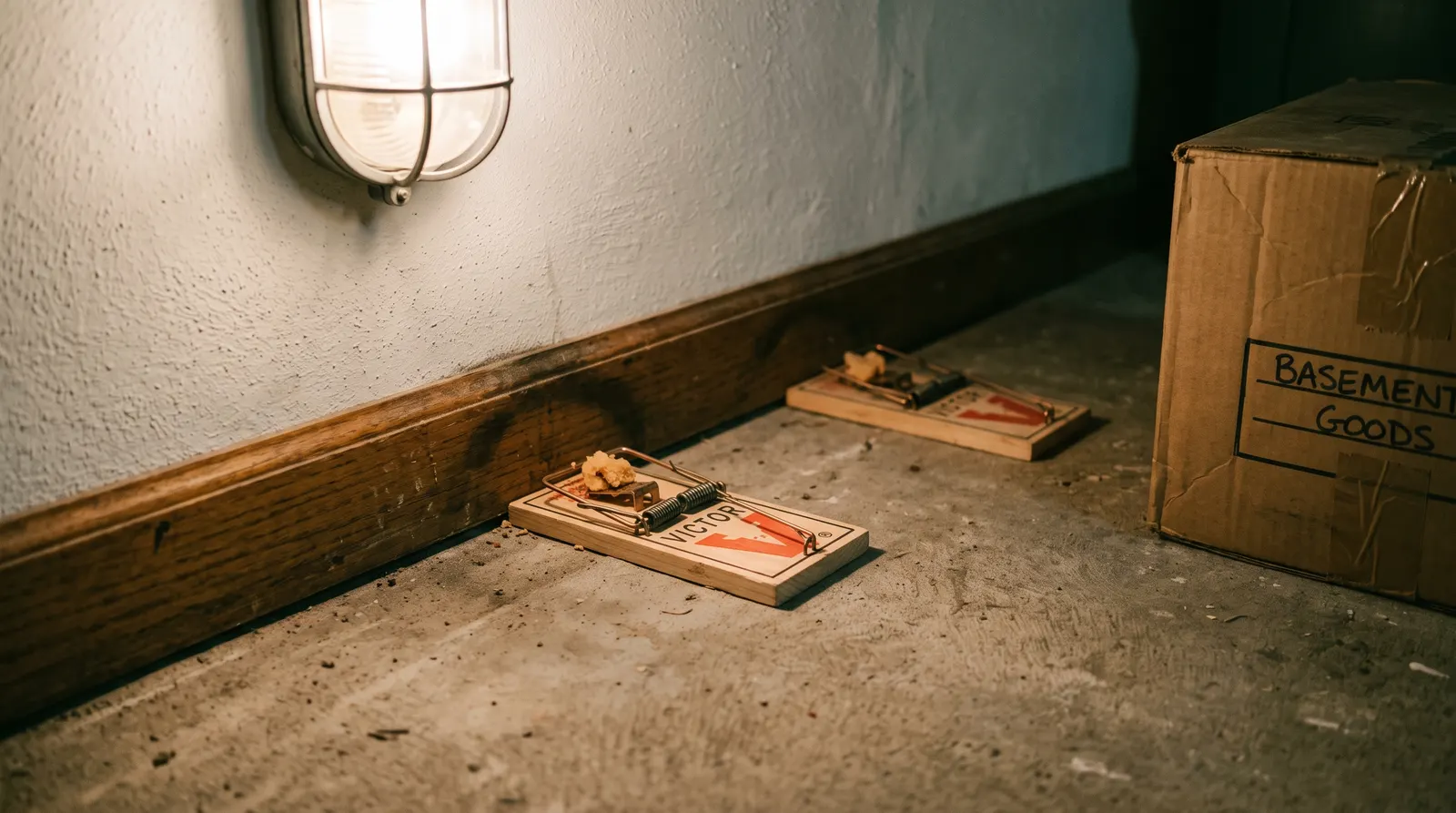
Snap trap set against a baseboard behind a kitchen appliance
“What is the 5 day rule for mice?”
Source A People Also Ask question on this SERP. It circulates widely and is not a CDC or extension standard, which is itself worth knowing before acting on it.

1 / 3

The gap between what gets asked and what gets answered is unusually wide here. The most searched questions are about traps, and the most consequential answer is about a bin bag and a spray bottle.

Know the line

Safe to do yourself, or call a technician?

Safe to check yourself

  • Setting snap traps in accessible rooms
  • Cleaning droppings using the CDC protocol
  • Sealing gaps you can reach with steel wool and caulk
  • Removing food sources and clutter harbourage
  • Fitting mesh over vents and weep holes

Call a pro now

  • Evidence inside a wall cavity or roof space
  • Nesting in insulation or ductwork
  • Catches continuing after two weeks of correct trapping
  • Any rodenticide use you are unsure about
  • Sealing work at height or under a floor

24/7 dispatch network

Get a licensed pest control technician

Tell us where you are seeing evidence and what you have already tried, plus your ZIP code. Licensed, insured technicians covering your area will contact you directly. No obligation to hire.

Fire, a gas smell, or an injury? Leave the building and call 911 first, then your gas utility or power company. Use this form once you are safe.

By submitting this request you agree that Emergency Services 24H and the licensed contractors in its network may contact you at the phone number and email you provided, including by automated dialing system, prerecorded message, or text. Consent is not a condition of purchase. Message and data rates may apply. You can opt out at any time. See our privacy policy and terms.

Free to submit. No obligation to hire.

Straight answers

Frequently asked questions

The questions homeowners actually search for on this problem, answered in plain language.

Browse all guides
Can I vacuum or sweep up mouse droppings?

No. CDC guidance is explicit that sweeping or vacuuming rodent urine, droppings or nesting material can aerosolise hantavirus. Ventilate the area for about an hour, spray with a disinfectant or bleach solution, let it soak, then wipe up with paper towels.

What bleach dilution should I use for rodent cleanup?

CDC gives 1.5 cups of household bleach per gallon of water, which is roughly one part bleach to nine parts water. Spray until the material is wet, leave it about five minutes to soak, then wipe up with paper towels and dispose of them sealed.

How many mice are in the house if I see one?

Assume more than one. Mice are nocturnal and avoid people, so a daytime sighting usually means enough pressure that they are foraging outside their normal pattern. Droppings, gnaw marks and trap catches map the population far better than sightings do.

What is the most effective trap for mice?

Multiple snap traps, set along walls with the trigger end against the wall, baited with a small smear rather than a blob. Mice run along edges rather than across open floor, and quantity matters more than any particular brand.

Where are they getting in?

Through gaps you would not think were gaps. A mouse passes through an opening the size of a dime, so utility penetrations, weep holes, garage door seals, vents and gaps under siding are the usual routes. Steel wool packed into the gap with caulk over it holds up better than caulk alone.

When should I call a professional?

When correct trapping has run for two weeks and catches are still coming, when there is evidence inside a wall cavity, roof space or crawl space, or when nesting has reached insulation or ductwork. Single visits commonly run $150 to $500 and two visit programmes around $300 to $400.

Gnawed gap around a pipe penetration where it passes through an exterior wall
Finding the entry point
Snap traps set perpendicular to a baseboard runway in a basement
Trap placement along a runway
Rodent control Inspection: $75 to $250, most often around $140. Trapping programme: $200 to $600, most often around $380. Exclusion and sealing: $200 to $1,500, most often around $650. Sanitation and droppings cleanup: $200 to $800, most often around $450. Attic insulation replacement: $1,500 to $6,000, most often around $3,000. Source: Aggregated 2026 US cost guides (HomeGuide, Angi, This Old House), cross-checked against UGC-reported prices. Rodent control $0 $1k $2k $3k $4k $5k $6k Inspection $75–$250 Trapping programme $200–$600 Exclusion and sealing $200–$1,500 Sanitation and droppings cleanup $200–$800 Attic insulation replacement $1,500–$6,000 Most commonly reported figure Source: Aggregated 2026 US cost guides (HomeGuide, Angi, This Old House), cross-checked against UGC-reported prices
Exclusion is the only permanent fix. Trapping without sealing entry points is a subscription, not a solution.

Sources for this page

Checked . If a figure here no longer matches its source, that is a bug, so tell us and we will correct it.

24/7 dispatch network

Get help from a licensed local contractor

Tell us what has failed and where you are. We route your request to licensed, insured contractors covering your ZIP code, and they contact you directly.

Fire, a gas smell, or an injury? Leave the building and call 911 first, then your gas utility or power company. Use this form once you are safe.

By submitting this request you agree that Emergency Services 24H and the licensed contractors in its network may contact you at the phone number and email you provided, including by automated dialing system, prerecorded message, or text. Consent is not a condition of purchase. Message and data rates may apply. You can opt out at any time. See our privacy policy and terms.

Free to submit. No obligation to hire.