Skip to content
Emergency Services 24H

Emergency Plumbing → Triage

What is a plumbing emergency? Three categories qualify, and everything else waits

Three categories qualify. Everything else is a next-morning job at roughly half the labor rate. Here is the test, the borderline cases settled, and what the wait actually saves you.

A plumbing emergency is a failure that keeps causing damage while you wait, and in the United States calling one out after hours costs 1.5 to 2 times the standard $100 to $200 hourly rate. Three categories qualify. Everything else is a morning job.

Competitors answer this question with a list of scary examples. A list does not help at 11pm with an unfamiliar noise coming from a wall. A test does.

The three-part test for a plumbing emergency

What is considered a plumbing emergency?

Uncontrolled water you cannot shut off, contamination from sewage entering the home, or any leak reaching wiring, outlets or the panel. If your situation is none of those three, it is a next-morning job and waiting costs you nothing but discomfort.

  • Uncontrolled water. A split supply line, a failed washing-machine hose, a cistern that will not stop filling, or a shut-off valve that will not close.
  • Contamination. Sewage or grey water coming up through toilets, tubs, showers or floor drains. This is a health hazard, not a mess.
  • Water meeting power or gas. A leak above a panel or outlets, a soaked appliance, or a gas water heater that is leaking or venting badly.

Why “how bad it looks” is the wrong test

The instinct is to judge by drama. Drama is a poor predictor of cost. A hairline split spraying into a wall cavity produces no visible puddle and can destroy a ceiling overnight.

A toilet that overflows spectacularly across a tiled floor and then stops is a mop and twenty minutes. The difference is not volume in the moment, it is whether the water is still arriving and where it is going.

Two questions sort almost every case. Is water still entering the building envelope? Is it landing on something absorbent, structural or electrical? Two noes means it waits.

One exception to the “it can wait” rule

Anything you cannot locate counts as still running. If you can hear water and cannot find it, or the meter is turning with every tap closed, treat it as active regardless of how little you can see. An unlocated leak is by definition leaking somewhere you are not looking.
Know the line

The borderline cases, settled

Safe to check yourself

  • One blocked toilet, second bathroom available, nothing overflowing: morning
  • No hot water in mild weather, no leak, no smell: morning
  • A slow drain that still drains: morning
  • A dripping tap or a weeping shut-off valve: morning
  • A small ceiling stain that is not growing while you watch: morning

Call a pro now

  • Water rising after the supply valve is closed: tonight
  • Several drains backing up at once, or waste in tubs and showers: tonight
  • A water heater leaking, hissing, or smelling of gas: tonight
  • A ceiling stain that is spreading, sagging or dripping: tonight
  • Any leak above outlets, appliances or the electrical panel: tonight

The no-hot-water case deserves a note because it generates a large share of after-hours calls. A cold shower is not dangerous.

A water heater that is leaking, rumbling like a kettle, or producing a sulphur smell is a different problem. The smell in particular is a gas utility call, not a plumbing one.

The single-blocked-toilet case is the other one. It is only urgent when the water keeps rising after you have closed the toilet's own shut-off valve, or when other fixtures back up at the same time. That combination points at the sewer line.

The plumbing emergency test Stop. Call 911 first: Water meeting electricity anywhere; Sewage in a living space; A gas smell at any appliance; Scalding water that will not shut off. Contractor tonight: Uncontrolled water you cannot isolate; No water to the entire property; The only toilet out of service; No hot water in freezing conditions. Can wait for an appointment: Drips, weeps and slow drains; A single fixture out of service; Cosmetic damage after the water is stopped; Anything you have already isolated at a stop The plumbing emergency test Stop. Call 911 first Leave the building Water meeting electricity anywhere Sewage in a living space A gas smell at any appliance Scalding water that will not shutoff Contractor tonight Damage is compounding Uncontrolled water you cannotisolate No water to the entire property The only toilet out of service No hot water in freezingconditions Can wait for an appointment Book in normal hours Drips, weeps and slow drains A single fixture out of service Cosmetic damage after the water isstopped Anything you have already isolatedat a stop When in doubt, treat it as the more serious lane. A false alarm costs nothing.
Two questions decide it: can you stop it, and is it getting worse? If the answer is yes and no, it is a Tuesday job.

What waiting until morning actually saves

Indicative US ranges. Always get a written quote.

Job Typical range
Standard labor, weekday hours $100–$200 / hr
Emergency / after-hours labor up to $350 / hr
After-hours multiplier 1.5×–2×
Trip fee $75–$500
Typical saving by waiting $150–$400
Water damage cleanup if it keeps running $1,000–$2,000+

Source: HomeGuide 2026 emergency plumber cost guide; Angi 2026 emergency plumber cost data (retrieved August 2026). Figures vary by region, severity and after-hours timing.

Figures last checked

The saving is real but conditional. It only exists if the water has genuinely stopped, because a leak that runs all night converts a few hundred dollars of premium labor into a cleanup bill that starts around $1,000. Full detail on what an emergency plumber charges after hours sits on its own page, including whether the trip fee is credited.

When it is a 911 call, a gas call, or a water-company call

Can you call 911 for a plumbing emergency?

Only when a life is at risk: an injury, a gas smell, a structure failing, or water touching live electrics. Water alone is not a 911 call. Gas goes to the utility from outside the building, and a street-side break goes to your water company.

Four numbers cover four different failures, and dialling the wrong one costs the hour that matters most.

  • 911: someone injured or trapped, a ceiling or floor sagging under water weight, fire or smoke, or a person who has contacted energised water.
  • Gas utility emergency line: any sulphur or rotten-egg smell near a water heater or boiler. Leave first, call from outside, and switch nothing on or off.
  • Water utility: no water across the whole street, a geyser at the kerb, or a leak on the street side of your meter, which is their asset and their bill.
  • Licensed plumber: everything inside your property line that is still leaking, backing up or venting.

Carbon monoxide is the risk that hides behind a plumbing problem. A gas water heater that is back-drafting can put CO into the house while the water holds your attention, which is why the CPSC treats a working CO alarm as basic equipment wherever fuel-burning appliances are installed.

What to do in the hours before the plumber arrives

Whether you called tonight or booked the morning, the waiting period is where the damage total is decided. Four actions, in order.

  1. Drain the system. With the main closed, open the lowest tap in the house and an outside spigot. That clears the water still standing above the break.
  2. Lift and move. Get contents, rugs and furniture legs off wet flooring. Foam blocks or foil under furniture feet stops stain transfer.
  3. Move air. Fans across wet materials and a dehumidifier if you have one. The EPA drying window is 24 to 48 hours, and it starts when the material gets wet, not when you notice.
  4. Photograph, then extract. Wide shots, then close shots, then start removing standing water. Keep any failed component.

The one thing not to do is attempt the repair. Licensed-plumber guidance published by Progressive is explicit that a homeowner should not try to fix a burst pipe, because the usual result is more damage.

If you have not found the shut-off yet, our guide to find and close the main shut-off valve covers every valve type including the seized ones.

The damage clock that makes waiting expensive

Mold is the reason plumbing urgency is measured in hours rather than days. The EPA puts the window before growth can begin in wet building materials at 24 to 48 hours.

That clock does not care whether you have called anyone. It starts when the drywall, carpet or insulation gets wet, which is why extraction and airflow matter more overnight than the plumber's arrival time does.

24/7 dispatch network

Get a licensed plumber moving on this

Describe what has failed and give us your ZIP code. Licensed, insured plumbers covering your area will contact you directly, whether you need someone tonight or the first slot tomorrow. No obligation to hire.

Fire, a gas smell, or an injury? Leave the building and call 911 first, then your gas utility or power company. Use this form once you are safe.

By submitting this request you agree that Emergency Services 24H and the licensed contractors in its network may contact you at the phone number and email you provided, including by automated dialing system, prerecorded message, or text. Consent is not a condition of purchase. Message and data rates may apply. You can opt out at any time. See our privacy policy and terms.

Free to submit. No obligation to hire.

What homeowners actually ask

What people actually call out at 2am

Drawn from real public forum threads and reported prices, summarised and attributed as patterns. These are not reviews of this site, and no names or ratings have been invented.

Homeowner closing a lever-handle water shut-off valve in a basement
“Toilet overflowing, do not think it is due to a clog”
Source Thread title, r/Plumbing. A recurring pattern: people call out-of-hours for overflows that stop the moment the supply valve is closed.

1 / 4

Read enough public threads and a pattern appears: most out-of-hours calls are triggered by not knowing whether the situation is serious, not by the situation being serious. The categories above exist to remove that uncertainty before it costs you the multiplier.

How the matching works, and what we do not do

Emergency Services 24H is a referral service. We do not employ plumbers and we do not perform the work, so we have no incentive to tell you this is an emergency when it is not.

Requests route by ZIP code to licensed, insured contractors covering your area, and they contact you directly to quote and schedule. If the honest answer is "book it for the morning", that is what this page says, and the form will still be here in the morning.

Straight answers

Frequently asked questions

The questions homeowners actually search for on this problem, answered in plain language.

Browse all guides
What is considered a plumbing emergency?

Water you cannot stop, sewage entering the home, or a leak reaching wiring or the electrical panel. Those three need someone within hours. A dripping tap, a slow drain or one blocked toilet in a home with another bathroom can wait for normal hours and saves you the after-hours premium.

Is no hot water a plumbing emergency?

Usually not, unless the water heater is leaking, hissing, or you can smell gas near it. Cold showers are miserable rather than dangerous. A gas water heater that smells of sulphur or is venting badly is a different matter and goes to your gas utility, not to a morning appointment.

Is one blocked toilet an emergency?

Not if you have another working bathroom and nothing is overflowing. It becomes urgent when water keeps rising after the supply is off, when several drains back up at once, or when waste appears in tubs and showers, because that pattern points at the sewer line rather than the toilet.

Can you call 911 for a plumbing emergency?

Only when a life is at risk: someone injured, a gas smell, a structure failing under water weight, or water in contact with live electrics. Water alone is not a 911 call. Gas goes to the utility emergency line from outside the building, and a street-side main break goes to your water company.

How much do plumbers charge for emergencies?

Standard labor runs about $100 to $200 an hour and after-hours work typically runs 1.5 to 2 times that, reaching around $350 an hour. A separate trip fee of roughly $75 to $500 applies either way, so waiting until morning usually saves $150 to $400 on a two-hour job.

What should I do while waiting for the plumber?

Keep the main valve closed, open the lowest tap to drain the remaining pressure, and move contents clear of the wet area. Photograph everything before you mop, then get air moving over the wet materials. Do not attempt the pipe repair, which is the step that reliably makes the bill larger.

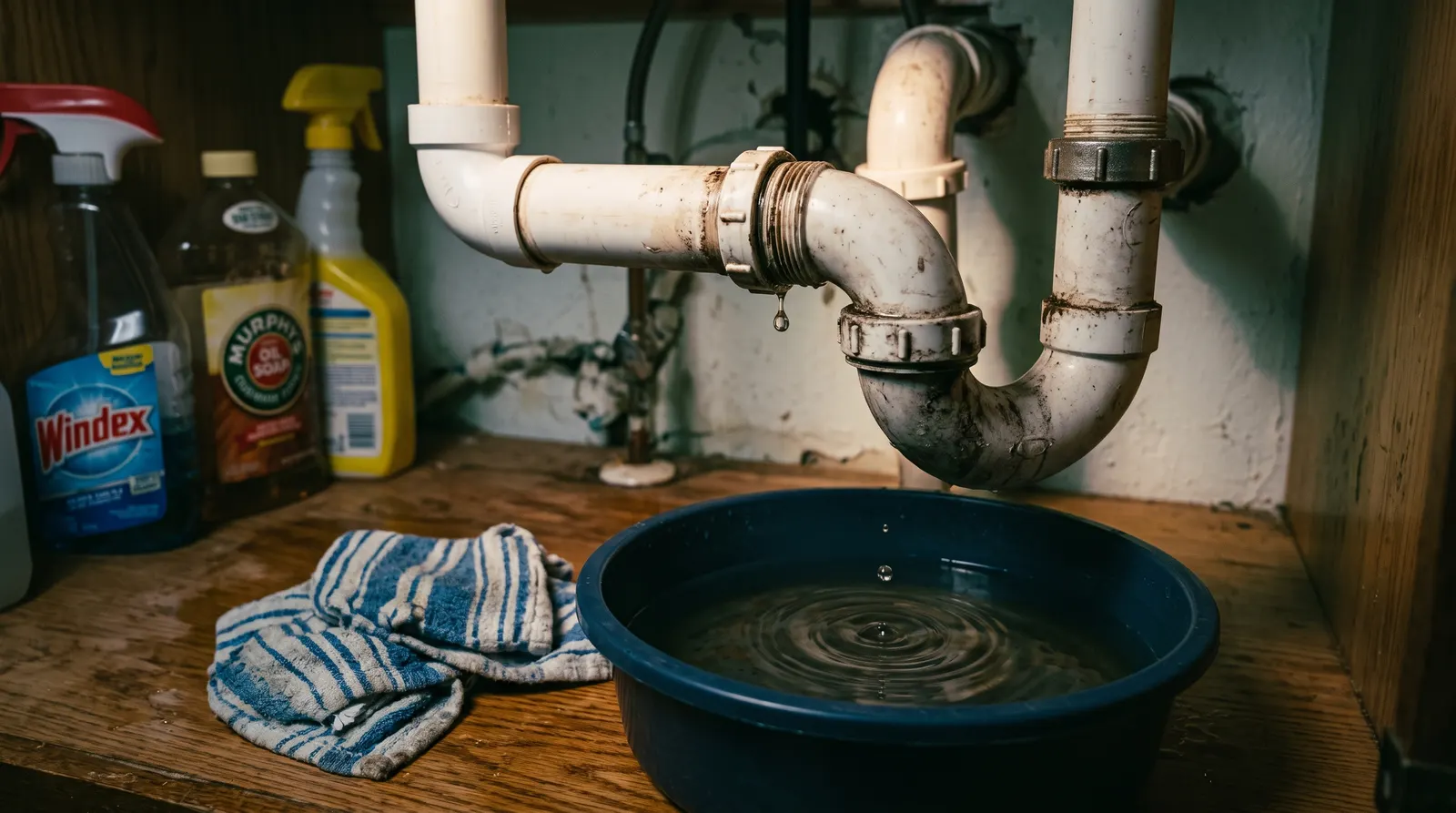
Slow drip from a P-trap joint caught in a bucket under a sink
A drip you can manage versus a flow you cannot
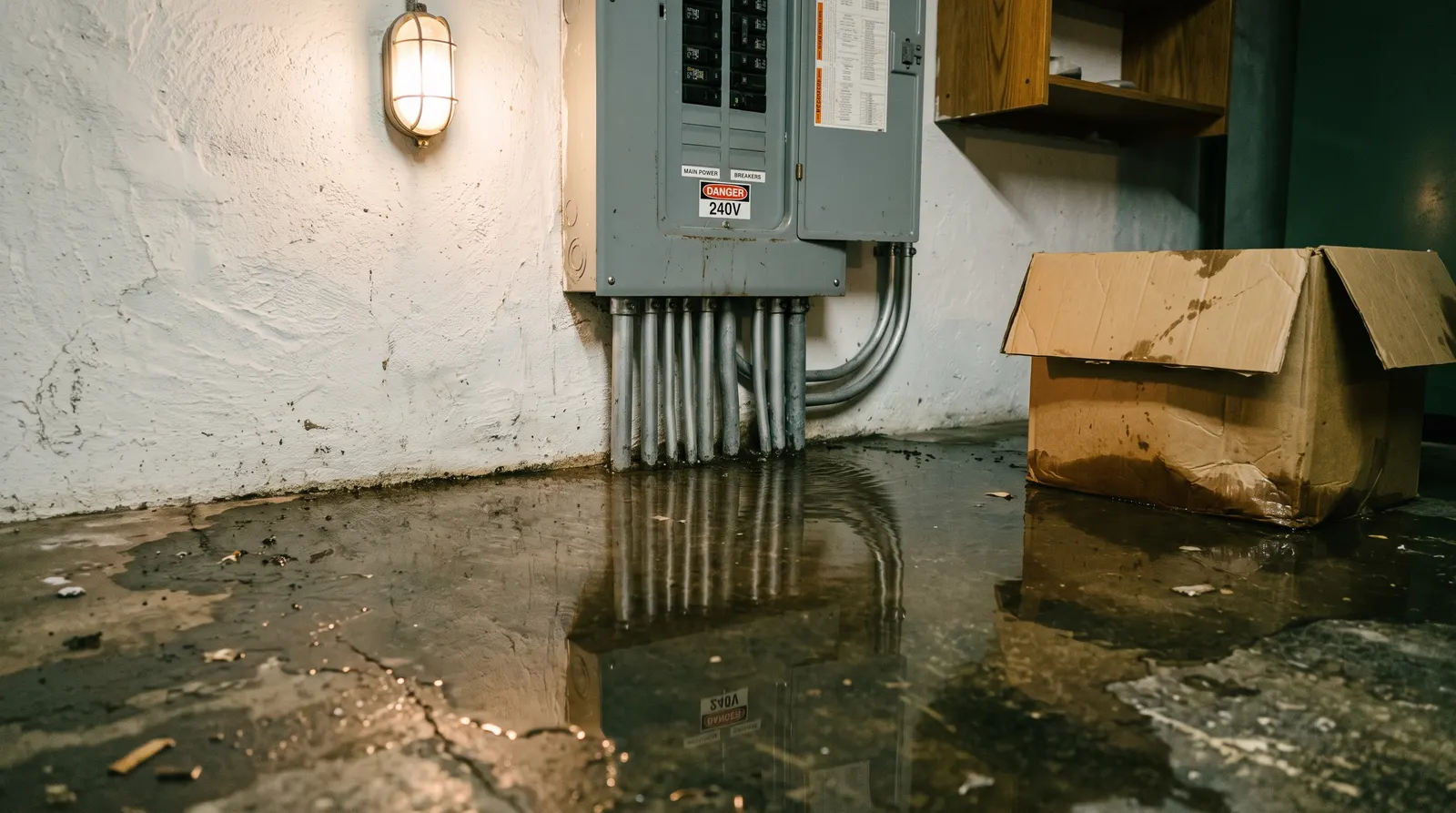
Standing water spreading across a basement floor toward the base of an electrical panel
When water reaches electrics
Emergency premium versus scheduled rates Scheduled daytime call-out: $75 to $200, most often around $125. Evening or weekend call-out: $150 to $400, most often around $250. Overnight or holiday call-out: $250 to $650, most often around $400. Typical hourly labor rate: $45 to $200, most often around $100. Source: Aggregated 2026 US cost guides (HomeGuide, Angi, This Old House), cross-checked against UGC-reported prices. Emergency premium versus scheduled rates The same repair, priced at after-hours and at daytime rates. $0 $200 $400 $600 $800 Scheduled daytime call-out $75–$200 Evening or weekend call-out $150–$400 Overnight or holiday call-out $250–$650 Typical hourly labor rate $45–$200 Most commonly reported figure Source: Aggregated 2026 US cost guides (HomeGuide, Angi, This Old House), cross-checked against UGC-reported prices
The premium is real and it is the whole reason this triage matters. Waiting until morning on a contained problem routinely halves the bill.

Sources for this page

Checked . If a figure here no longer matches its source, that is a bug, so tell us and we will correct it.

24/7 dispatch network

Get help from a licensed local contractor

Tell us what has failed and where you are. We route your request to licensed, insured contractors covering your ZIP code, and they contact you directly.

Fire, a gas smell, or an injury? Leave the building and call 911 first, then your gas utility or power company. Use this form once you are safe.

By submitting this request you agree that Emergency Services 24H and the licensed contractors in its network may contact you at the phone number and email you provided, including by automated dialing system, prerecorded message, or text. Consent is not a condition of purchase. Message and data rates may apply. You can opt out at any time. See our privacy policy and terms.

Free to submit. No obligation to hire.