Emergency Plumbing
Plumbing Emergency? What to Do First
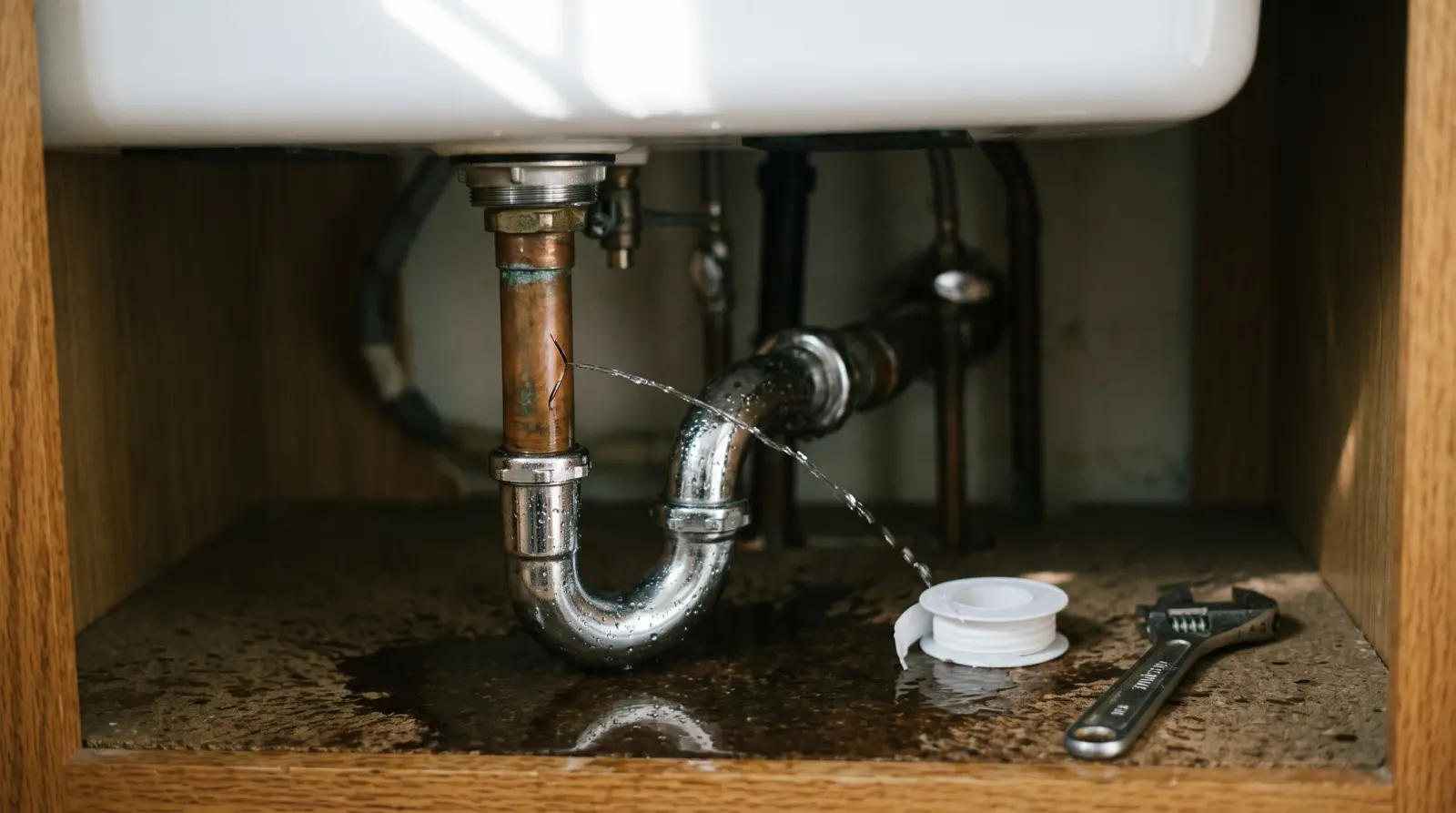
Expect a $75 to $500 call-out fee plus $100 to $200 an hour, rising 1.5 to 2 times after hours to around $350. A plumbing emergency is water you cannot stop, sewage indoors, or a leak reaching wiring. Close the main valve, then call.
24/7 dispatch network
Request a licensed contractor now
Fire, a gas smell, or an injury? Leave the building and call 911 first, then your gas utility or power company. Use this form once you are safe.
The stakes, in real numbers
Why the first ten minutes matter
Every figure is sourced
- 51,000
- home electrical fires a year in the US
- 48h
- window before mold can start after water damage
- 200+
- US deaths a year from consumer-product carbon monoxide
- $25,000
- damage from just one inch of flood water
Source: ESFI
Source: EPA
Source: CPSC
Source: NFIP
It is any water or gas-appliance failure still doing damage while you decide. In the United States it costs $100 to $200 an hour in daylight, up to $350 after 6pm.
Shutting off the water supply is free and takes ninety seconds. Everything after is a pricing decision.
This page does what the ranking plumbing service pages skip: how to stop the water, and the rates to judge a quote by.
What counts as a plumbing emergency
What counts as one, and what can wait?
Water you cannot stop, sewage entering the home, or a leak reaching wiring. Those need someone within hours. A drip in a two-bathroom house waits until morning.
The test is whether it is still causing loss while you sleep. A cracked line in a wall cavity is an emergency; a stopped overflow on tile is not.
That is why the most common plumbing issue reported to 24 hour plumbing services, a blocked drain, rarely is one.
Three categories qualify, the ones an after-hours plumber accepts as urgent:
- Uncontrolled water: a burst pipe, a failed supply hose, a tank that will not stop filling.
- Contamination: sewage or grey water backing up through toilets or floor drains, a health hazard rather than a mess.
- Water meeting electricity or gas: a leak above a panel, or a water heater venting badly.
If none fit, it is a next-morning job. Our quick triage of what counts as an emergency walks the borderline cases.
In this guide
Everything in the emergency-plumbing guide
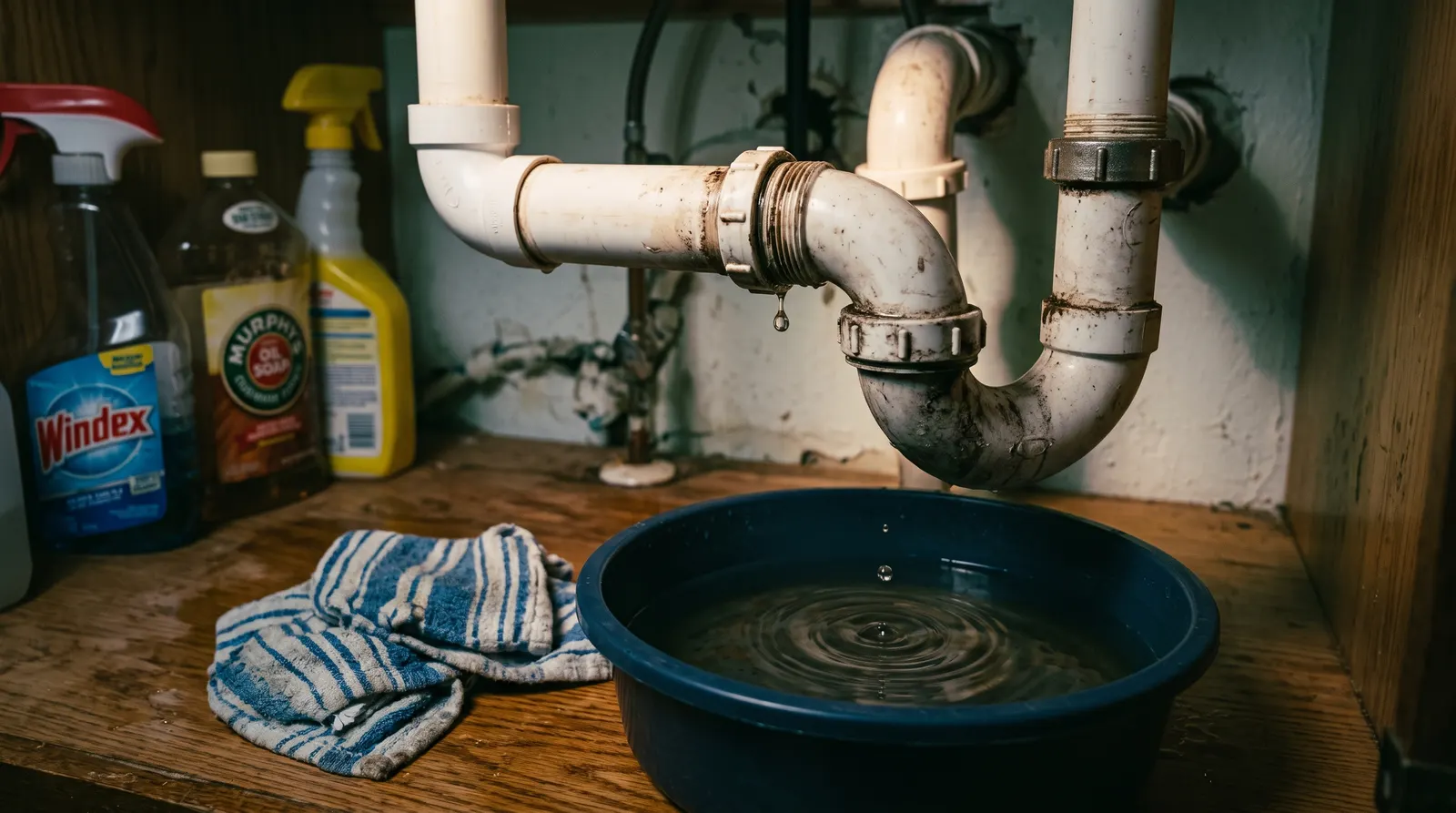
What counts as a plumbing emergency
Where “call now” ends and “wait to morning” begins.
How much an emergency plumber costs
Service-call fees, hourly rates and the after-hours premium.
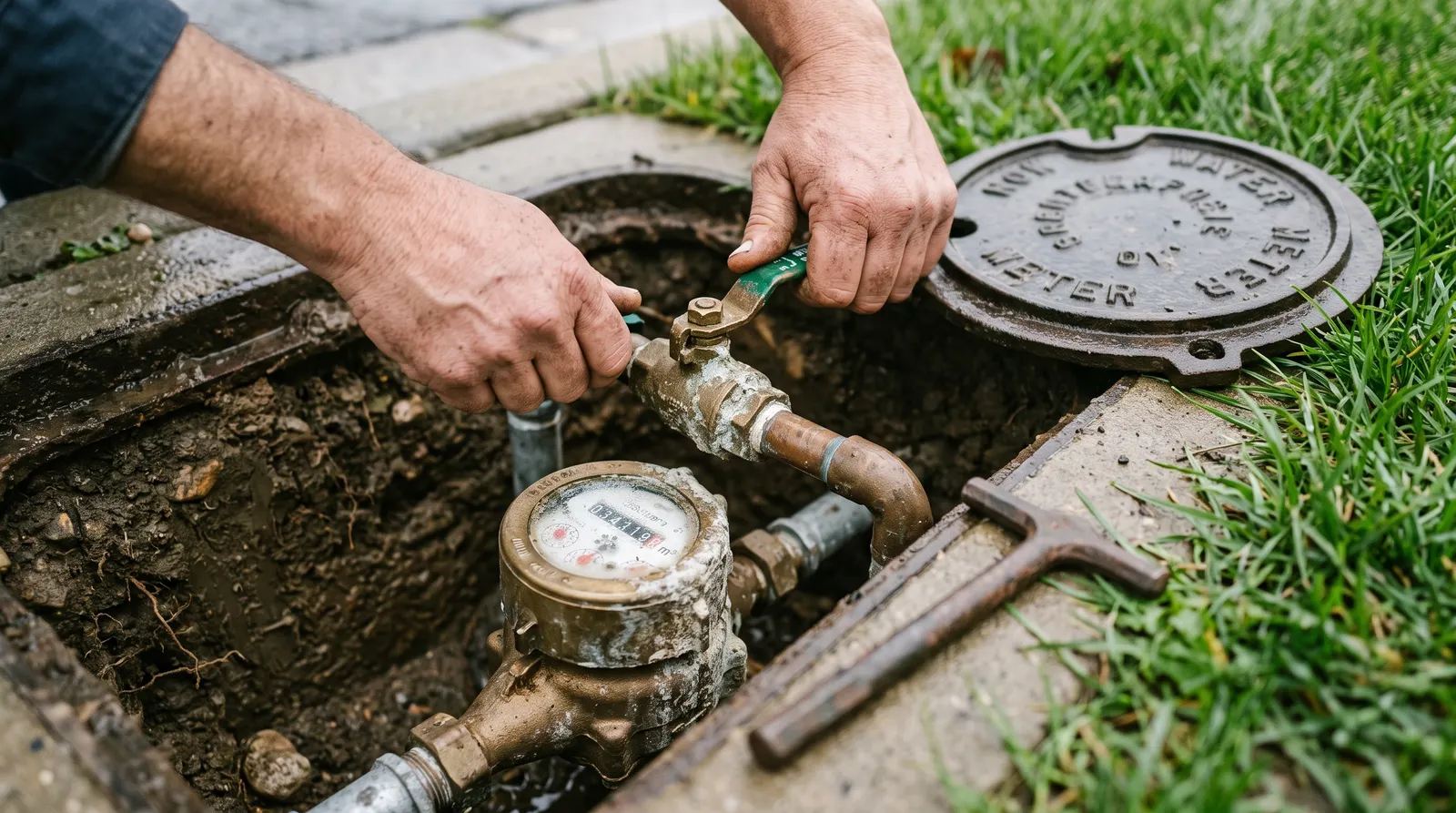
Burst pipe: do these things right now
The safe order for a pipe that has let go: water, power, who to call.
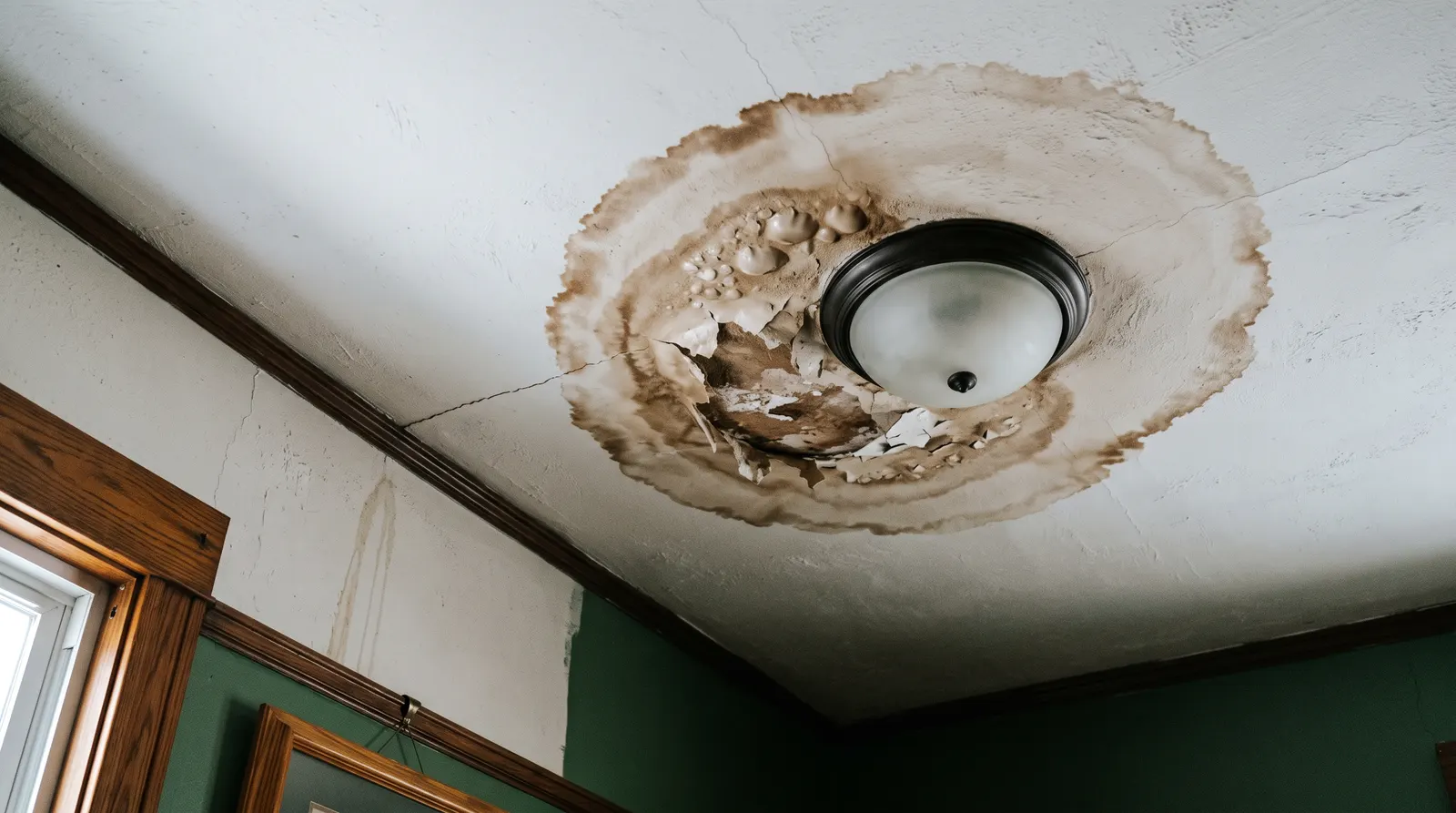
How to tell if a pipe burst in your wall
Hidden-leak signs: sounds, stains and the water-meter test.
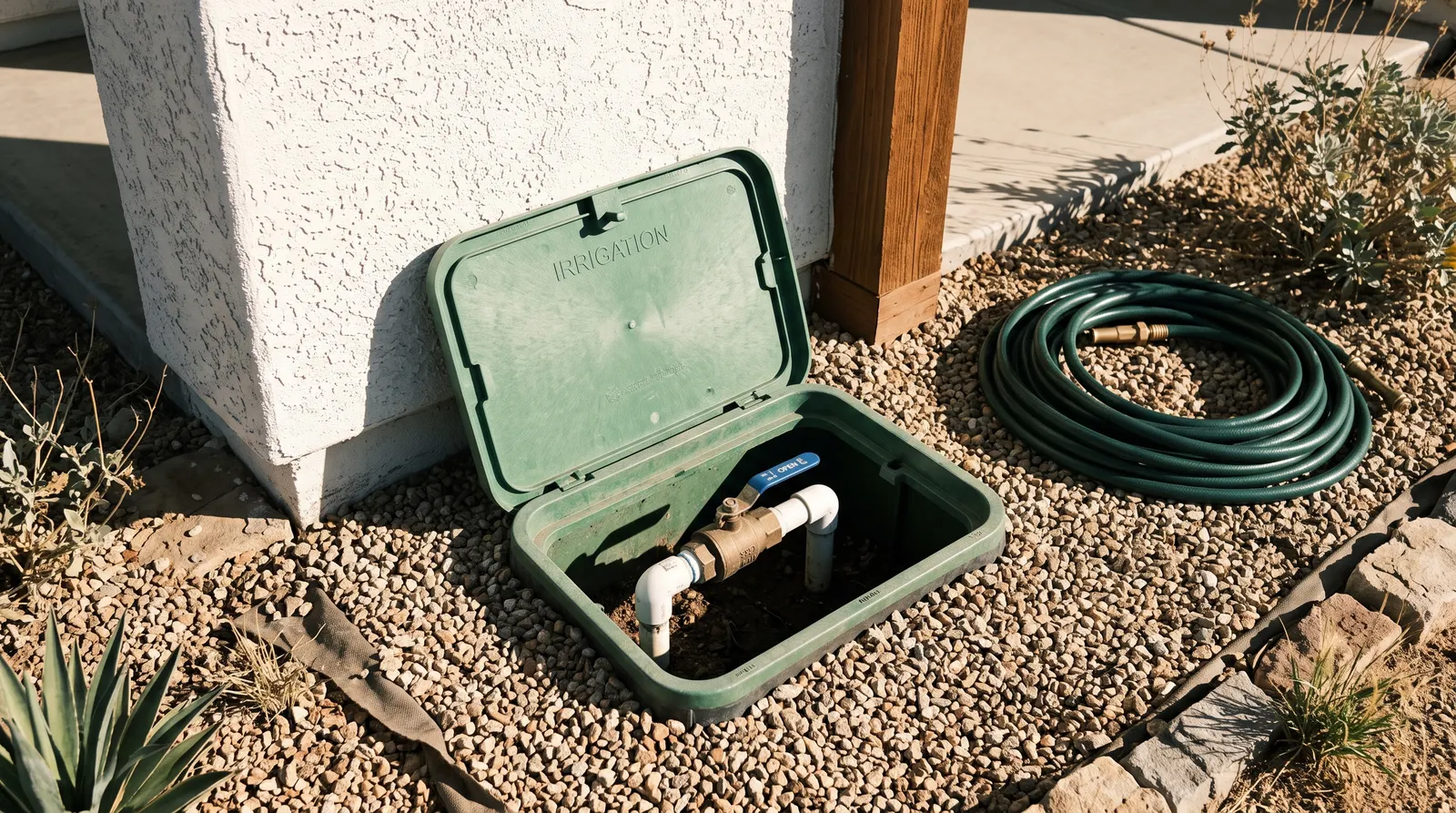
How to find and shut off your main water valve
Where the shut-off is, and how each valve type closes.
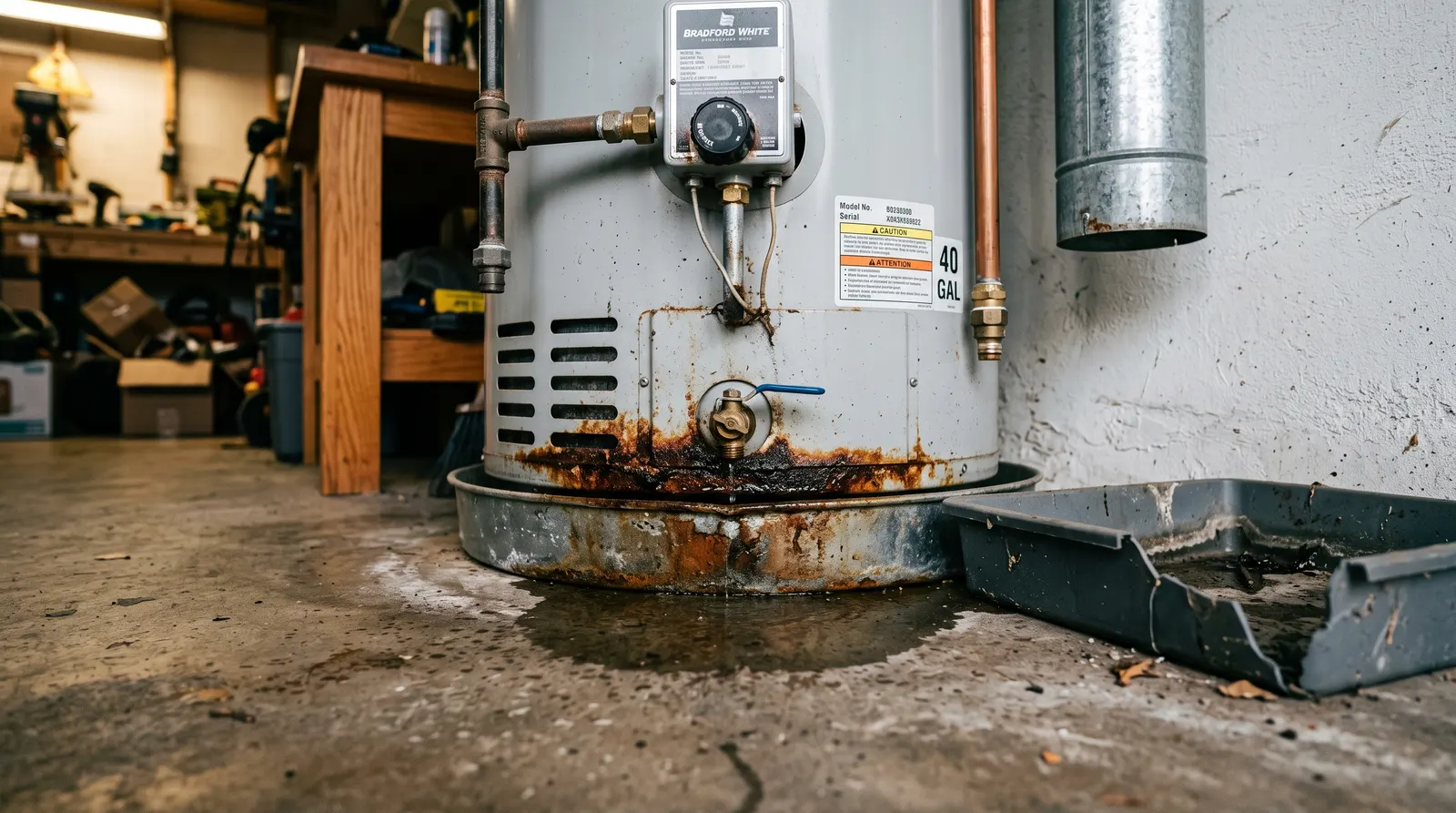
Water heater leaking from the bottom
What the leak means, and how to make it safe.
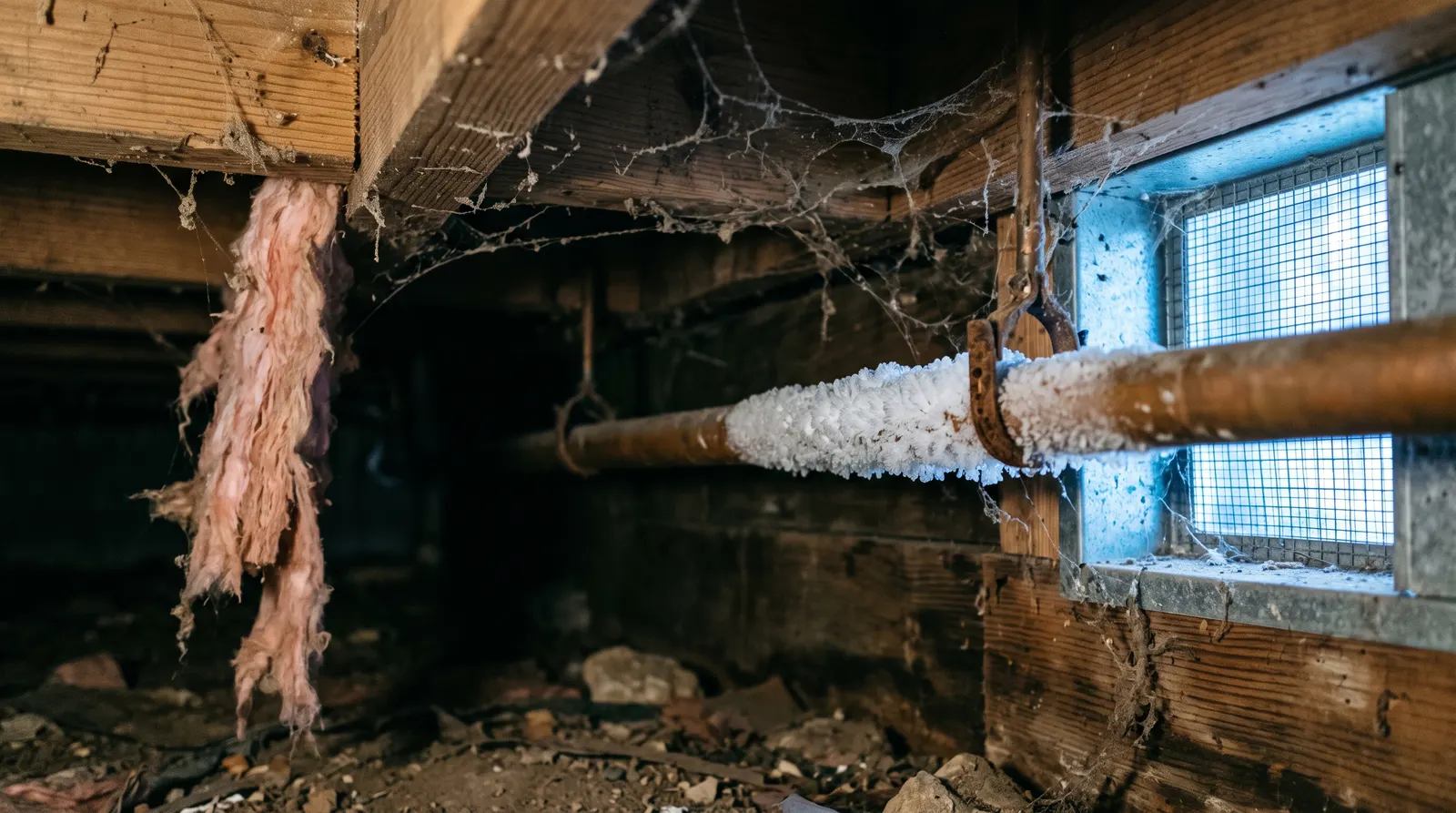
Frozen pipes: prevent, thaw and handle a burst
Red Cross prevention and thawing guidance.
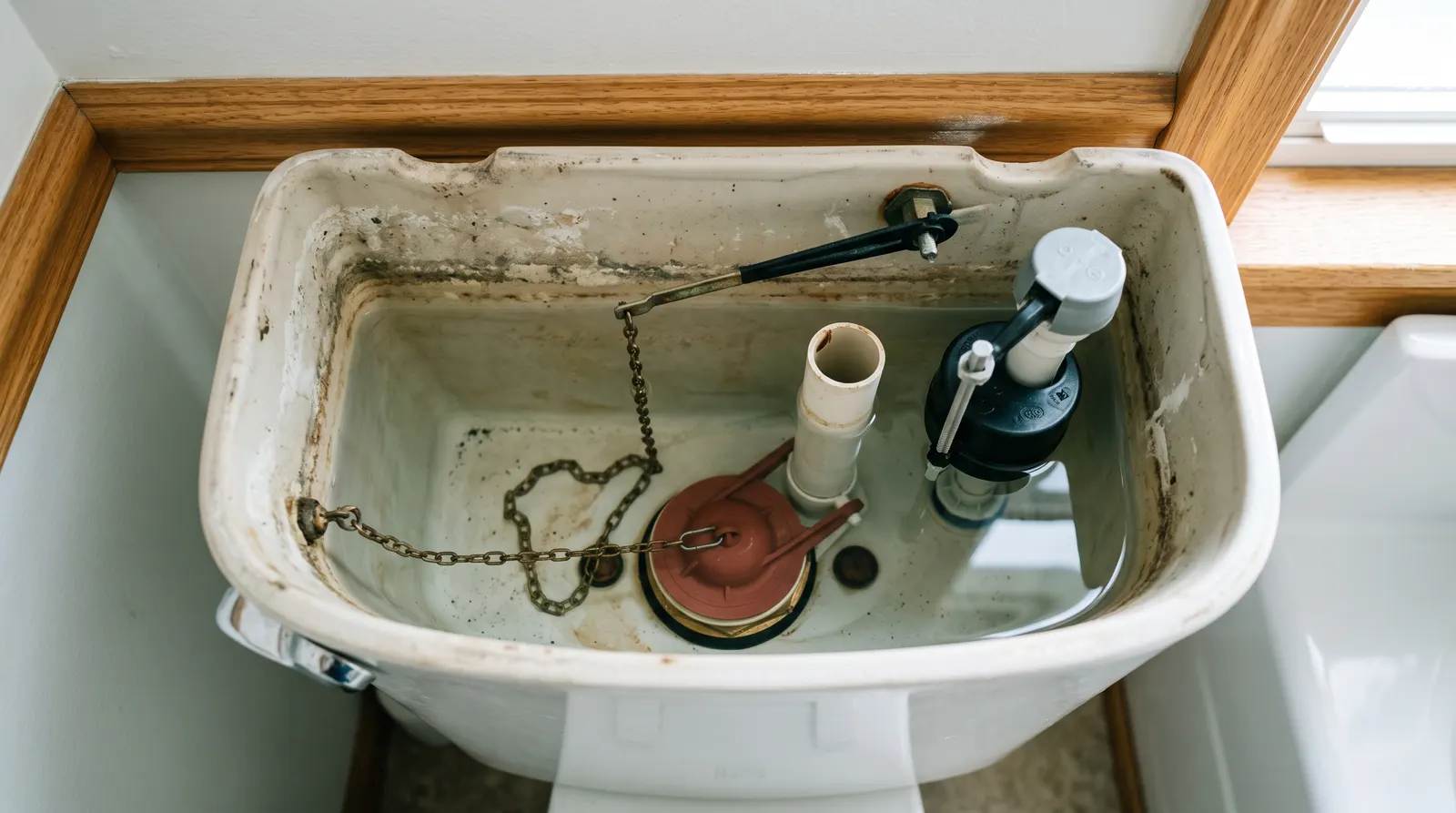
Toilet overflowing: how to stop it fast
Stop the rising bowl, then tell a clog from a backup.
“Waiting until your house is flooding to try to figure out where to shut the water off, that can be an expensive problem.”
The first five minutes
The shut-off sequence, in the order that matters
- 01
Close the main valve
Turn the main shut-off clockwise until it stops. On a lever ball valve, a quarter turn is closed.
- 02
Open the lowest tap
A basement faucet plus an outside spigot drains the pipes above and drops the pressure.
- 03
Check for water near power
If water is near outlets or the panel, cut that circuit from a dry position.
- 04
Photograph, then call
Shoot wide and close before you mop, and call with the valve already closed.
Order matters more than speed: closing the valve without draining leaves gallons of pressurised water above the break. A low tap ends that.
Do not attempt the repair itself
Progressive’s licensed-plumber guidance is blunt: do not attempt to repair a burst pipe yourself, because it usually leads to more damage. Tape on a live line buys minutes.
Where the main shut-off valve is, and how each type closes
The valve is where the supply enters: in a basement, on the wall facing the street near the meter; in slab-built homes, the garage or outside by the hose bib.
A second stop sits outside in a ground box near the kerb, and it belongs to the water utility, so a leak street-side of the meter is their bill. Master plumber Roger Wakefield adds that the box is offset to one side.
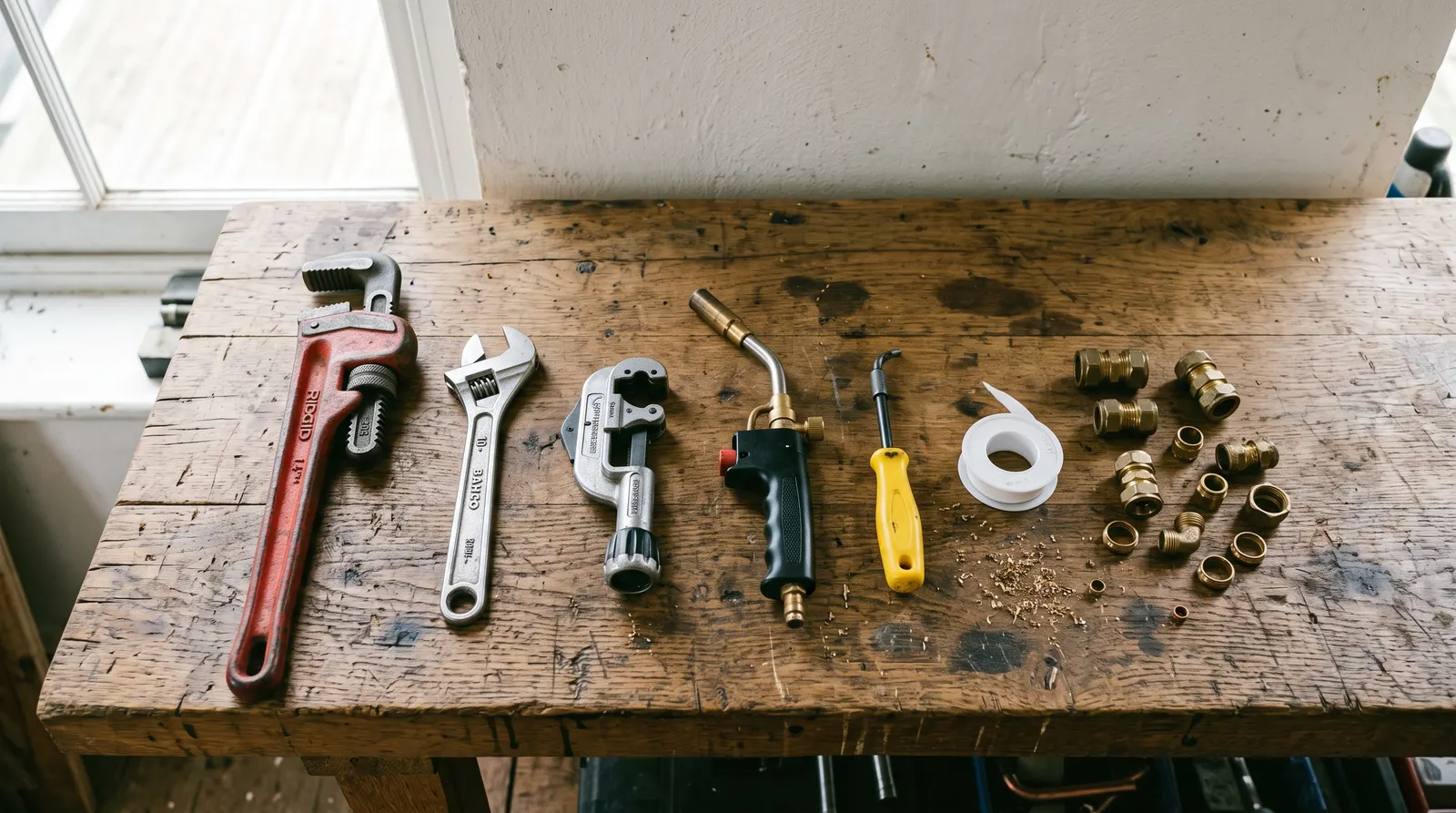
Two cheap tools make it usable, and Wakefield says buy them first: a meter key for the lid and side-mounted valves, and a meter wrench that drops over the valve.
The technicians at Service Stars, a licensed Connecticut contractor, add two rules: label the valve and keep the path clear, and on a valve that may not survive turning, do not touch it.
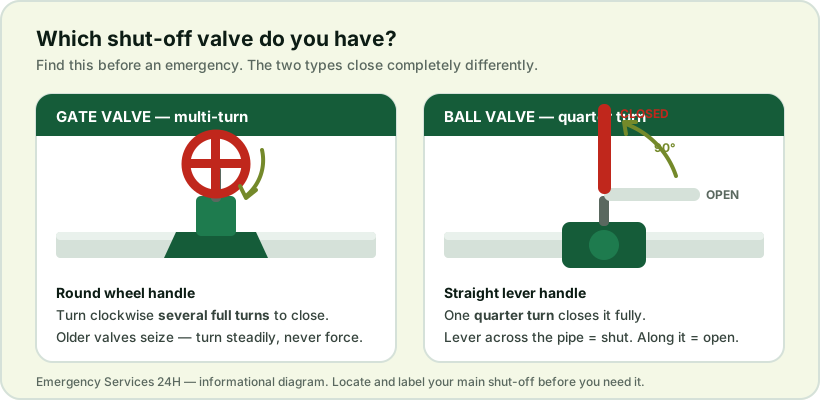
Gate valves are the round wheel handles on older homes: several turns, and most likely to seize. Ball valves close in a quarter turn.
If the handle will not move, stop before you break it: a snapped gate valve on a live main turns a contained leak into an open one. Our main shut-off valve walkthrough covers seized handles.
What an emergency plumber actually costs
Indicative US ranges. Always get a written quote.
| Job | Typical range | Notes |
|---|---|---|
| Service-call / trip fee | $75–$500 | Charged just to come out and diagnose |
| Standard labor | $100–$200 / hr | Normal business hours |
| Emergency / after-hours labor | up to $350 / hr | Nights, weekends and holidays |
| After-hours premium | 1.5×–2× the rate | Typical multiplier on the base hourly rate |
| Burst pipe repair, accessible | $150–$2,000 | Reported average around $500 |
| Burst pipe under slab or concrete | $500–$4,000+ | Access work dominates the bill |
| Water damage cleanup, if it flooded | $1,000–$2,000+ | Separate from the plumbing repair |
The trip fee and the labor are separate lines, so the emergency plumber visit cost is never just the hour that follows.
The second is the multiplier: the same work at 1.5 to 2 times the rate once the office is shut. Our breakdown of emergency plumber pricing takes each line apart.
Is the after-hours premium worth paying, or can it wait?
Should I pay the emergency rate or wait until morning?
If the water is stopped and nothing is soaking in, wait and pay the day rate. If it runs into a ceiling or an electrical space, call now. The damage outruns the labor bill within hours.
The arithmetic is one-sided: a few hundred dollars of premium labor against a $1,000 to $2,000 cleanup and the EPA’s 24 to 48 hour clock.
Three situations are call-now at any hour: sewage in the living space, water at electrical equipment, and a leak you cannot locate.
The premium is not invented at the door. The licensed California contractor Anytime Plumbing states it plainly: some plumbers charge up to twice their normal rate after hours. Richard Behney, a former plumbing-company owner, adds a freeze event fee that is not waived.
If the water is off and you are dry, go to bed and call at eight. That costs us a lead and is still right, as in the whole home emergency guide.
24/7 dispatch network
Get a licensed plumber moving on this
Tell us what has failed and where you are. The request goes to licensed, insured plumbers nearby. Submitting is free.
Fire, a gas smell, or an injury? Leave the building and call 911 first, then your gas utility or power company. Use this form once you are safe.
Know the line
Safe to check yourself, or call a pro now?
Safe to check yourself
- Closing the main valve and draining from a low tap
- Cutting power to a wet area from a dry position
- Plunging one clogged toilet with a flange plunger
- Photographing the damage before you clean up
- Extracting standing water and moving air over it
Call a pro now
- A burst pipe you cannot stop: do not attempt the repair
- Sewage backing up into tubs, drains or the basement
- A leaking or badly venting water heater, especially gas
- Water at the electrical panel, or a soaked appliance
- No water in the house, or a suspected supply-line break
When it is a 911 call, a gas call, or a water-company call
Can you call 911 for a burst pipe?
Only when a life is at risk: an injury, a gas smell, a failing structure, or water touching live electrics. Gas goes to the utility from outside the building, and a street-side break goes to your water company.
The search results never answer this. Four numbers cover four failures, and the wrong one costs the hour that matters.
- 911: someone injured or trapped, a ceiling sagging under water weight, or a person who has contacted energised water.
- Gas utility emergency line: any rotten-egg smell near a water heater. Leave first, call from outside, and switch nothing on or off.
- Water utility: no water across the street, a geyser at the kerb, or a leak street-side of your meter.
- Licensed plumber: everything inside your property line still leaking, backing up or venting.
Carbon monoxide gets missed. A back-drafting gas water heater puts CO into the house while the leak holds your attention, which is why the CPSC treats a CO alarm as basic kit.
Water near electricity: the one move to make first
Do not stand in water to reach a breaker panel. That is worth more than everything else here.
If you can reach the panel from a dry floor with dry hands, kill that circuit. If not, ask your power company to cut supply at the meter, free in an emergency.
Soaked appliances stay off
An appliance rained on from above does not go back on because it looks dry: water tracks into control boards and stays. Have it checked first, and treat a tingle from any metal fixture as a call to the power company.
What “we will be there within two hours” actually means
Every emergency plumbing page promises a response window and none define it. The clock starts at dispatch acknowledgement, and a storm-night queue runs on severity.
Three questions convert it into a plan: the arrival window rather than the dispatch time, whether you get a call ahead, and what happens to the trip fee.
"Water is running and I cannot stop it" is a different job from "it is stopped but the ceiling is wet".
Document it now, argue with the insurer later
Photograph before you mop: the room, the failed part, the wet materials.
Keep the failed part. A split pipe is evidence of sudden failure, and sudden accidental discharge is what a policy responds to.
Log when you found it and closed the valve, because mitigation timing matters to adjusters. If water reached flooring, the water damage side covers drying and costs.
What homeowners actually ask
What homeowners actually report paying
Drawn from real public forum threads and reported prices, summarized and attributed as patterns. These are not reviews of this site, and no names or ratings have been invented.
“Burst pipe fixing cost $350. Is that reasonable?”
“Pipes froze and burst, plumber fixed it, now what?”
“What do you think is a reasonable price for this?”
“Main line repair: about $225 if you dig the hole”
1 / 4
Five questions to ask before you agree to the call-out
An emergency is the worst negotiating position, so use a script:
- What is the trip or service fee, and is it credited against the repair? Expect $75 to $500. Credited is common, not universal.
- What is the hourly rate right now? You want a number, not "our standard emergency rate".
- Is there a minimum charge? Two-hour minimums are common at night and change the maths.
- What is your state license number, and are you insured? Both are checkable; hesitation is the answer.
- Will I get a written quote before work starts? Diagnosis first, price second, work third.
How the matching works, and what we do not do
Emergency Services 24H is a referral service and does not employ plumbers. Your request goes to licensed, insured contractors nearby, who contact you directly.
The price is settled between you and the contractor. More on who runs this site.
The upsell is what gives you the right to cancel back
California draws a line here. A small repair you called for is its own contract class with no cancellation right, on three conditions: $750 or less, you initiated contact, and nothing is sold beyond what the problem needs.
The third condition is the one that breaks. Once a drain call becomes a repipe signed the same night, the cancellation right returns. Tonight and the bigger job are two decisions.
What this does not say: California only. The seven-day window depends on a declaration being in force for that area at that time.
California Business and Professions Code s. 7159.10 (service and repair contracts) (accessed 2026-09-05)
Straight answers
Frequently asked questions
The questions homeowners actually search for on this problem, answered in plain language.
Browse all guidesHow fast will an emergency plumber actually arrive?
Most windows start at dispatch acknowledgement, not arrival, so ask for an arrival window. On a freeze night a stopped leak waits behind a running one.
Can I cancel after an emergency plumber has quoted?
In California a repair you called for at $750 or less carries no cancellation right, but once a larger job is sold the same night it returns: three business days, or seven under a declared emergency.
What tools do I need to close an outside meter valve?
A meter key to lift the lid and turn side-mounted valves, and a meter wrench you drop over it. Both are stocked at big-box stores.
Do I need to turn off the water heater too?
Yes, if the main is closed for long. Shut the cold inlet and kill the breaker, because an element firing in a tank that cannot refill burns out.
What is considered a plumbing emergency?
Water you cannot stop, sewage backing up indoors, or a leak reaching wiring. Those need someone within hours. A dripping tap in a two-bathroom home can wait.
How much do plumbers charge for emergencies?
Standard labor runs $100 to $200 an hour, nights and holidays 1.5 to 2 times that, near $350. A $75 to $500 trip fee covers the diagnosis; ask whether it is credited.
Can you call 911 for a plumbing emergency?
Only with a life-safety element: an injury, a gas smell, a failing structure, or water at live electrics. A gas leak goes to the gas utility; a street main break to your water company.
What should I do while waiting for the plumber?
Keep the main valve closed, open the lowest tap, and move belongings clear. Photograph before you mop. Do not attempt the pipe repair yourself, the step that turns a repair bill into a damage bill.
Where is my main water shut-off valve?
Usually where the supply enters: a basement wall, a utility closet, the garage, or beside the water heater. Outside there is often a second stop in a ground box.
Is it cheaper to wait until morning?
Yes, but only if the water is stopped. After-hours labor at 1.5 to 2 times base costs a few hundred dollars; an unchecked leak runs into thousands plus a $1,000 cleanup.
Sources for this page
- U.S. Environmental Protection Agency: A Brief Guide to Mold, Moisture and Your Home: the 24–48 hour drying window
- U.S. Consumer Product Safety Commission: Carbon Monoxide Information Center
- Electrical Safety Foundation International
- Insurance Information Institute
- HomeGuide
- Angi
Experts quoted on this page
Independent, publicly published sources, quoted with attribution and linked in full. None is affiliated with Emergency Services 24H, reviewed this page, or works in the referral network.
- Roger Wakefield: Licensed Texas master plumber and plumbing educator, Roger Wakefield Plumbing Education - “How Do I Turn Off the Water Main Supply to My House?” (2020)
Reviewed on . If a figure here no longer matches its source, that is a bug, so tell us and we will correct it.
24/7 dispatch network
Tell us what has failed and where you are
Tell us what has failed and how soon you need someone. We route your request to licensed, insured contractors covering your area, and they contact you directly.
Fire, a gas smell, or an injury? Leave the building and call 911 first, then your gas utility or power company. Use this form once you are safe.