Fridge not cold but freezer works: it is an airflow problem
A fridge not cold but freezer works is an airflow fault, not a cooling fault: one evaporator lives in the freezer and a fan blows air down a duct. Clearing an iced duct drops the compartment from 70F to about 45F in ten minutes, and it is properly cold four hours later.
A fridge not cold but freezer works is an air distribution fault, not a cooling fault. The refrigerator and freezer share one cooling system, and the fridge is simply not getting cold air: a blocked vent, a frosted duct, a stuck damper or a dead fan.
Fridge not cold but freezer works: the cooling system is fine
What does a cold freezer prove?
That the compressor, the sealed system and the refrigerant charge are all working. Those are the expensive components. What remains is the delivery path, and every part of it is cheap by comparison.
People arrive at this symptom braced for a compressor quote. The symptom itself is the evidence that the compressor is not the problem.
Put another way: a fridge not cold but freezer works is the cheapest version of a cooling complaint you can have.
As appliance repair technician Jim Ostroff puts it, a refrigerator freezer has one evaporator, it lives in the freezer, and the fresh-food side is cooled by air blown down a duct from it.
Searchers write this both ways: a refrigerator not cooling but freezer works means the same thing. Ostroff works three steps: bags blocking the vents; a failed fan or damper; a frost plug closing the duct.
Four checks, in order
How to find the break in the airflow
01
Move what will spoil
The fresh food side is the warm one, so dairy, meat and leftovers are the items at risk. Move them to the freezer side, which is still holding temperature, or to a cooler.
02
Run the fan test
Hold the freezer door switch in with the door open. The evaporator fan should spin up within seconds. Silence, rattling or clicking is your answer.
03
Look for frost at the back panel
Ice on the evaporator behind the rear freezer panel blocks the duct feeding the fridge, and is the most common single cause.
04
Thaw fully, then watch it
Twenty four to forty eight hours, both doors open. Cooling that fails again within days means the defrost system, not the ice.
Cited source0:28
“Your refrigerator does not make itself get cold.”
JO
Jeff Ostroff
Consumer DIY and appliance-repair channel host
jeffostroff, 2026
An independent source we cite. Not affiliated with Emergency Services 24H, and not a network contractor.
Start with the free one. An overstuffed fridge blocks its own vents, as does an incorrectly loaded shelf against the back wall.
An overloaded fridge runs its compressor harder, and extreme external temperatures in a garage make it worse. If clearing the vents fixes it, the machine was never faulty.
The sixty-second fan test
Every guide on this topic mentions the evaporator fan. Almost none of them explain that the fan stops when you open the door, which is why people conclude it has failed when it has not.
Hold the freezer door switch in with tape. The fan should spin up within seconds; silence points at the motor or ice on the blade.
Ice in the duct is the most common cause
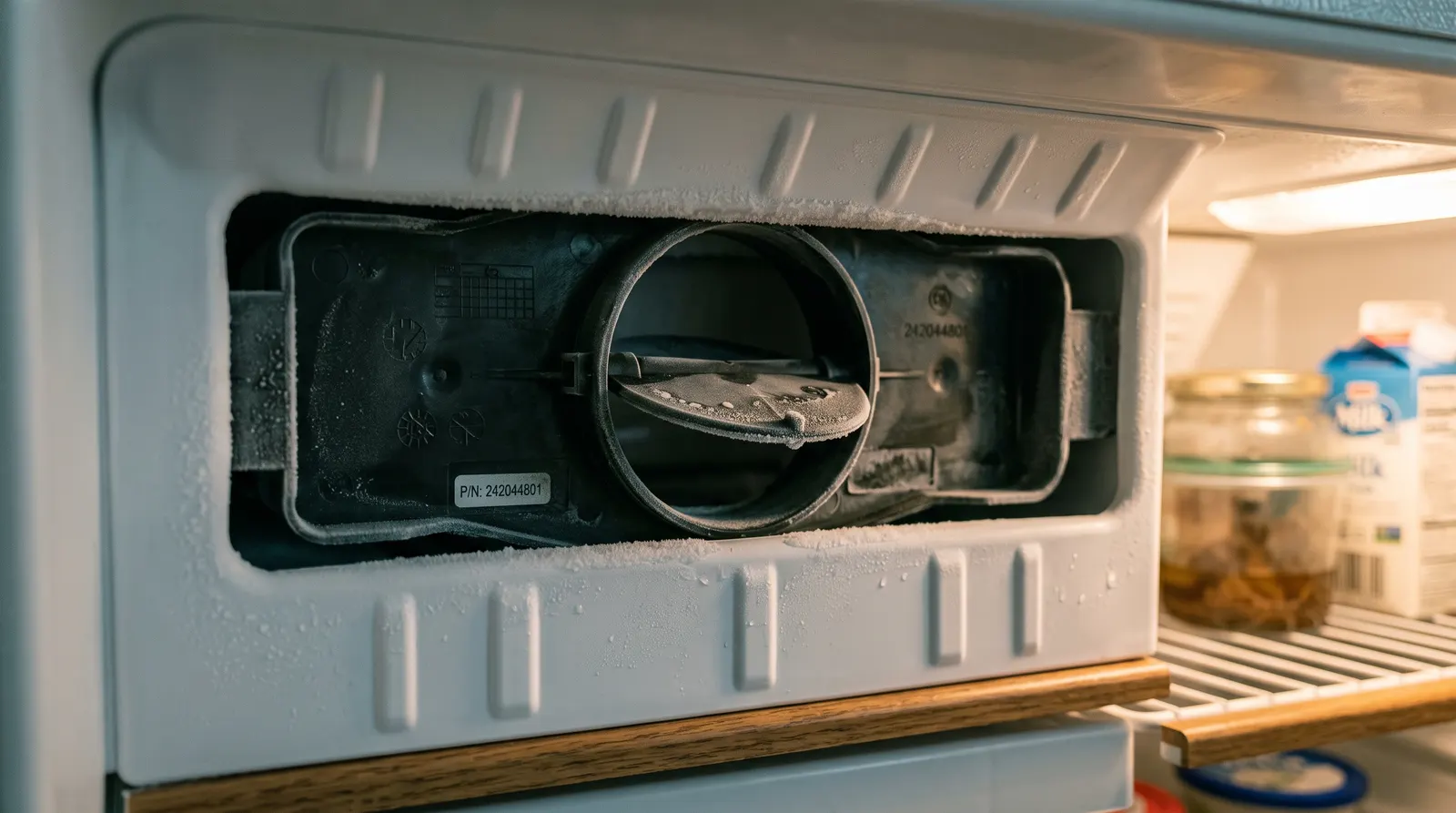
The duct between freezer and fridge is a narrow tunnel, and it frosts closed before anything else does.
Frost on the evaporator coil blocks the airflow path. A 24 to 48 hour thaw with both doors open clears it and confirms it.
What happens next matters. Cooling that returns and holds means a one-off; a fridge warm again within a week means the defrost system is the real fault.
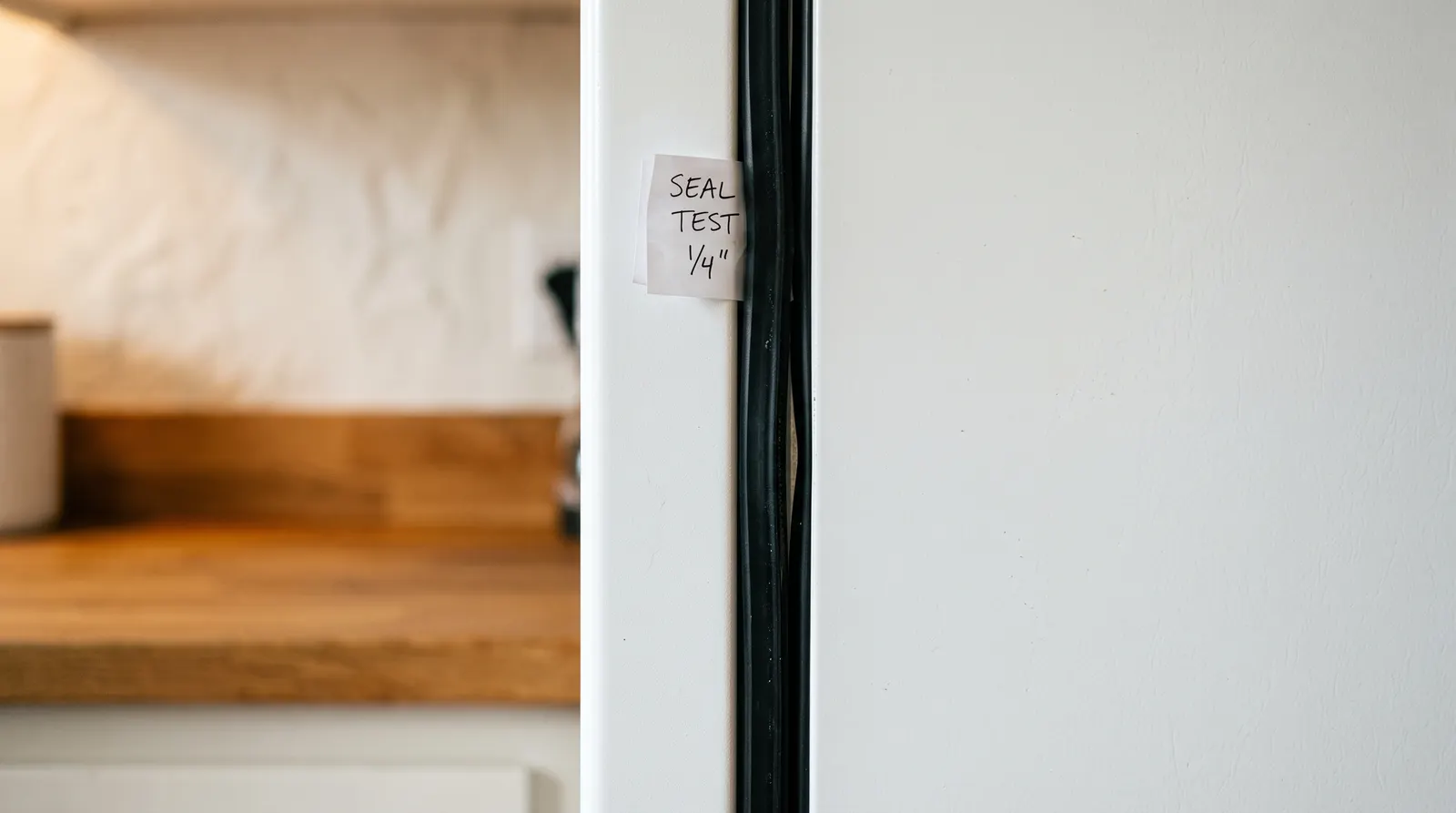
A second reason it returns is damaged door seals: a dipped seal lets humid air in and that moisture re-freezes the duct. Get the manufacturer’s own gasket, because cheap ones ship folded and never seal.
He names the step that decides whether the repair holds: the evaporator panel must click back into sealed contact with the duct.
His worked example sets the expectation: after clearing an iced duct the compartment fell from 70°F to 40-45°F in ten minutes and was properly cold at four hours.
Vents: boxes and containers against the back wall block the outlets directly.
Loading: an overfilled fridge circulates badly even when nothing is broken.
Damper: a small motorised or manual door that meters cold air into the fridge.
Door seal: a gasket that fails the banknote test lets warm room air in continuously.
The damper: a small door with a big effect
The damper is a separate part from the duct and from the fan, and pages on this topic routinely merge all three.
The damper meters cold air into the fresh food side. Stuck closed it gives this symptom on a bottom freezer refrigerator.
Do not refreeze warm food
The freezer side is still working, which makes it tempting to move warm fridge contents into it. That is fine for items you are freezing deliberately and it is not a rescue for perishables that have already been above 40F for more than two hours. Those go in the bin.
Is the food safe while this is happening?
The fresh food compartment is the one that has failed, which means the food most at risk is the food least able to survive it.
Move dairy, meat, seafood and leftovers first. Anything above 40F for two hours should be discarded.
This specific symptom points at airflow between the compartments rather than the sealed system, which is usually a much cheaper repair.
What this repair costs
Indicative US ranges. Always get a written quote.
Job
Typical range
Notes
Manual thaw
no part cost
Diagnoses and temporarily fixes an ice blockage
Clearing vents and reloading
no part cost
Resolves a real share of cases
Damper or air diffuser
low-cost part
Stuck closed gives exactly this symptom
Evaporator fan motor
mid-cost part plus labor
Behind the rear freezer panel
Defrost control or main board
the 50 percent rule (per our repair-or-replace guide)
Compare against a comparable new unit
Source: Fixr 2026 appliance repair cost data, with part-level costs stated qualitatively where no published figure exists (retrieved August 2026). Figures vary by region and timing.
Figures last checked
The top two rows cost nothing and resolve a real share of these faults, which is the argument for the thaw first.
What you can do and what needs a technician
Thawing, unloading and clearing vents need no tools and no experience.
A faulty evaporator fan or damper is an intermediate job: rear panel off, a few screws, a connector. A temperature control board failure is where guessing gets expensive.
If the whole machine has stopped cooling rather than just the fresh food side, our page on a refrigerator that is not cooling at all covers that different diagnosis.
What homeowners actually ask
What owners report
Drawn from real public forum threads and reported prices, summarized and attributed as patterns.
These are not reviews of this site, and no names or ratings have been invented.
“Fridge not cooling but freezer working fine”
SourceThread title, r/diynz, the number one organic result. The replies converge on the evaporator fan and a frosted duct, not the cooling system.
“What is causing my fridge to not cool, but the freezer is still...”
SourceThread title from a community discussion on this SERP. The first suggestion is always the fan test.
“Freezer not freezing, fridge works fine”
SourceThread title, diy.stackexchange.com, the mirror-image fault. Useful because it confirms the two symptoms have different causes and should not be treated as one problem.
1 / 3
The pattern in those threads is that the fan and the ice come up within the first few replies, and the compressor almost never does. That is a reasonable signal about where the odds sit.
Do dirty condenser coils cause a fridge to stop cooling?
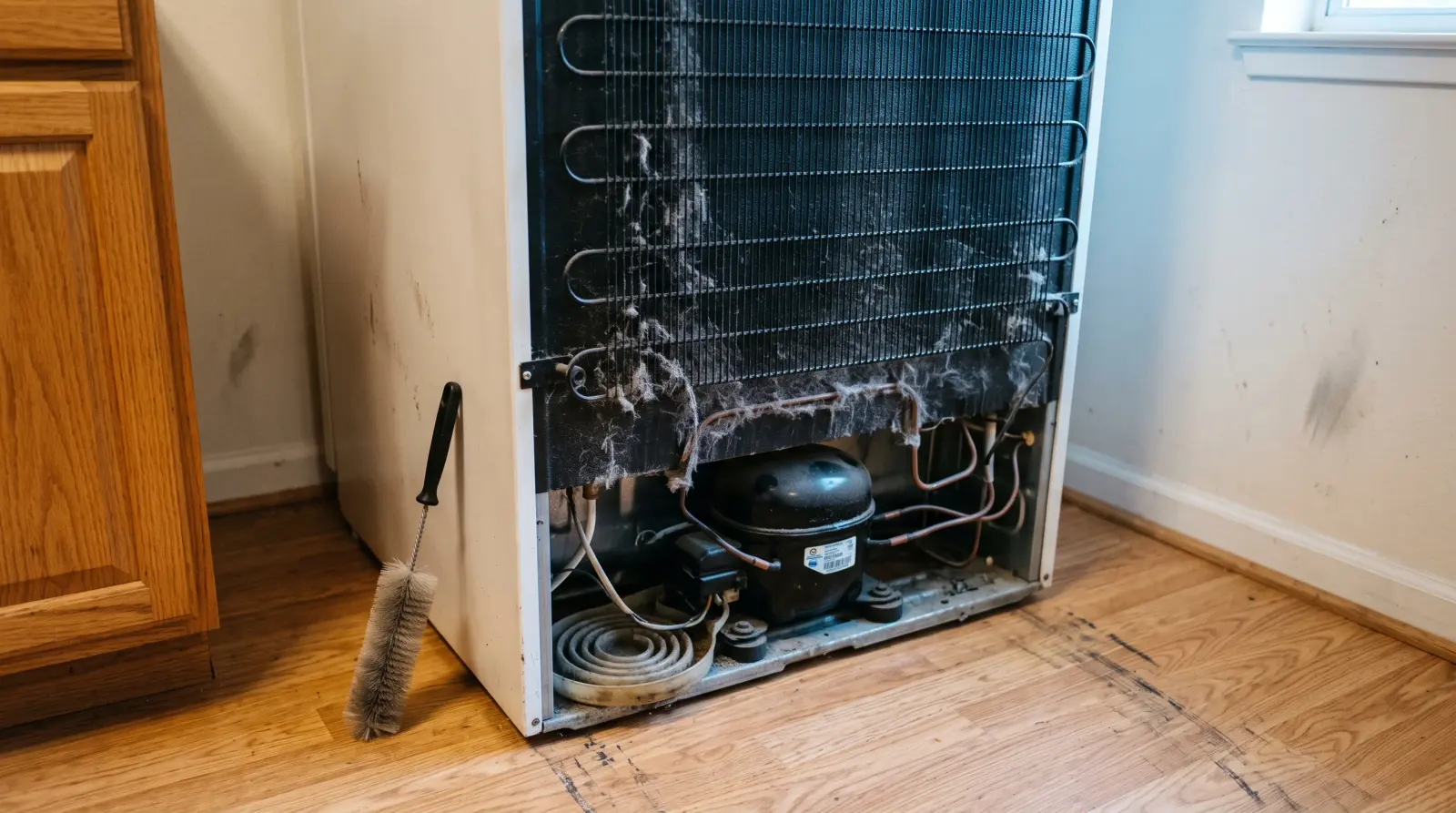
They can, but the giveaway differs: dirty condenser coils make the whole machine struggle, so the freezer suffers too. Clean them anyway, because it is free and it is the first thing a technician checks.
Will a home warranty cover a temperature control board failure?
Sometimes, and the exclusions matter more than the coverage: most plans exclude a unit that failed through lack of maintenance, which is how a dirty condenser is classified. Check what it says about diagnostic fees.
Why is my refrigerator not cooling but my freezer is freezing?
Cold air is being made and not delivered: a blocked vent, a frosted duct, a stuck damper or a dead fan.
How do I test the evaporator fan?
Hold the freezer door switch in with tape. The fan should spin up within seconds; silence, a rattle or a click means a failed motor or ice on the blade.
How long should I unplug it to thaw the ice?
Twenty four to forty eight hours, doors open, food in a cooler. A shorter thaw leaves ice deep in the duct.
Will it just freeze up again?
If the defrost system has failed, yes. Cooling that returns and fails again within a week points at the defrost heater, thermostat or board.
Is the food in the fridge still safe?
Not above 40F for more than two hours: discard it. Move anything you want to keep into the freezer side or a cooler.
Can I fix this myself?
Partly. To fix a warm fridge yourself, thawing, unloading and clearing vents are straightforward; a fan or damper is an intermediate job. A control board diagnosis needs a technician.
The damper between compartments
Door seal test
Because the freezer still works, the compressor and refrigerant charge are almost certainly fine. That rules out the most expensive repairs.
Independent, publicly published sources, quoted with attribution and linked in full.
None is affiliated with Emergency Services 24H, reviewed this page, or works in the referral network.
Jeff Ostroff: Consumer DIY and appliance-repair channel host, jeffostroff - “FIXED: Fridge Is Warm BUT Freezer Cold, 3 Causes” (2026)
Tell us what has failed and how soon you need someone. We route your request to licensed, insured contractors covering your area, and they contact you directly.
Fire, a gas smell, or an injury? Leave the building and call 911 first, then your gas
utility or power company. Use this form once you are safe.