Refrigerator not cooling: work the cheap causes first
A refrigerator not cooling is usually an airflow or heat-removal fault, not a dead appliance. The component most likely to have failed is a compressor start relay at roughly $10 to $15, and owners are routinely quoted several hundred dollars for the compressor it operates.
A fridge not cooling is usually a heat removal or airflow failure. Refrigerator problems follow a predictable order, and the start relay is first.
That gap is the reason to work this list in order rather than reaching for the phone.
First: protect the food
How long is food safe once the fridge stops cooling?
About four hours with the door closed, and roughly 48 hours in a full freezer or 24 in a half-full one. Anything held above 40F for more than two hours goes in the bin rather than back in the fridge.
Move dairy, meat, seafood and leftovers into a cooler with ice or into the freezer side if it is still cold. Then stop opening the door while you work.
The order that saves money
Four checks before you call anyone
01
Move the perishables
A closed refrigerator holds safe temperature about four hours. Get dairy, meat and leftovers into a cooler or the freezer before you start opening the door repeatedly.
02
Listen at the back
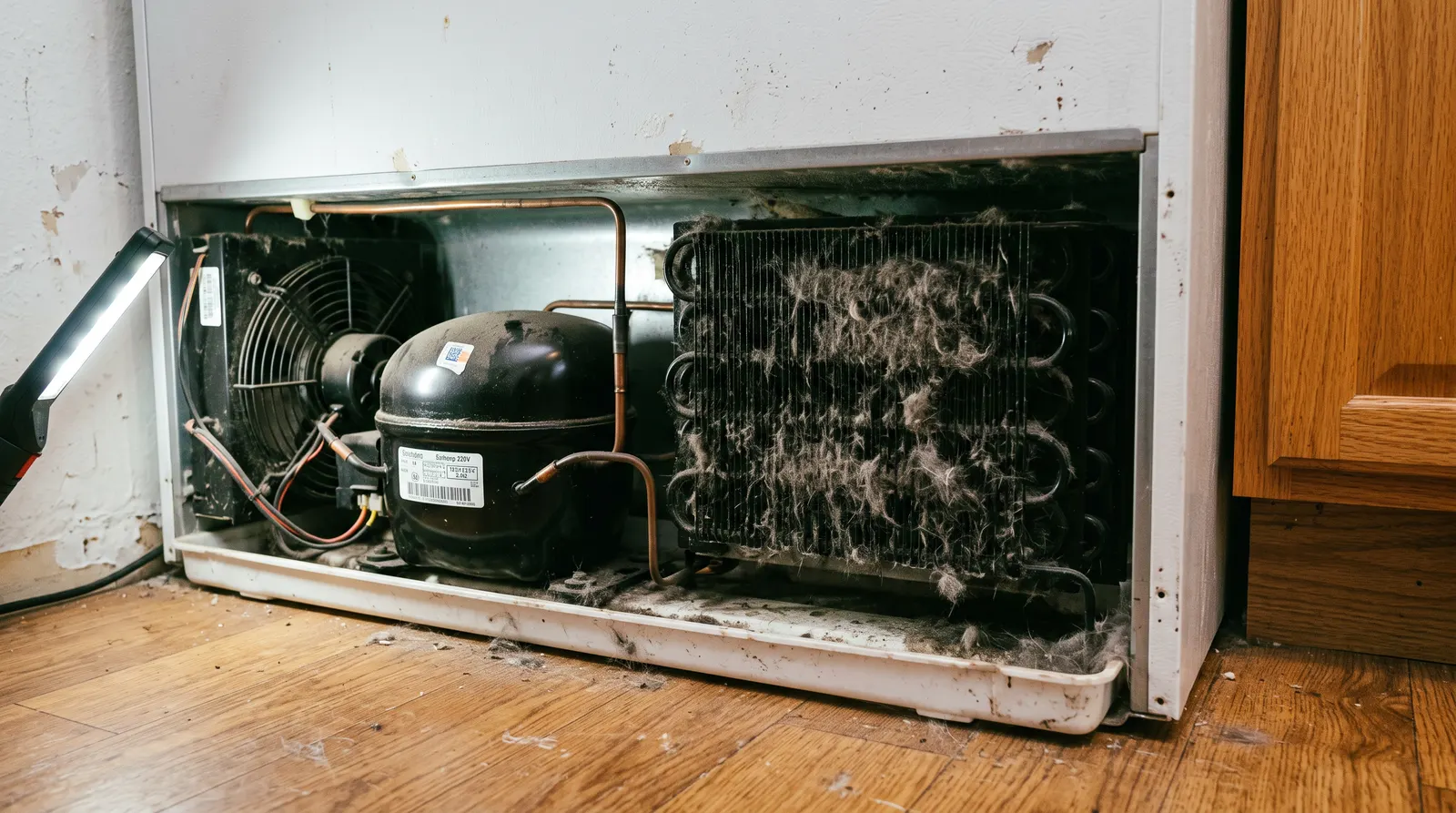
A working compressor makes a low steady hum and the discharge line runs warm. Silence with a warm cabinet points at the start relay or the compressor itself.
03
Clean the coils, clear the vents
Unplug, then vacuum or brush the condenser coils. Move food away from the back wall vents and check the door seal with a banknote.
04
Test the relay before the compressor
A start relay and capacitor kit runs roughly $10 to $15 and is what a technician checks first. It fails far more often than the compressor it operates.
Cited source
On where a fridge that has stopped getting cold is diagnosed first.
“ice on the evaporator coils is the number one failure. So that's what we're going to check first.”
JO
Jeff Ostroff
Consumer DIY and appliance-repair channel host
jeffostroff, 2026
An independent source we cite. Not affiliated with Emergency Services 24H, and not a network contractor.
This one test splits the diagnosis in two, and almost nobody does it.
Pull the fridge out and listen at the back. A working compressor hums steadily and its discharge line runs warm, so the problem is airflow.
Silence, or a click every few minutes followed by nothing, means the compressor is not starting. That points at the start relay far more often than at the compressor.
Refrigerator not cooling? Start at the condenser coils
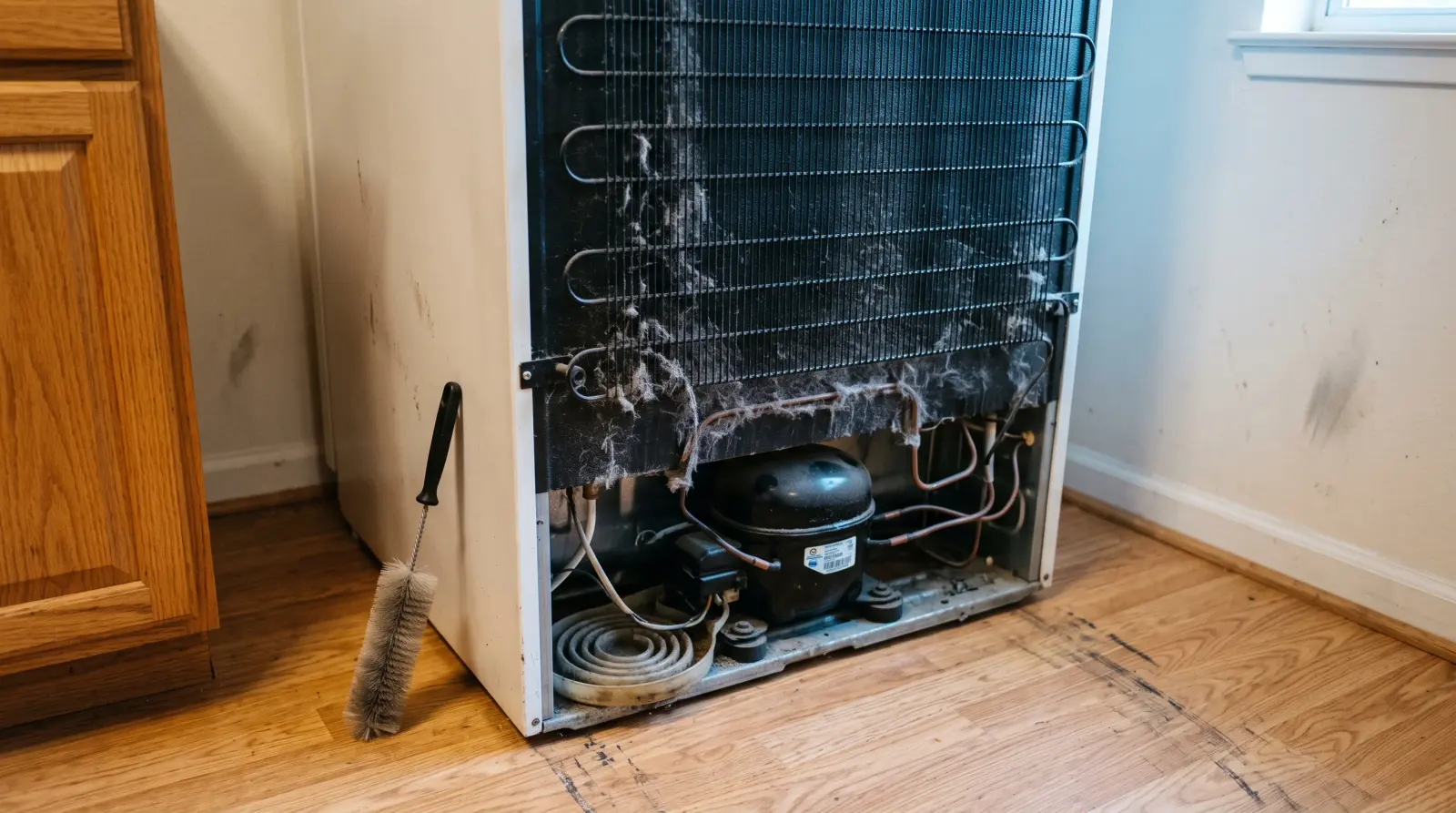
Coils are how heat leaves the system, and a layer of dust and pet hair insulates them.
Unplug the machine, find the coils underneath or on the back, and vacuum them clean. Leave clearance behind and above, because a fridge against a wall fights the same problem.
Vents: food packed against the back wall blocks the cold air outlets.
Door seal: close the door on a banknote. If it slides out freely, the gasket is done.
Loading: both overfilling and near-empty hurt circulation.
Setting: 37F to 38F for the fridge, 0F for the freezer, measured rather than assumed.
The start relay: a $15 part mistaken for a $600 job
Why check the relay before the compressor?
Because the relay is what starts the compressor, it fails far more often, and it costs roughly $10 to $15 against several hundred for the compressor. A technician tests it first for exactly that reason.
The relay plugs onto the side of the compressor. Owners report the relay and capacitor kit at roughly $10 to $15, fitted with a nut driver.
That does not make every silent fridge a relay. It means the relay is ruled out before anyone quotes for the compressor.
Jim Ostroff’s framing decides which half of this page you need: a refrigerator does not make itself cold, one evaporator in the freezer produces the air and the fresh-food side is fed through a duct. With the freezer working, the sealed system has proved itself.
Ostroff also names the component behind repeat failures: the door gasket. A dipped seal lets warm, humid air in, which re-freezes the duct and works the compressor harder. A fridge fixed once and drifting warm again is a gasket.
Frost on the evaporator: the defrost system
If the compressor runs and one compartment cools while the other does not, ice is the usual culprit.
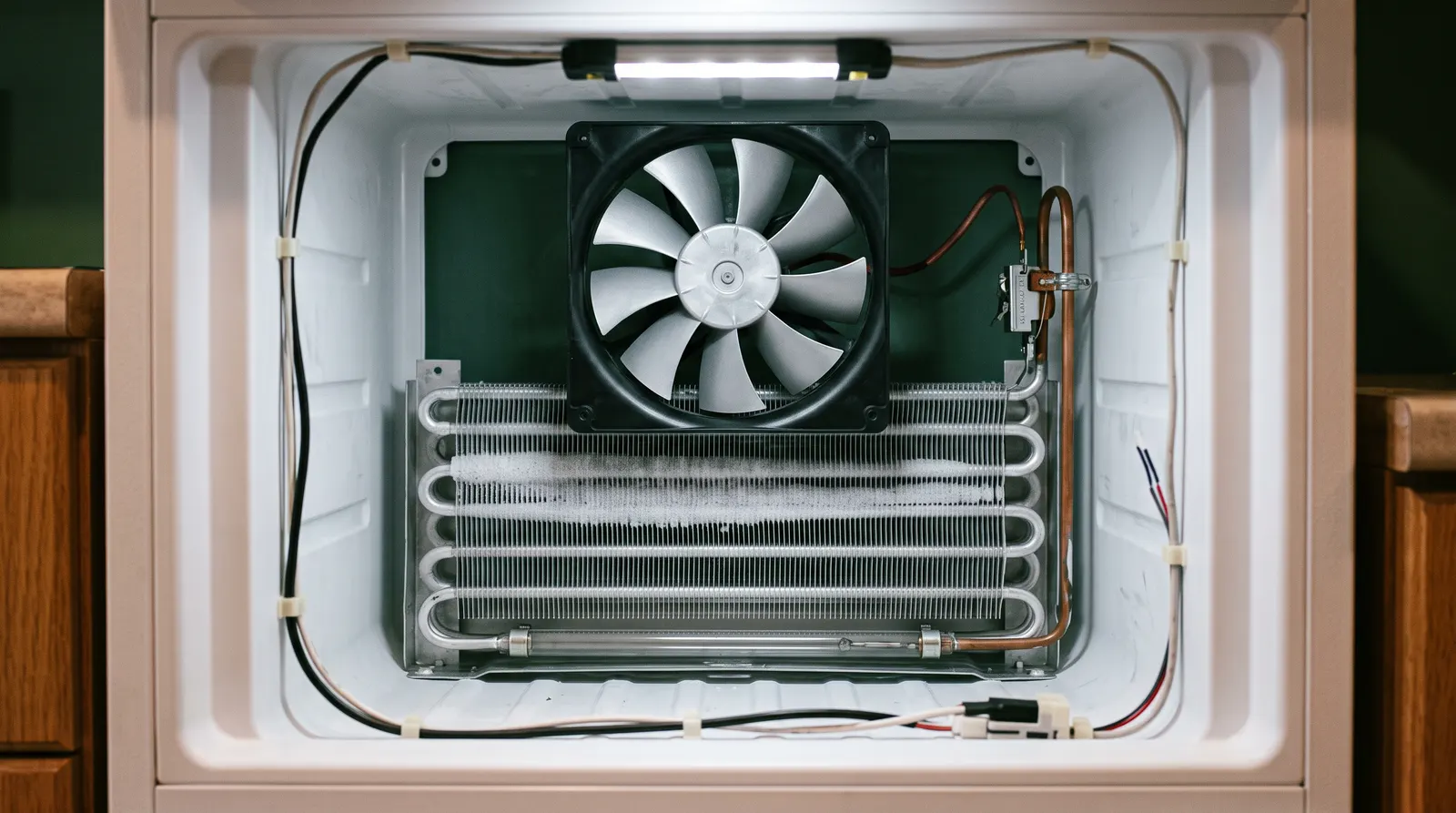
Frost on the evaporator coil behind the rear freezer panel blocks airflow to the fresh food side. A 24 to 48 hour thaw with the doors open confirms it.
Unplugging clears a latched control board on some models, and a day off melts ice. Neither repairs a failed relay, fan, gasket or heater.
Refrigerant work is not a DIY job
Anything involving the sealed system, refrigerant charge or brazed joints is licensed work in the US and requires certification and recovery equipment. Coils, vents, seals, relays and fans are all accessible with basic tools and the machine unplugged. The sealed system is not.
Move medication and high-risk food to a cooler first. The USDA treats four hours above 40F as the safety limit for refrigerated food.
What each stage of this repair costs
Indicative US ranges. Always get a written quote.
Job
Typical range
Notes
Compressor start relay, part only
~$10–$15
Owner-reported, fits with a nut driver
Condenser coil cleaning
DIY, no part cost
Resolves a real share of no-cool calls
Door gasket replacement
low-cost part
Fails the banknote test
Evaporator fan motor
mid-cost part plus labor
Behind the rear freezer panel
Compressor replacement
several hundred dollars
Where the 50 percent rule starts to bite
Source: Fixr 2026 appliance repair cost data; part prices reported by owners in appliance repair communities, marked as reported (retrieved August 2026). Figures vary by region and timing.
Figures last checked
Read the first row against the last. An ordered diagnosis tells you which row you are in before anyone quotes.
Repair or replace this refrigerator
Apply the 50 percent rule: replace once the quoted repair exceeds half the price of a comparable new unit, with the diagnostic fee counted on the repair side.
Age moves the line but does not set it: a cheap part on a twelve-year-old fridge is worth doing, a sealed system job is not. Our repair-or-replace guide sets the rule against typical lifespans, and the appliance repair guide covers the other machines.
What homeowners actually ask
What owners report
Drawn from real public forum threads and reported prices, summarized and attributed as patterns.
These are not reviews of this site, and no names or ratings have been invented.
“Fridge/freezer stopped cooling, can I fix it?”
SourceThread title, r/appliancerepair, the number one organic result. The top advice is to diagnose the compressor circuit rather than the compressor.
“Got a refrigerator not cooling properly, freezer fine, fridge...”
SourceThread title surfaced in the discussions block. The recurring answer separates an airflow fault from a cooling fault before anyone suggests a part.
“One owner was quoted $350 for the compressor plus $300 to install it”
SourceOwner-reported quote from an appliance repair community, where the fault turned out to be a start relay costing under $15. Quoted as a reported experience rather than as a typical outcome.
1 / 3
The consistent thread is sequencing: the community answer starts at the cheapest plausible cause and works up.
How the matching works, and what we do not do
Emergency Services 24H is a referral service. We employ no technicians and sell no parts.
Your request routes to licensed, insured technicians nearby. Every figure here is a published range or an owner-reported price.
Know the line
Safe to check yourself, or call a pro now
Safe to check yourself
Cleaning the condenser coils with the machine unplugged
Clearing vents and rearranging the load
Testing the door gasket with a banknote
Measuring the actual temperature with a thermometer
A 24 to 48 hour manual thaw
Call a pro now
Anything involving refrigerant or the sealed system
A compressor that hums and trips out repeatedly
Evaporator fan replacement behind the rear panel
Defrost control or main board diagnosis
Any quote you want checked before approving
24/7 dispatch network
Get a licensed appliance repair technician moving on this
Tell us what the fridge is doing. Licensed, insured appliance technicians covering your area will contact you directly. No obligation to hire.
Fire, a gas smell, or an injury? Leave the building and call 911 first, then your gas
utility or power company. Use this form once you are safe.
Straight answers
Frequently asked questions
The questions homeowners actually search for on this problem, answered in plain language.
What is the recommended refrigerator temperature, and can a setting cause this?
Around 37F for the fresh-food side and 0F for the freezer. An improperly set temperature control, a door left ajar, or broken gasket seals that let warm air in will all look like a failure before any refrigerator parts are at fault.
Why is my fridge not cooling but the freezer is working?
Cold air is made in the freezer and blown into the fresh food side through a duct. When the freezer is fine, that duct is blocked by frost, the damper is stuck, or the fan has failed.
Does an RV refrigerator fail the same way?
No. Most RV units are absorption fridges with no compressor and no fan, so this diagnosis does not transfer. A domestic electric refrigerator is what this page covers.
How do I reset a refrigerator compressor?
There is no reset button on a compressor. Unplugging clears a control board latch and lets ice thaw, but repairs no failed relay, fan or seal.
What is the most common fridge failure?
Airflow, not the compressor. To fix a refrigerator that will not cool, start with dirty condenser coils, blocked vents, worn door seals and a frosted evaporator.
How do I know if the fridge compressor is bad?
Listen at the back. A working compressor hums and warms the discharge line. Silence with a warm cabinet points at the start relay, a $10 to $15 part a technician tests first.
How long is food safe in a fridge that stopped cooling?
About four hours with the door closed, 48 in a full freezer, 24 in a half-full one. Above 40F for two hours, discard perishable food.
Why is my refrigerator not cooling but the freezer is fine?
A different fault. A fridge not cooling freezer working means cold air is not reaching the fresh food side: a blocked vent, an iced duct, a failed damper or a dead fan.
Is it worth repairing a refrigerator that is not cooling?
It depends which part failed. A start relay is a clear yes at any age. A sealed system job is where the 50 percent rule (per our repair-or-replace guide) applies.
Condenser coils and airflow
The evaporator fan behind the panel
A compressor replacement on a unit past about ten years rarely makes sense against the price of a new refrigerator.
Independent, publicly published sources, quoted with attribution and linked in full.
None is affiliated with Emergency Services 24H, reviewed this page, or works in the referral network.
Jeff Ostroff: Consumer DIY and appliance-repair channel host, jeffostroff - “FIXED: Fridge Is Warm BUT Freezer Cold, 3 Causes” (2026)
Tell us what has failed and how soon you need someone. We route your request to licensed, insured contractors covering your area, and they contact you directly.
Fire, a gas smell, or an injury? Leave the building and call 911 first, then your gas
utility or power company. Use this form once you are safe.