Is it worth repairing an appliance? Run the numbers first
Is it worth repairing an appliance? Yes when the quoted fix costs less than half the price of a comparable new machine, which is the 50 percent rule. Washing machine repair runs $150 to $400 nationally and a refrigerator start relay is $10 to $15, so the failed part decides it.
Whether to repair an appliance turns on one ratio: the quoted fix against half the price of a comparable new machine. Washing machine repair runs $150 to $400 and a refrigerator start relay is $10 to $15, so the failed part decides it.
The 50 percent rule, stated plainly
What is the 50 percent rule?
Replace rather than repair once the quoted fix costs more than half the price of an equivalent new appliance. Count the diagnostic fee on the repair side, and compare against a like-for-like model rather than the cheapest one on the shelf.
The rule scales with what is at stake: a $250 repair is trivial against a $1,400 machine and absurd against a $380 one (illustrative pair, read 2026-08-16).
The trade applies a tighter version. Yale Appliance works to a 35 percent rule paired with a seven-year rule. Note whose interest that serves: a stricter threshold produces more replacements.
Two observations cut against the sale. Parts availability has worsened over seven years, and an old second refrigerator costs roughly $10 to $20 a month in extra electricity.
Four steps to a defensible decision
How to run the numbers properly
01
Get the part named
Not the symptom, the part. A compressor quote with no relay test is a guess with a price.
02
Price a like-for-like replacement
Compare against a comparable new model, not the cheapest one on the shelf and not the one you would upgrade to. That number is the denominator.
03
Check it against lifespan
Where is the machine in its life, and how many faults has it had? A first fault at year five and a third at fourteen are different decisions.
04
Add the fee and decide
Include the diagnostic fee on the repair side. Above half the replacement price, replacement usually wins. Below it, repair usually does.
Cited source2:34
“The total cost of repair should not exceed 35% of what it would cost to buy a new appliance.”
YA
Yale Appliance
Appliance dealer with an in-house service department
Yale Appliance, Boston, 2023
Bias to weigh: Sells appliances and service; the 35% rule is their own published guideline.
An independent source we cite. Not affiliated with Emergency Services 24H, and not a network contractor.
This is the sequencing error that costs people the most money, and it happens in both directions.
People replace working machines because a symptom sounded terminal. A fridge that will not cool can be a $15 relay or a compressor job.
A quote without a diagnosis is not a quote
If nobody has told you which component failed and how they established that, you do not yet have the information the 50 percent rule needs. Ask what was tested and what the reading was. A technician who has diagnosed properly can answer that in one sentence.
How long each appliance should last
Lifespan is the variable the rule quietly depends on, because it decides how much life a repair is buying back.
A machine at the halfway point of its life is buying years; one past it is buying months.
Repair history is the better signal, and almost nobody weighs it. A machine on its third unrelated fault in two years is telling you where it is in its life more accurately than its serial number does.
Part-level economics: the number that decides it
The gap between the cheapest and dearest repair on the same appliance is the whole reason this page exists.
Refrigerator start relay: roughly $10 to $15, owner-reported, fits with a nut driver.
Dryer thermal fuse: a low-cost safety part, though the vent behind it is the real fix.
Washer door seal: roughly $230 to $300 fitted (Fixr 2026, read 2026-08-16).
Washer drain pump: roughly $300 to $400 fitted.
Sealed system or compressor: several hundred dollars, and where the rule usually bites.
Read that list against a new machine price and the decision makes itself. It cannot tell you which row you are in, which is why diagnosis comes first.
How diagnostic fees actually work
Is a free service call really free?
Usually only if you proceed with the repair. Most companies charge to attend and diagnose, then credit that fee against the work. The offer is reasonable and it is worth confirming when you book rather than discovering on the doorstep.
Ask three things before the visit: what the fee is, whether it is credited, and whether there is a callback charge if the same fault returns.
Yale Appliance is candid about the fee: it covers the van, the parts warehouse, insurance and the call center. A genuinely free look is largely over across the trades.
They price from an appliance repair "blue book": a flat average per repair type, parts included, billed on a completed call. Ask an hourly firm what a return trip costs.
The variable almost nobody compares is how long the installed part is warranted. Yale warranties theirs for five years against a common ninety days.
When the rule gives the wrong answer
Any rule of thumb has edges, and being honest about them is more useful than defending the rule.
A cheap part on an old machine is worth doing, because the rule measures proportion rather than age. Appliance parts that are discontinued end a trivial repair regardless.
Energy use and the replacement argument
Efficiency is the argument used to push replacement, and it is sometimes right.
Genuinely old refrigerators and washers use noticeably more energy. It does not support replacing a repairable five-year-old machine.
Ask for the specific comparison. A retailer who cannot name the annual consumption of both machines is making a sales point.
Is it worth repairing an appliance? The three failures that mean replace
Some faults settle the question before the arithmetic starts.
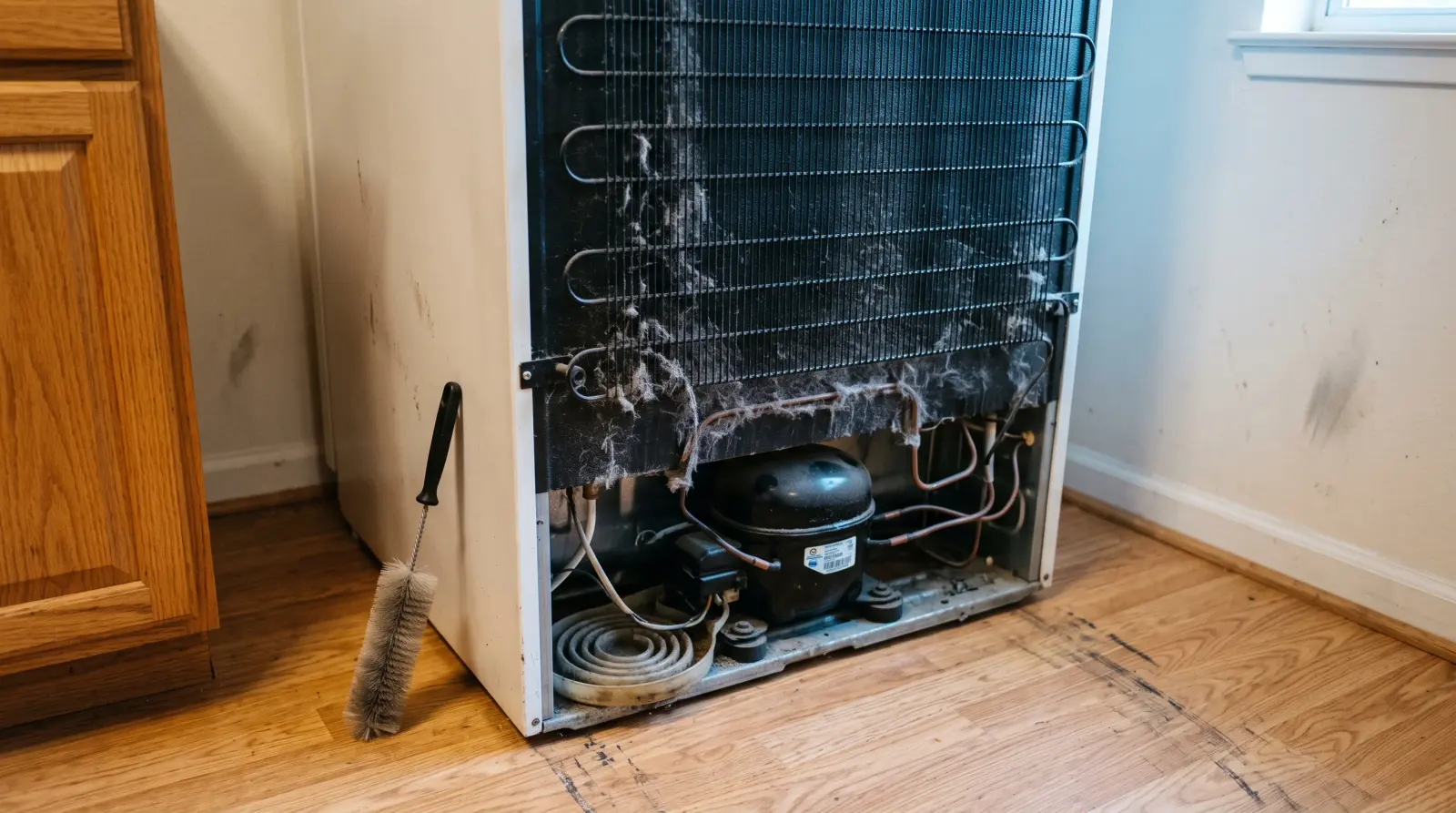
A sealed system or compressor failure on a refrigerator past the middle of its life.
A washer gearbox or transmission leaking oil rather than water.
A cracked tub in a dishwasher or washing machine, which is structural rather than mechanical.
The three that almost always mean repair
And some settle it the other way just as firmly.
A refrigerator start relay at roughly $10 to $15, at any age.
A dryer thermal fuse once the vent behind it has been cleared properly.
Any hose, filter, seal or gasket, which are wear items rather than failures.
The rule of thumb: if the repair exceeds half the replacement cost and the unit is past half its expected life, replace it.
The figures the decision runs on
Indicative US ranges. Always get a written quote.
Job
Typical range
Notes
Refrigerator start relay, part only
~$10–$15
Owner-reported, a clear repair at any age
Washing machine repair, overall
$150–$400
National average around $300
Stopping a washing machine leak
$75–$200
Contractor average for the leak
Washer drain pump replacement
$300–$400
Mid-range decision on an older machine
Washer door seal or gasket
$230–$300
Front loader boot leaks (Fixr 2026, read 2026-08-16)
The decision threshold
Replace above 50%
Of the price of a comparable new machine
Source: Fixr 2026 appliance repair cost data; part prices reported by owners in appliance repair communities, marked as reported (retrieved August 2026). Figures vary by region and timing.
Figures last checked
The last row is the rule and the rows above are the inputs. Nothing else is complicated once you have those two numbers.
Questions to ask before you approve a repair
What exactly failed, and how was that determined?
Is the diagnostic fee credited against the work?
Is the part in stock or on order?
What is the warranty on the part and the labor?
What does the labor cost separately?
Is there a callback charge if it recurs?
Those six questions take a minute on the phone and they are the difference between an informed decision and a hopeful one.
What homeowners actually ask
What the SERP shows and owners report
Drawn from real public forum threads and reported prices, summarized and attributed as patterns.
These are not reviews of this site, and no names or ratings have been invented.
“What is the 50 rule for appliance repair?”
SourceA People Also Ask question on the live SERP for appliance repair, alongside "what is the 50/50 rule for appliances". Neither is answered on any of the ten ranking pages, all of which are city service listings.
“One owner was quoted $350 for the compressor plus $300 to install it”
SourceOwner-reported quote from an appliance repair community, where the actual fault was a start relay costing under $15. Quoted as a reported experience, not a typical outcome.
“Replace rather than repair when the fix costs more than half the price of a new comparable machine”
SourceFixr 2026 washing machine repair cost guidance, which is the published source for the rule of thumb this page works through.
1 / 3
The gap between what Google is asked and what ranks is wide here: both rule questions appear in People Also Ask, and all ten organic results are city service listings.
Appliance repair without the guesswork
Emergency Services 24H is a referral service.
Your request routes to licensed, insured technicians nearby. A diagnosis is not a commitment to a repair, and the figures here are published ranges.
Know the line
Safe to check yourself, or call a pro now
Safe to check yourself
The failed part is a relay, fuse, seal, hose or filter
The machine is inside its expected lifespan
This is its first significant fault
The quote is well under half a comparable new price
The appliance is built in or integrated
Call a pro now
A sealed system, compressor or gearbox failure
The machine is past its expected lifespan
Third unrelated fault in two years
The quote is at or above half a comparable new price
The part is discontinued or on long backorder
24/7 dispatch network
Get a licensed appliance repair technician moving on this
Tell us the appliance, the symptom. Licensed, insured technicians covering your area will contact you directly. No obligation to hire, and no obligation to repair.
Fire, a gas smell, or an injury? Leave the building and call 911 first, then your gas
utility or power company. Use this form once you are safe.
The threshold a repair shop applies to its own recommendations
A documented first-hand account, not a market pattern.
A Boston appliance dealer's service operation stating the thresholds it applies to its own repair recommendations, drawn from the repair jobs its technicians perform.
Most advice shrugs about age. One Boston dealer publishes its arithmetic: no repair past roughly a third of the replacement cost, and repair under seven years old.
You can run that while the technician is still in your kitchen. A firm that sells replacements wants the threshold lower, so treat it as a starting point.
What this does not say: A rule of thumb from one firm that both repairs and SELLS appliances, a commercial interest pointing toward replacement; neither the 35 percent nor the seven-year figure is derived from published data.
Is it cheaper to use an appliance repair company or the manufacturer?
A local appliance and repair firm is cheaper on labor; the manufacturer is faster on home appliance repair parts under warranty.
Does one firm cover dryer appliance repair and dishwasher appliance repair, or do I need two?
One appliance service and repair firm usually covers the laundry too. A kitchen appliance repair service that also does appliance repair and parts saves a second visit. If an appliances customer service line quotes a part, price it against a local firm that can repair home units that week.
Is it worth repairing an appliance that is out of warranty?
Out of warranty changes who pays, not the arithmetic. The warranty on the new part matters more than the expired one on the machine.
What is the 35 percent rule?
A stricter version of the 50 percent rule: do not repair once the quote passes about a third of the replacement cost. It comes from firms that also sell appliances, so treat it as a second opinion.
Does a discontinued part change the answer?
Completely. Any home appliance repair becomes impossible when the part is no longer made, and a technician can check availability by model number on the phone.
Should I repair a built-in appliance on the same rule?
The threshold moves in favor of repair. Kitchen appliance repair on an integrated unit competes with cabinetry and fitting, so the true replacement cost is well above the sticker.
Is it worth it to fix an appliance?
Usually, if the repair costs under half the price of a comparable new machine and the appliance is inside its lifespan. Diagnose the failed part first.
What is the 50 rule for appliance repair?
Replace rather than repair once the quoted fix exceeds half the price of an equivalent new appliance. Include the diagnostic fee and compare like for like.
Does the age of the appliance change the answer?
Lifespan decides how much the repair buys back: the same $250 repair is straightforward at five years and questionable at fifteen.
What is a diagnostic fee and is it refundable?
The charge for attending and identifying the fault. Most companies credit it against the repair if you proceed, so ask how it works when you book.
When is a cheap repair still worth it on an old appliance?
When the part is cheap and the rest of the machine is sound. A $15 start relay on a twelve-year-old refrigerator is worth doing. It also breaks down when a part is discontinued.
Do you carry out the repairs yourselves?
No. Emergency Services 24H is an appliance repair service referral network, routing your request to licensed technicians nearby. We perform no repairs and sell no parts.
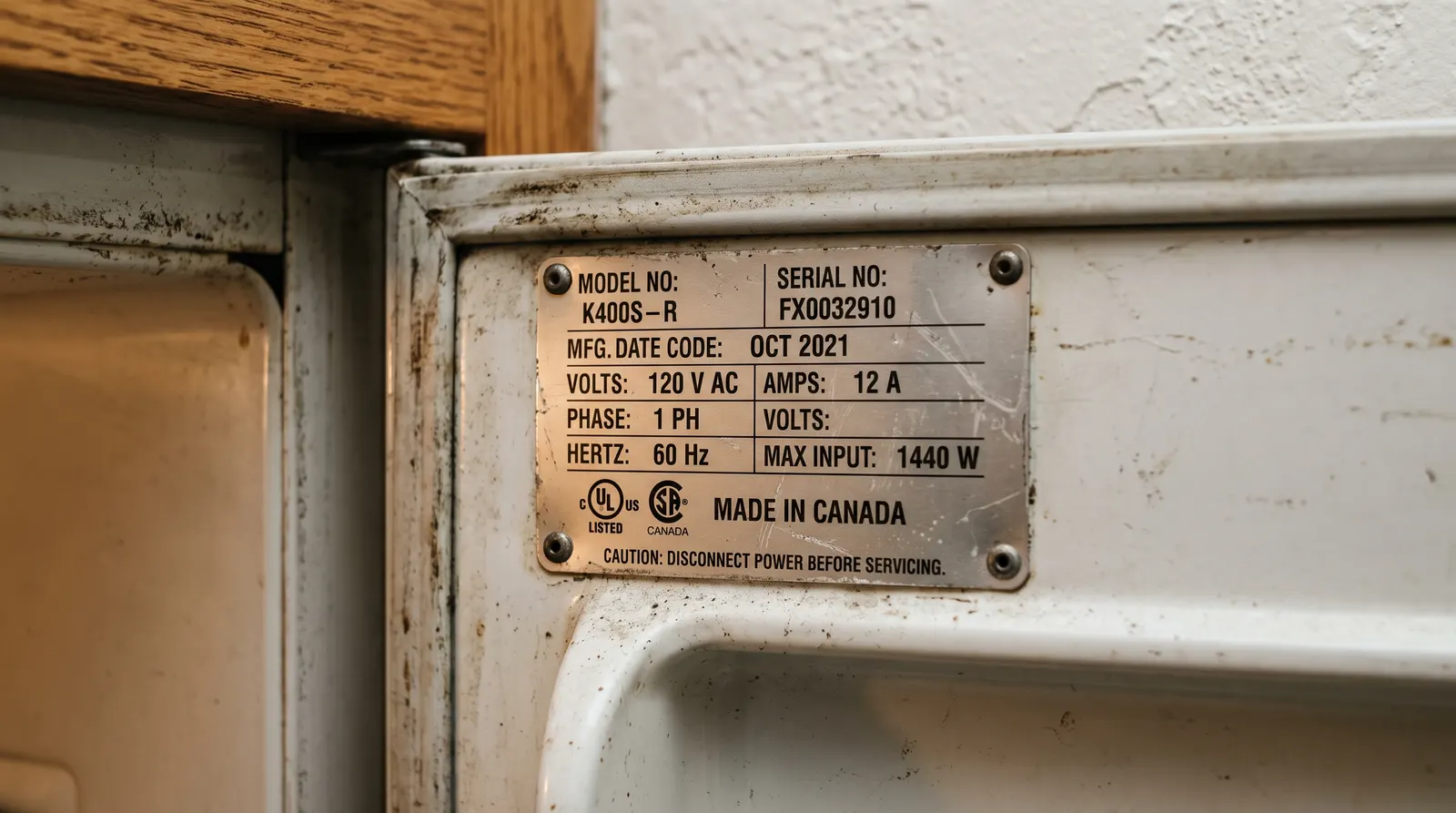
The model and serial plate
Repair or replace, on paper
Compare the repair quote against the row for your appliance. If it crosses half, ask what else on the unit is close to failing.
How the matching works, and what we do not do
Emergency Services 24H is a referral service. We do not employ appliance technicians and we do not sell parts, so we have no stake in whether the answer here is repair or replace.
Independent, publicly published sources, quoted with attribution and linked in full.
None is affiliated with Emergency Services 24H, reviewed this page, or works in the referral network.
Yale Appliance: Appliance dealer with an in-house service department, Yale Appliance, Boston - “What Should You Pay for an Appliance Service Call?” (2023)Declared bias: Sells appliances and service; the 35% rule is their own published guideline.
Tell us what has failed and how soon you need someone. We route your request to licensed, insured contractors covering your area, and they contact you directly.
Fire, a gas smell, or an injury? Leave the building and call 911 first, then your gas
utility or power company. Use this form once you are safe.