Circuit breaker keeps tripping: causes, safe checks and when to stop
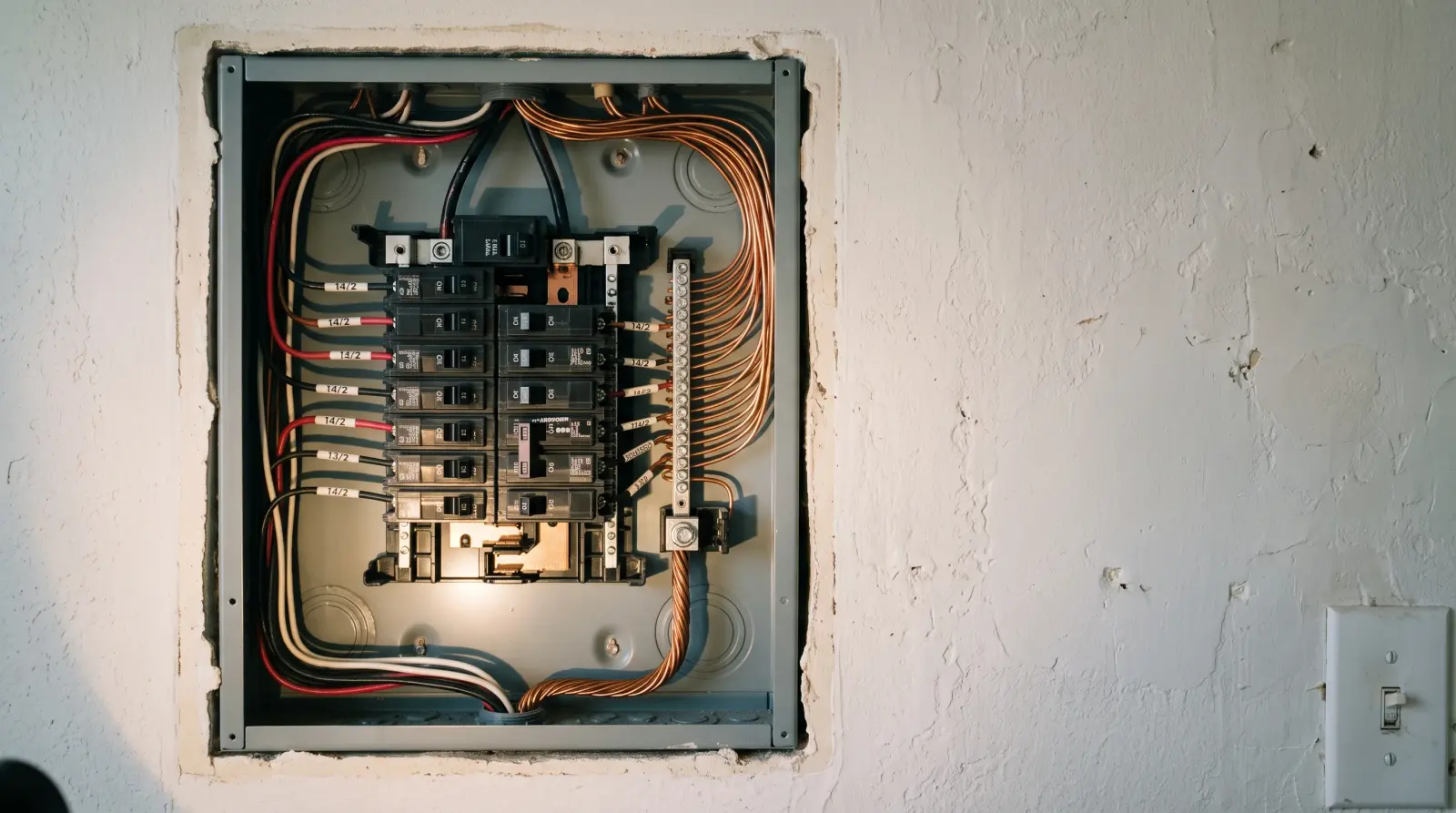
A circuit breaker keeps tripping because something keeps needing to be protected against. A 15 amp circuit carries 1,440 watts continuously, and ESFI ties arcing faults to more than 28,000 home fires a year (ESFI, read 2026-07-22).
A circuit breaker keeps tripping for one of four reasons: an overload drawing more than the circuit is rated for, a short circuit, a ground fault, or a failed appliance or breaker.
Four things: an overload, where the total draw exceeds the circuit rating; a short circuit, where hot touches neutral; a ground fault, where hot touches earth or water; or a failed appliance or worn breaker that trips below its rating.
They present differently, which is useful. An overload trips after a delay, usually when a second appliance starts. A short circuit trips instantly and hard.
Thomas Adams, an Oregon master electrician, teaches the same territory as three causes rather than four, and the compression is useful: overload, ground fault, arc fault.
The timing tell is sharper still.
Adams also notes that the trip point drifts with the weather.
Twenty-minute diagnosis
The isolation method, step by step
01
Unplug everything
Every lamp, charger, TV and appliance on that circuit, plus anything hardwired you can switch off at the wall. The circuit must be genuinely empty.
02
Reset once, properly
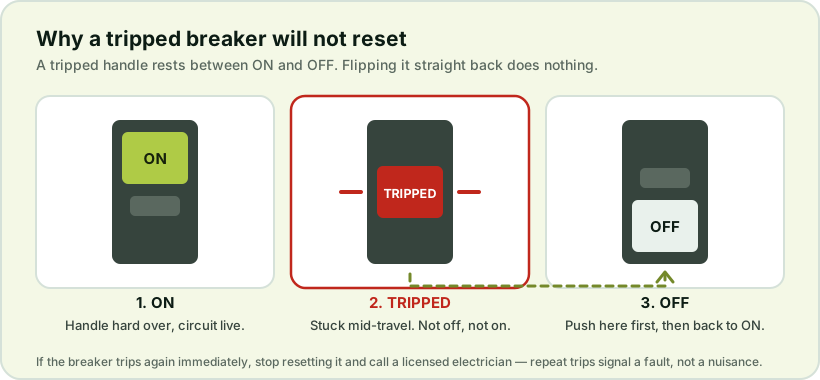
Push the handle firmly all the way to off, past the middle position, then back to on. A tripped breaker sits between the two and will not reset from there.
03
Reintroduce one at a time
Plug devices back in singly, leaving a few minutes between each. Heat-producing appliances go last, because they draw hardest when they cycle.
04
Note what it trips on
The device running at the moment it trips is your candidate. If it trips with nothing connected, stop and call an electrician.
Cited source~23:34
“if it's an outlet or a switch just making a breaker trip, it'll stay on for a little while; it won't just immediately flip back and kind of throw a little bit of a spark.”
UT
United Tradesman Academy
Working service electrician
United Tradesman Academy, 2022
An independent source we cite. Not affiliated with Emergency Services 24H, and not a network contractor.
The reset itself defeats a surprising number of people.
On, tripped and off are three positions rather than two. Push the handle firmly past the middle to off, then back to on.Source: Emergency Services 24H original diagram
A breaker doing its job is not a fault. A breaker doing it repeatedly is telling you about an overload, a short, or a ground fault, and each needs a different fix.
The amp maths nobody shows you
Indicative US ranges. Always get a written quote.
Job
Typical range
Notes
15 amp circuit, maximum
1,800 watts
Theoretical peak at 120 volts
15 amp circuit, continuous load
1,440 watts
The 80 percent rule for anything running over three hours (NEC continuous-load rule, read 2026-07-22)
20 amp circuit, maximum
2,400 watts
Theoretical peak at 120 volts
20 amp circuit, continuous load
1,920 watts
The working figure to plan against
Typical space heater
1,500 watts
Fills a 15 amp circuit on its own
Hair dryer, kettle, microwave
1,000–1,800 watts each
Any two on one circuit is the classic overload
Source: Standard US residential circuit ratings at 120 volts, with the National Electrical Code 80 percent continuous-load convention (retrieved August 2026). Figures vary by region and timing.
Figures last checked
A 15 amp circuit at 120 volts carries 1,800 watts at absolute maximum, and 1,440 watts for anything running more than three hours.
Add a kettle, a microwave or a hair dryer to that and the total passes the rating within seconds.
How many resets is too many
Is it safe to keep resetting a breaker that trips?
One reset with the circuit cleared is diagnosis. A second immediate trip is a fault, not a nuisance.
The reason this matters more than it sounds is that arc faults are quiet.
The rule worth adopting: once the circuit is empty and it still trips, the breaker has stopped being a nuisance and started being the only thing standing between a fault and a fire.
Stop immediately for any of these
A burning or hot-plastic smell anywhere on the circuit, a warm or discoloured outlet or switch plate, scorch marks around a receptacle, buzzing or crackling at the panel, or a breaker that feels hot to the back of a finger.
Tripping with nothing plugged in
What is left is fixed: cable inside a wall or ceiling, a hardwired device such as a light fitting, an extractor fan or a doorbell transformer, a damaged junction, or the breaker itself.
Once it genuinely trips on an empty circuit, there is no safe homeowner step remaining. Testing that fault means opening the panel and metering the circuit, which is licensed work.
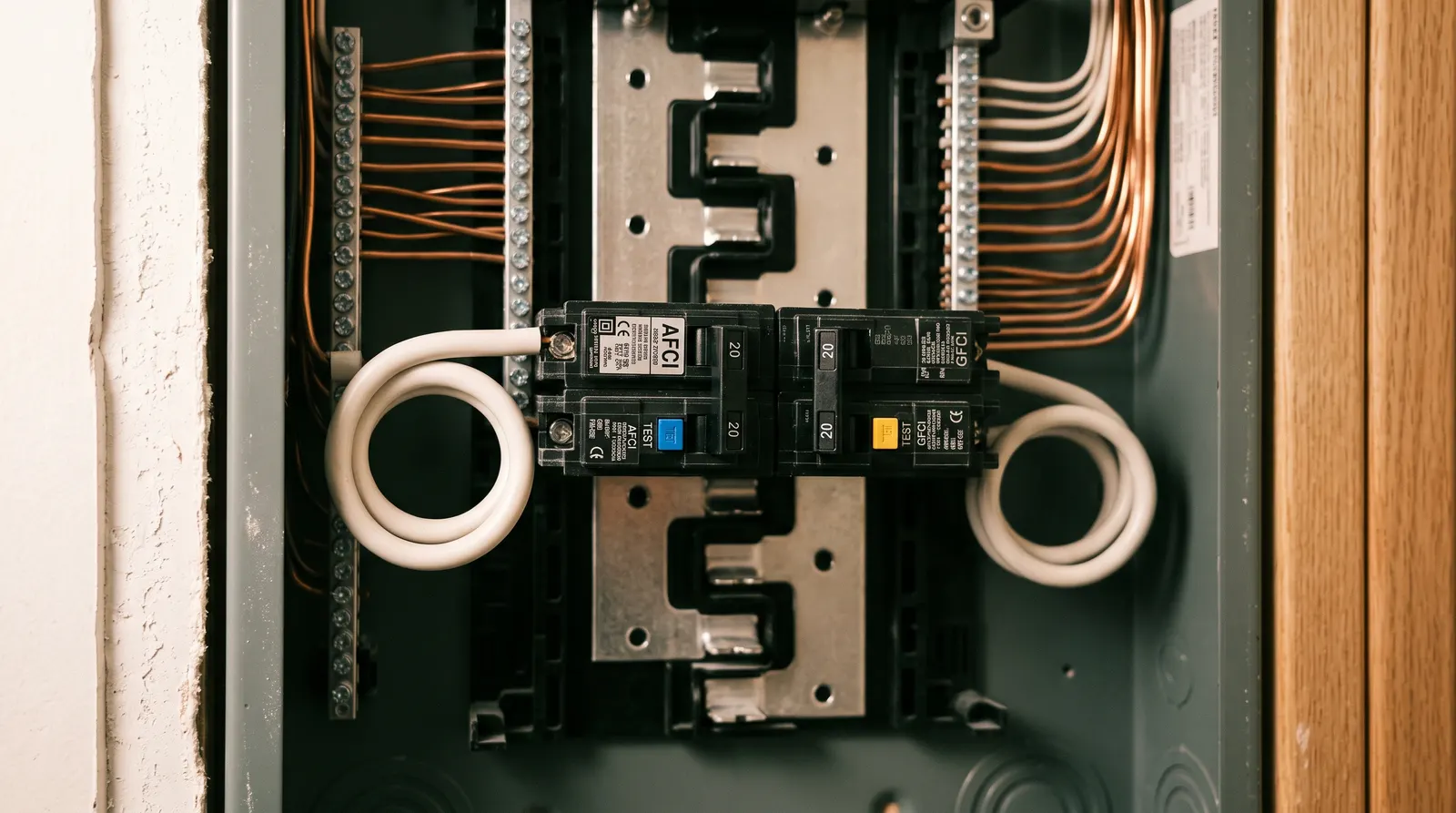
AFCI and GFCI breakers trip for different reasons
Adams draws the distinction in one line that is worth memorising before you call anyone: GFCIs, the ones with the test buttons, were made to protect people, full stop.
There is an age dimension people miss.
GFCI devices trip on current leaking to earth, often only a few milliamps.
AFCI breakers trip on the electrical signature of an arc rather than on current.
Both nuisance-trip on some motor loads and older appliances, which is a genuine annoyance and still not a reason to downgrade them.
Never replace either with a standard breaker to stop the tripping.
What tripping tells you, appliance by appliance
Air conditioner or heat pump. Trips on start-up point at inrush current or a failing start capacitor.
Clothes dryer. Usually a heating element that has sagged and is shorting to the drum housing.
Microwave. Often not the microwave at all but a shared kitchen circuit.
Refrigerator. Compressor start current, or a defrost heater that has failed short.
The dryer case deserves particular attention because it combines an electrical fault with a lint load. The US Fire Administration publishes guidance on clothes dryer fire safety for exactly this reason.
Know the line
Safe to check yourself, or call a pro now?
Safe to check yourself
Unplugging the circuit and reintroducing devices one at a time
One firm reset with the circuit cleared
Adding up appliance wattages against the circuit rating
Resetting a GFCI outlet with its own test and reset buttons
Moving a heat-producing appliance to a different circuit
Call a pro now
Any tripping that continues with the circuit genuinely empty
Opening the panel cover or replacing a breaker
Any burning smell, warm outlet, scorch mark or panel buzzing
Replacing an AFCI or GFCI device that keeps operating
Intermittent tripping that no unplugging pattern explains
When it is the breaker itself
Breakers do wear. Repeated tripping heats and fatigues the mechanism, and a breaker that begins operating below its rated load has usually degraded.
The test that settles it is simple in principle and licensed in practice.
Dustin Stelzer of Electrician U lists the tells that a breaker itself has failed: it will not go to ON at all; it snaps to ON and trips instantly with no load connected; the handle feels mushy with no spring behind it; or the back of it is melted or charred where it meets the bus bar.
Two brand names come with a specific caution attached.
If the breaker will not reset at all rather than tripping repeatedly, that is a different symptom with a different meaning.
24/7 dispatch network
Get a licensed electrician moving on this
Tripping with nothing plugged in, or any burning smell on the circuit. Send the symptoms and licensed, insured electricians covering your area will contact you directly. No obligation.
Fire, a gas smell, or an injury? Leave the building and call 911 first, then your gas
utility or power company. Use this form once you are safe.
What diagnosis costs
Indicative US ranges. Always get a written quote.
Job
Typical range
Notes
Service-call fee
$100–$200
Usually covers the first hour on site
Standard labor
$50–$130 / hr
Weekday business hours
Emergency / after-hours labor
$100–$250 / hr
Typically 1.5×–2× standard
Intermittent fault tracing
often 2+ hours
Faults that come and go take longer to find (electrician trade-forum reports, read 2026-07-22)
Source: HomeGuide 2026 electrician cost per hour; Angi 2026 electrician cost data (retrieved August 2026). Figures vary by region and timing.
Figures last checked
Intermittent faults cost more to find than constant ones, because the electrician has to provoke the condition before they can measure it. Budget two hours rather than one on anything that only trips occasionally.
How the matching works, and what we do not do
Emergency Services 24H is a referral network rather than a contractor. Nobody here is dispatched by us to your panel; the electrician who attends works for their own firm.
Your request routes to licensed, insured contractors covering your area, and they contact you directly. Tell them whether the circuit trips empty, because that single fact changes what they bring.
The two devices are not doing the same job
A documented first-hand account, not a market pattern.
A named Oregon master electrician, in a 2026 published video, explaining to homeowners which device protects people and which protects the building, in the context of the nuisance trips he is called out to.
When a breaker keeps tripping, the question people ask next is whether the protective device can simply be swapped for a plain one. Understanding what each type guards makes the answer obvious.
An Oregon master electrician puts it in one line: the GFCI, the one with the test button, exists to protect people from a shock path to ground. An arc fault breaker exists to protect the building from a connection that is sparking inside a wall. They are not interchangeable, and neither is decoration.
What this does not say: A practitioner's plain-language summary of the two device types; the governing requirement is the electrical code adopted in the reader's jurisdiction, which this research could not read because NFPA 70 is paywalled.
Unplug everything on the circuit, reset the breaker once, then plug devices back in one at a time until it trips. That identifies the appliance in most cases. If it trips with the circuit completely clear, the fault is in fixed wiring or the breaker itself and needs a licensed electrician rather than more resets.
Should I be worried if my breaker keeps tripping?
Yes, once it has happened more than once. A breaker is a fire-protection device, and repeated tripping means it is repeatedly interrupting something. ESFI attributes more than 28,000 home fires a year to arcing faults, and an arc fault behind a wall produces exactly this symptom while remaining invisible.
How do I find out what is tripping my breaker?
Work the circuit systematically. Unplug every load including hardwired ones you can switch off, reset once, then reintroduce devices one by one with a few minutes between each. The device drawing on the circuit at the moment it trips is your candidate, and heat-producing appliances are the usual answer.
How many times can a breaker trip before it needs replacing?
There is no fixed number, but breakers do weaken with repeated tripping, and one that begins tripping below its rated load has usually degraded. The more important point is that replacing a breaker to stop it tripping, without finding what it was protecting against, removes the protection rather than the problem.
Why does my breaker keep tripping with nothing plugged in?
Because the fault is not in anything you can unplug. That narrows it to fixed wiring, a hardwired device such as a light fitting or extractor, a damaged cable inside a wall, or a failed breaker. It is the one variant of this problem with no safe homeowner fix and it needs a licensed electrician.
Is it dangerous if a circuit breaker keeps tripping?
Yes, once it is repeating. The breaker is doing its job, but the fault behind it is still there, and arcing faults are the category ESFI ties to more than 28,000 home fires a year (ESFI, read 2026-07-22).
Can a bad appliance trip a breaker on its own?
Often. A failing motor in a fridge, a space heater or a window air conditioner draws far more than its rating as it starts, and a damaged cord shorts intermittently. Plug it into a different circuit: if that one trips too, the appliance is the fault.
Is it safe to keep resetting a tripped breaker?
Once, with the circuit cleared, as diagnosis. Beyond that, no. Each reset re-energises whatever the breaker interrupted, and if that is a short circuit or an arcing connection you are repeatedly feeding current into a heat source.
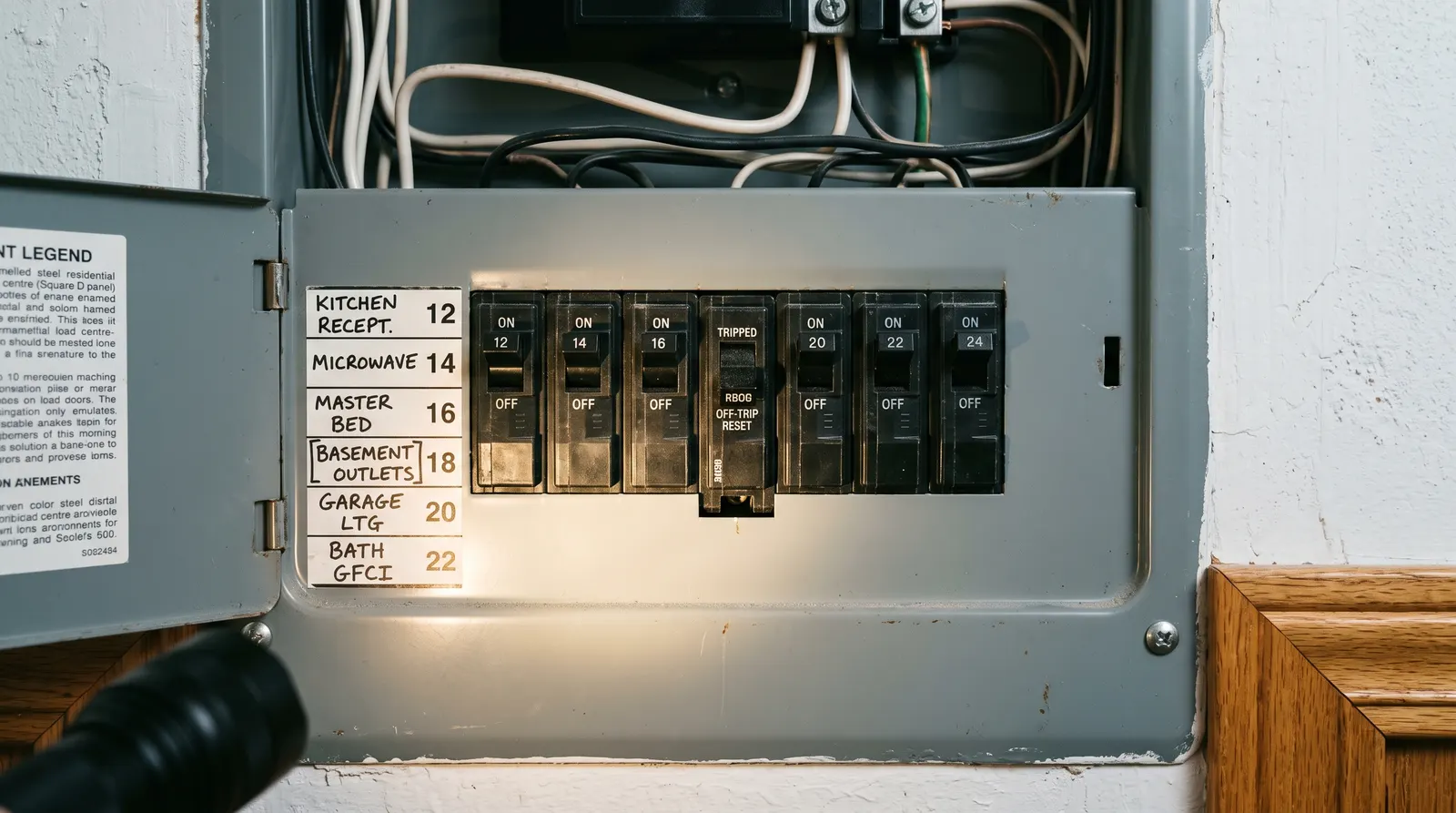
What a tripped handle looks like
AFCI and GFCI breakers
Never replace a breaker with a higher-rated one to stop the tripping. The breaker protects the wire, and a larger one lets the wire overheat instead.
Independent, publicly published sources, quoted with attribution and linked in full.
None is affiliated with Emergency Services 24H, reviewed this page, or works in the referral network.
United Tradesman Academy: Working service electrician - “How To Troubleshoot Circuit Breaker Tripping & Testing” (2022)
Tell us what has failed and how soon you need someone. We route your request to licensed, insured contractors covering your area, and they contact you directly.
Fire, a gas smell, or an injury? Leave the building and call 911 first, then your gas
utility or power company. Use this form once you are safe.