Lights flickering is usually a bulb or a dimmer and costs nothing to fix. The share that is loose wiring matters, because ESFI ties arcing faults to more than 28,000 home fires a year (ESFI, read 2026-07-22).
Lights flickering is a supply interruption, and the scope of the flicker identifies the cause faster than any list of possibilities.
One circuit means a loose connection. The whole house means the panel, the main neutral or the utility.
Every ranking page for this search gives an undifferentiated list of causes.
When the same circuit also trips, read what a a breaker tripping on the same circuit is telling you, because a faulty or mismatched dimmer and a loose connection produce the same symptom at the lights bulbs and only one of them heats.
Scope the flicker first
How do I work out why my lights are flickering?
Establish how much is affected. A single fixture points at the bulb, its holder or its dimmer. A whole circuit points at a loose termination shared by everything on it.
Two-minute diagnosis
Narrow it by scope, in this order
01
Test one fixture
Does it flicker on its own, with nothing else happening in the house? A single fixture points at the bulb, the holder or the dimmer serving it.
02
Test the room
Switch on every light on the same circuit. If they all flicker together, the fault is shared and sits at a connection somewhere on that run.
03
Test the house
Whole-house flicker, especially if some rooms brighten while others dim, points at the panel, the main neutral or the utility supply.
04
Ask a neighbor
If the street flickers too, it is the utility. That is a call to your power company and nothing an electrician can fix inside your property.
Cited source~19:45
The same fault that makes a light flicker is the one that starts fires.
“the cause of most fires in homes are loose connections”
TA
Thomas Adams
Oregon master electrician and business owner
Classic Electric, 2026
An independent source we cite. Not affiliated with Emergency Services 24H, and not a network contractor.
One lamp with the lights flickering on it alone is the large benign majority, and three checks clear almost all of it.
Seating. Switch off, let the bulb cool, and screw it firmly home.
The bulb itself. Swap it for a known-good one.
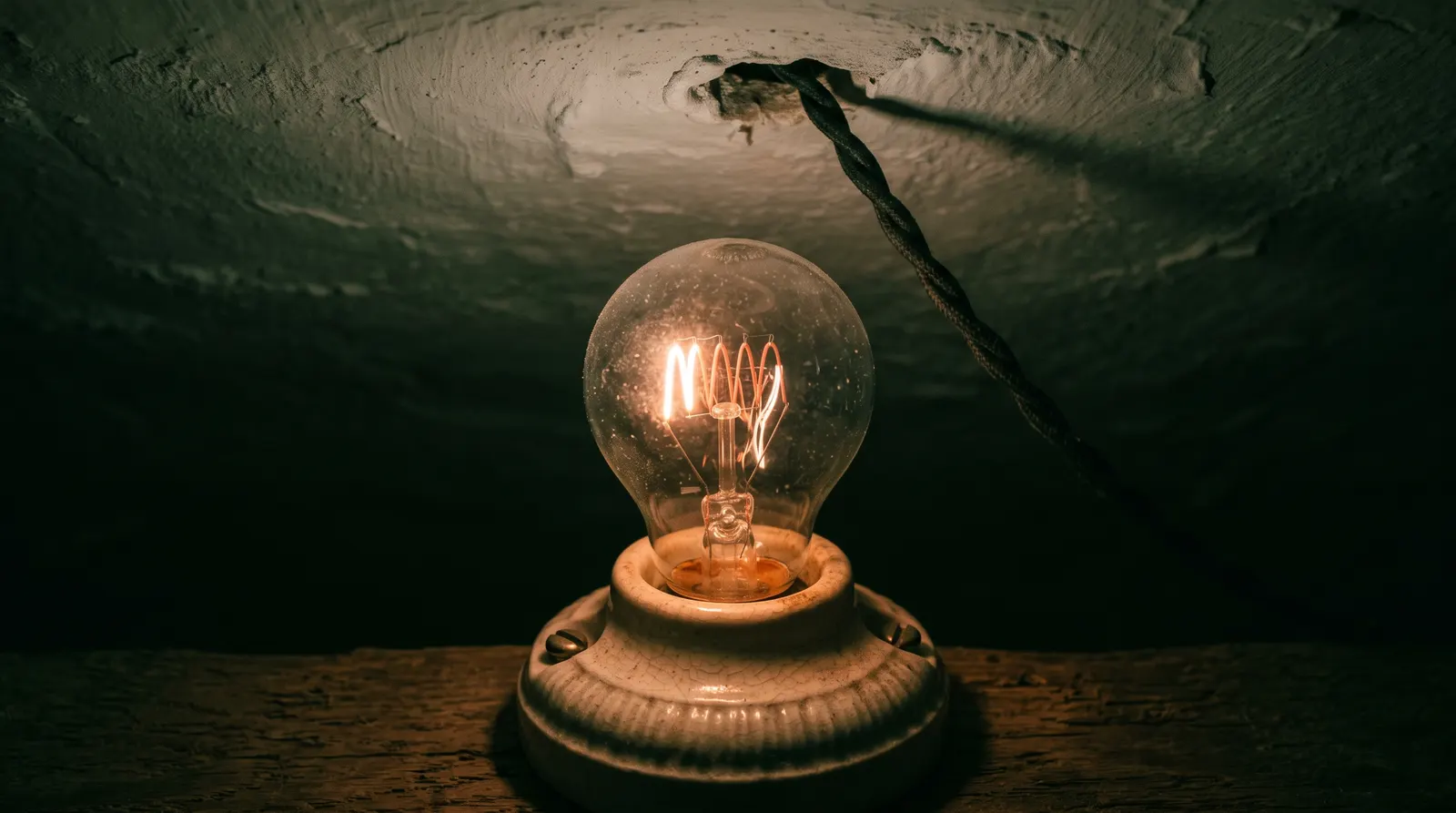
The holder. A brass tab in an Edison socket that has been flattened by over-tightening will not press on the base properly.
Why LEDs flicker on old dimmers
This is now the most common cause of household flicker and none of the ranking pages explains it properly.
Older leading-edge dimmers were built for incandescent bulbs, which draw a lot of current and behave as a simple resistive load.
The dimmer’s switching circuit needs a minimum current to hold a stable trigger point, and an LED does not supply it.
The fix is an LED-compatible trailing-edge dimmer rather than a different bulb, and swapping every dimmer in a house that has been converted to LED is a common and legitimate job.
One room or one circuit flickering
When every fixture on a circuit has its lights flickering together, the fault is shared, which means it sits upstream at a connection.
The usual culprit is a loose termination: a backstab push-in connector in a receptacle that has relaxed over years of heating and cooling, or a wire nut that was never tightened properly.
This is the case that escalates.
Flicker plus warmth or smell is not a lighting problem
If any switch plate, outlet or fitting on the flickering circuit is warm to the touch, discoloured, or smells of hot plastic, stop treating this as a lighting fault.
Whole-house flicker and the loose neutral
House-wide flicker is a different category and it is the one worth taking seriously immediately.
The signature to watch for is asymmetry: lights in some rooms brighten while lights in other rooms dim, often as a large appliance cycles.
The consequence is not just flicker.
Flicker when an appliance starts
Is it normal for lights to dim when the AC turns on?
A brief dip is normal. Motor-driven appliances draw several times their running current for a fraction of a second at start-up, and the whole house sees it.
The distinction is between a momentary sag and a sustained one.
Repeated deep dips are worth a load assessment.
When lights flickering becomes a fire risk
Flicker on its own is rarely dangerous.
The mechanism behind all three is the same one Oregon master electrician Thomas Adams names as the cause of most house fires in his experience: loose connections.
Most of the time the intermittency is in a lamp, a dimmer or a driver and nothing is heating.
That is why the combinations below matter more than the flicker.
Flicker plus heat or smell. A warm switch plate, a hot fitting, or any burning-plastic odour on the same circuit. Isolate it tonight.
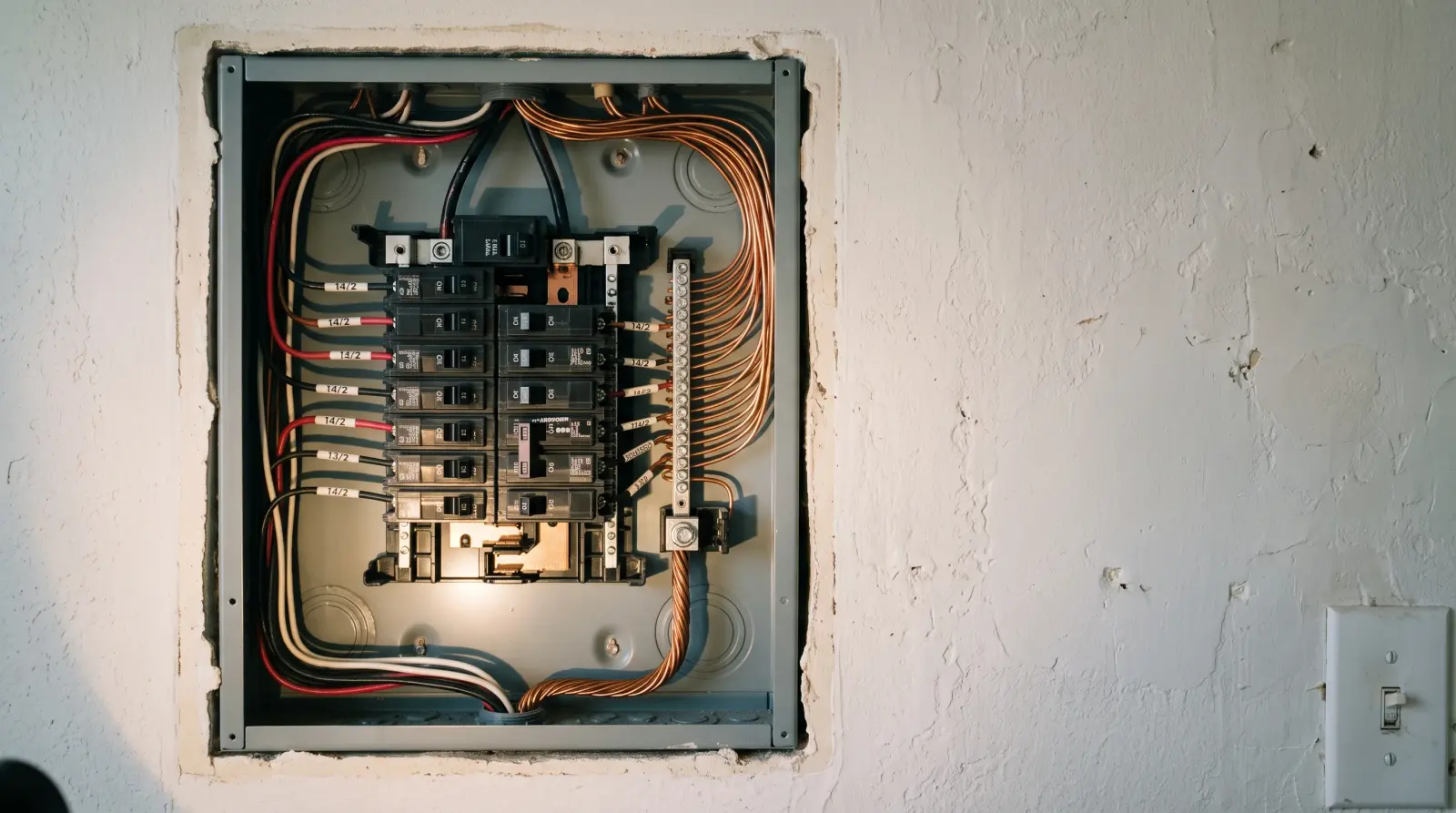
Flicker plus tripping. A circuit that both flickers and trips its breaker is showing you two symptoms of one fault.
Flicker plus scorching. Any discolouration at an outlet, switch or fitting means the connection has already been hot. That is not a wait-and-see situation.
If a smell is present at all, treat it as a burning electrical smell first and a flicker problem second.
The apartment and shared-supply case
A large share of people searching this live in apartments, where the useful advice is different and nobody gives it.
Ask neighbors before assuming the fault is inside your unit.
The reporting route is the building management company or the landlord rather than a private electrician, and putting it in writing matters because shared-supply faults tend to move slowly until they are documented.
Know the line
Safe to check yourself, or call a pro now?
Safe to check yourself
Reseating or swapping a bulb after letting it cool
Testing whether the flicker is one fixture, one circuit or the house
Asking neighbors whether the street is affected
Noting whether flicker coincides with an appliance starting
Switching a circuit off at the panel from a dry position
Call a pro now
Any flicker with heat, scorching or a burning smell
Whole-house flicker, or rooms brightening while others dim
Replacing a dimmer, switch, fitting or receptacle
Flicker on a circuit that also trips its breaker
Anything inside the panel, ever
24/7 dispatch network
Get a licensed electrician moving on this
Flicker with heat or a smell, or a whole-circuit fault you cannot narrow down. Send the symptoms and licensed, insured electricians covering your area will contact you directly. No obligation.
Fire, a gas smell, or an injury? Leave the building and call 911 first, then your gas
utility or power company. Use this form once you are safe.
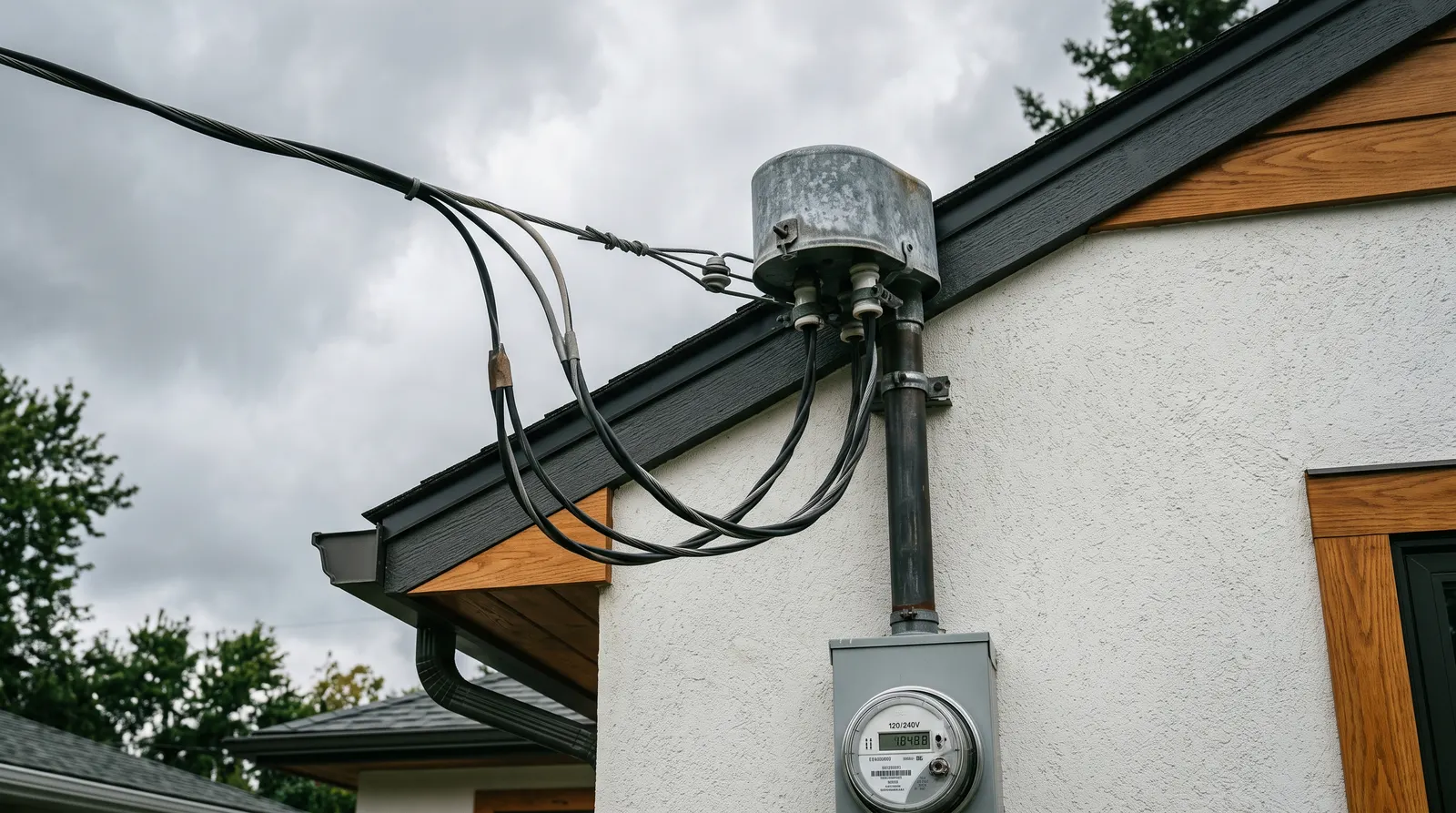
Whole-house flicker, especially with lights brightening as well as dimming, can indicate a loose service neutral. That is a utility-side fault and a genuine fire and equipment risk.
What tracing a flicker costs
Indicative US ranges. Always get a written quote.
Job
Typical range
Notes
Service-call fee
$100–$200
Usually covers the first hour on site
Standard labor
$50–$130 / hr
Weekday business hours
Emergency / after-hours labor
$100–$250 / hr
Typically 1.5×–2× standard
Intermittent flicker tracing
often 2+ hours
The fault has to be provoked before it can be measured (electrician trade-forum reports, read 2026-07-22)
LED-compatible dimmer swap
inside one hour
Part cost is modest; the diagnosis is the value
Source: HomeGuide 2026 electrician cost per hour; Angi 2026 electrician cost data (retrieved August 2026). Figures vary by region and timing.
Figures last checked
Intermittent faults are the expensive kind, because the electrician has to provoke the condition before they can measure it.
Emergency Services 24H is a referral service. We do not employ electricians and we do not carry out electrical work.
What we do instead is match the job: the request goes to licensed, insured contractors who cover your address, and the contractor calls you.
A flicker and a fire are often the same fault at different stages
A documented first-hand account, not a market pattern.
A working service technician, in a 2020 published video, describing loose and arcing connections found on residential service calls and the heat they produce before anything visibly fails.
Most people live with a flickering light for months.
It arcs intermittently, which is what you see as a flicker, and it heats up where nobody is looking.
What this does not say: One practitioner's causal judgement about connection faults, not a measured association; it cannot support any share of residential fires, and USFA cause coding would not resolve it either. A second tradesperson cited elsewhere in this bank makes the same point about loose connections, which is corroboration by agreement rather than by evidence.
Start with scope. One lamp flickering is almost always the bulb, the holder or an incompatible dimmer.
Should I worry if my lights flicker?
Not usually, and yes in three specific cases: if the flicker is house-wide, if it comes with a burning smell or a warm switch plate, or if the same circuit also trips its breaker. ESFI attributes more than 28,000 home fires a year to arcing faults (ESFI, read 2026-07-22), and arcing produces exactly this intermittent behavior.
Are flickering lights a fire hazard?
Flicker itself is a symptom, not a hazard. What it can indicate is a loose termination arcing inside a wall box, which generates heat where nothing can carry it away.
Why do my LED bulbs flicker on a dimmer?
Because most older dimmers were designed for incandescent bulbs, which draw far more current. An LED presents a much smaller load, so the dimmer cannot hold a stable switching point and the light pulses.
Why do my lights dim when the AC starts?
A brief dip as a large motor starts is normal, because the inrush current is several times its running current. What is not normal is a deep dip, a dip that lasts more than a second, or lights that stay noticeably dimmer while the appliance runs.
When to worry about flickering lights?
Worry when multiple lights or all your household lights flicker together, when the same circuit flickers under load, or when a fitting is warm. Those point at loose wiring or overloaded circuits rather than a loose bulb, and that is an electrical problem rather than a lamp problem.
Why do fluorescent tube lights flicker in cold weather?
Fluorescent lights and older tube lights start slowly when the tube or the ballast is cold or failing, so a flicker that settles after a minute is normal for them. LED lights do not behave that way: if LED lights keep flickering, look at the dimmer first.
What are the common causes and fixes when home lights flicker?
The common causes are a loose bulb, an incompatible dimmer, a failing fixture, loose wiring at a switch or outlet, and overloaded circuits. The fixes run in that order, and only the last two need an electrician.
Do I call the utility or an electrician for flickering lights?
Call the utility if the whole house flickers, if neighbors have the same problem, or if lights brighten in some rooms while dimming in others, which suggests a failing service neutral. Call an electrician if the flicker is confined to your property, one circuit or one fixture.
Loose neutral symptoms
The service entrance
Utility-side neutral faults are usually repaired by the power company at no cost. Call them before you pay a private electrician to investigate.
Independent, publicly published sources, quoted with attribution and linked in full.
None is affiliated with Emergency Services 24H, reviewed this page, or works in the referral network.
Thomas Adams: Oregon master electrician and business owner, Classic Electric - “If You Want To Know Why Your Breaker Trips, Watch THIS!” (2026)
Tell us what has failed and how soon you need someone. We route your request to licensed, insured contractors covering your area, and they contact you directly.
Fire, a gas smell, or an injury? Leave the building and call 911 first, then your gas
utility or power company. Use this form once you are safe.