Burning electrical smell: what to do in the next five minutes
A burning electrical smell is the fastest-moving fault on this site: overheating insulation gives off odour before it ignites, and ESFI ties arcing faults to more than 28,000 home fires a year (ESFI, read 2026-07-22). Find the source or cut the power.
A burning electrical smell is overheating polymer: melting wire insulation, an outlet body, or a circuit board.
An electrical fire smell like hot plastic usually starts with overloaded circuits and electrical wires warming inside a wall or a box. When the same circuit also trips, read what a a breaker that trips again and again is telling you.
An electrical smell without a visible source is still a fault: a smell in house air that returns under load is the wall, not the weather.
First: is this a leave-the-house situation?
When does a burning electrical smell mean evacuate?
Any visible smoke or flame, a smell that is strengthening, or a smell coming from inside a wall, a ceiling or the panel that you cannot locate. In those cases leave and call 911.
Leave and call 911: smoke, flame, a strengthening smell, or an unlocatable smell from a wall, ceiling or panel.
Isolate and call an electrician tonight: smell plus a warm or discoloured outlet, switch or fitting that you can identify.
Investigate carefully: faint smell, nothing warm, no discolouration, and a plausible harmless cause.
In all three: test the smoke alarms before anyone sleeps.
The first five minutes
Killing power safely when you cannot find the source
01
Smoke or flame? Leave and call 911
Do not investigate a visible fire. Get everyone out, close doors behind you, and call from outside.
02
Unplug what you can reach
Anything on the suspect circuit, starting with heat-producing appliances and extension leads. Do not pull a plug that is hot or scorched; kill the circuit instead.
03
Kill the circuit from a dry position
Dry floor, dry hands, one hand. Switch off the breaker for that area.
04
Ventilate, then call
Open windows. Do not stand over a hot fitting breathing the fumes while you investigate.
Cited source~20:21
“So you get this fallacy over the years that if I don't have anything plugged into an outlet, it won't cause a fire. Oh yes it will.”
TA
Thomas Adams
Oregon master electrician and business owner
Classic Electric, 2026
An independent source we cite. Not affiliated with Emergency Services 24H, and not a network contractor.
It is the odour of polymer breaking down under heat.
Most people describe it as sharp, acrid and chemical, like burning plastic or hot rubber.
The important property is that the smell arrives before the fire, not with it.
Thomas Adams, an Oregon master electrician, puts the underlying cause in one phrase from his own field experience: the cause of most house fires is loose connections.
He also kills the assumption that buys people an extra day of waiting: that an outlet with nothing plugged into it cannot start a fire.
The conductors behind the faceplate are live whether or not anything is drawing from them, and a loose connection inside the box heats regardless of what is in the socket.
Never put water on an electrical fire
Water conducts. Throwing it at an energised fire routes current back along the stream to whoever is holding the bucket, and it spreads a burning appliance rather than smothering it. If there is fire, leave and call 911.
Smells that are not an electrical fault
Seasonal burn-off. The first cold night of the year, when heating runs for the first time in months, is the single most common false alarm.
New appliance cure. Ovens, space heaters and hair dryers give off a manufacturing smell on first use. It fades and does not return.
Overworked motor. A vacuum with a blocked filter, a bathroom fan clogged with lint, or a fridge with a jammed condenser fan smells hot without being an electrical fault as such.
Something in the ductwork. Debris or a dead animal on a heat exchanger smells organic rather than chemical. Unpleasant, and not a fire risk.
Where the smell usually comes from
Four locations account for most genuine cases, and they are worth checking in this order because they are ordered by how likely they are to be the source.
Outlets and switch plates. Feel each one on the suspect circuit with the back of a hand.
Extension leads and power strips. Especially under a rug, behind furniture, or carrying a heater. Daisy-chained strips are a classic.
Light fittings. Over-wattage bulbs in enclosed fittings cook the wiring in the rose.
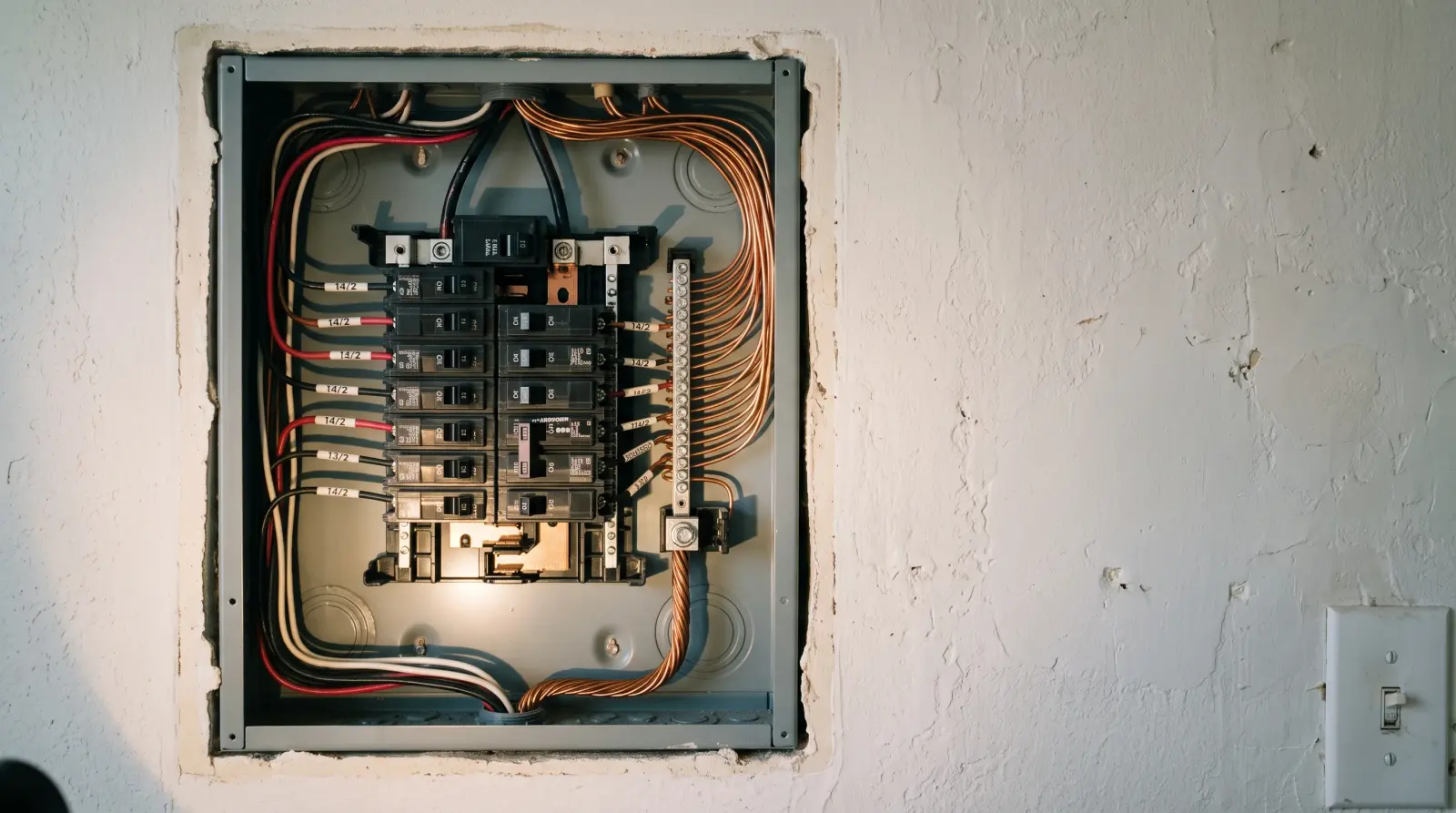
The panel itself. A smell at the panel is the most serious version, because it usually means a loose termination is arcing on a main conductor.
Is the smell itself toxic?
Is a burning electrical smell harmful to breathe?
Burning PVC cable insulation gives off irritant gases that are unpleasant and best avoided. Ventilate, and do not stand over a hot fitting breathing it in while you investigate.
Smelling burning with nothing there
The first is that a smell outlasts the event that caused it.
The second is that the smell is not in the house.
Can I sleep in the house tonight?
If the source was never found, no. That is the whole answer, and it is uncomfortable to give because it usually means an after-hours call.
If you traced it to one appliance, unplugged it, and there is no smell anywhere else in the house, that is a different situation and it will keep until morning.
Test every smoke alarm before anyone sleeps either way.
Know the line
Safe to check yourself, or call a pro now?
Safe to check yourself
Unplugging appliances and extension leads on the suspect circuit
Feeling outlets and switch plates with the back of a hand
Switching a circuit off at the panel from a dry position
Opening windows and ventilating the area
Testing smoke alarms and checking for recent burn-off causes
Call a pro now
Any smell coming from the panel itself
A smell inside a wall or ceiling that you cannot locate
Removing an outlet, switch or light fitting to look behind it
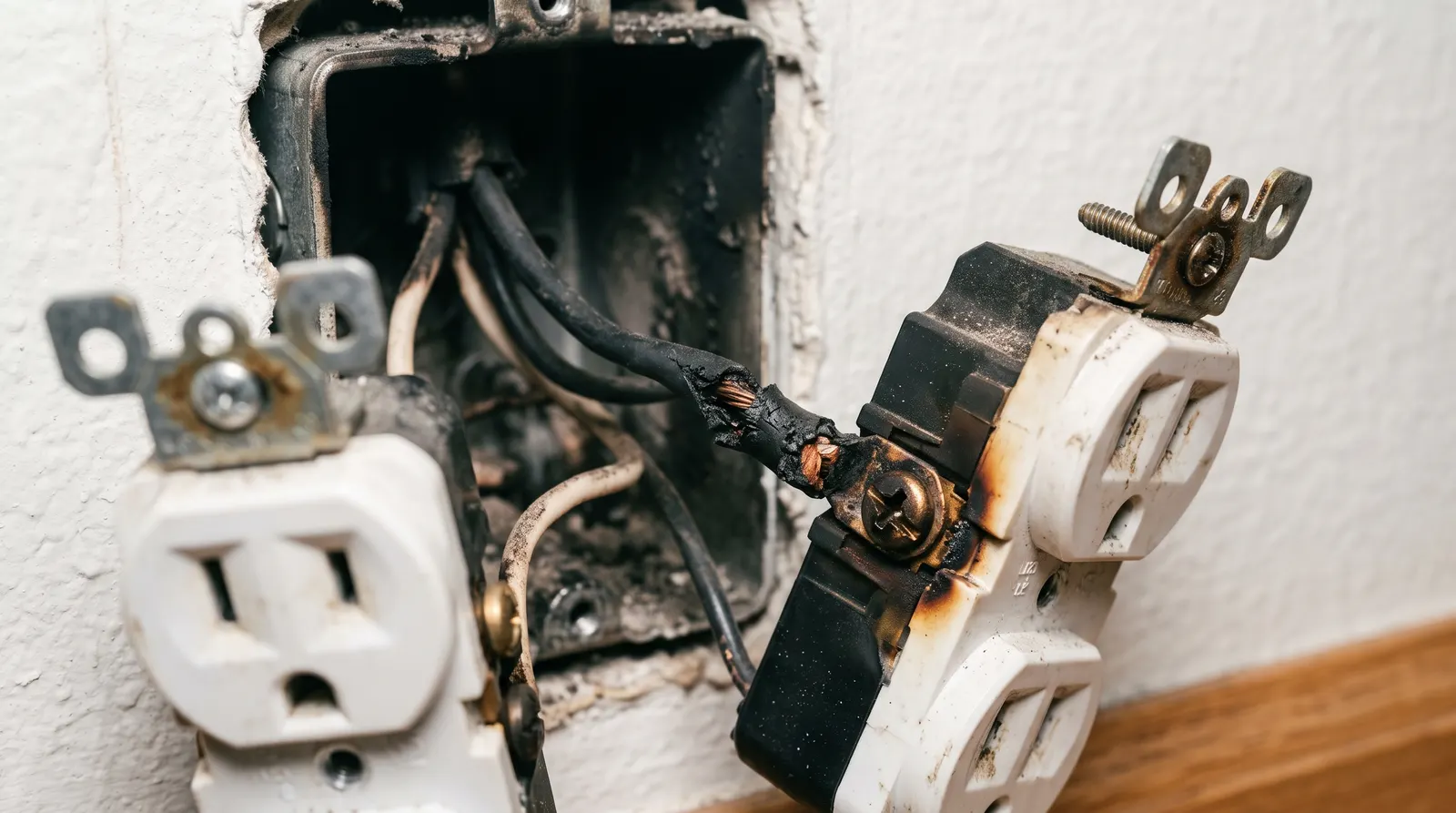
Anything already warm, discoloured or scorched
Any recurrence after the circuit has been isolated
24/7 dispatch network
Get a licensed electrician moving on this
A burning smell you cannot locate, or one traced to a warm outlet or the panel. Send the details and licensed, insured electricians covering your area will contact you directly. No obligation.
Fire, a gas smell, or an injury? Leave the building and call 911 first, then your gas
utility or power company. Use this form once you are safe.
There is no safe way to investigate this yourself. Kill the circuit at the panel, leave it off, and get a licensed electrician out.
What an after-hours call-out costs
Indicative US ranges. Always get a written quote.
Job
Typical range
Notes
Service-call fee
$100–$200
Usually covers the first hour on site
Standard labor
$50–$130 / hr
Weekday business hours
Emergency / after-hours labor
$100–$250 / hr
Typically 1.5×–2× standard
Typical after-hours call-out total
$150–$500
Labor plus parts on a straightforward fault
Night, weekend or holiday urgent call
$200–$800
Top of the band
Source: HomeGuide 2026 electrician cost per hour; Angi 2026 electrician cost data; Housecall Pro electrical pricing guidance (retrieved August 2026). Figures vary by region and timing.
Figures last checked
This is one of the few faults where the after-hours premium is straightforwardly worth paying.
An electrician on this call will usually thermal-image the panel and the suspect circuit, then open the warmest point. Full rate detail sits in our guide to what an emergency electrician charges.
How the matching works, and what we do not do
Emergency Services 24H is a referral service. We do not employ electricians and we do not attend faults ourselves.
Your request routes to licensed, insured contractors covering your area, and they contact you directly.
Why we do not tell you how many house fires start this way
You will find articles that state, to the fire, how many US house fires begin with an electrical fault.
The national figures are estimates modelled from a reporting system fire departments contribute to voluntarily.
Participation and cause coding vary by department and by state, and “cause under investigation” is itself one of the categories, so any single cause’s share moves between years for reasons that have nothing to do with what happened in anyone’s house.
What this does not say: NFIRS reporting is voluntary and incomplete; cause under investigation is itself a reporting category, so cause-specific shares are unstable between years.
Should I call the fire department if I smell electrical burning?
Call 911 if you can see smoke or flame, if the smell is strong and getting stronger, or if you cannot locate it and it seems to come from a wall, ceiling or the panel. Fire crews carry thermal cameras and will find a smouldering connection you cannot.
Why do I randomly smell electrical burning?
Usually because something briefly overheated and the odour lingers in soft furnishings long after the event. Work through the harmless causes first: seasonal burn-off from a heater or oven, dust on an element, or an overworked motor.
What are the early warning signs of an electrical fire?
A persistent burning-plastic odour, outlets or switch plates that feel warm, discolouration or scorch marks around a receptacle, buzzing or crackling from a wall or panel, lights that dim when nothing has changed, and breakers that trip repeatedly. ESFI attributes more than 28,000 home fires a year to arcing faults, which produce exactly these symptoms.
Is an electrical burning smell toxic?
Burning PVC cable insulation releases irritant gases that are unpleasant and best not breathed. Ventilate the area, and do not stand over a hot fitting inhaling it while you investigate.
Can you smell an electrical fire before it starts?
Often, yes. Overheating insulation gives off odour well before ignition, which is why a burning smell with no visible cause is treated as urgent rather than curious.
Is a burning electrical smell dangerous?
Yes. A burning smell like hot plastic or fish means an electrical wire or an electrical outlet is already running hot enough to break down its insulation.
How do I find the source of an electrical burning smell?
Work outlet by outlet and appliance by appliance: feel each faceplate, then unplug heat-producing loads such as a dishwasher, a space heater or a dryer. A dishwasher electrical fault and a failing outlet smell the same, so find source before you decide it has passed.
Does a burning smell that vanishes mean it was nothing?
No. A smell that came and went tells you when the circuit was loaded, not that the fault healed.
Can I sleep in the house after smelling burning?
Not if you never found the source. If you traced it to one appliance, unplugged it, and there is no smell anywhere else, that is a different situation.
Heat damage at a terminal
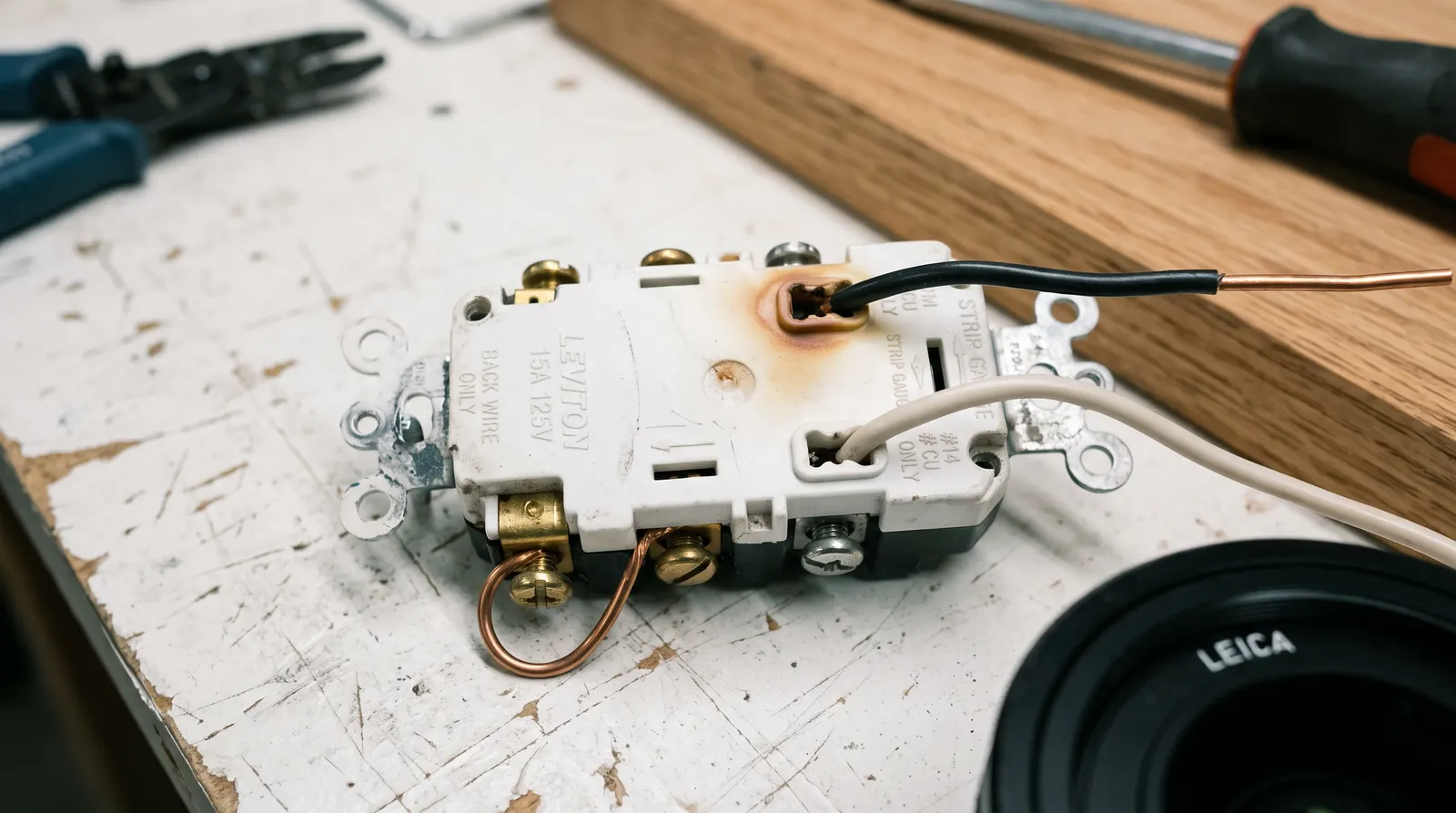
Backstab connections and why they fail
Backstabbed receptacle connections are a common cause of this smell. Re-landing conductors on the side screws is cheap and permanent.
Independent, publicly published sources, quoted with attribution and linked in full.
None is affiliated with Emergency Services 24H, reviewed this page, or works in the referral network.
Thomas Adams: Oregon master electrician and business owner, Classic Electric - “If You Want To Know Why Your Breaker Trips, Watch THIS!” (2026)
Tell us what has failed and how soon you need someone. We route your request to licensed, insured contractors covering your area, and they contact you directly.
Fire, a gas smell, or an injury? Leave the building and call 911 first, then your gas
utility or power company. Use this form once you are safe.