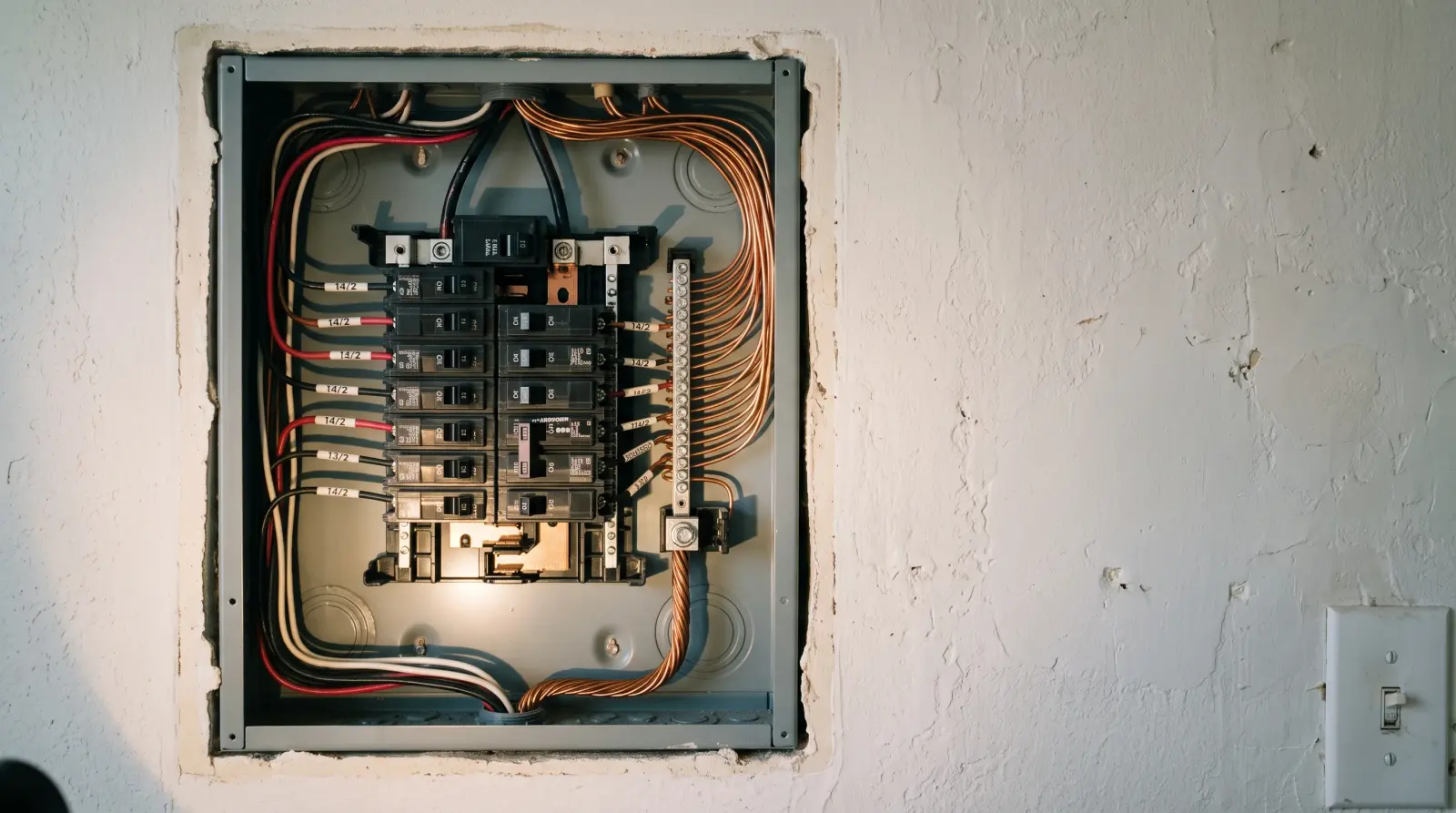
A buzzing electrical panel has one normal sound and three that are not. Arcing is the category ESFI ties to more than 28,000 home fires a year (ESFI, read 2026-07-22), so telling a faint hum from a crackle is the whole job.
A buzzing electrical panel is not automatically a fault. A faint hum audible only within a foot or two can be entirely normal.
The commercial pages ranking for this question average under 900 words on a genuine safety topic.
Is a buzzing electrical panel normal?
Should my breaker box make noise?
A quiet, steady, unchanging hum audible only close up can be normal. Anything you can hear across the room, anything intermittent, and anything that crackles or sizzles is not. Heat or a burning smell removes the question entirely.
Diagnose without touching
How to locate the sound safely
01
Listen without touching
Stand near the panel with the room quiet. Note whether the sound is constant, intermittent, or tied to something switching on elsewhere in the house.
02
Note what is running
Heating, air conditioning, a dryer or a well pump. A buzz that appears with one appliance narrows the fault to that breaker or its termination.
03
Check for heat and smell, from a distance
Back of a hand near the cover, not on it. Any warmth, any burning-plastic smell, or any discolouration around the panel changes this to a same-night call.
04
Do not open the cover
Removing the panel cover exposes busbars that stay live with every breaker off, and main lugs that stay live even with the main off. There is nothing you can safely see in there.
Cited source~10:20
On damage inside a panel that is invisible with the cover on.
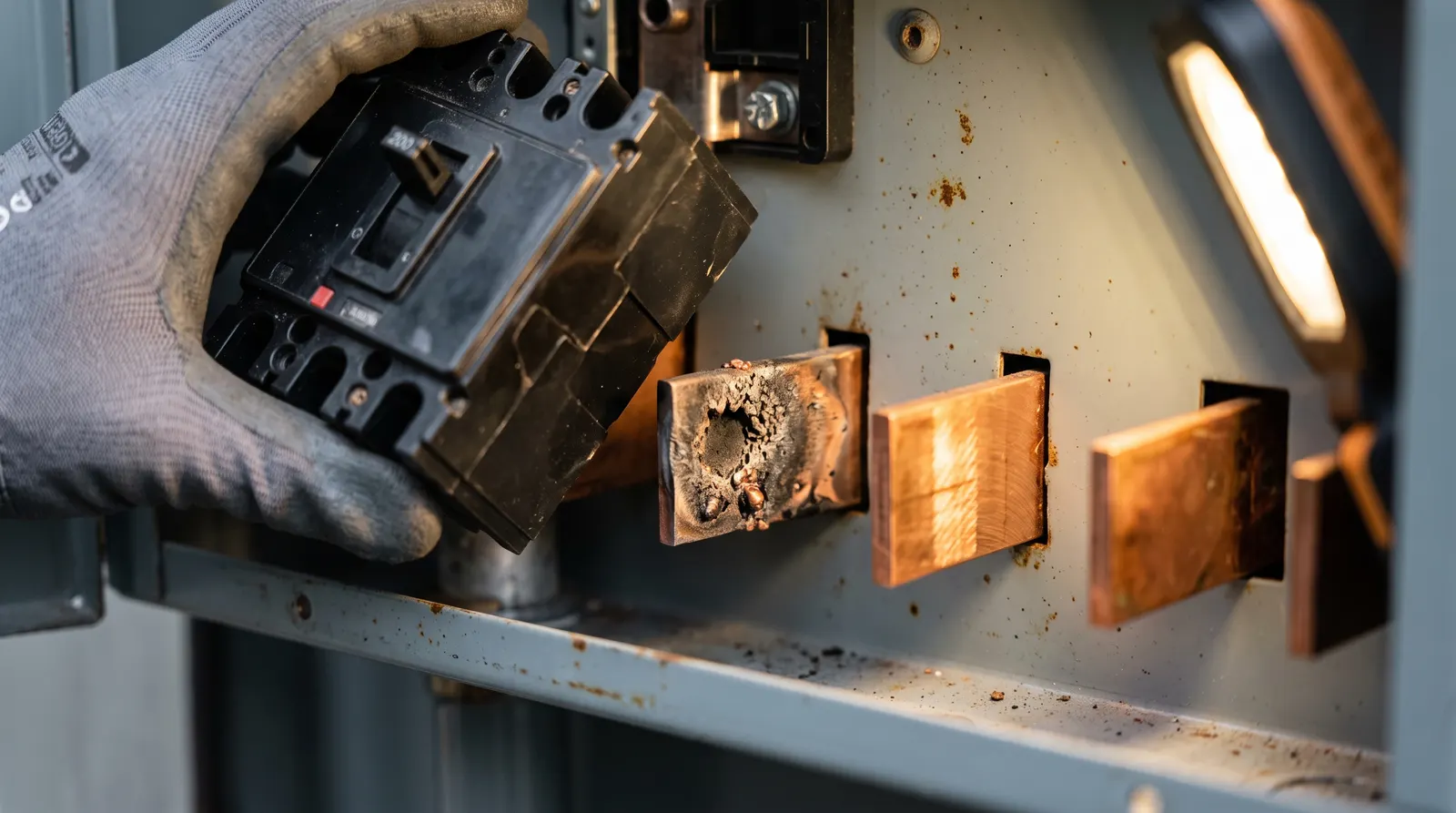
“sometimes you have to dig even further and take the breaker out and be like, whoa, that bus is messed up, and then you flip the breaker around and you're like, whoa, that thing's melted on the back - and it's things that from the front you would just have no idea about.”
DS
Dustin Stelzer
Electrician and electrical instructor
Electrician U, 2021
An independent source we cite. Not affiliated with Emergency Services 24H, and not a network contractor.
Alternating current reverses direction sixty times a second in the US, and the magnetic field it produces makes laminated steel physically flex at that frequency.
Inside a panel, breakers and any transformer-based device do it on a much smaller scale.
The useful part of understanding this is that a buzzing electrical panel making a normal hum has no reason to change.
Buzzing, crackling and sizzling are three different sounds
The search results treat panel noise as one phenomenon. It is three, and they carry different levels of urgency.
A steady buzz. Mechanical vibration, a loose panel cover or mounting screw, or a breaker that is not fully seated on the busbar.
Crackling. Intermittent arcing across a gap that opens and closes as things heat and cool.
Sizzling or frying. Sustained arcing, usually with heat already present.
If you also have a breaker that keeps tripping on the panel making the noise, treat the two symptoms as one fault rather than a coincidence.
What sits behind the second and third of those sounds is, in the words of Oregon master electrician Thomas Adams, the thing he holds responsible for most house fires: a loose connection.
Inside a panel that means a breaker not fully seated on the busbar, or a conductor not properly clamped at its terminal.
Dustin Stelzer of Electrician U describes what that eventually looks like when a breaker is finally pulled: melted or charred plastic on the back of the device where it meets the bus, and charring at the terminal where the branch wire leaves.
Do not open the panel cover
Do not open the panel cover
This is the instruction no ranking page gives, and it matters more than anything else here.
Removing the cover exposes the busbars, which remain live with every breaker switched off, and the main lugs, which remain live even with the main breaker off because they sit on the utility side of it.
Buzzing only when something is running
Why does the panel buzz only when the heat is on?
Because the noise is load-dependent, which narrows it to the breaker carrying that load or the termination behind it. A connection that is marginal makes no noise at rest and buzzes as soon as current flows through it.
Heating, air conditioning, electric dryers and well pumps are the usual triggers, because they draw hard and run for extended periods.
Write down which appliance is running when the sound starts.
When to switch the main off
Isolating the whole house is disruptive, so it is worth being clear about when it is the right call.
Switch the main off tonight if there is heat at the panel, any burning smell, visible scorching, or a sizzling sound.
Isolate the affected circuit only if the noise is load-dependent and you can identify the breaker, and there is no heat or smell.
Leave everything on and book a daytime call if the hum is faint, constant, unchanged for years, and nothing is warm.
Do all of it from a dry position with dry hands.
Can I sleep with the panel buzzing?
A buzzing electrical panel with a faint, unchanging hum, nothing warm and no smell: yes, and book a daytime appointment.
Crackling, sizzling, heat, scorching or any burning smell: no. Switch off the main and call tonight.
Test your smoke alarms before bed either way.
Know the line
Safe to check yourself, or call a pro now?
Safe to check yourself
Listening and characterizing the sound from a step back
Noting which appliance is running when it starts
Checking for heat and smell without touching the cover
Switching off an individual breaker from a dry position
Switching off the main, from a dry position, if there is heat or smell
Call a pro now
Removing the panel cover, under any circumstances
Tightening any termination inside the panel
Replacing a breaker, a busbar or the panel itself
Any crackling, sizzling, heat, scorching or burning smell
Panel noise in an apartment, which is usually the building owner responsibility
24/7 dispatch network
Get a licensed electrician moving on this
Panel noise with heat, a smell or crackling. Send the details and licensed, insured electricians covering your area will contact you directly. No obligation to hire.
Fire, a gas smell, or an injury? Leave the building and call 911 first, then your gas
utility or power company. Use this form once you are safe.
A panel is meant to be silent. Buzzing usually means a loose connection arcing under load, which is the exact mechanism behind panel fires.
What a panel inspection costs
Indicative US ranges. Always get a written quote.
Job
Typical range
Notes
Service-call fee
$100–$200
Usually covers the first hour on site
Standard labor
$50–$130 / hr
Weekday business hours
Emergency / after-hours labor
$100–$250 / hr
Typically 1.5×–2× standard
Breaker replacement
one hour + parts
Reported around $250 for a Saturday call-out
Panel inspection with thermal imaging
often 1–2 hours
Load has to be applied before hot spots show
Source: HomeGuide 2026 electrician cost per hour; Angi 2026 electrician cost data; licensed-electrician reported figures from public trade-forum threads, marked as reported (retrieved August 2026). Figures vary by region and timing.
Figures last checked
What the electrician will do
Knowing the sequence makes the bill readable and explains why this is not a five-minute job.
They apply load first, because a marginal termination makes no heat at rest.
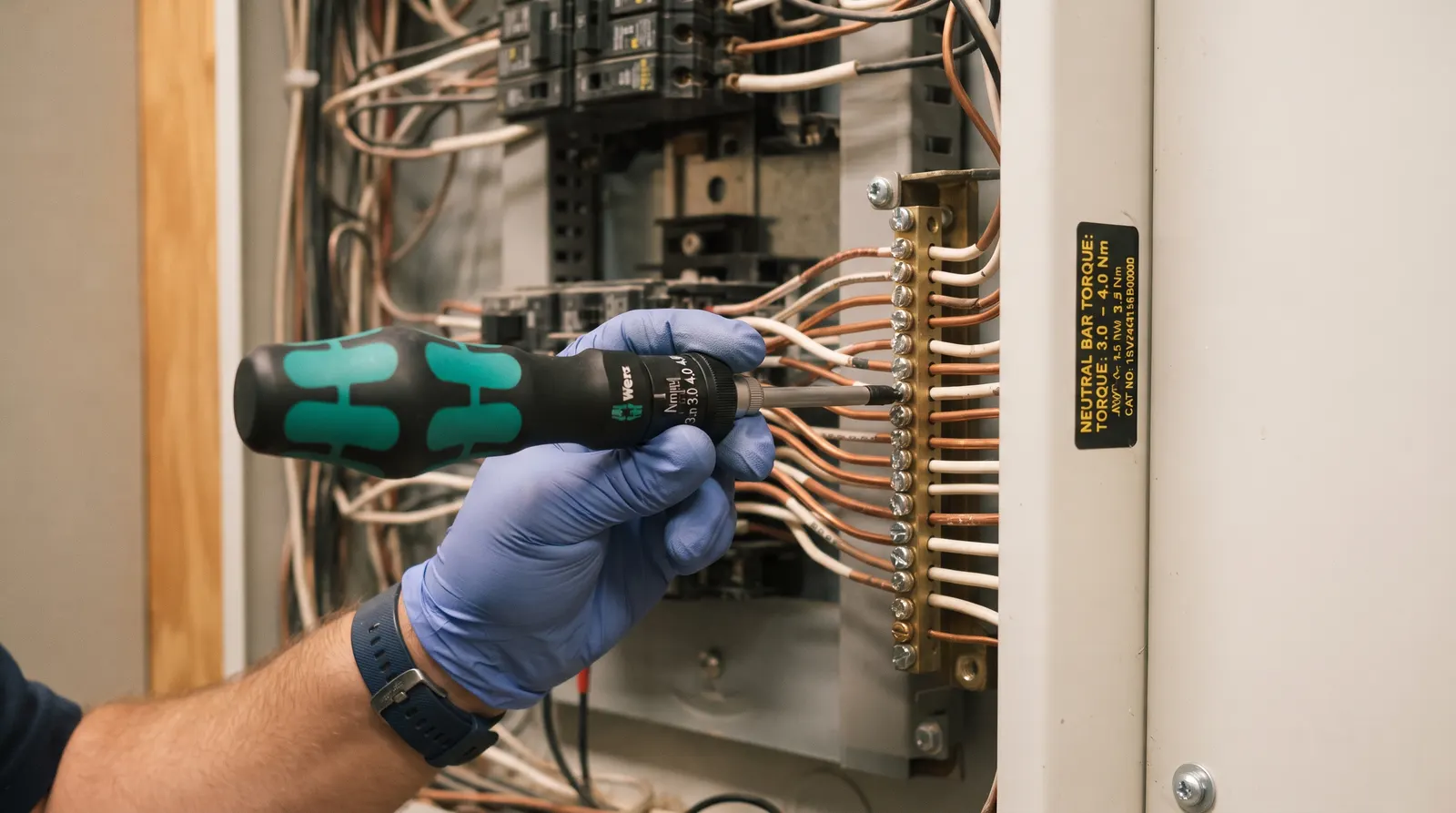
From there it is a torque check on every termination.
Then replacement of whatever is failing: a breaker, a busbar stab, or the conductor termination itself.
How the matching works, and what we do not do
Emergency Services 24H is a referral service. We do not employ electricians and we do not carry out panel work.
Your request routes to licensed, insured contractors covering your area, and they contact you directly.
Straight answers
Frequently asked questions
The questions homeowners actually search for on this problem, answered in plain language.
A faint hum you can only hear with your ear close to the panel can be normal. Alternating current vibrates the laminated steel inside breakers and transformers sixty times a second, and that produces a low, consistent, unchanging sound. Anything audible from across the room is not that.
Is electrical buzzing normal?
Quiet, steady and unchanging is normal. Loud, intermittent, crackling or sizzling is not, and neither is any sound accompanied by heat, discolouration or a burning smell. The distinction that matters is not really the volume, it is whether the sound is constant or irregular.
What does a blown breaker sound like?
A failing breaker often buzzes or chatters under load rather than producing a single dramatic noise, and it may feel warm. A breaker that trips with a solid mechanical clack is working correctly. One that hums, sizzles or feels hot to the back of a finger is the one to be concerned about.
How do you fix a buzzing breaker?
Not as a homeowner. Diagnosing panel noise means removing the cover, which exposes live busbars that remain energised with every breaker off and even with the main off. An electrician thermal-images the panel under load, checks termination torque, and replaces the failing breaker or repairs the connection.
Is a buzzing fuse box dangerous?
It can be. Loose terminations, failing breakers and arcing all produce audible noise, and arcing in particular generates heat inside an enclosure with nowhere for it to go. ESFI attributes more than 28,000 home fires a year to arcing faults, which makes panel noise worth a same-week call and heat a same-night one.
Is a buzzing breaker box dangerous?
A quiet, steady hum is not. A loud humming noise, a buzzing sound that comes and goes, a sizzling noise or an occasional spark all mean a loose termination or a failing circuit breaker, and those are the faults that start fires.
Why does the panel buzz only when the air conditioner starts?
Because the noise is load-dependent. A compressor or a failing AC capacitor inside an AC unit pulls heavy inrush current, so a breaker panel making a buzzing noise when turned on is telling you which circuit carries the fault.
What does buzzing under load usually turn out to be?
Most often a loose connection on one overloaded circuit, where the sound from the electrical panel rises and falls with what is running. A breaker that makes buzzing sounds every time the same appliance starts is the one an electrician will meter first.
Why does my breaker box buzz when the heat is on?
Because the noise is load-dependent, which usually narrows it to the breaker carrying that load or its termination. Heating and air conditioning circuits draw hard and are the most common culprits. Note which appliance is running when the sound starts, because that tells the electrician exactly where to look.
A loose bus connection
Torque, not tightness
Certain legacy panel brands cannot be safely repaired and are replaced as a matter of policy. Ask the electrician to identify the panel before quoting parts.
Independent, publicly published sources, quoted with attribution and linked in full.
None is affiliated with Emergency Services 24H, reviewed this page, or works in the referral network.
Dustin Stelzer: Electrician and electrical instructor, Electrician U - “How to Tell if a Breaker is Bad” (2021)
Tell us what has failed and how soon you need someone. We route your request to licensed, insured contractors covering your area, and they contact you directly.
Fire, a gas smell, or an injury? Leave the building and call 911 first, then your gas
utility or power company. Use this form once you are safe.