Not one page ranking for this search publishes a rate. Here is the whole structure: the call-out fee, the hourly rate, the after-hours multiplier, and what makes one job cost more than another.
An emergency electrician in the United States charges a $100 to $200 service call that usually covers the first hour, then $50 to $130 an hour in normal hours or $100 to $250 an hour after hours. A night, weekend or holiday call-out commonly totals $200 to $800 including parts.
Every page ranking for this term promises upfront pricing and publishes none. If you are holding a quote right now, the tables below tell you whether it sits inside the market band.
The short answer on emergency electrician cost
How much does an emergency electrician cost?
A $100 to $200 service call covering the first hour, plus $50 to $130 an hour standard or $100 to $250 an hour after hours. After-hours labor typically runs 1.5 to 2 times standard, and night or holiday call-outs commonly total $200 to $800.
Two pricing models exist and they are rarely disclosed. Some firms fold the first hour into the service call; others charge a smaller trip fee and start the clock on arrival. The questions further down reveal which you are dealing with before the van leaves.
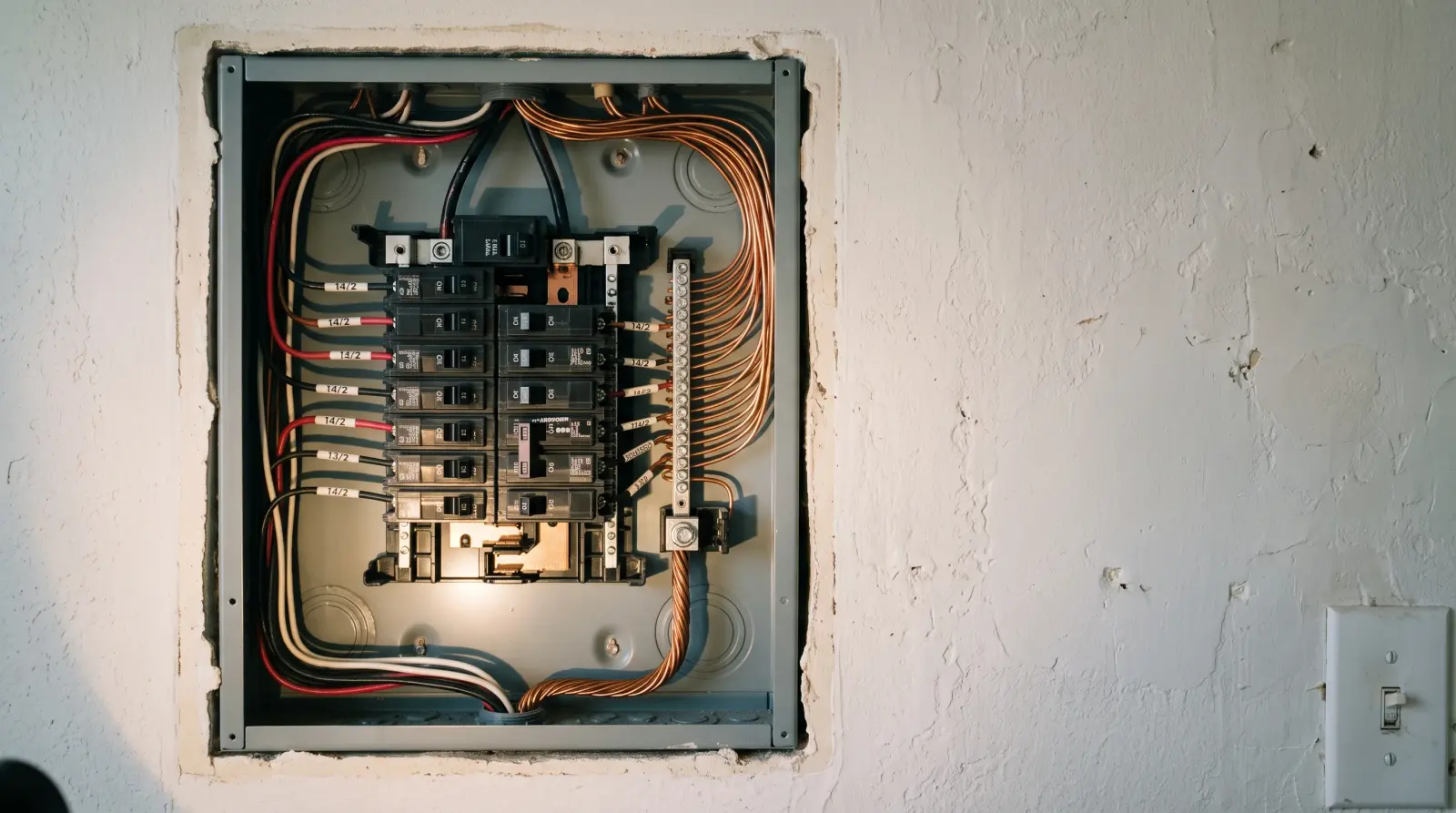
Electrical is the category where waiting is least defensible. An arcing connection does not stabilise overnight; it gets hotter.
Rate card: fees, labor and the after-hours premium
Indicative US ranges. Always get a written quote.
Job
Typical range
Notes
Service-call fee
$100–$200
Usually covers the first hour on site
Separate trip fee, where charged instead
$40–$100
Some firms use a flat $150–$300 emergency fee
Standard labor
$50–$130 / hr
Weekday business hours
Emergency / after-hours labor
$100–$250 / hr
Typically 1.5×–2× standard
Typical after-hours call-out total
$150–$500
Labor plus parts on a straightforward fault
Night, weekend or holiday urgent call
$200–$800
Top of the band, holidays included
Source: HomeGuide 2026 electrician cost per hour; Angi 2026 electrician cost data; Housecall Pro electrical pricing guidance (retrieved August 2026). Figures vary by region, severity and after-hours timing.
Figures last checked
What the call-out fee is really buying
The service call covers travel, the diagnostic look, and in most cases the first hour on site. It is not a deposit against the repair unless the company says so.
That distinction produces most of the doorstep disagreements in this trade. A firm charging $180 that credits it against the work is cheaper than a firm charging $120 that does not, the moment any repair actually happens.
Credited or not. Ask outright whether the fee comes off the final invoice if you approve the work.
What the first hour includes. Some quotes bundle it into the call-out, some start the clock separately.
Minimum charge. Two-hour minimums exist overnight and change the maths on a twenty-minute fix.
Parts markup. After-hours parts come from retail shelves rather than trade counters, which shows in the materials line.
What actually drives the price up
The hourly rate is only half the bill. Four things decide how many hours there are, and none of the ranking pages mentions any of them.
Intermittent versus constant. A fault that is present when the electrician arrives is measurable. One that comes and goes has to be provoked first, which routinely doubles the time.
Panel work. Anything inside the panel means isolation, cover removal, thermal imaging under load and a torque check on terminations. That is an hour before any repair begins.
Access. A crawlspace, a loft with no boarding, or a cable buried in a finished wall costs time that has nothing to do with the electrical work itself.
Chain length. Tracing a dead circuit means opening devices one by one along the run. A long circuit through finished rooms is genuinely slow.
You can shorten most of these. Note what is running when the fault appears, write down which outlets work and which do not, and clear access to the panel before anyone arrives.
Cost by job, not by category
Indicative US ranges. Always get a written quote.
Job
Typical range
Notes
Outlet or switch replacement
inside one hour + part
Part cost is a few dollars
Breaker replacement
one hour + part
Reported around $250 on a Saturday call-out
Main breaker replacement
~2 hours + part
Reported around $90/hr plus parts, standard hours
Tracing an intermittent fault
2 hours+
The condition has to be provoked before it can be measured
Panel inspection with thermal imaging
1–2 hours
Load applied first, then imaged under load
Source: HomeGuide 2026 electrician cost per hour; licensed-electrician reported figures from public trade-forum threads, marked as reported (retrieved August 2026). Figures vary by region, severity and after-hours timing.
Figures last checked
24/7 dispatch network
Get a quote from a licensed electrician in your ZIP
Send the fault and your ZIP code and licensed, insured electricians covering your area will contact you directly. Compare what you are quoted against the tables above. No obligation to hire.
Fire, a gas smell, or an injury? Leave the building and call 911 first, then your gas
utility or power company. Use this form once you are safe.
What homeowners actually ask
What electricians report charging
Drawn from real public forum threads and reported prices, summarised and attributed as patterns.
These are not reviews of this site, and no names or ratings have been invented.
“$200 plus materials for the first hour on an emergency call, including a twenty-minute drive”
SourceLicensed electrician describing emergency pricing on forums.mikeholt.com, in a thread about smoke from a panel. A trade pricing pattern, not a quote for your job.
“$250 for a Saturday-morning service call to replace a breaker”
SourceReported figure in a weekend service-call pricing thread on forums.mikeholt.com.
“About $90 an hour plus the cost of the breaker, roughly two hours for a main-breaker replacement”
SourceElectrician in the same thread, describing standard rather than emergency rates.
“How much is emergency service worth?”
SourceThread title, forums.mikeholt.com. Electricians disagreeing among themselves about emergency pricing, which is why published ranges are wide.
1 / 4
Those figures come from electricians discussing their own pricing on a trade forum rather than from a cost aggregator, which makes them useful as a sanity check and unsuitable as a rate card. Note that the electricians in that thread disagree with each other, which is the honest reason published ranges are as wide as they are.
The five questions to ask before dispatch
An emergency is the worst negotiating position available. Ninety seconds of questions fixes most of that.
What is the call-out fee, and is it credited against the repair? Expect $100 to $200, or a $40 to $100 trip fee.
What is the hourly rate right now? A number, not "our emergency rate".
Is there a minimum charge? Two hours is common overnight.
What is your state licence number, and are you insured? Both are checkable and the hesitation is the answer.
Will I get a written quote before work starts? Diagnose, price, then work. Any other order is how bills get surprising.
Ask for it in a text message if it is the middle of the night. A quoted rate in writing eliminates the entire class of dispute that begins with "that is not what I was told on the phone".
Warning signs of an emergency electrical bait price
The FTC documents the bait-and-switch pattern in emergency trades: a low headline price on the phone, a much larger number once the technician is on site and you feel committed.
A firm price quoted over the phone before anyone has seen the fault.
Reluctance to give a licence number, a company address or proof of insurance.
Cash-only pressure, or a large deposit demanded before any work.
The scope growing sharply the moment the panel cover comes off, with no written revision.
A dispatcher who will not state the call-out fee and the hourly rate as two separate numbers.
What can wait until morning, and what it saves
Should I pay the emergency rate tonight?
If the faulty circuit is isolated at the panel, nothing smells of burning, and your smoke alarms work, wait and pay the standard rate. If there is heat, a burning smell, panel noise or a breaker that will not hold, call tonight.
Waiting typically halves the labor rate, which on a two-hour job is $100 to $240. That is a real saving and it is worth taking when the fault is genuinely isolated.
It is not worth taking against heat or smell. ESFI attributes more than 28,000 home fires a year to arcing faults, and an arcing connection gives no reliable warning of how much time you have. Our page on a burning electrical smell covers where that line sits, and the guide to what counts as an electrical emergency covers the rest.
Never let price delay a 911 call
Smoke, flame, a shock injury or a downed power line is an emergency-services call and not a pricing decision. Every cost consideration on this page applies after the immediate danger has been dealt with, not instead of dealing with it.
Do electricians come out for free?
For quotable work, often yes. A rewire, a new circuit or a panel upgrade is a competitive quote and most firms will price it without charge.
For diagnosing an unknown fault, almost never, because the diagnosis is the work. An electrician who spends an hour finding an arcing termination has delivered the entire value of the visit before they touch a tool, and that is what the service call pays for.
Does insurance cover any of this?
Generally the damage rather than the repair. A policy typically responds to fire damage caused by an electrical fault, while the failed component and the labor to replace it are usually excluded as maintenance.
Photograph everything before anything is replaced, and ask the electrician to note the cause on the invoice. A written cause is what turns a repair bill into supporting evidence for a claim, and it costs nothing to request at the time.
How the matching works, and what we do not do
Emergency Services 24H is a referral service. We do not employ electricians, we do not perform electrical work, and we never quote a price for the job itself.
Your request routes by ZIP code to licensed, insured contractors covering your area, and they contact you directly. The rate tables on this page exist so that conversation starts from an informed position rather than a blind one.
Know the line
Worth the after-hours premium, or worth waiting?
Safe to check yourself
A single dead outlet with the rest of the house fine
One flickering lamp or an incompatible dimmer
A tripped GFCI you have already reset successfully
A circuit isolated at the panel with no smell and no heat
Call a pro now
Any burning smell, smoke or scorching
A breaker that will not stay reset
Buzzing, crackling or sizzling at the panel
Water in contact with live equipment
Half the house dead, or lights brightening and dimming together
Straight answers
Frequently asked questions
The questions homeowners actually search for on this problem, answered in plain language.
Expect a service call of $100 to $200 that usually covers the first hour on site, then labor beyond that at $50 to $130 an hour in normal hours. After hours the labor rate moves to roughly $100 to $250 an hour. Some firms charge a separate $40 to $100 trip fee instead, or a flat $150 to $300 emergency fee.
Are 24 hour electricians more expensive?
Yes, typically 1.5 to 2 times the standard rate for the labor portion. A night, weekend or holiday call-out commonly totals $200 to $800 including parts, against $150 to $500 for a routine after-hours visit. The service call itself is often the same figure whatever the hour.
Do electricians come out for free?
For quotable work such as a rewire or a new circuit, a free estimate is common. For diagnosing an unknown fault it is not, because the diagnosis is the work. Emergency attendance is almost never free, and any firm offering it on an emergency call is recovering the cost elsewhere in the quote.
When should I call an emergency electrician?
Burning smells or smoke from any electrical fitting, sparking or scorched outlets, a breaker that will not stay reset, buzzing or crackling at the panel, and any water in contact with live equipment. Everything else, including a dead outlet or one flickering lamp, is a normal weekday appointment at half the labor rate.
Is the emergency call-out fee credited against the repair?
Sometimes, and it is the single most useful question to ask before dispatch. A firm charging $150 that credits it against the work is materially cheaper than one charging $95 that does not, as soon as any repair happens. Ask outright rather than assuming.
How do I know an electrician quote is fair?
Hold it against the bands published here, then check three things: that the call-out fee and hourly rate are stated separately, that there is a written quote before work begins, and that the licence number is given without hesitation. A quote that cannot be broken into those parts is not a quote.
What is on the van
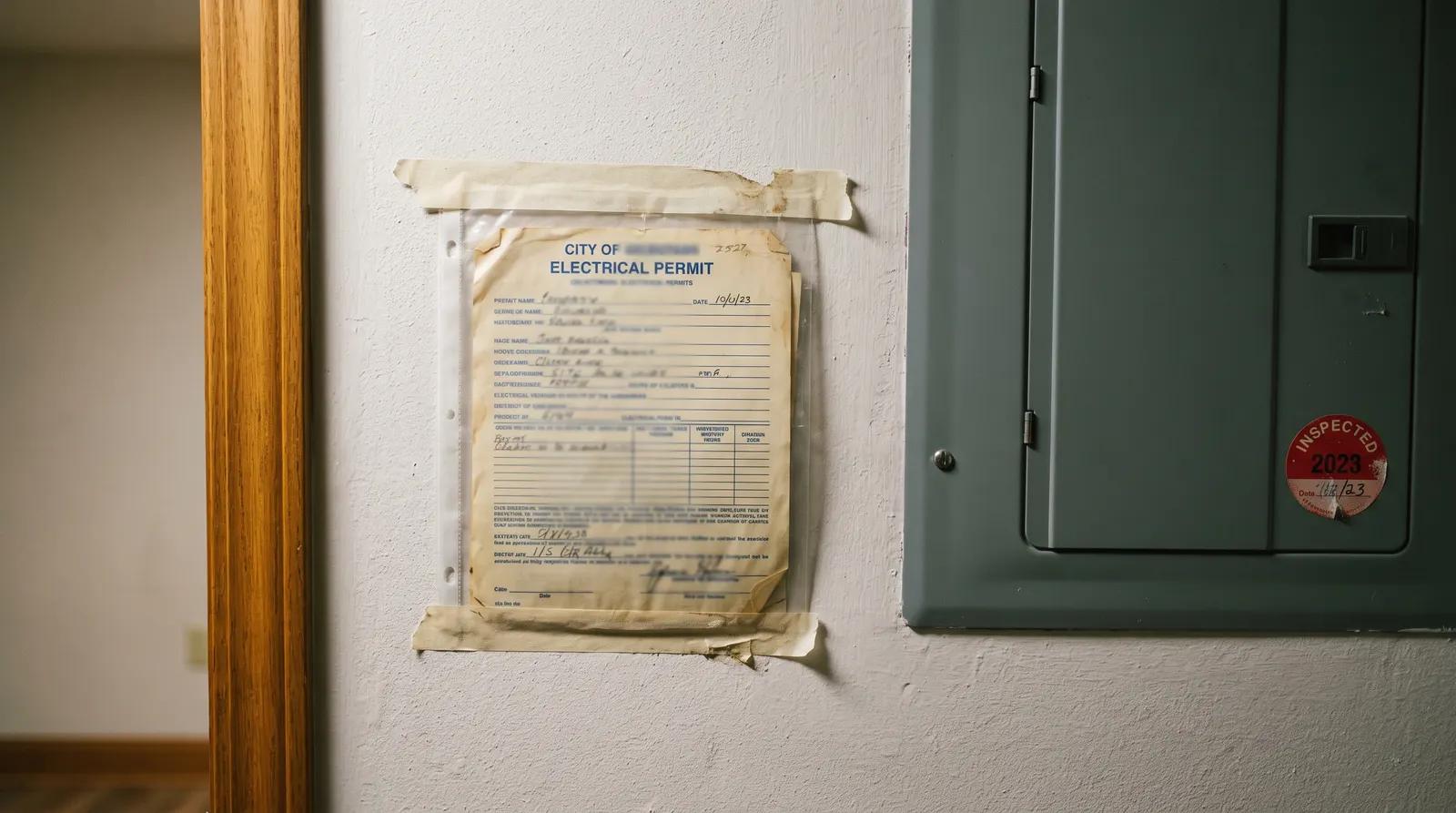
Permit and inspection paperwork
Permit and inspection fees are separate on panel and service work, and they are not padding. Budget for them.
Tell us what has failed and where you are. We route your request to licensed, insured contractors covering your ZIP code, and they contact you directly.
Fire, a gas smell, or an injury? Leave the building and call 911 first, then your gas
utility or power company. Use this form once you are safe.