Plumbing frozen pipes are not the emergency; the pressure building behind the ice is, and the split appears when everything starts working again. How to thaw frozen pipes safely takes hours, and a freeze-night call runs from about $500.
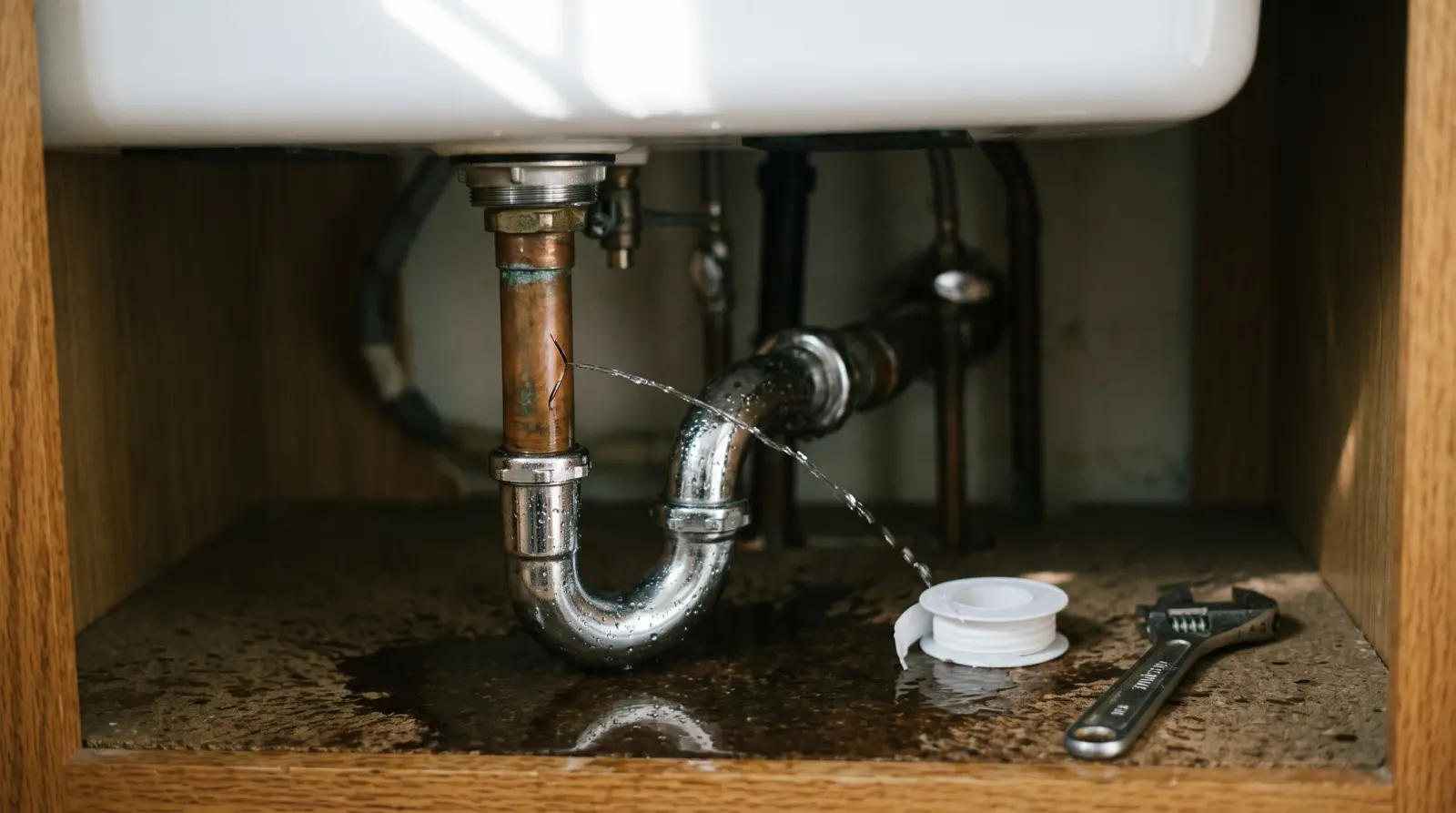
Plumbing frozen pipes split from pressure, not from ice contact. As an ice plug grows, the water trapped between it and a closed tap has nowhere to go, and the pipe fails at its weakest point, usually somewhere between the plug and the faucet.
That single mechanism explains every piece of advice below, including the one instruction the American Red Cross puts first: keep the faucet open.
Cited source
On whether to leave taps trickling through a hard freeze.
“Better waste the water than have the water damage from a frozen pipe.”
DB
David Butler
Master plumber
Milestone Home Services, 2024-01-17
Bias to weigh: Works for a plumbing and HVAC contractor that sells the repair being discussed.
An independent source we cite. Not affiliated with Emergency Services 24H, and not a network contractor.
Red Cross guidance: keep the faucet open while thawing, because water flowing through the pipe helps melt the remaining ice.
02
Heat from the tap end
Work backward from the open faucet toward the frozen section, so meltwater always has somewhere to escape rather than being trapped.
03
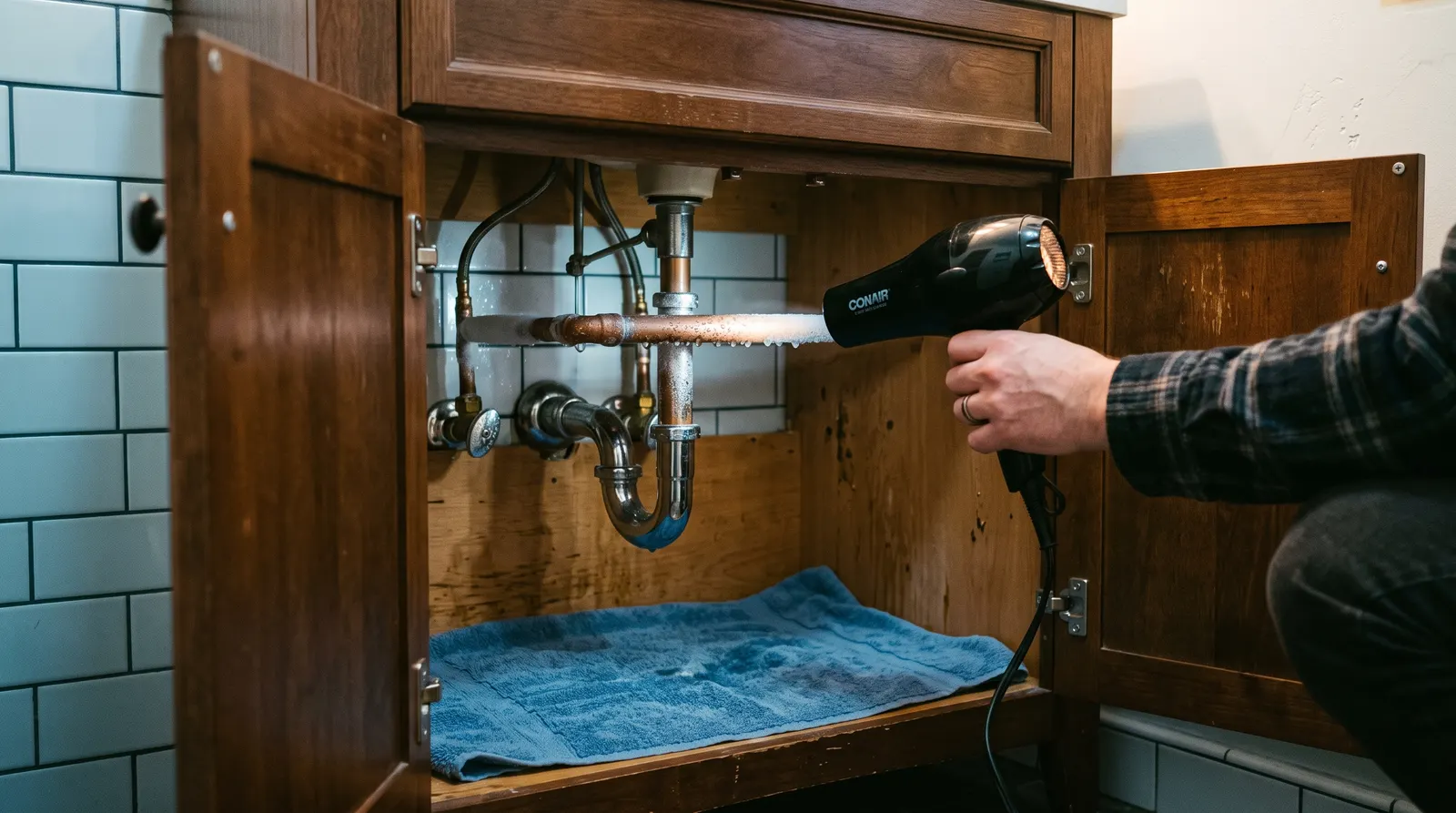
Use the right heat
A hair dryer, a heating pad, listed heat tape, or towels soaked in hot water. Keep the heat moving and keep it away from standing water.
04
Never an open flame
No blowtorch, no propane heater, no charcoal. Open flame in a wall or crawlspace is how a frozen pipe becomes a house fire.
Why keeping the faucet open matters
Should I leave the tap open while thawing a frozen pipe?
Yes. American Red Cross guidance is to keep the faucet open, because as the frozen area melts, water flowing through the pipe helps melt the rest of the ice. An open tap also gives the trapped pressure somewhere to go, which is what removes the risk of a split.
It doubles as your progress indicator. A trickle that becomes a dribble and then a steady stream tells you the plug is clearing without opening a single wall.
Never use an open flame on a frozen pipe
No blowtorch, no propane heater, no charcoal or kerosene appliance indoors. Copper conducts heat straight into whatever it passes through, and a torch in a joist bay or a wall cavity ignites dust, insulation and framing quickly. Every safe method on this page is low-temperature and applied over a broad area.
How long plumbing frozen pipes last before they burst
There is no clock for plumbing frozen pipes, and any page that gives you one is guessing. Duration is not the variable; the closed-tap condition is.
A pipe frozen for days may never fail when the pressure has an escape, and can split within an hour when the plug grows against a closed faucet. Some find pipes frozen a week with no damage; others lose a ceiling overnight.
Practically: open the tap, and the question stops mattering.
When the frozen section is inside a wall
This is the case the ranking guides skip and the forums keep asking about. You cannot put a hair dryer on a pipe you cannot see.
Warm the room, not the pipe. Raise the ambient temperature and aim a space heater at the wall face, from a safe distance and never unattended.
Open the cabinet doors. Under-sink cabinets on exterior walls trap cold; opening them lets house heat reach the pipework, which is standard Red Cross advice.
Use an infrared heater on the wall surface. Slower than direct heat but it works through drywall without any flame.
Do not open the wall while the line is pressurised. If you cut into a split pipe under pressure, you convert a frozen pipe into an active flood.
This is where calling a plumber genuinely earns the fee. Thawing machines that pass low-voltage current along the pipe clear a concealed plug in minutes, and locating that plug is a skill rather than a guess.
The thaw is when the leak appears
Ice seals the split it created. While the pipe stays frozen, a burst pipe often shows no water at all, which is why returning flow is so often followed by the sound of water in a ceiling.
Be at the main shut-off valve when flow returns. Have someone else watch the run if you can, and check every joint, every ceiling below the affected line, and inside any cabinet the pipe passes through.
If water does appear, the sequence in what to do the moment a pipe bursts takes over, starting with closing that valve you are already standing next to.
Know the line
Safe to check yourself, or call a pro now
Safe to check yourself
Opening the faucet and leaving it open
Hair dryer, heat pad or hot towels on an exposed, reachable pipe
Raising room temperature and opening cabinet doors
Letting cold water drip from exposed runs overnight
Standing by the main valve as flow returns
Call a pro now
A frozen section inside a wall, ceiling or slab
Anything requiring the wall to be opened while pressurised
A pipe that has already split and is leaking
Frozen supply into a property with no accessible main shut-off
Heat tape installation on a run you cannot inspect
Preventing the next freeze, per the Red Cross
What temperature should I keep the house at to stop pipes freezing?
The American Red Cross advises keeping the heat set no lower than 55F when you go away in cold weather, holding the thermostat at the same temperature day and night, letting cold water drip from faucets served by exposed pipes, and opening kitchen and bathroom cabinet doors.
The constant-temperature point is the one people skip to save money. A nightly setback of a few degrees is exactly the window in which an exterior-wall run freezes, and the saving is trivial against a burst.
The dripping tap works for the reason set out at the top of this page. A tap that is open cannot build pressure behind an ice plug, which is the mechanism that splits pipes.
What homeowners actually ask
What people actually post on freeze nights
Drawn from real public forum threads and reported prices, summarized and attributed as patterns.
These are not reviews of this site, and no names or ratings have been invented.
“Help! I am home alone and pipes are frozen and I do not know what to do!”
SourceThread title, r/Plumbing. The single most common freeze-night post: not a burst, just no guidance at 11pm.
“Is there a way to thaw a frozen pipe, if you cannot access the pipe?”
SourceThread title, diy.stackexchange.com. The inaccessible-pipe case that almost no published guide addresses.
“If pipe has been frozen for a week, should I call a plumber?”
SourceThread title, diy.stackexchange.com. The recurring answer pattern is that a frozen pipe is urgent once it thaws, not while it is frozen.
“If your pipes are frozen there is probably nothing a plumber can do”
SourceThread title ranking first for this query on Reddit. Overstated, but it reflects real freeze-night queue experience.
1 / 4
What plumbers can and cannot do on a freeze night
The first-ranking thread for this search says a plumber probably cannot help with plumbing frozen pipes. That is overstated, but it reflects something real about how freeze nights work.
What they can do: locate a concealed plug quickly, thaw it with equipment no homeowner owns, and repair a split once it appears. What they cannot do is arrive quickly when every line in the region has frozen at once.
Queues on those nights are triaged by active leaks. An intact frozen pipe is lower priority, which is worth knowing before you wait rather than thaw.
The queue explains the quote as well as the wait. Richard Behney, a former plumbing-company owner who coaches the trade, tells operators not to take a frozen plumbing call under $500. The price is for the truck, the technician and the slot.
During a record February freeze his own average ticket collapsed to around $136, which he calls one of the biggest mistakes of his career. A suspiciously low freeze-night quote is a shop that has not priced the event.
Behney’s shop moved from a $49 service call waived on completion to a $79 event fee that was not, plus $99 after 5pm. Reported flat rates sit around $500 to $695.
Never use a torch, propane heater or open flame to thaw a pipe. That is the single most common way a frozen pipe becomes a house fire.
What a freeze-night call-out costs
Indicative US ranges. Always get a written quote.
Job
Typical range
Notes
Emergency trip fee
$75–$500
Charged to attend, freeze nights included
Labor, standard hours
$100–$200 / hr
Thawing and locating the plug
Labor, after hours
up to $350 / hr
1.5×–2×, and freeze nights are peak demand
Burst repair, accessible run
$150–$2,000
Reported average near $500
Burst repair, under slab
$500–$4,000+
Access work dominates the bill
Water damage cleanup if it let go
$1,000–$2,000+
Separate restoration trade
Source: HomeGuide 2026 emergency plumber cost guide; Angi burst-pipe repair cost data; homeowner-reported figures from public forum threads, marked as reported (retrieved August 2026). Figures vary by region and timing.
Figures last checked
Freeze nights are peak demand, so the after-hours multiplier sits at the top of its range. Thawed and not leaking, the first morning slot is materially cheaper. Rate detail is in our breakdown of the bill.
Your request routes to licensed, insured contractors nearby. On a regional freeze, say on the phone whether the pipe is leaking, because that decides where you sit in the queue.
24/7 dispatch network
Get a licensed plumber moving on this
A concealed frozen section, a pipe that has already split, or a property you cannot get heat into. Send the details and licensed, insured plumbers covering your area will contact you directly. No obligation.
Fire, a gas smell, or an injury? Leave the building and call 911 first, then your gas
utility or power company. Use this form once you are safe.
Straight answers
Frequently asked questions
The questions homeowners actually search for on this problem, answered in plain language.
Open the faucet the pipe feeds first, then apply gentle heat from the faucet end back toward the frozen section with a hair dryer or heat tape. Never a blowtorch. Opening the tap gives the melt somewhere to go, which stops the plug pushing the split open.
What minimum temperature keeps pipes from freezing?
Hold the house at 55F or above, including overnight and while away, and open cabinet doors under sinks on an outside wall so warm air reaches the plumbing pipes. In a mobile home, skirting and pipe insulation matter more than the thermostat.
Do frozen pipes eventually thaw out?
Yes, once the temperature rises, and that is when the problem shows. If the ice split the pipe it has also been sealing the split, so the leak starts as it melts. Be at the main shut-off when flow returns.
What do plumbers use to unfreeze pipes?
Controlled electric heat: thawing machines that pass low-voltage current through the pipe, heat blankets, heat guns at a distance. Never an open flame, which scorches framing and can ignite a cavity. Their advantage is locating the plug quickly.
How long can pipes be frozen before they burst?
There is no reliable clock: pressure rather than time splits a pipe. Frozen plumbing can sit for days without failing if the pressure has an escape. Leave a faucet open.
When should I worry about frozen pipes?
When a tap slows to a trickle in cold weather, an ice plug has formed upstream. Sub-freezing temperatures, unheated crawlspaces and exterior-wall runs are the setup, and the American Red Cross advises heat no lower than 55F in an empty property.
Can I use a hair dryer to thaw a pipe?
Yes, and it is the standard method. Open the faucet first, then work the heat from the tap end toward the frozen section so meltwater can escape. Never substitute a blowtorch or a propane heater.
What can I pour down the drain to unfreeze pipes?
For a frozen drain rather than a supply line, hot water poured slowly helps, as does rock salt in hot water on a trap. Never boiling water on a supply pipe: the thermal shock can crack it.
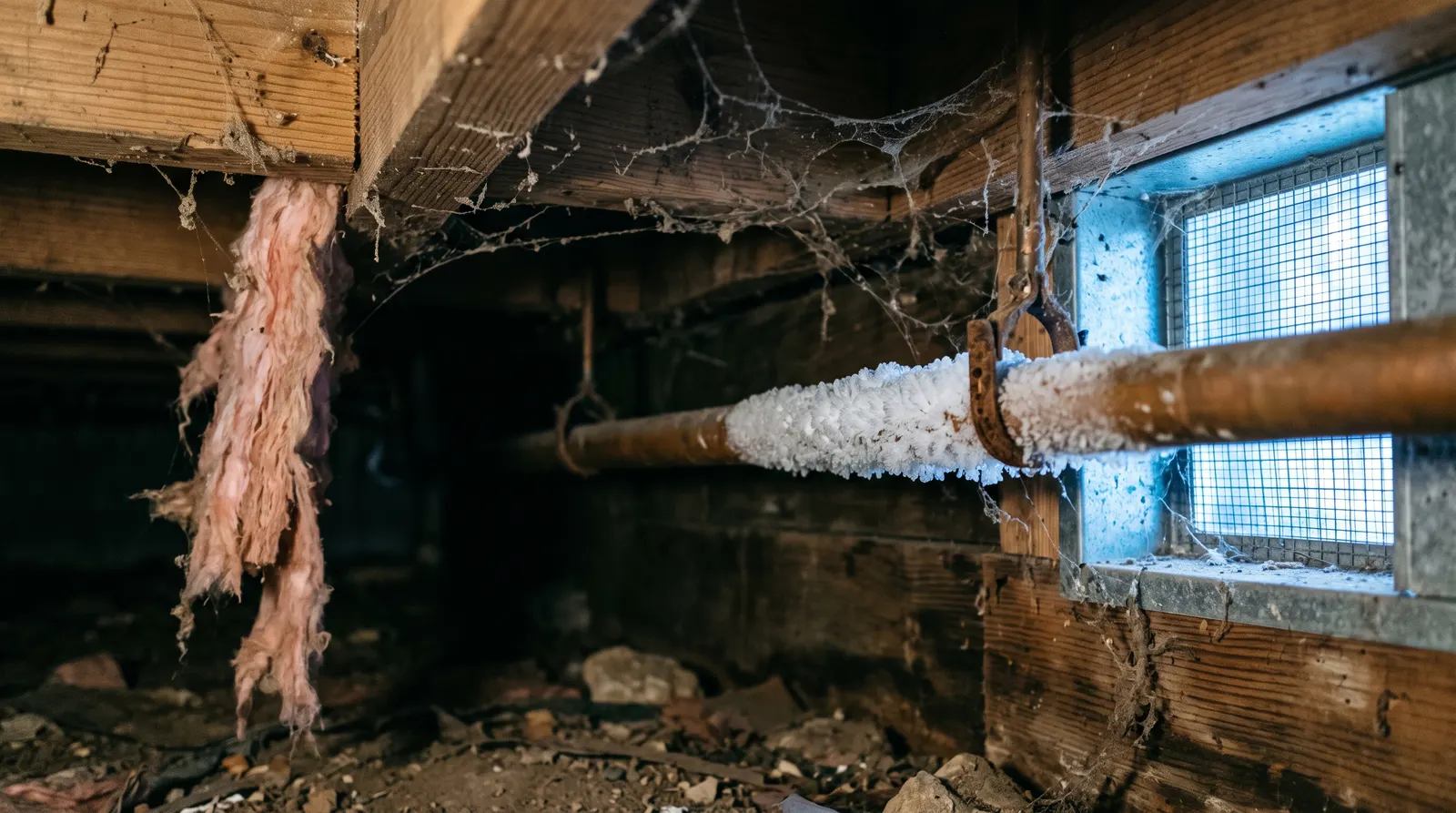
How a pipe freezes in an uninsulated run
Thawing a pipe safely
Insulation is the cheapest line on this chart by two orders of magnitude, and it is the only one that prevents the others.
Tell us what has failed and how soon you need someone. We route your request to licensed, insured contractors covering your area, and they contact you directly.
Fire, a gas smell, or an injury? Leave the building and call 911 first, then your gas
utility or power company. Use this form once you are safe.