Storm, Roof and Tree
Storm Damage Roof, Tree and Tarp Emergencies
Storm damage roof work starts with safety, then documentation, then a tarp at $1.00 to $2.80 per square foot after hours. The permanent repair comes last, and the order decides what insurance pays.
24/7 dispatch network
Request a licensed contractor now
Fire, a gas smell, or an injury? Leave the building and call 911 first, then your gas utility or power company. Use this form once you are safe.
The stakes, in real numbers
Why the first ten minutes matter
Every figure is sourced
- 51,000
- home electrical fires a year in the US
- 48h
- window before mold can start after water damage
- 200+
- US deaths a year from consumer-product carbon monoxide
- $25,000
- damage from just one inch of flood water
Source: ESFI
Source: EPA
Source: CPSC
Source: NFIP
Storm damage to a roof runs in a fixed order: life safety, temporary protection, documentation, then permanent repair.
The search results for storm damage roof queries open with shingle taxonomy.
“A lot of storm chasers change names almost every year.”
The order that matters
Four steps, and the sequence is the point
- 01
Lines and gas before the roof
Never touch a downed line or anything in contact with one. Report electrical hazards to the police and the utility.
- 02
Decide whether it is safe to stay
A loaded ceiling, structural impact or standing water near power means clear the area. Most policies include additional living expenses for exactly this.
- 03
Photograph before you cover anything
Wide shots then close shots, outside, inside and in the attic. Temporary protection changes the evidence, so the camera comes before the tarp.
- 04
Stabilise, then repair
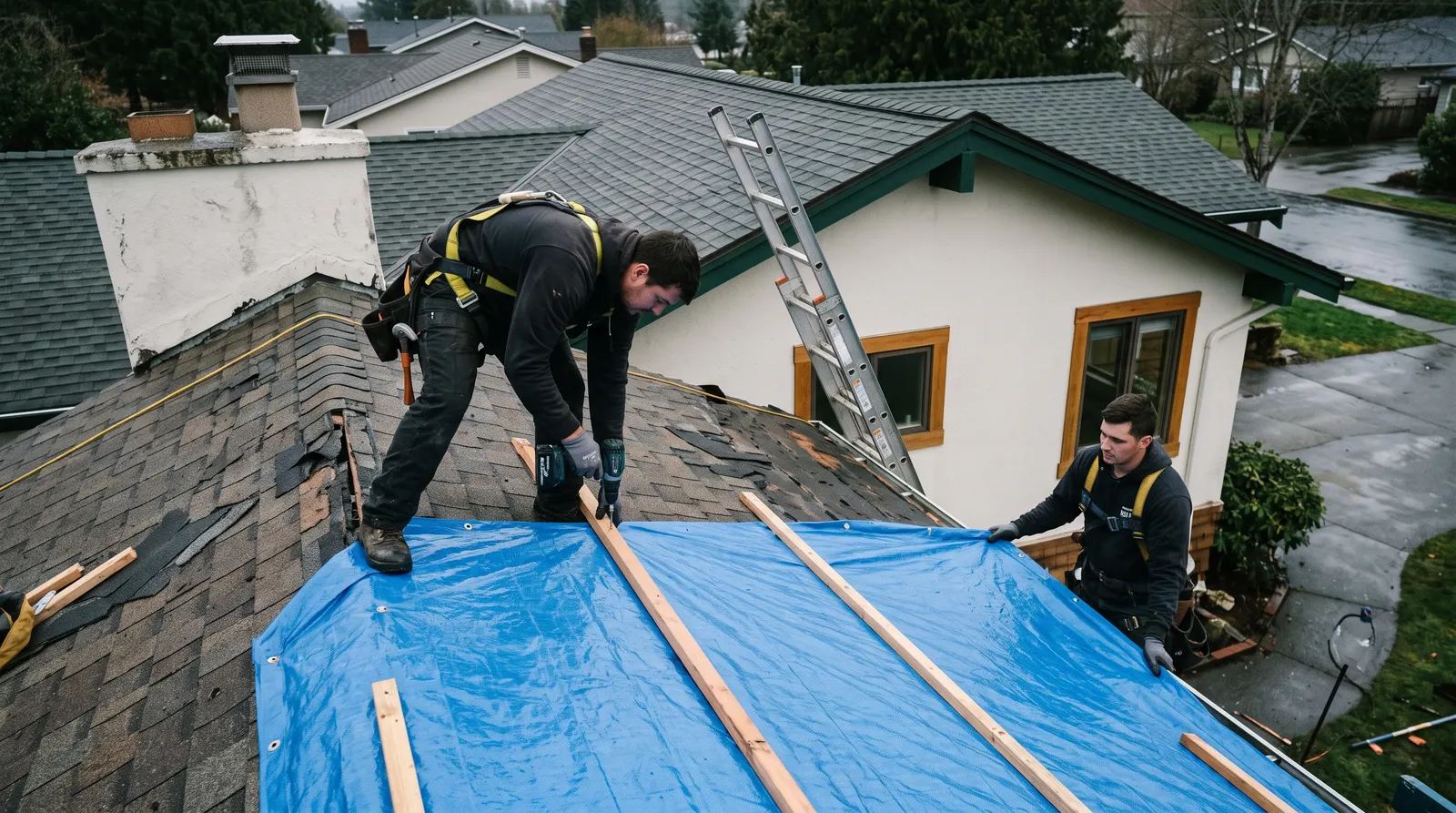
Emergency tarping stops the water. Permanent repair follows once the building is dry, documented and an adjuster has seen it.
Storm damage roof repair runs in that order for a reason: the insurer pays for the loss you stopped, not the one you let run. Emergency Services 24H routes roofers and tree crews covering your area, and it covers the trades a storm sets off indoors too.
That includes pest problems once water gets in. Start from the emergency services home page if the trade is not obvious.
Before the roof: downed lines and gas
This comes before every other instruction
Never touch a downed power line, or any object, tree or vehicle in contact with one. Report electrical hazards to the police and the utility company.
That guidance comes from the National Weather Service, and it is the part conversion-first pages soft-pedal because it delays the phone call they want you to make.
Is the building safe to occupy?
How do you decide whether to stay in the house?
Clear the area under any sagging or loaded ceiling, and leave if there is structural impact that has not been assessed or standing water near live electrics.
A tree through the roof is a structural question before it is a roofing one.
Document before you cover anything
Every ranking page tells you to document the damage. None of them tell you what that means.
- Exterior: wide shots of each elevation, then close shots of missing, lifted or creased shingles.
- Interior: ceiling staining with something for scale, damaged contents and flooring.
- Attic: daylight through the decking, wet rafters and wet insulation, before any drying starts.
- Written: date, time, the weather event, and a log of every call you make.
The full checklist, including how to prepare for the adjuster visit, is on our storm damage documentation page.
In this guide
Everything in the storm, roof and tree guide
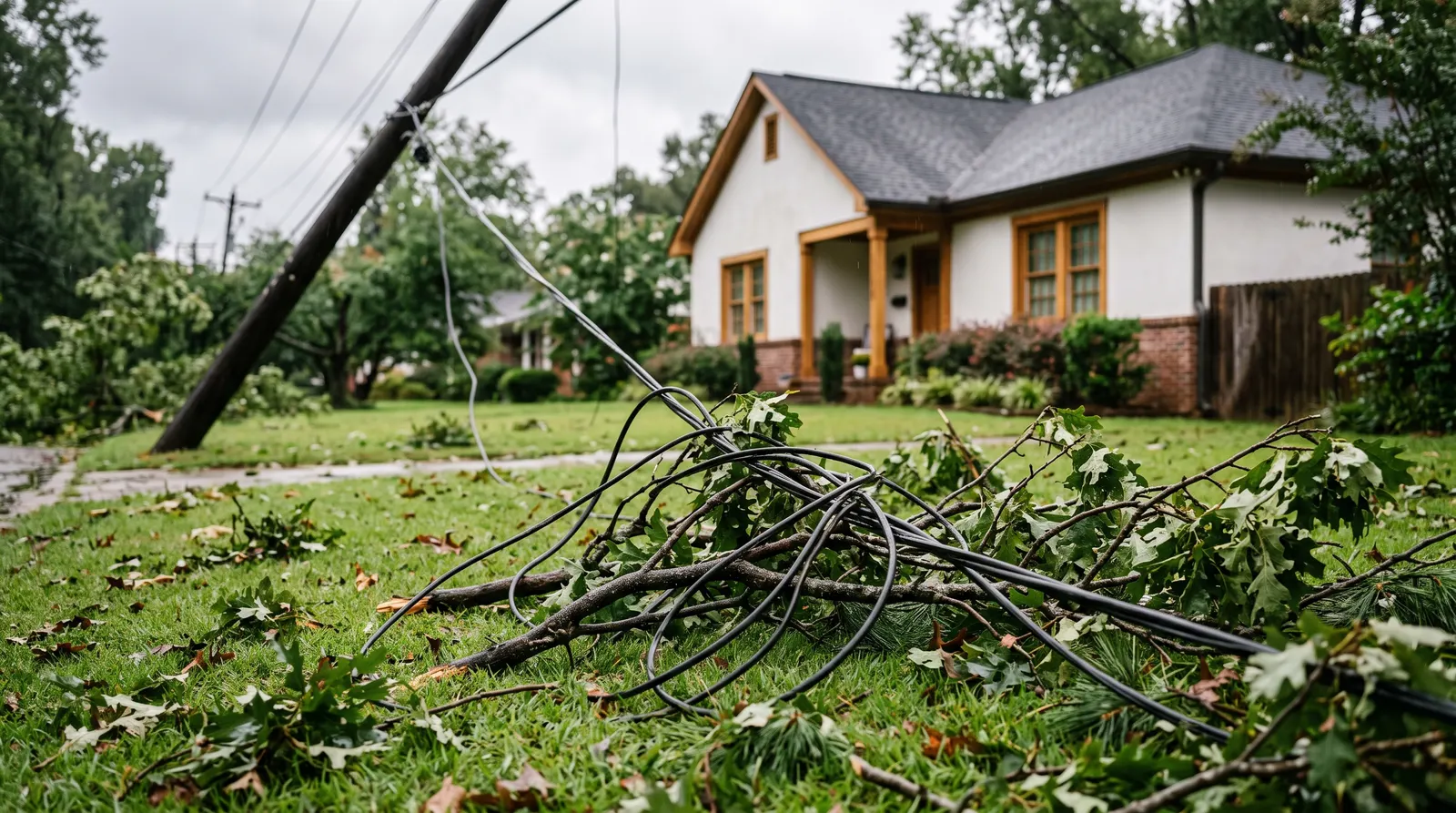
Tree fell on the house
The first ten minutes, the stay-or-leave decision, who pays, and what emergency removal actually costs.
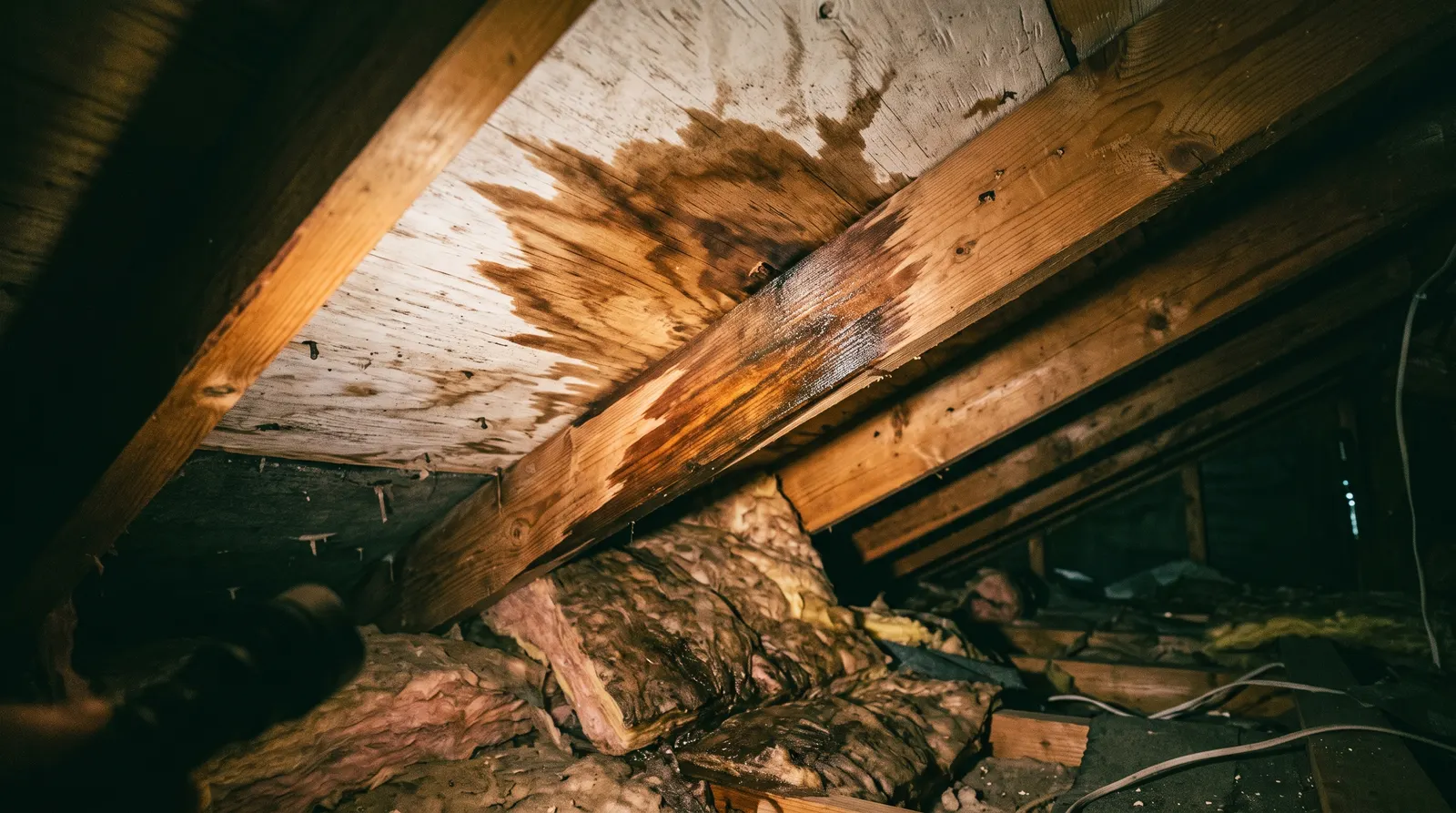
Roof leaking in heavy rain
Contain it from inside first. Why volume triggers it, and why the leak is never above the stain.
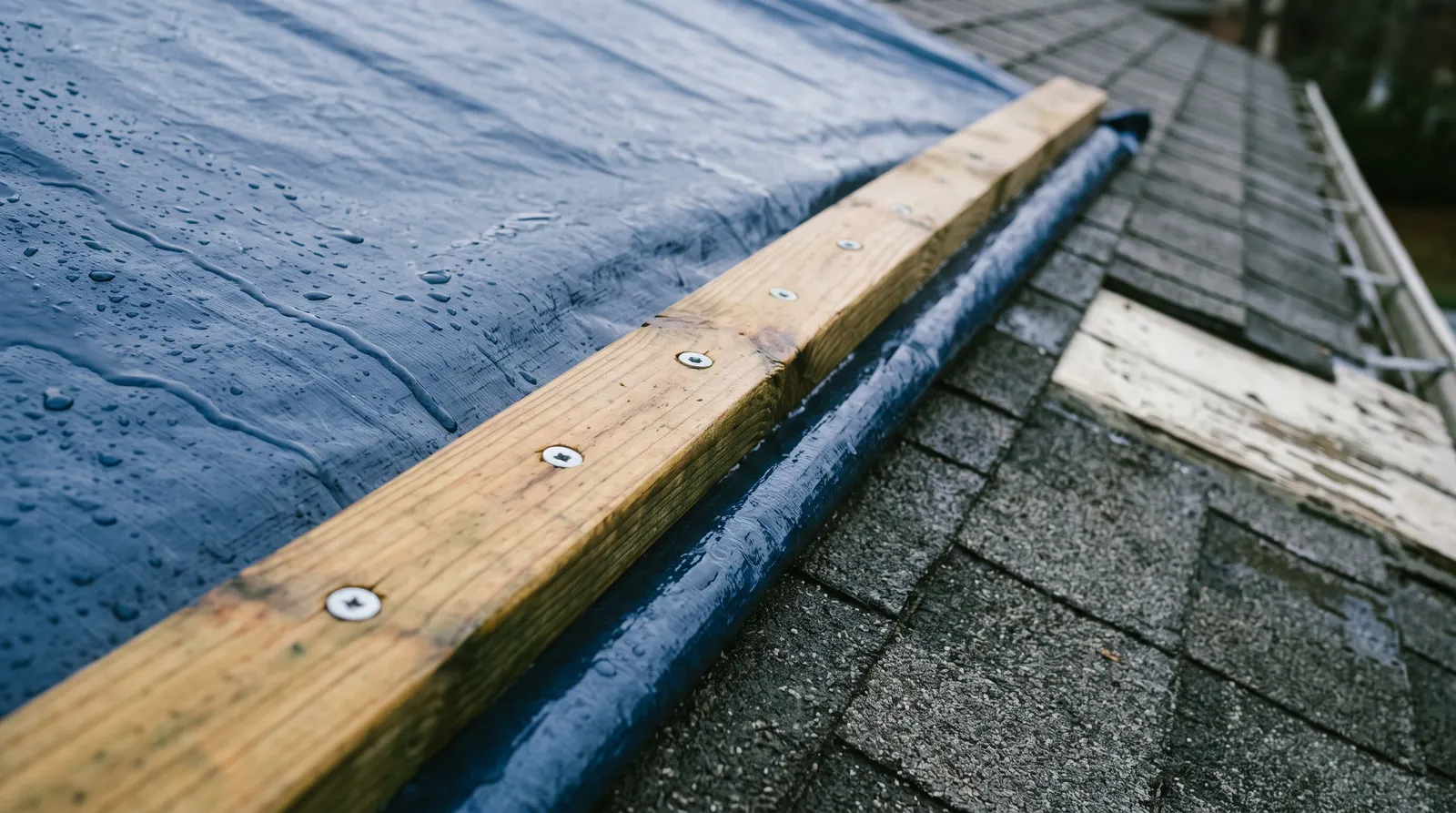
How to tarp a roof
The go or no-go gate before the ladder, why the tarp is the cheap part, and what to do instead.
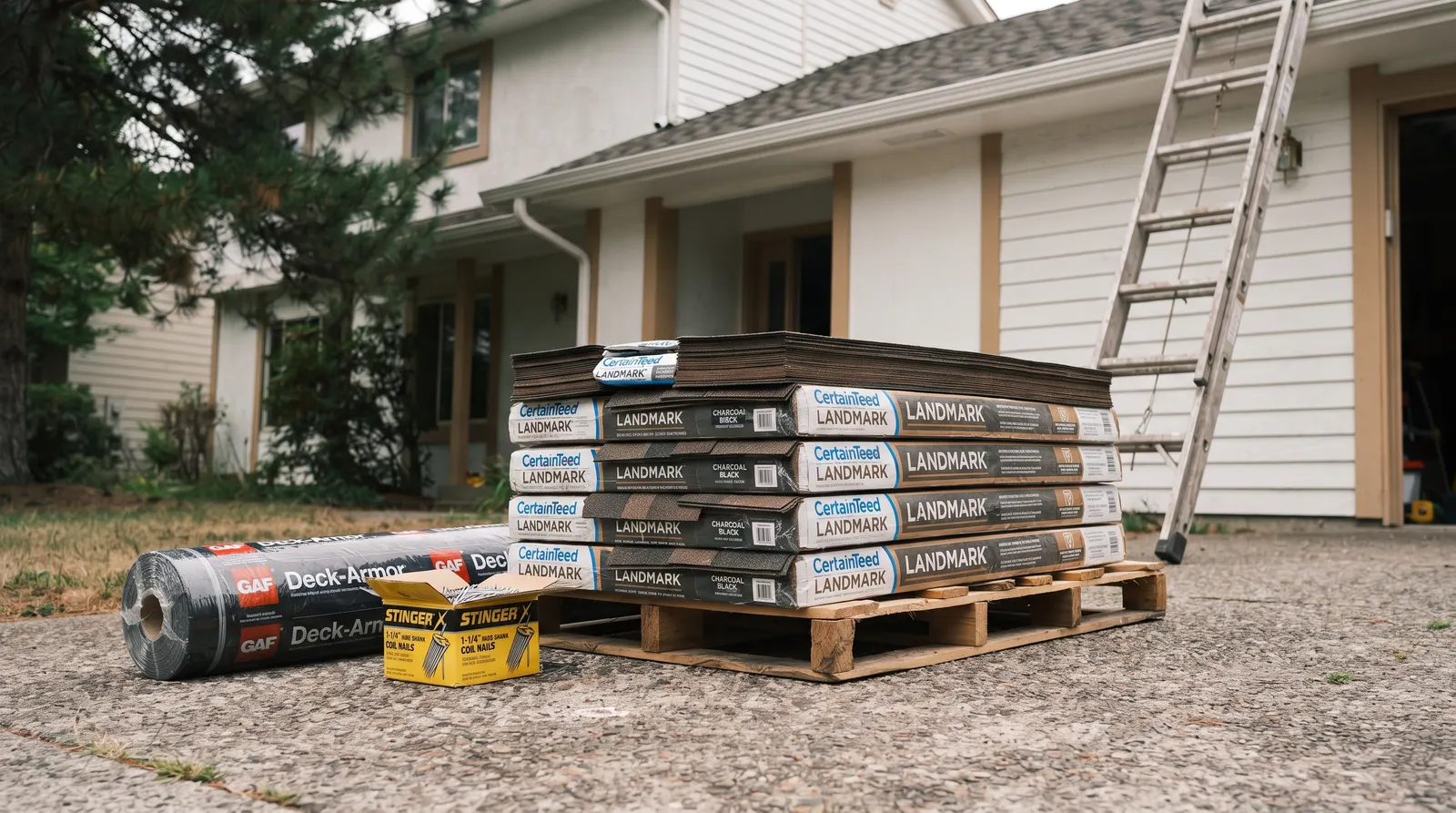
Emergency roof repair cost
Real after-hours pricing, the call-out premium, and the policy duty that makes emergency work claimable.
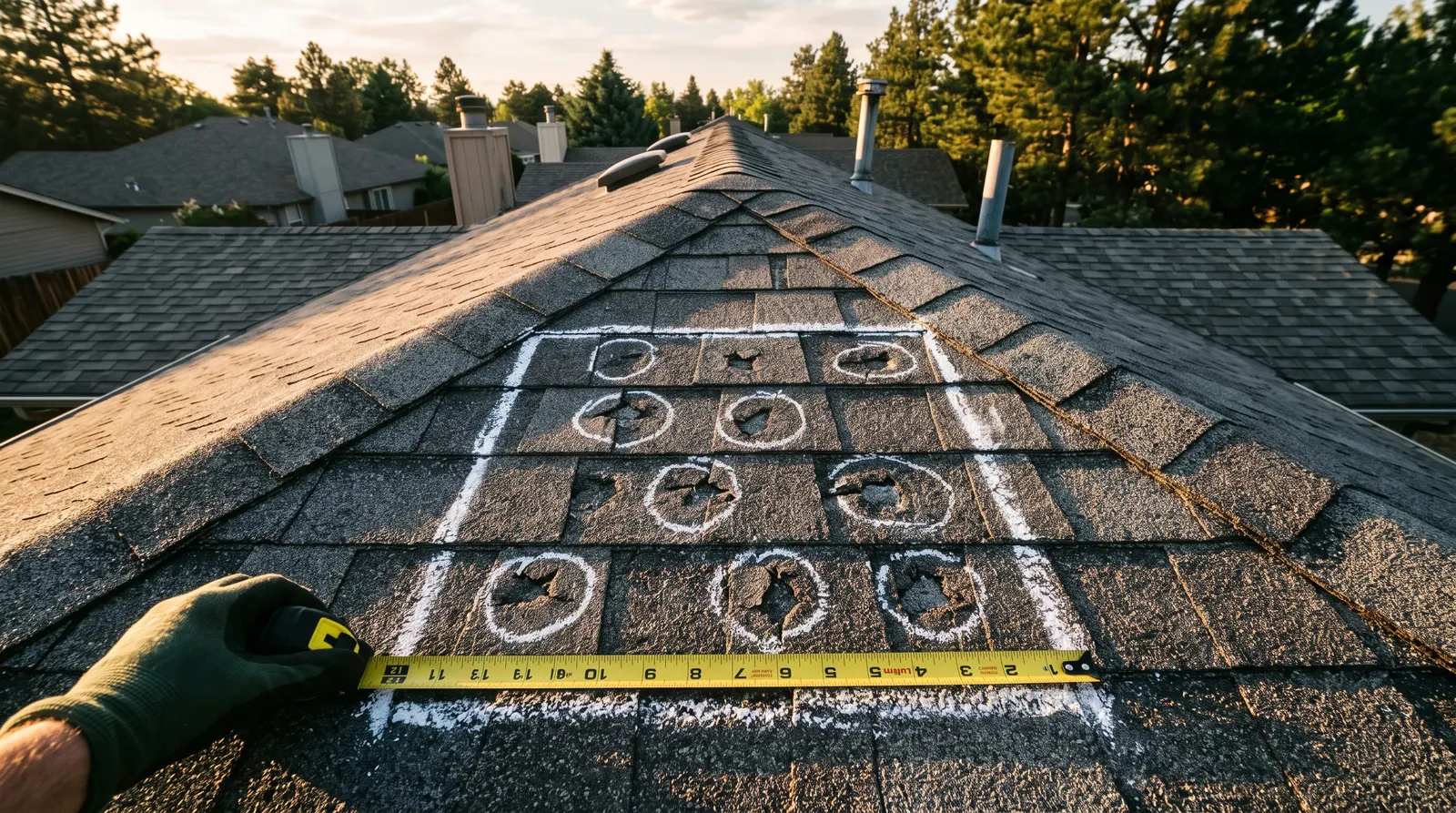
Storm damage documentation
Exactly what to photograph and in what order, including the attic evidence that wins claims.
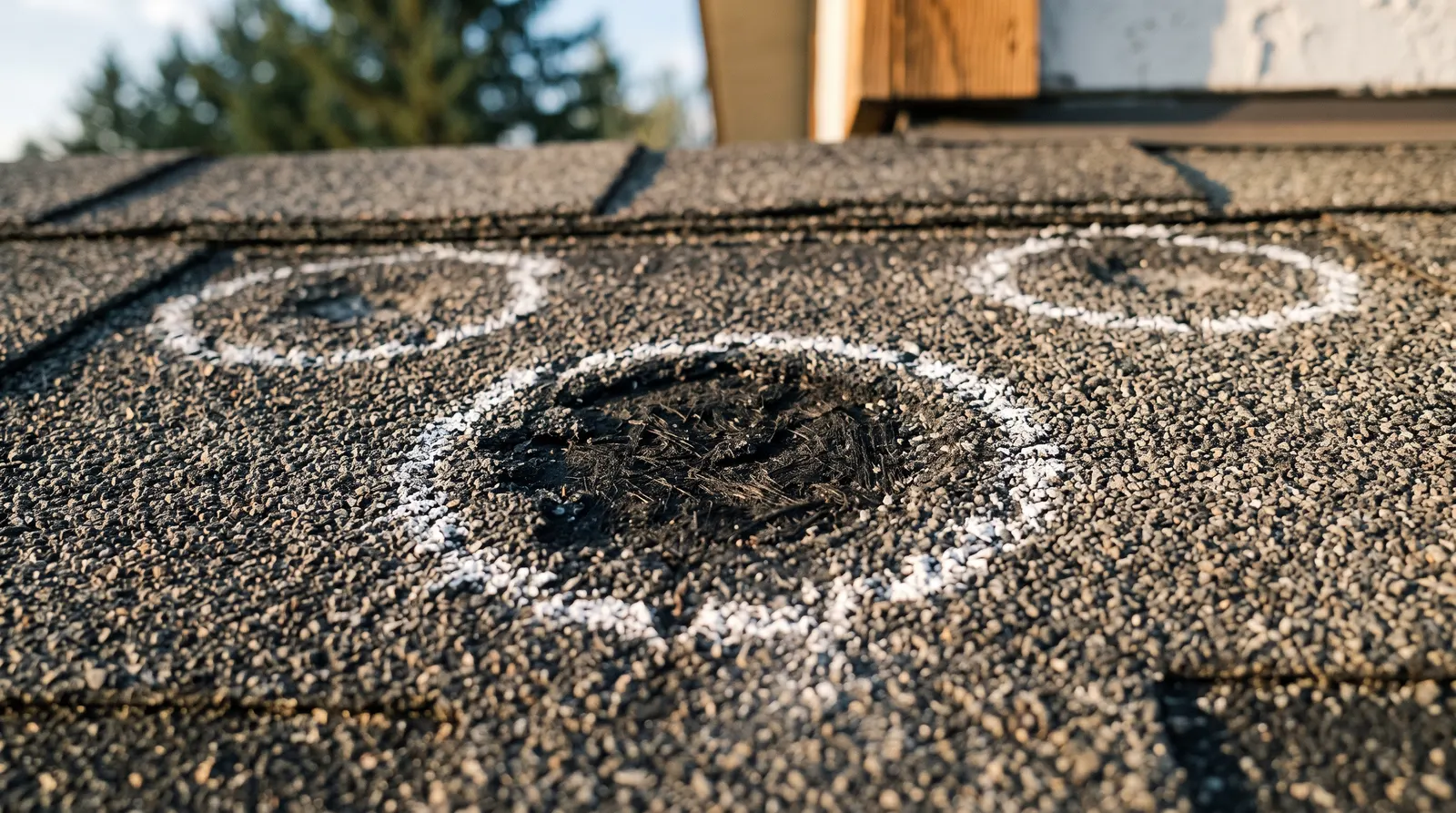
Hail damage roof
How to identify it from the ground, whether to claim, and what the repair-versus-replace threshold means.
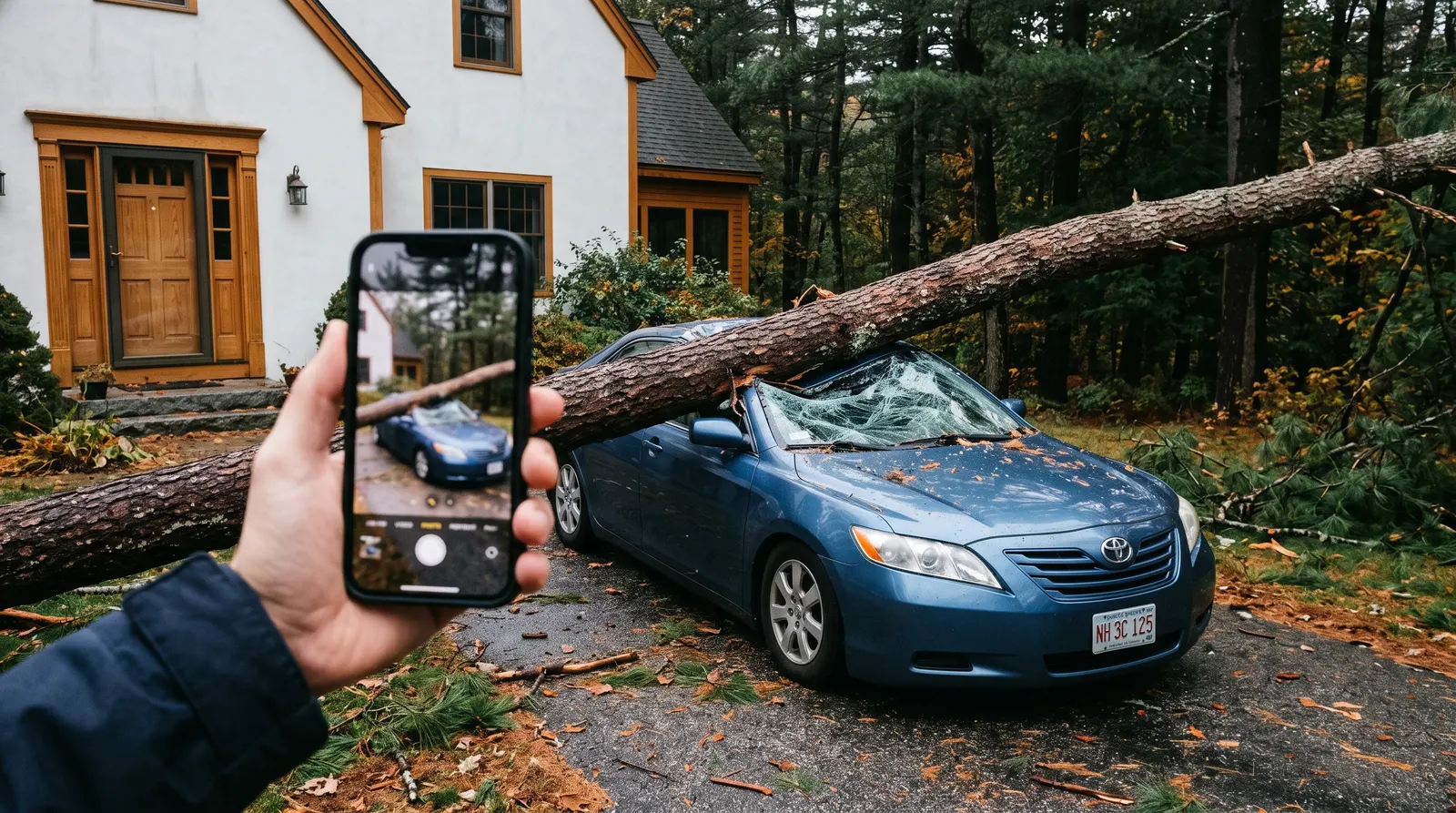
Tree fell on the car
Comprehensive auto cover rather than home insurance, the negligence test, and total loss thresholds.
What emergency storm work costs
Indicative US ranges. Always get a written quote.
| Job | Typical range | Notes |
|---|---|---|
| Emergency roof tarping, after hours | $1.00–$2.80 / sq ft | Average job ~$450, range $150–$3,300 |
| Standard roof tarping | $0.70–$2.00 / sq ft | Non-emergency, scheduled |
| Tarp material alone | $0.10–$0.40 / sq ft | Almost all the cost is labor |
| After-hours call-out fee | $100–$200 | Added on top of the work |
| Emergency tree removal | 2x–3x standard | Commonly $500–$3,000+ for storm jobs |
| Tree debris removal, insurance | ~$500–$1,000 cap | Generally none if no structure was hit |
Source: Angi 2026 cost to tarp a roof data, GoTreeQuotes emergency tree removal cost data, and Insurance Information Institute debris removal guidance (retrieved August 2026). Figures vary by region and timing.
Figures last checked
The third row is the one nobody publishes.
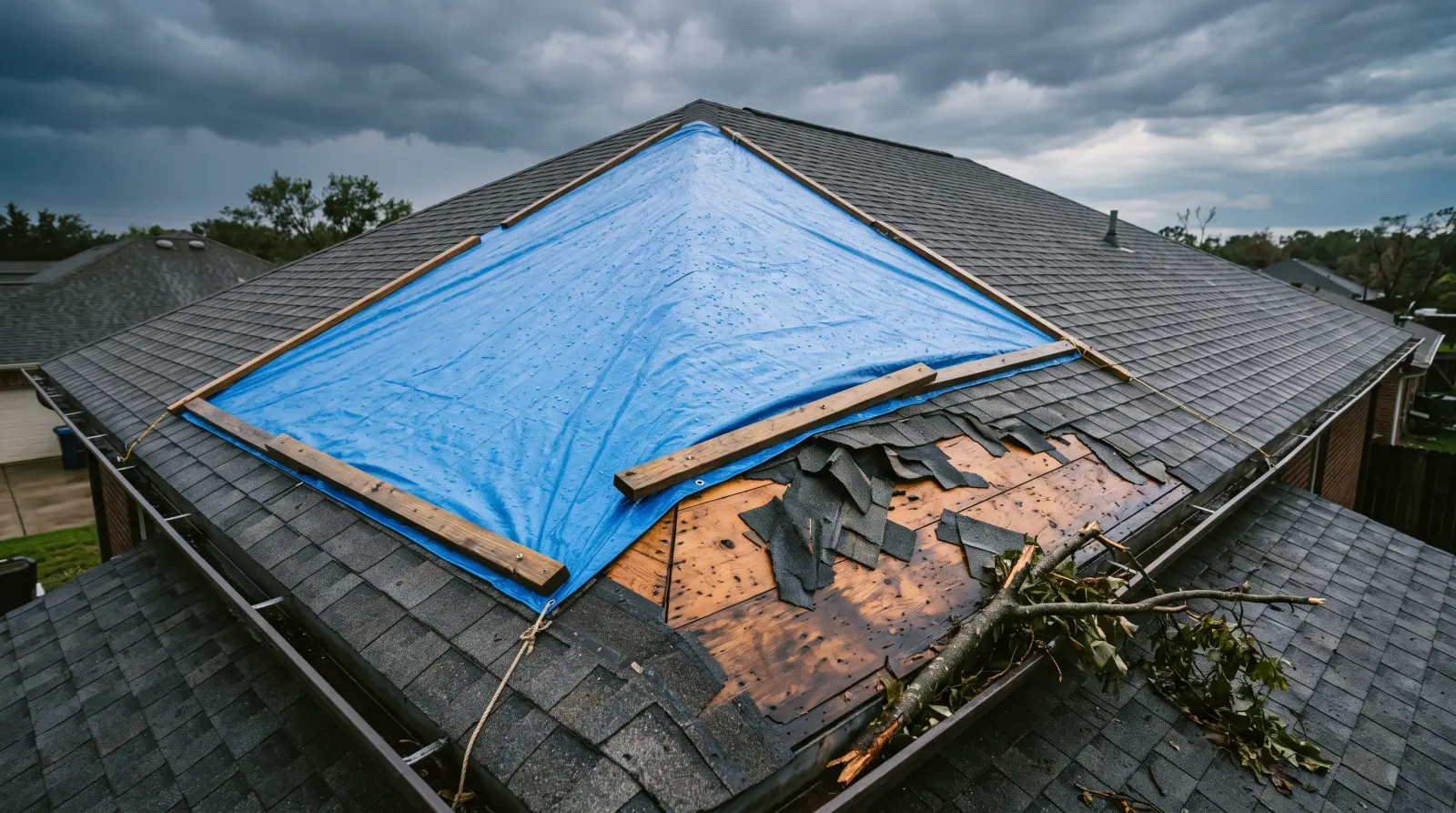
Temporary protection: tarping
Tarping is not a repair. It is a bridge between the storm and the permanent work, and it exists because water damage compounds daily.
Roofing contractor Steve Sims names the failure that makes a tarp pointless: laying it on top of the shingles, so that water runs in behind it.
His expectation of how long even a good one lasts is modest - another couple of storms, maybe a few more rains - which is the right way to think about the whole exercise.
Our guide to tarping a roof covers the conditions that make it a professional job rather than a weekend one, and what to do from inside when climbing is out of the question.
Storm damage roof: what it actually looks like
- Wind: missing, lifted or creased shingles, often along a single edge or ridge.
- Hail: bruising of the shingle mat and granule loss, with granules collecting in gutters.
- Impact: punctures and structural damage from branches, debris or a whole tree.
- Delayed: interior staining that appears days later, because water travels before it drops.
Two of those need care, because the obvious evidence is often the wrong evidence.
How that assessment is actually made is worth knowing before anyone visits.
Finally, the signal people most often mistake for evidence: a street lined with roofer yard signs after a storm indicates canvassing pressure, not that your roof was damaged.
What emergency and permanent repair costs
A tree on the house is a different problem
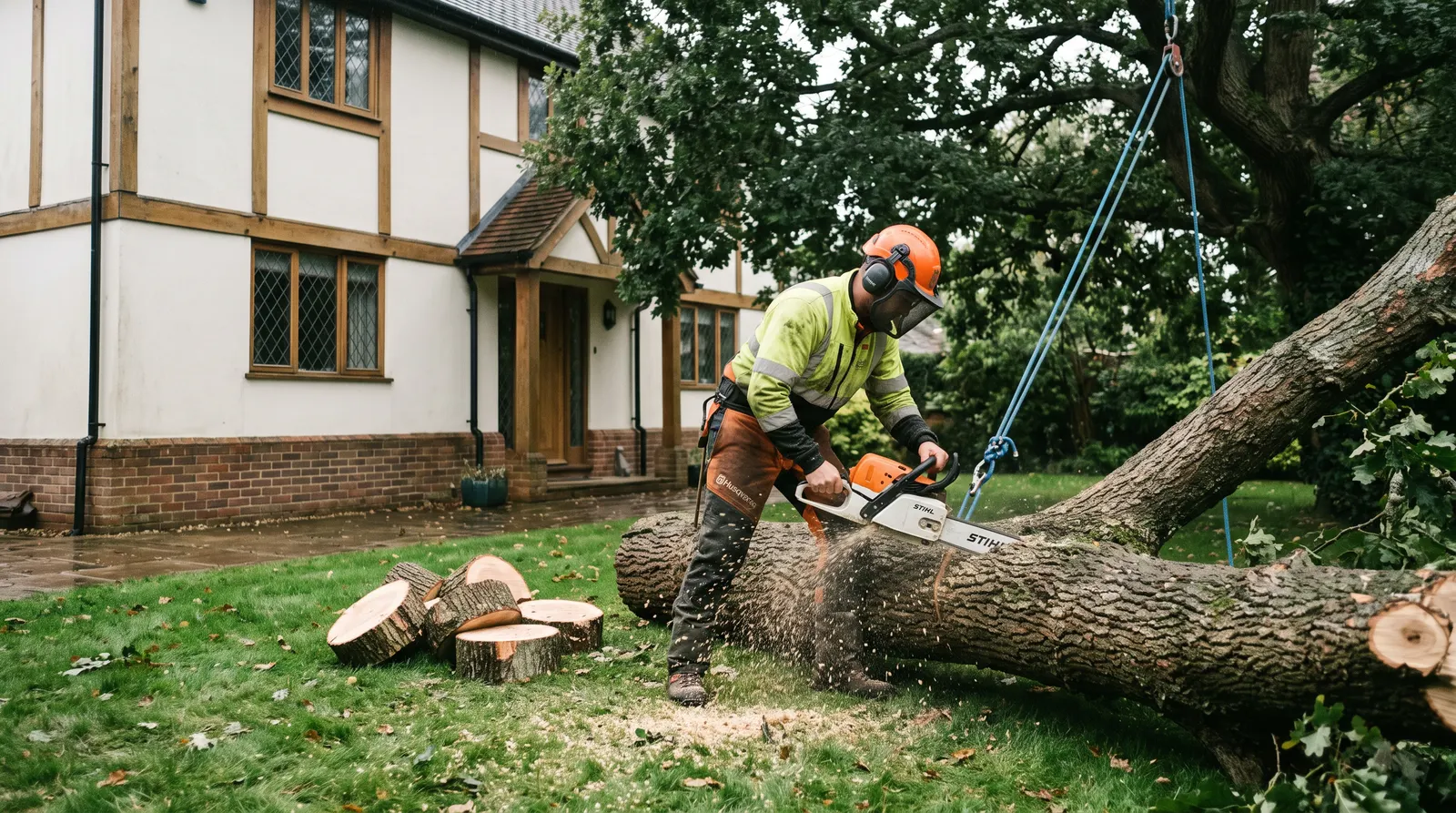
It brings three trades and an electrical question with it, and the order matters.
Utility first if any line is involved, then tree removal, then structural assessment, then roofing and interior repair.
Who pays: the rules people get wrong
Whose insurance pays when a tree hits your house?
Yours, generally, regardless of who owned the tree. Debris removal is typically capped around $500 to $1,000, and if the fallen tree did not hit an insured structure there is generally no debris removal coverage at all.
Where the tree came from a neighbor and was already dead or decaying, your insurer may pursue theirs through subrogation, which can end with your deductible being reimbursed.
Sudden against gradual: the coverage line
This single distinction decides most roof claims.
Damage caused by a covered event such as wind or hail is claimable.
A dated letter from a roofer attributing the cause to the storm is worth asking for while they are on site.
24/7 dispatch network
Get a licensed storm damage contractor moving on this
Tell us what happened and where you are. Licensed, insured contractors covering your area will contact you directly. Submitting costs nothing and there is no obligation to hire.
Fire, a gas smell, or an injury? Leave the building and call 911 first, then your gas utility or power company. Use this form once you are safe.
Know the line
Safe to check yourself, or call a pro now
Safe to check yourself
- Containing water from inside with buckets and sheeting
- Relieving a bulging ceiling deliberately into a bucket
- Isolating circuits serving wet areas from a dry position
- Photographing and documenting everything
- Moving valuables out of affected rooms
Call a pro now
- Anything involving a downed line or a damaged service mast
- Climbing onto a roof in wind, rain or after impact damage
- Tree removal of any kind after a storm
- Structural assessment where a ceiling or wall is affected
- Emergency tarping in conditions that are still deteriorating
What you can safely do, and what you cannot
The homeowner list is real and it is entirely indoors.
Buckets, sheeting, moving valuables, relieving a loaded ceiling deliberately, and isolating wet circuits from a dry position.
The middle of the night case
Nothing on the search results page addresses what to do at two in the morning, which is when a fair share of this happens.
Contain the water and protect the floor. Photograph everything now, because daylight and a tarp will both change the evidence.
How to vet a storm chaser from a contractor
- Verify a license and proof of insurance
- Confirm a local physical address, not just a phone number
- Be cautious with any crew that knocked on your door
- Never sign an assignment of benefits at the door
- Get the emergency scope in writing separately
- Photograph any paperwork before you sign it
What homeowners actually ask
What the sources say, and what people ask
Drawn from real public forum threads and reported prices, summarized and attributed as patterns. These are not reviews of this site, and no names or ratings have been invented.
“Do not touch downed power lines or objects in contact with downed lines”
“If a tree falls on your house, are you covered?”
“What not to say to insurance adjuster roof”
1 / 3
The adjuster question is the honest one.
How the matching works, and what we do not do
Emergency Services 24H is a referral service. We do not employ contractors, we do not perform repairs, and we are not an insurance adviser.
Your request routes to licensed, insured contractors covering your area, and they contact you directly.
The contractor explaining your policy has stepped outside their license
After a storm, the person on your roof will often be the one explaining what your insurance will pay. In Florida that is specifically prohibited unless the contractor also holds a public adjuster license: interpreting policy provisions, advising on coverage, or adjusting the claim on your behalf is public adjusting, and it is a separate license for a reason.
The same law requires a good faith itemised estimate of services and materials before you sign any authorisation to repair under a claim. The underlying point travels beyond Florida.
What this does not say: Florida statute. The boundary between describing damage and interpreting coverage is fact-specific, and other states draw it differently.
Florida Statutes s. 489.147 - Prohibited property insurance practices and contract requirements (accessed 2026-09-05)
After a declared storm, the clock ends when work starts
Florida gives a homeowner two separate ways out of a roofing contract, and both are shorter than people expect. If the contractor leaves out the required notice about prohibited practices, the contract can be voided within ten days of signing.
If the contract was signed within a hundred and eighty days of the Governor declaring an emergency, and the property sits in the declared area, it can be cancelled without penalty within ten days or by the official start date, whichever comes first.
That second clause explains behavior a lot of homeowners find puzzling.
What this does not say: Florida only. The 10-day window can end early: the official start date is defined to include a permit being issued or a temporary repair being made.
Florida Statutes s. 489.147 - Prohibited property insurance practices and contract requirements (accessed 2026-09-05)
Straight answers
Frequently asked questions
The questions homeowners actually search for on this problem, answered in plain language.
Browse all guidesWhat does storm damage roof repair cost?
Emergency tarping is $1.00 to $2.80 per square foot after hours with an average job around $450. The permanent repair is quoted separately once the roof is dry.
Do I need to tarp before the adjuster sees it?
Yes. Policies require you to prevent further damage, and photographs plus receipts show you did. Document the damage first, then cover it.
How long do I have to file a storm claim?
Commonly 12 months from the date of the storm, though the policy wording rules. File as soon as you have the date and the photographs.
Is a tree on the house covered?
Damage to the building is covered, and debris removal is capped near $500 to $1,000 when the tree hit an insured structure. A tree that missed the house is generally not covered for removal.
What should I do first after storm damage to my roof?
Check for downed power lines and gas smells before you look at the roof at all. NWS guidance is to never touch a downed line or anything in contact with one, and to report electrical hazards to the police and the utility. Only then assess the building and start documenting.
What is considered storm damage to a roof?
Damage from a sudden covered event: wind lifting, creasing or removing shingles, hail bruising the surface and stripping granules, or impact from a tree or debris. Gradual wear, age and long-standing leaks are not storm damage even when a storm is when you noticed them.
Will homeowners insurance pay for roof repair?
Generally yes when the cause is a covered event such as wind or hail, and generally no for wear, neglect or a leak that has been running for months. The distinction is sudden against gradual, and documentation dated to the storm is what supports it.
How much does emergency roof tarping cost?
Emergency after-hours tarping runs about $1.00 to $2.80 per square foot with an average job near $450 and a typical range of $150 to $3,300. An after-hours call-out fee of roughly $100 to $200 may apply on top. The tarp material itself is only about $0.10 to $0.40 per square foot.
Who pays if a tree falls on my house?
Your own homeowners policy generally covers the damage regardless of whose tree it was. Debris removal is typically capped around $500 to $1,000, and if the tree did not hit an insured structure there is generally no debris removal coverage at all.
Do you employ the contractors?
No. Emergency Services 24H is a referral service. We route your request to licensed, insured storm damage and roofing contractors covering your area, and they contact you directly.
Sources for this page
- NOAA National Weather Service: Safety after the storm: downed lines, gas leaks, generators
- Centers for Disease Control and Prevention: Protect yourself from electrical hazards after a disaster
- Insurance Information Institute: What standard homeowners insurance covers, including storm perils and the ~$500 per-item cap on trees, shrubs and plants
- Angi
- GoTreeQuotes
- U.S. Department of Homeland Security: Thunderstorm and lightning preparedness and response
Experts quoted on this page
Independent, publicly published sources, quoted with attribution and linked in full. None is affiliated with Emergency Services 24H, reviewed this page, or works in the referral network.
- Dmitry Lipinskiy: Roofing contractor and industry commentator, Roofing Insights - “Storm Chasers Scams VS Roofing Contractors” (May 2019)
Reviewed on . If a figure here no longer matches its source, that is a bug, so tell us and we will correct it.
24/7 dispatch network
Tell us what has failed and where you are
Tell us what has failed and how soon you need someone. We route your request to licensed, insured contractors covering your area, and they contact you directly.
Fire, a gas smell, or an injury? Leave the building and call 911 first, then your gas utility or power company. Use this form once you are safe.