AC blowing hot air comes down to three causes that look identical at the vent: a failed run capacitor, low refrigerant, or a frozen coil. The outdoor unit separates them in about thirty seconds, and a capacitor is a $150 to $400 repair while a refrigerant leak is several times that.
An AC blowing hot air is still moving air but no longer removing heat. Three causes account for almost every case: a frozen evaporator coil, a failed run capacitor at $200 to $300 fitted, or a refrigerant charge that has leaked away.
None of them can be told apart at the vent, which is why diagnosing an AC blowing hot air starts outside rather than indoors.
Thirty-second split
Go and look at the outdoor unit first
01
Walk to the outdoor unit
Everything you need to narrow this down is out there. Listen and look before you touch anything indoors.
02
Silent and still
Neither the fan nor the compressor is running while the indoor fan is. That points at a failed run capacitor or a contactor, and it is the most common sudden failure.
03
Fan spinning, compressor humming
A hum without a start is the classic capacitor signature. Switch the system off rather than leave it straining.
04
Running normally
The system is trying and not achieving, which points at refrigerant charge, a frozen indoor coil, or airflow. Go back inside and look for ice.
Cited source9:00
“The other thing is you could have one singular window open in the building and that would be enough to not be able to drop the temperature in the building.”
CM
Craig Migliaccio
HVAC technician, instructor and author
AC Service Tech LLC, 2025
An independent source we cite. Not affiliated with Emergency Services 24H, and not a network contractor.
AC blowing hot air, cause one: a frozen evaporator coil
The indoor coil gets cold to condense moisture out of the air. If airflow drops, it gets colder still, the condensate freezes, and the ice blocks airflow further.
That feedback loop is why a slightly dirty filter becomes a frozen coil over a few hours, ending with a system running flat out and delivering room-temperature air.
The filter that starves a coil is not always a dirty one. HVAC instructor Craig Migliaccio of AC Service Tech describes homeowners strangling their units with a high MERV filter in a one-inch slot never designed for that restriction.
The upgrade feels like maintenance and behaves like a blockage. Where high filtration is wanted, he points to a four-inch filter cabinet rather than a denser filter in the existing slot.
Airflow has a target rather than a direction. Migliaccio works to roughly 400 CFM per 12,000 BTU of cooling capacity, dropping toward 375 or 350 in humid climates.
Too little airflow freezes the coil. Too much is also a defect: the coil never drops below the dew point, so moisture never leaves the air.
Switch to fan only and leave the fan running. That is the thawing method, and it can take several hours.
Replace the filter and open every closed return and supply vent while it thaws.
Do not chip at the ice or aim a heat gun at the coil. Aluminium fins and copper tube damage easily.
If it freezes again after a clean filter and full airflow, the cause is refrigerant rather than airflow.
Cause two: the run capacitor
This is the most common sudden failure in residential air conditioning and the single most argued-about line on an HVAC invoice.
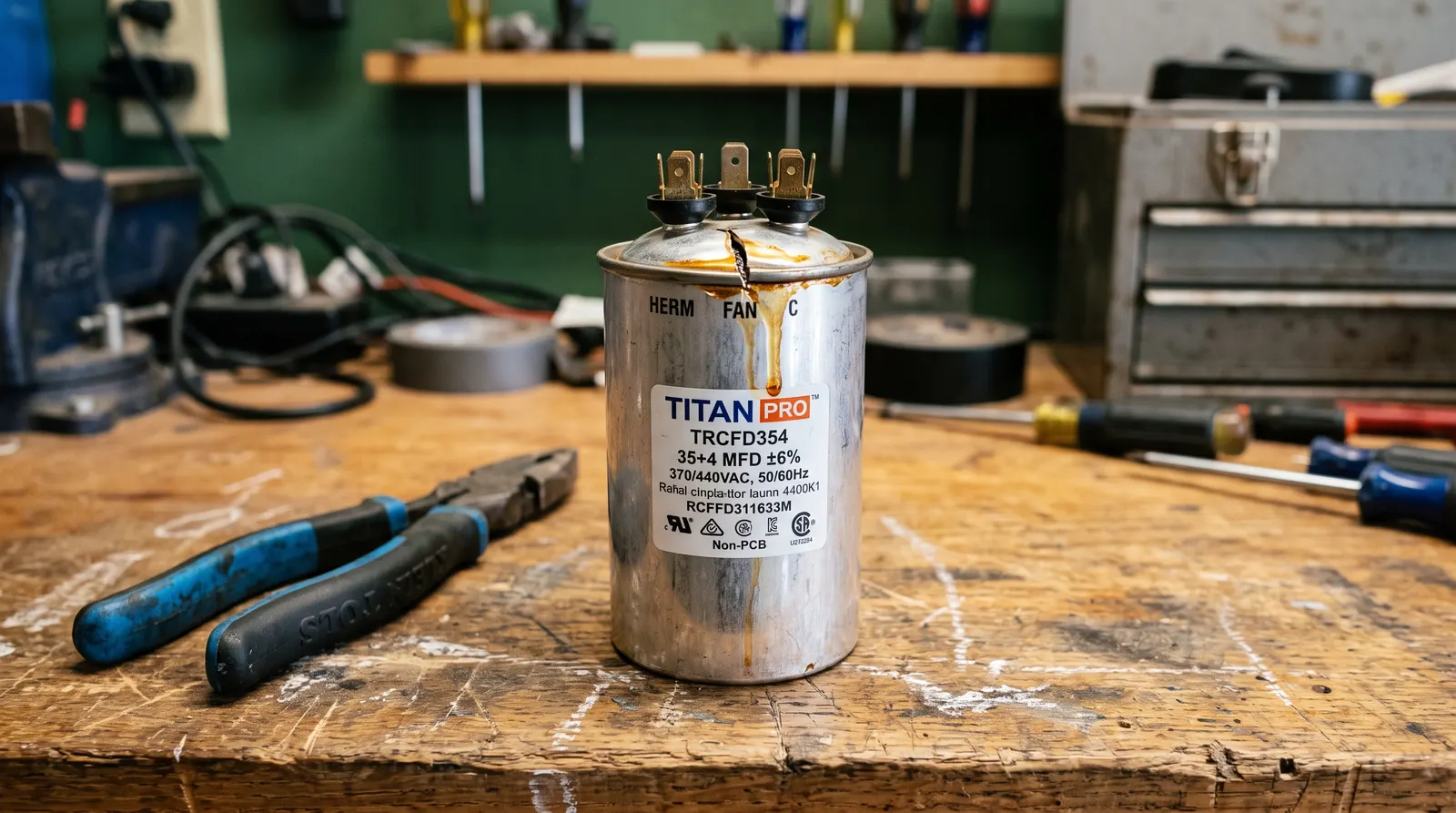
The run capacitor gives the compressor and outdoor fan the phase shift they need to start. When it weakens, the indoor fan keeps running while the outdoor unit sits silent or hums, so air keeps coming from the vents and is not cold.
The part costs under $30. Fitted, the job runs $200 to $300 in standard hours and more after them, which reflects a stocked van, a license and an out-of-hours rota.
Capacitors hold a charge after the power is off
This is the reason capacitor replacement is not a homeowner job even though the part is cheap and the swap looks trivial. A run capacitor stores enough energy to injure you after the disconnect is pulled, and it has to be discharged deliberately before anything is touched. Every video that skips that step is teaching people to take a shock.
Cause three: refrigerant, which means a leak
Does an AC need refrigerant topping up?
No. Refrigerant circulates in a sealed system and is not consumed. If the charge is low, it escaped through a leak, and it will escape again. A recharge without a leak repair buys a season at best.
Ask for the leak search and repair quote alongside the recharge price. A leak in the evaporator coil or the compressor is a repair-or-replace conversation on any system over about ten years old.
How to tell if refrigerant is low
There is no home test, and any page implying otherwise is wrong. There are three signs worth reporting to a technician.
Ice on the larger copper line at the outdoor unit, where it enters the service valves.
Very long run times with the house never quite reaching setpoint, particularly in the afternoon.
Oily residue at line joints or at the service valves, because refrigerant oil escapes with the gas.
Confirming it needs manifold gauges, and handling refrigerant in the United States requires EPA certification. Venting it deliberately is a federal offence.
Should I turn it off?
An AC blowing hot air should be switched off in every case except a frozen coil.
A system that cannot remove heat is wearing components for nothing. If the compressor hums without starting, running it is actively damaging: switch it off at the thermostat.
With ice present, switch to fan only rather than off, because moving air thaws the coil. Our page on an AC that will not start at all covers the reset sequence.
Car, window unit or central system
Rule out the free one first. Migliaccio’s least glamorous cause: a single open window can stop the system dropping the temperature at all.
The equipment is working; it is being asked to cool the outdoors. Close the house, give it an hour, and see whether the reading moves.
There is a sizing version of the same problem. A unit too large for the house cools fast, satisfies the thermostat and shuts off before removing any moisture, short-cycling without dehumidifying.
Migliaccio’s point is that bigger is not better: sizing comes from a heat load calculation such as ACCA’s Manual J rather than a rule of thumb.
If yours is a car, the components and the refrigerant are different, and that is a job for a mechanic rather than an HVAC contractor.
Window and portable units share this logic: capacitors and coils that freeze for the same reasons, with unplugging for five minutes as the reset.
Know the line
Safe to check yourself, or call a pro now?
Safe to check yourself
Observing what the outdoor unit is doing
Switching to fan only to thaw a frozen coil
Replacing the filter and opening closed vents
Clearing leaves and debris from around the condenser
Turning the system off when it cannot cool
Call a pro now
Replacing a run capacitor, which holds a charge after power is removed
Anything involving refrigerant, which needs EPA certification
Leak searching, gauges and combustion of any kind
A compressor that hums and will not start
Repeated freezing after airflow has been restored
24/7 dispatch network
Get a licensed HVAC technician moving on this
Tell us what the outdoor unit is doing. Licensed, insured HVAC contractors covering your area will contact you directly. No obligation to hire.
Fire, a gas smell, or an injury? Leave the building and call 911 first, then your gas
utility or power company. Use this form once you are safe.
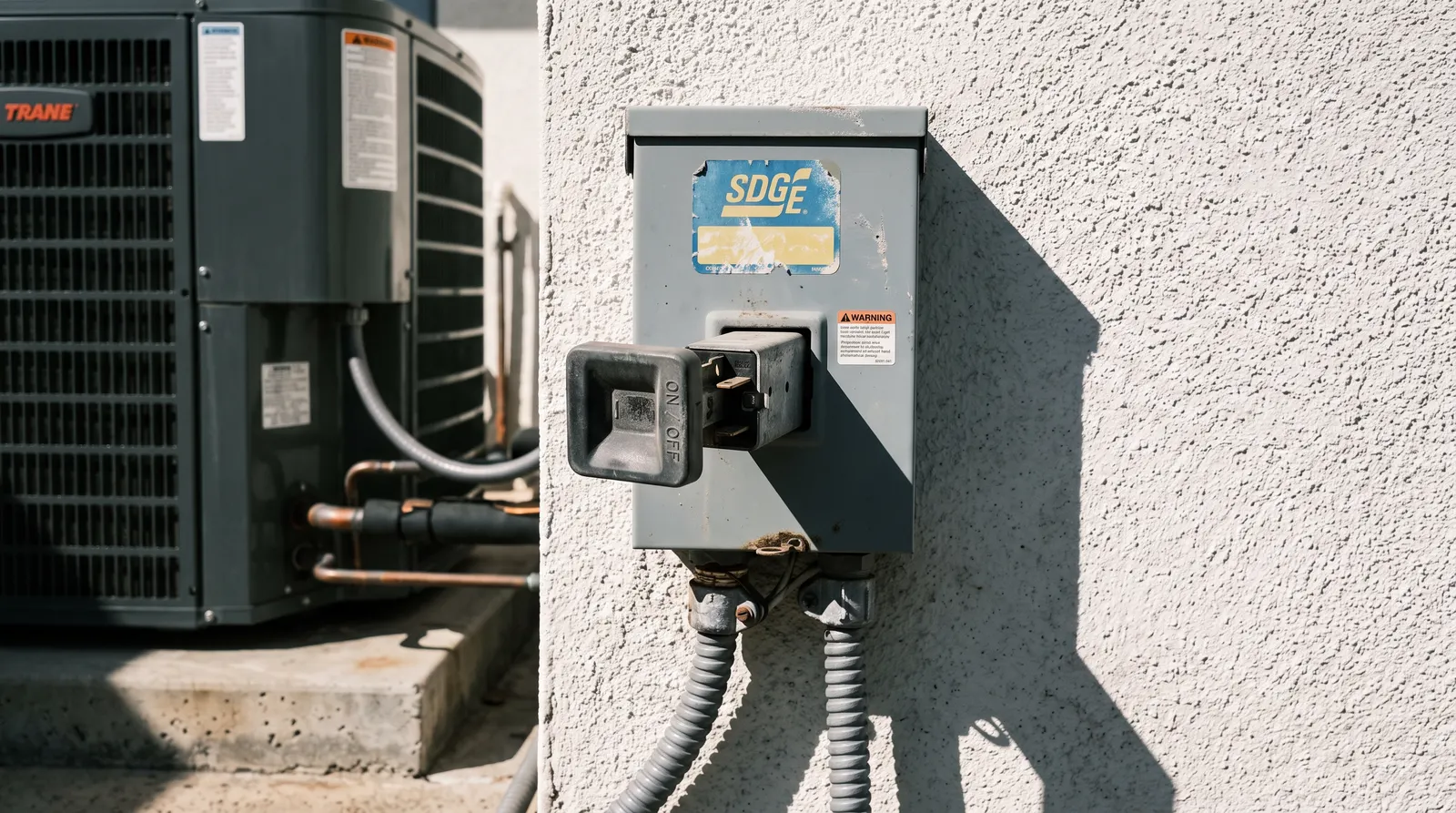
If the indoor blower runs but the outdoor unit is silent, the fault is almost always at the condenser: capacitor, contactor, or the disconnect.
What each of the three costs to fix
Indicative US ranges. Always get a written quote.
Job
Typical range
Notes
Run capacitor replacement
$200–$300
Standard hours; the part itself is under $30
Refrigerant recharge
$250–$600
Temporary unless the leak is also repaired
Blower motor
$400–$900
Standard hours
After-hours diagnostic fee
$150–$250
$225–$500 on a holiday
Emergency labor multiplier
1.5×–3×
Applied to the standard hourly rate
Source: 2026 emergency HVAC rate aggregator data; HomeGuide 2026 HVAC repair cost guide; homeowner-reported figures from public forum threads, marked as reported (retrieved August 2026). Figures vary by region and timing.
Figures last checked
The frozen-coil case is the cheapest of the three, because a filter and some patience is often the entire fix. The capacitor is the most common, and refrigerant is where the quoted price and the real price diverge most.
What does it mean if the AC is blowing warm air but running?
An AC blowing warm air but running has the indoor fan working and the cooling side not. Silent outdoors usually means a failed run capacitor; running normally points at refrigerant or a frozen coil.
How long should I leave the system off before calling?
Long enough to thaw a coil, one to three hours on fan only. If it blows cold for twenty minutes and then goes warm again, the ice is a symptom and the airflow or charge is the fault.
How do I fix my AC from blowing hot air?
Start at the outdoor unit. Silent while the indoor fan runs usually means a failed run capacitor; running normally points at refrigerant or a frozen coil. Check the filter and the copper lines first.
Should I turn my AC off if it is blowing hot air?
Yes, with one exception. If there is ice on the lines or the coil, switch to fan only so it can thaw. Otherwise turn it off, because running a system that cannot remove heat risks the compressor.
What does it mean if my AC only blows hot air?
The system is still moving air but no longer removing heat. Three causes account for most cases: a frozen evaporator coil, a failed run capacitor, or a refrigerant charge that has leaked away.
How do I know if my AC refrigerant is low?
Ice on the larger copper line at the outdoor unit, long run times with poor cooling, sometimes an oily residue at line joints. Confirming it needs gauges, and handling refrigerant in the US requires EPA certification.
Is a refrigerant recharge worth paying for?
Only as a stopgap. Refrigerant is not consumed in normal operation, so a low charge leaked out and will leak again. Ask for a leak search and a repair quote alongside the recharge price.
What is the 3 minute rule for air conditioners?
Most systems will not restart the compressor for three to five minutes after it stops, because restarting against system pressure damages it. Wait the delay out before concluding the compressor has failed.
The run capacitor
The disconnect beside the condenser
A bulged capacitor is visible on inspection and is the most common single cause. Ask the technician to show you the old part.
Independent, publicly published sources, quoted with attribution and linked in full.
None is affiliated with Emergency Services 24H, reviewed this page, or works in the referral network.
Craig Migliaccio: HVAC technician, instructor and author, AC Service Tech LLC - “Air Conditioner NOT Blowing Cold Air! Possible Problems Explained!” (2025)
Tell us what has failed and how soon you need someone. We route your request to licensed, insured contractors covering your area, and they contact you directly.
Fire, a gas smell, or an injury? Leave the building and call 911 first, then your gas
utility or power company. Use this form once you are safe.