After-hours HVAC labor runs $275 to $600 (2026 rate aggregator data, read 2026-08-16), so five minutes of checking is worth it. A furnace won’t turn on for one of four reasons, and two of them are switches nobody knows exist: the power switch and the door interlock.
A furnace won’t turn on for one of four reasons: no call for heat, no power, an unseated access panel, or a lockout. Working those four takes ten minutes and can save a $150 to $250 diagnostic fee.
Stop first if you can smell gas
A gas smell is not a troubleshooting situation
Sulphur or rotten eggs near the furnace means unburnt gas. Leave the building without switching anything on or off, including light switches, and call your gas utility emergency line from outside.
Carbon monoxide is the other stop point, and it is harder because you cannot detect it.
Furnace won’t turn on: the four checks that fix most no-heat calls
What do I check when the furnace will not start?
Thermostat mode, setpoint and batteries, then the power switch that looks like a light switch. The access panel must press a door interlock. Then the tripped circuit breaker and a one-minute power cycle.
Ten-minute check
Work them in this order
01
Thermostat
Mode on heat, setpoint above room temperature, fresh batteries. A thermostat with dying batteries still shows a display and fails to close the circuit.
02
The furnace power switch
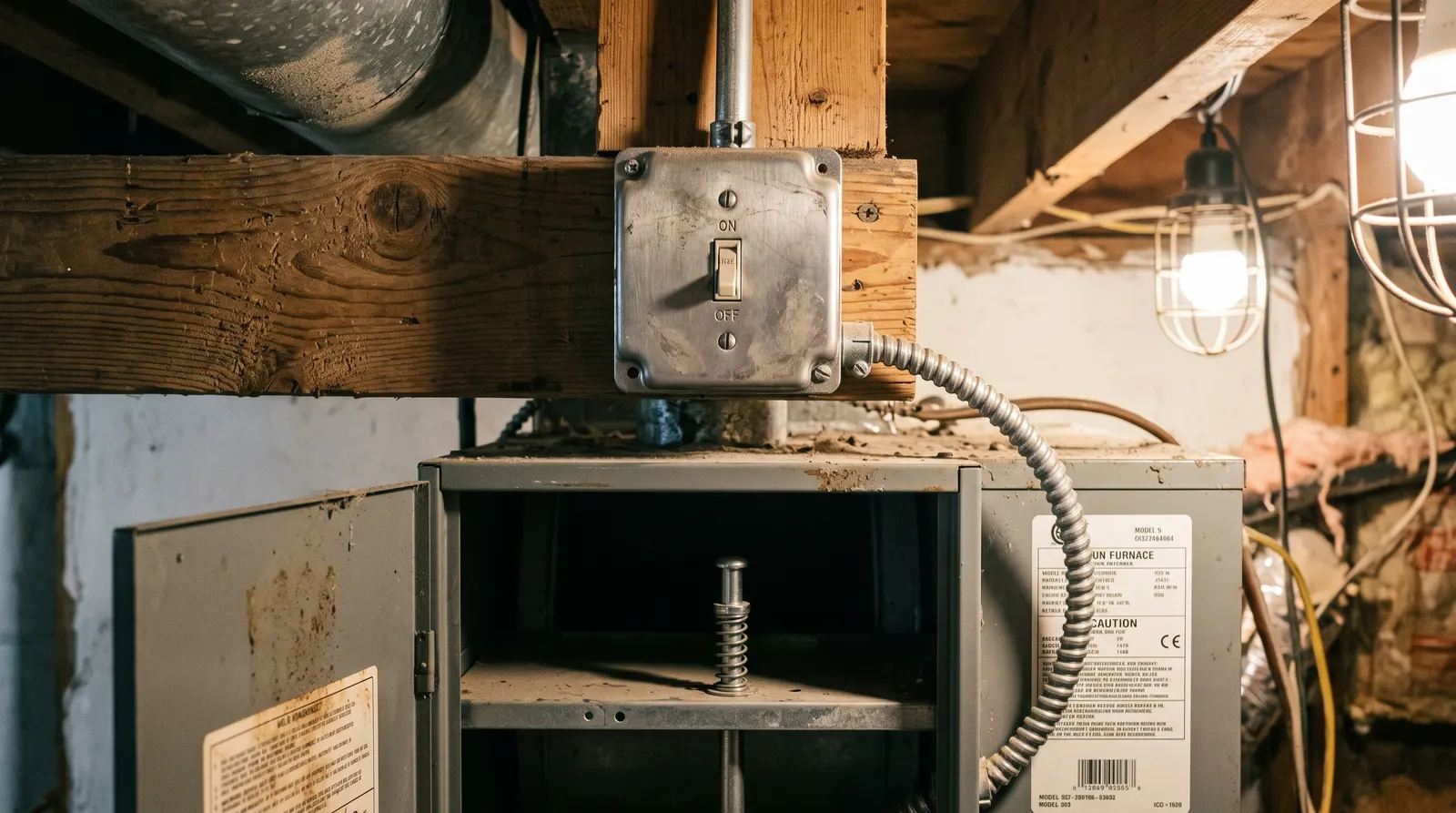
A switch that looks like a light switch, on the casing or the wall beside it. It gets flipped by mistake and kills the furnace.
03
The access panel
Behind the front panel is a plunger interlock. If the panel is not fully seated, usually after a filter change, there is no power at all.
04
Breaker, then lockout reset
Check the furnace breaker, then switch the furnace off at its own switch for a minute and back on to clear a lockout.
Cited source2:00
“So, the very first problem that we're going to go over is a dirty flame sensor. That's the champion of all furnace problems.”
WO
Word of Advice TV
Working HVAC service technician
Word of Advice TV, 2020
An independent source we cite. Not affiliated with Emergency Services 24H, and not a network contractor.
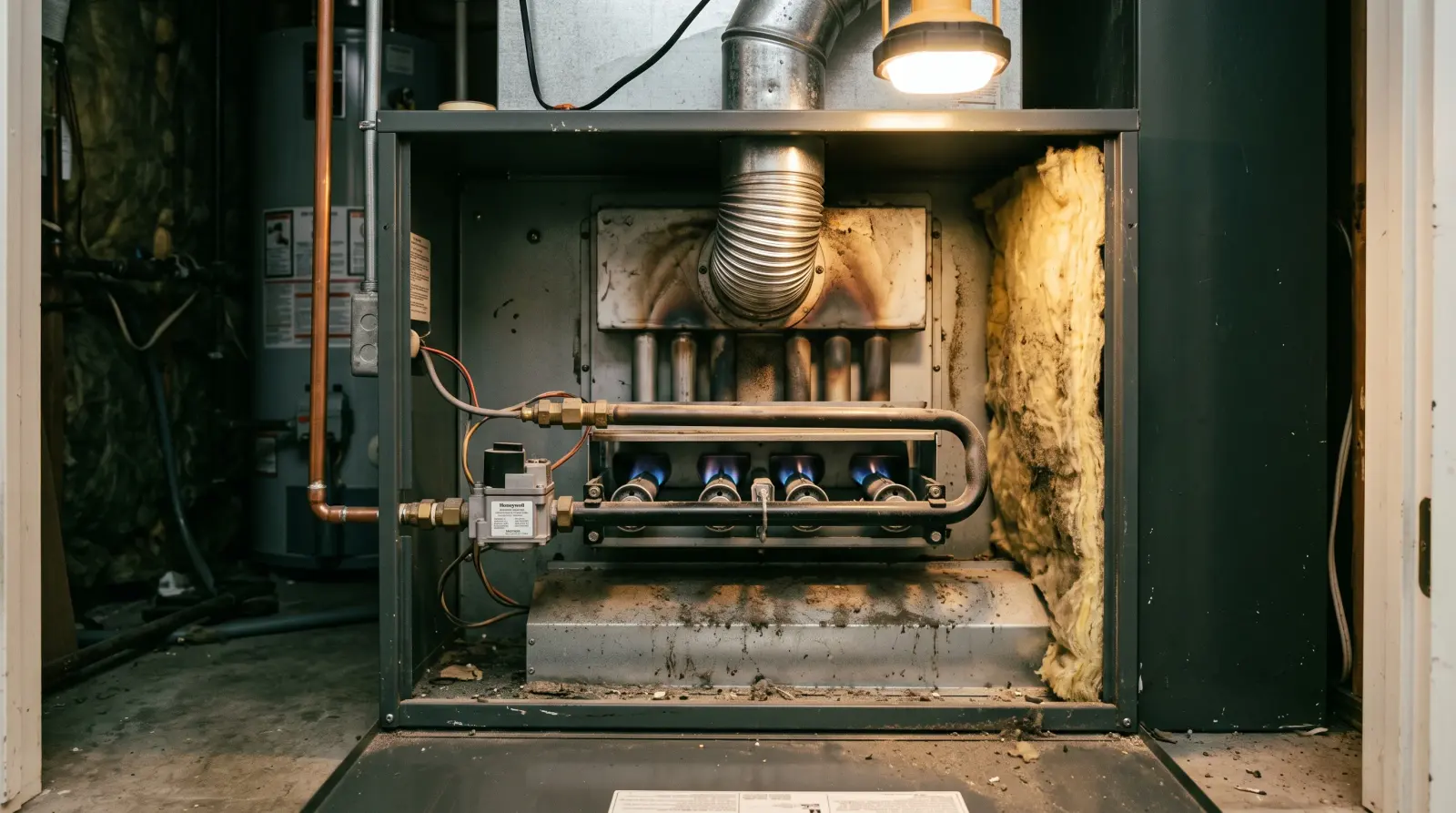
Behind the front panel of almost every modern furnace is a plunger switch. The panel presses it when properly fitted, and there is no power when it is not.
It exists so the blower cannot run with the cabinet open, and it is the commonest reason a furnace goes from working to dead after a filter change.
The power switch that looks like a light switch
In basements it is often at the top of the stairs, switched off by people assuming it is a light, and it doubles as the reset button location.
What lockout means and how to clear it
A modern furnace lights the burner, then looks for a flame. Finding none it purges and retries three or four times, then locks out deliberately, to avoid filling the heat exchanger with unburnt gas.
Lockout has a duration: Word of Advice TV describes three to five retries followed by a three-hour lockout.
A homeowner checking twenty minutes later concludes the unit is dead when it is in timeout. The silence is not evidence of a failed furnace.
Clear it once. Switch the furnace off at its own power switch, wait a full minute, switch it back on and let it attempt a full cycle.
Watch what happens. If it lights and runs, something transient caused it. If it locks out again, the fault is real.
Do not keep resetting. Cycling a furnace that cannot prove a flame genuinely adds risk.
Common causes: a dirty flame sensor, a failed igniter, a blocked condensate drain, or a blocked flue.
Reading the diagnostic flash code
Read it before you cut the power. Word of Advice TV puts that ahead of every other check, because the instinctive move destroys the evidence.
An intermittent fault is stored in that blink pattern, and killing power clears it, so the technician waits for it to happen again.
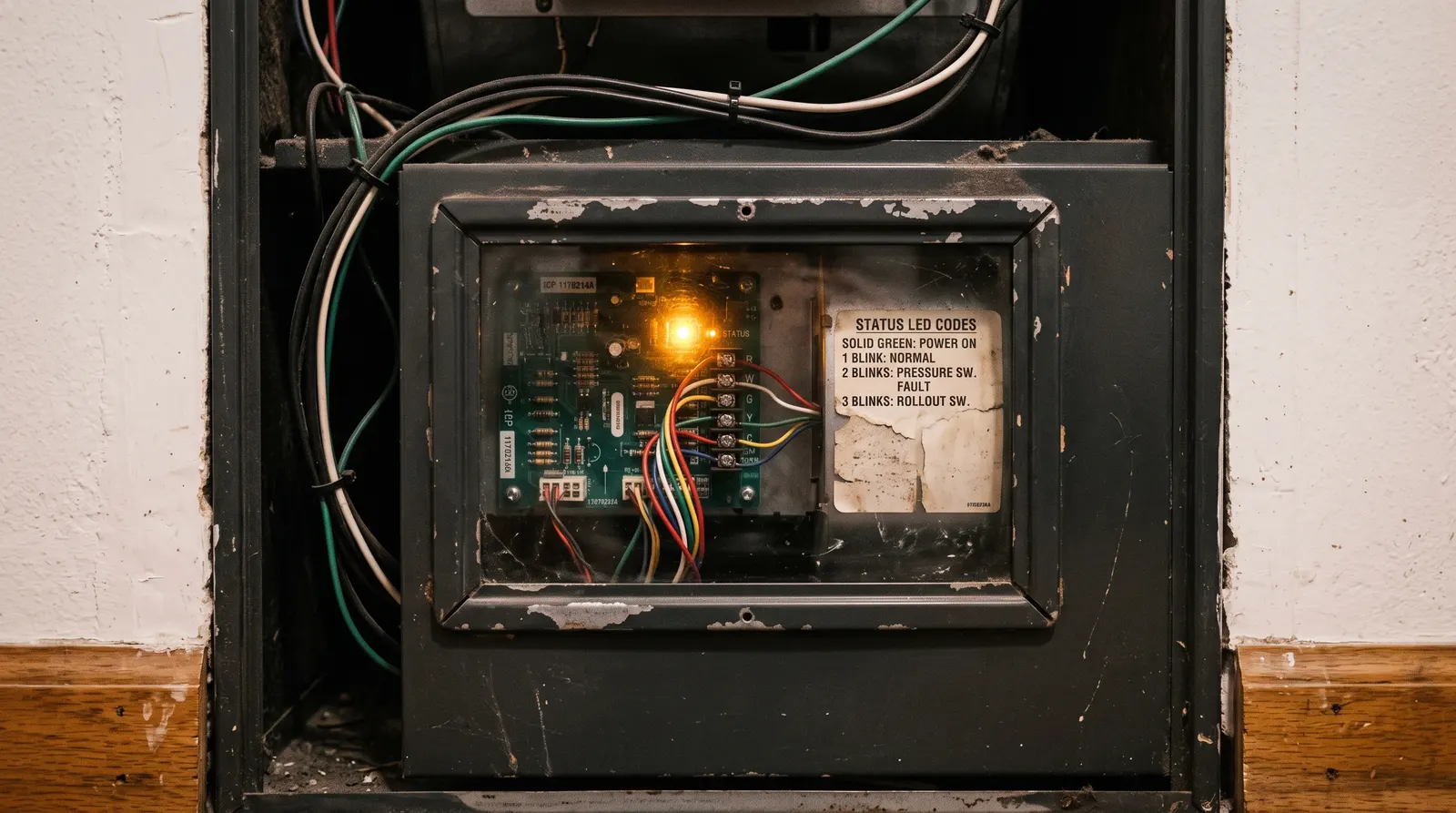
There is an LED on the control board behind a small window. It flashes a pattern, and a legend inside the access door translates it: pressure switch open, flame sense fail, limit switch open.
Count the flashes, photograph the legend, and quote the code when you call. It halves the diagnostic time, which is what the first hour of the bill is made of.
Two codes get misread as a dead furnace. A pressure switch open code with a click and nothing running points at the inducer, though the obstruction is usually debris or a nest in the wheel or flue.
A control board with power in and none out is as silent as one switched off, which is why the switches get checked before anyone quotes a board.
A timing tell no code reports: the furnace fan should start twenty to thirty seconds after the burners light. If it will not start after a minute, that points at the blower motor, and burnt electrics settles it.
Most modern gas furnaces do not have one. Oil furnaces usually do, on the burner, and it should be pressed once only.
On an oil furnace the reset button matters, and pressing it repeatedly floods the combustion chamber with oil.
Getting through a cold night safely
If the checks fail and you are waiting until morning, pipes come first and people second, because pipes cannot move to a warmer room.
Open cabinet doors under sinks on exterior walls and let cold taps drip, standard freeze prevention.
Consolidate. Close off unused rooms, and heat one space rather than trying to heat the house with portable heaters.
Spread the electrical load. Two 1,500 watt heaters on one 15 amp circuit trip the breaker.
Never bring combustion indoors. No generator, no charcoal or gas grill, no camping stove, and never the oven as a heater.
Know the line
Safe to check yourself, or call a pro now?
Safe to check yourself
Thermostat mode, setpoint and batteries
The furnace power switch and the access panel seating
The furnace breaker
One lockout reset via a one-minute power cycle
Reading and reporting the diagnostic flash code
Call a pro now
Anything involving the gas valve, burners or heat exchanger
Replacing an igniter, flame sensor or pressure switch
A furnace that locks out repeatedly after a reset
Any gas smell, ever
A furnace that has triggered a CO alarm
24/7 dispatch network
Get a licensed HVAC technician moving on this
Checks done and still no heat, or a furnace locking out repeatedly. Send the flash code if you have it, and licensed, insured HVAC contractors covering your area will contact you directly.
Fire, a gas smell, or an injury? Leave the building and call 911 first, then your gas
utility or power company. Use this form once you are safe.
Four free checks first: the service switch, the blower door interlock, the breaker, and the thermostat batteries. They account for a large share of dead furnaces.
What it costs if the checks do not fix it
Indicative US ranges. Always get a written quote.
Job
Typical range
Notes
After-hours diagnostic fee, weeknight
$150–$250
Before any repair work
After-hours diagnostic fee, holiday
$225–$500
Top of the band on major holidays
Emergency labor multiplier
1.5×–3×
Applied to the standard hourly rate
Furnace igniter, standard hours
$150–$350
The most common no-heat repair
Furnace igniter, after hours
$275–$600
$400–$900 on a holiday
Holiday furnace failure, documented case
~$1,180
Read 2026-08-16. Diagnostic, multiplied labor and parts combined
Source: 2026 emergency HVAC rate aggregator data; HomeGuide 2026 HVAC repair cost guide (retrieved August 2026). Figures vary by region and timing.
Figures last checked
The igniter row is the one to note: the most common no-heat repair, with roughly a six-fold spread between standard hours and a holiday call-out.
If the house is holding a safe temperature and pipes are protected, booking the first slot of the next working day is a legitimate several-hundred-dollar decision. Full rate structure sits in our the cost of an emergency furnace or AC visit.
How the matching works, and what we do not do
Emergency Services 24H is a referral service. We do not employ HVAC technicians and we do not perform gas work.
Your request routes to licensed, insured contractors nearby. Include the flash code if you read it, because it travels with the request and shortens the visit.
Two cheap faults that look exactly like a dead furnace
A documented first-hand account, not a market pattern.
A working HVAC service technician, in a 2020 published video, describing the three-second flame pattern seen on residential furnace calls and the flame-sensor cleaning that resolved it, corroborated by a second contractor on filter-related shutdowns.
A furnace that lights and dies looks terminal from the hallway. The signature: burners that light and go out after about three seconds point at the flame sensor, which usually needs cleaning rather than replacing. A dirty air filter does the same thing from the other end.
Neither is a guarantee: both describe patterns from their own call histories. What matters is describing the behavior accurately, because three seconds and out is a different call from will not light at all.
What this does not say: Two technicians' patterns from their own call histories; almost guaranteed is the first technician's phrasing, not a measured predictive value, and other faults produce a similar short burn.
The AC works but the furnace will not turn on. What does that rule out?
If the AC fan works and the heat does not, that rules out thermostat power and most wiring, because one low-voltage circuit runs both. It points at the heating side: the power switch, the door interlock, the ignition sequence, or a tripped circuit breaker.
Does this apply to an electric, propane or wall furnace?
The switches do. An electric furnace has sequencers rather than burners, and a wall furnace often has a pilot light. In all of them the power switch, door switch and breaker come first.
How do I reset a furnace that will not turn on?
How to reset a furnace: off at its own power switch, wait a full minute, back on. That clears a control-board lockout. If it locks out again, stop and call a technician.
Is there a reset button on a furnace?
Most modern gas furnaces have no reset button. Oil furnaces do, on the burner, pressed once only; on gas the equivalent is the power switch for a minute.
What would cause a heater to not kick on?
Thermostat issues such as dead batteries, a flipped power switch, an access panel not seated against the door interlock, a tripped breaker, or a lockout. The first three dominate.
How do I force my furnace to start?
You should not, and mostly cannot. The board is refusing to ignite for a reason, and bypassing safety circuits on a gas appliance is how carbon monoxide incidents happen.
Why does my furnace lock out?
Because the board tried three or four times, failed to prove a flame, and stopped. Common causes: a dirty flame sensor, a failed igniter, a blocked condensate drain or flue.
What does the flashing light on my furnace mean?
It is a diagnostic code. Count the flashes, read the legend inside the access door, and quote the code when you call, because it often halves the diagnostic time.
The service switch and the door interlock
Reading the diagnostic blink code
Ask for the blink code before the visit. A technician who knows the code often arrives with the part already on the van.
Independent, publicly published sources, quoted with attribution and linked in full.
None is affiliated with Emergency Services 24H, reviewed this page, or works in the referral network.
Word of Advice TV: Working HVAC service technician - “Top 5 Furnace Problems and How to Fix Them” (2020)
Tell us what has failed and how soon you need someone. We route your request to licensed, insured contractors covering your area, and they contact you directly.
Fire, a gas smell, or an injury? Leave the building and call 911 first, then your gas
utility or power company. Use this form once you are safe.