Emergency HVAC cost starts with a diagnostic of $115 to $316 (2026 rate aggregator data, read 2026-08-16), then emergency labor at $275 to $600 an hour. Every page ranking for this promises upfront pricing and publishes none, so here is the fee, the multiplier and where the spread comes from.
An HVAC emergency call-out starts with an after-hours diagnostic of $150 to $250 on a weeknight, $225 to $500 on a holiday, then labor at 1.5 to 3 times standard. A documented holiday furnace failure came to about $1,180 all in.
None of the pages ranking for hvac emergency publishes any of that. If you are holding a quote, the tables below tell you whether it sits inside the market.
The short answer on what an HVAC emergency costs
What does an emergency HVAC call cost?
A $150 to $250 weeknight diagnostic fee or $225 to $500 on a holiday, plus labor at 1.5 to 3 times standard, which is roughly $115 to $600 an hour by region. Parts are separate and also cost more out of hours.
The premium is worth paying when a heating failure puts pipes at risk. That single scenario usually costs more than the whole after-hours surcharge.
Rate card: diagnostics, multipliers and parts
Indicative US ranges. Always get a written quote.
Job
Typical range
Notes
After-hours diagnostic fee, weeknight
$150–$250
Charged before any repair work
After-hours diagnostic fee, holiday
$225–$500
Major holidays sit at the top
Emergency labor multiplier
1.5×–3×
Roughly $115–$600 / hr depending on region
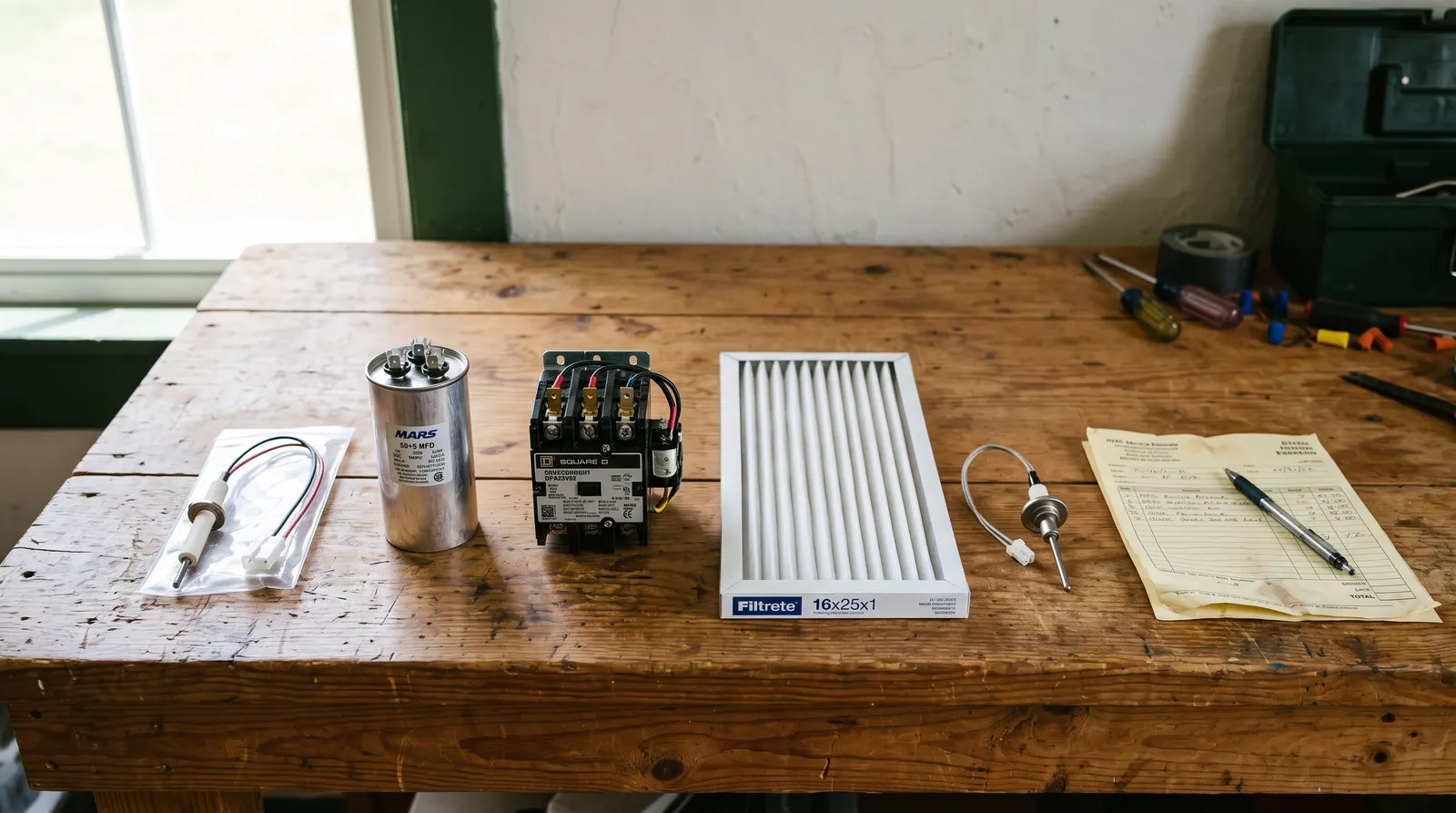
Capacitor replacement
$200–$300
Standard hours; the part itself is under $30
Blower motor
$400–$900
Standard hours
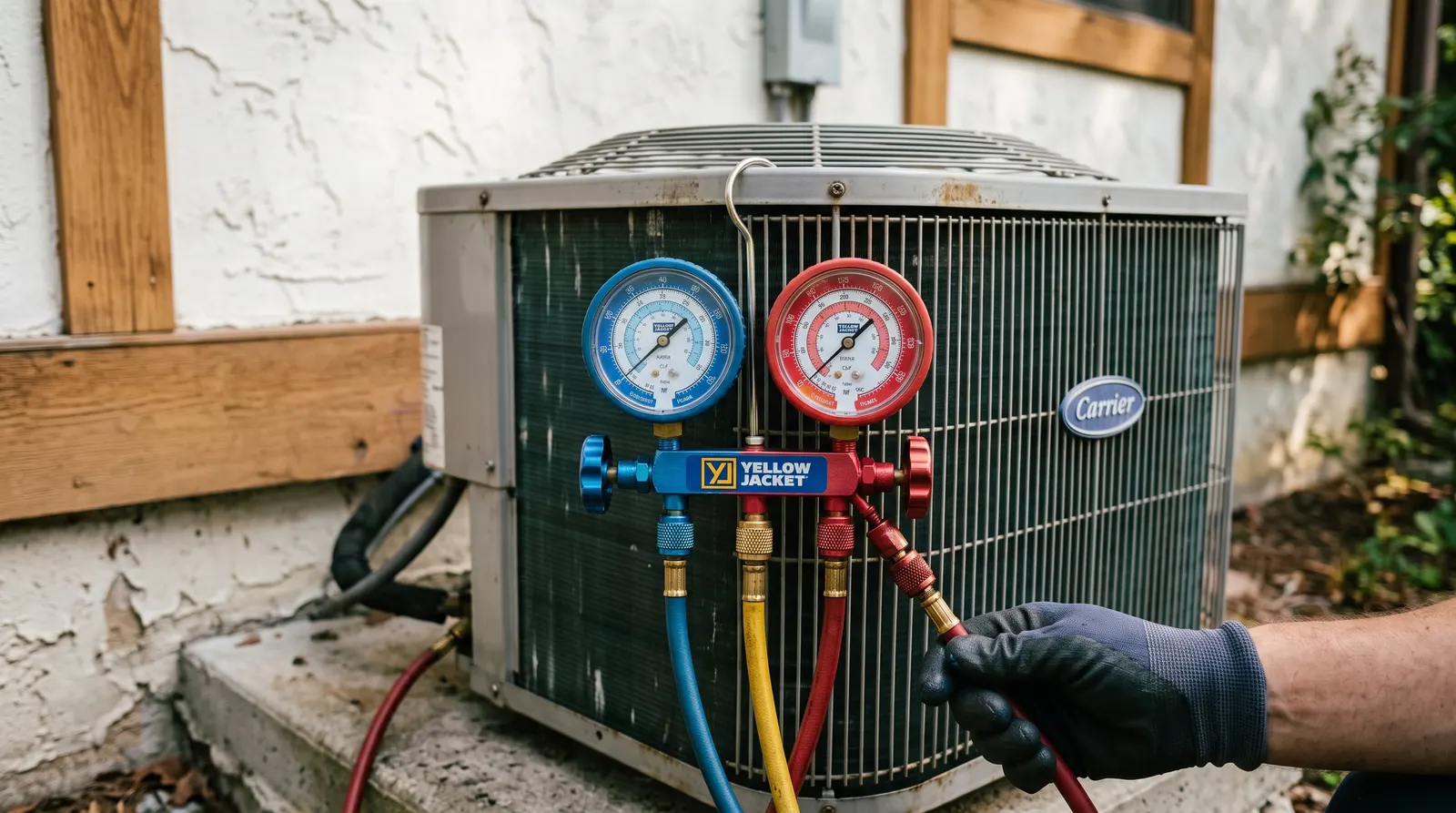
Refrigerant recharge
$250–$600
Temporary unless the leak is repaired too
Source: 2026 emergency HVAC rate aggregator data; HomeGuide 2026 HVAC repair cost guide; Angi 2026 HVAC cost data (retrieved August 2026). Figures vary by region and timing.
Figures last checked
Why the multiplier is wider than other trades
Plumbing and electrical after-hours work typically runs 1.5 to 2 times standard. HVAC runs 1.5 to 3, and the extra range is not arbitrary.
The difference is seasonality. The first hard freeze and the first heatwave generate more calls in forty-eight hours than the preceding six weeks, so every technician in a region is committed at once and pricing reflects scarcity.
The second factor is parts. Supply houses close, so an after-hours technician either has the part on the van at their own cost or sources it at retail. That shows up in the materials line rather than the labor line, which is why comparing hourly rates alone can mislead.
The same part, three different prices
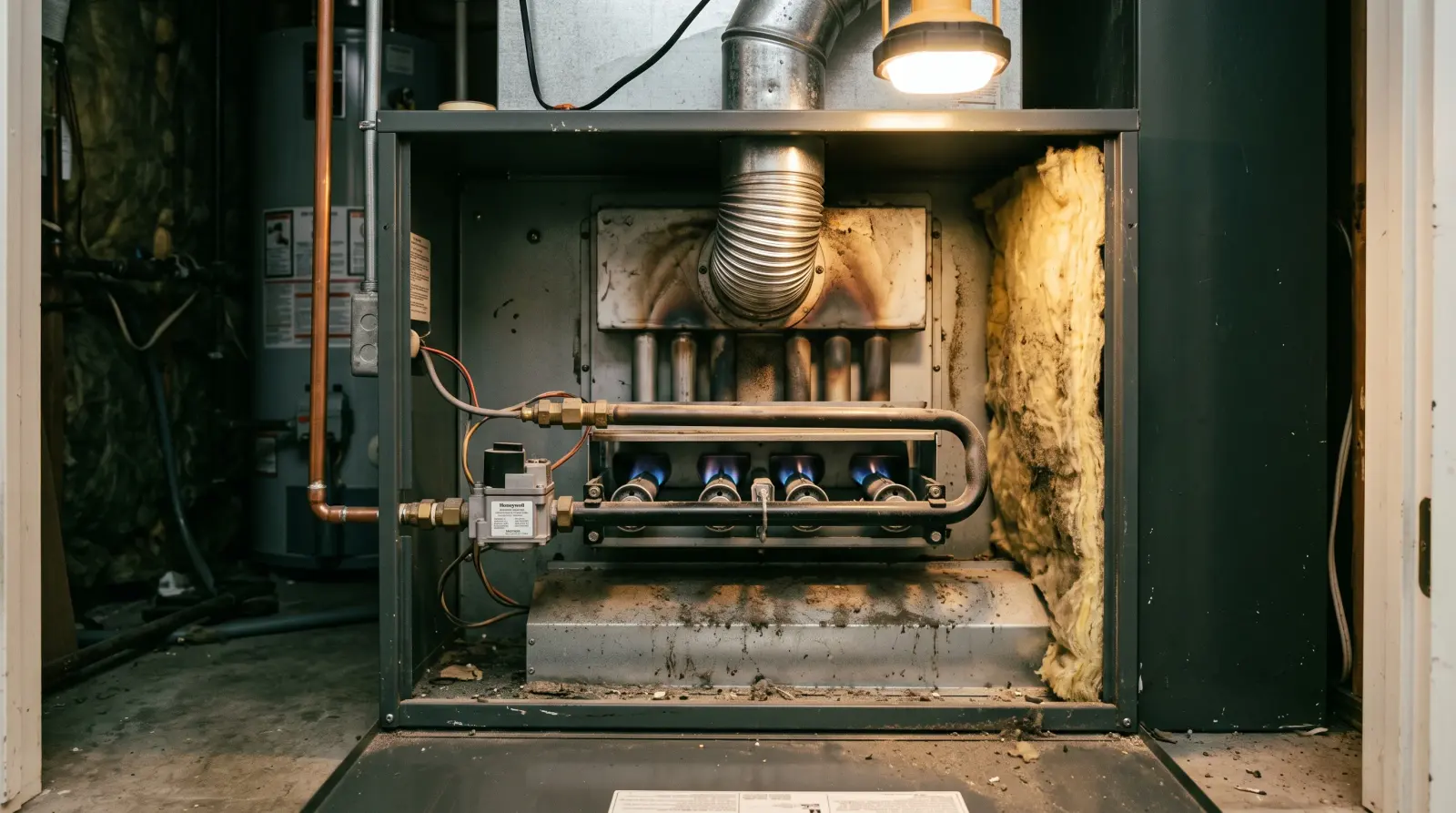
The furnace igniter is the clearest illustration in the trade, because it is the most common no-heat repair and the price spread is enormous.
One part, three different hours
Indicative US ranges. Always get a written quote.
Job
Typical range
Notes
Furnace igniter, standard hours
$150–$350
The most common no-heat repair there is
Furnace igniter, after hours
$275–$600
Read 2026-08-16. Same part, different hour
Furnace igniter, holiday
$400–$900
Roughly six times the standard-hours low end
Documented holiday furnace failure
~$1,180
Read 2026-08-16. Diagnostic plus multiplied labor plus parts
Source: 2026 emergency HVAC rate aggregator data (retrieved August 2026). Figures vary by region and timing.
Figures last checked
The top of the holiday band is roughly six times the bottom of the standard band for identical work, which is the number worth carrying into the decision.
It also makes an annual inspection look cheap against an HVAC emergency at the worst hour. A furnace that fails on Christmas Eve was showing symptoms in October.
24/7 dispatch network
Get a licensed HVAC technician moving on this
Send the fault and licensed, insured HVAC contractors covering your area will contact you directly. Compare what you are quoted against the tables above. No obligation to hire.
Fire, a gas smell, or an injury? Leave the building and call 911 first, then your gas
utility or power company. Use this form once you are safe.
What homeowners actually ask
What homeowners and technicians report
Drawn from real public forum threads and reported prices, summarized and attributed as patterns.
These are not reviews of this site, and no names or ratings have been invented.
“Paid $316 to replace a capacitor and inspect the system”
SourceHomeowner report in a public HVAC discussion thread.
“Techs add $100 to $150 for after-hours Sunday calls, turning a $10 part into over $500”
SourceRecurring pattern in the same thread.
“One AC shop charged $30 for the same capacitor”
SourceAlso from that thread.
“Holiday furnace failure, around $1,180 all in (read 2026-08-16)”
SourceCase figure published by a 2026 emergency HVAC rate aggregator, covering holiday diagnostic, multiplied labor and parts.
1 / 4
Emergency HVAC cost and the capacitor argument
No line item in home services generates more argument than this one, and both sides have a real case.
The homeowner side: the part costs under $30, the swap takes minutes, and paying $316 feels like being charged for scarcity of knowledge. That frustration is legitimate.
The contractor side: the invoice covers a stocked van carrying the right capacitance so the visit is one trip, a licensed technician, the diagnostic time to identify the failure rather than guess it, insurance, and an out-of-hours rota that exists so somebody answers at 9pm in July.
Both are true. Knowing the numbers lets you ask what proportion is diagnosis and what is parts, which is a reasonable question, rather than feeling ambushed by a total.
Five questions before dispatch
What is the diagnostic fee, and is it credited against the repair? Expect $150 to $250 on a weeknight.
What is the multiplier right now? Not the standard rate, the rate at this hour.
If it is the likely part, what does that cost tonight versus tomorrow? On an igniter the answer can be several hundred dollars.
What is your state license number, and are you insured? Both are checkable.
Will I get a written quote before work starts? Diagnose, price, then work.
Never let price delay a carbon monoxide response
If a CO alarm has sounded or you can smell gas near the furnace, none of this page applies until you are outside and have called 911 or your gas utility. CPSC guidance is to get everyone out to fresh air, call from outside, and do a head count rather than searching for the source. The cost conversation happens afterwards.
What waiting until morning saves
Is it worth waiting until morning for HVAC repair?
Usually half to two thirds of the labor cost, because the multiplier disappears and parts return to trade prices. It is only a real saving if the house is safe: pipes protected in a freeze, no vulnerable occupants in a heat event, and no CO alarm or gas smell.
On a two-hour job, standard labor plus a standard diagnostic against emergency labor plus an after-hours diagnostic is commonly $300 to $600 apart, and more on a holiday.
What it does not cover is risk: a house heading toward freezing has pipes at stake, and a heat event with an infant is a health question. Our guide to what counts as an emergency sets the thresholds.
Are maintenance plans worth it?
The honest answer is that the discount is rarely the point.
Most plans bundle an annual inspection with a percentage off repairs and priority dispatch. The percentage is worth less than it sounds against a 3x multiplier, and CPSC recommends the inspection anyway.
Priority dispatch is the part with real value, on the two or three days a year when every technician is committed. Judge a plan on that rather than the discount table.
Home warranties and what they usually exclude
Home warranty coverage of HVAC is common and the exclusions matter more than the coverage.
A service fee per claim rather than per visit, which stacks if the problem needs two trips.
Pre-existing condition exclusions, which are frequently invoked on older systems.
Improper maintenance exclusions, where a missing service history voids the claim.
Their contractor, their schedule. That is the practical conflict: warranty dispatch is rarely same-night, which is exactly when an emergency happens.
When repair stops making sense
Four signals, and any three together usually settle it.
Age beyond fifteen to twenty years, a quoted repair approaching a third of replacement cost, or a second major failure inside two seasons. A confirmed cracked heat exchanger ends the conversation on its own.
Derek Cole, a heating and air general manager, works to a $1,300 rule: on a system twelve to fifteen years old, a repair quote of $1,300 or more is the point to price replacement.
He notes inflation has eroded the threshold but says the rule holds. It is one operator’s heuristic, and worth treating as a prompt to get both quotes rather than a hard line.
His argument is about what comes next. Spend fifteen hundred on a twelve-year-old unit and six months later a blower motor puts you several hundred in again, with no warranty.
His phrase for the pattern: not a nickel-and-dime trap, a hundreds-of-dollars trap every single time. Replacing a compressor at that age puts a new heart in an old body, because the coils and lines are as old as the part.
He is also a selling contractor, so take the method rather than the recommendation. Ask for both numbers and weigh age, repair cost and efficiency.
Emergency HVAC repair services are priced the same way whether the call is emergency heating and air or cooling: a diagnostic, then labor.
A heating cooling company charges the way a one hour heating and air outfit does, and emergency commercial HVAC sits above both.
A true HVAC emergency, day or night, is heat or cooling lost in weather that makes the house unsafe. A 24-hour emergency HVAC company prices that rather than the discomfort, and Emergency Services 24H routes the request.
Emergency Services 24H is a referral service. We do not employ HVAC technicians, we do not perform repairs, and we never quote a price for the work itself.
Your request routes to licensed, insured contractors covering your area, and they contact you directly. The tables here exist so that conversation starts from an informed position.
Know the line
Safe to check yourself, or call a pro now
Safe to check yourself
A house holding a safe temperature with pipes protected
A cooling failure in mild weather with no vulnerable occupants
A fault you have isolated and that is not getting worse
A thermostat problem you have already narrowed down
Call a pro now
A carbon monoxide alarm, at any hour
A gas smell near the furnace
Indoor temperatures heading toward freezing
A heat advisory with infants, elderly occupants or medical conditions
A furnace short cycling on temperature, which is fatiguing the exchanger
What an “EPA certified” technician is actually certified to do
The phrase is on most HVAC vans and means something narrower than people assume: a federal certification for handling refrigerant lawfully, in classes from small appliances to a universal card.
None of that speaks to diagnosis. Two questions follow: which class of card, and does this state license HVAC repair services separately?
What this does not say: Section 608 is a federal handling certification; state HVAC licensing, where it exists, is a separate and usually stricter test of competence.
What counts as a true HVAC emergency, and what can wait?
Heat lost in freezing weather, cooling lost in a heat advisory, a gas smell, or a CO alarm. Anything else is a next-day call, and 24-hour heating repair costs the multiplier either way.
Does a maintenance plan cut what emergency HVAC repairs cost?
Usually through priority scheduling and a discount rather than a lower rate. HVAC yearly maintenance is worth more for what it prevents: the filter, the flame sensor and the drain that cause most emergency repair calls.
What does emergency HVAC cost after hours?
A diagnostic of $115 to $316 (2026 rate aggregator data, read 2026-08-16), then labor at $275 to $600 an hour. A holiday call-out multiplies that again, which is why one igniter spans a six-fold range.
Is emergency air conditioner repair priced differently from emergency furnace repair?
Not by trade. Both are HVAC repairs on the same labor rate; only the part differs.
Do residential and commercial HVAC rates differ?
Yes. Commercial HVAC carries rooftop access, larger equipment and often a service contract, so the rate and the minimum call-out are higher than residential HVAC services.
Are online reviews a reliable guide to emergency heat pricing?
They are a guide to how a firm behaves, not what the work costs. Air conditioning reviews rarely record the unit size or the hour of the call.
How much does emergency HVAC service cost?
Budget a diagnostic of $150 to $250 on a weeknight and $225 to $500 on a holiday, then labor at 1.5 to 3 times standard, roughly $115 to $600 an hour by region. Parts are extra and cost more out of hours.
Are after-hours HVAC rates really higher?
Yes, and by more than most trades: aggregator data puts the emergency multiplier at 1.5 to 3 times standard, wider than the 1.5 to 2 times typical in plumbing, because demand spikes on the first freeze and the first heatwave.
What does a furnace igniter cost?
Around $150 to $350 fitted in standard hours, $275 to $600 after hours, $400 to $900 on a holiday. It is the most common no-heat repair, and the clearest illustration of what the hour of the call costs.
Is the diagnostic fee credited against the repair?
Sometimes, and it is the single most useful question to ask before dispatch. A company charging $200 that credits it is cheaper than one charging $150 that does not, as soon as any repair happens.
Why is a capacitor replacement so expensive?
Because the part price and the job price measure different things. The capacitor is under $30; the invoice covers a stocked van, a licensed technician, diagnostic time and an out-of-hours rota. Homeowners report $200 to $316 fitted.
What does waiting until morning save?
Often half to two thirds of the labor, because the multiplier disappears. That saving is only real if the house is safe: pipes protected, no vulnerable occupants, no CO alarm or gas smell.
Gauges on the service ports
Common replacement parts and what they cost
Maintenance agreements often waive the diagnostic and put you ahead of the queue in a cold snap, which is when queue position is worth most.
Tell us what has failed and how soon you need someone. We route your request to licensed, insured contractors covering your area, and they contact you directly.
Fire, a gas smell, or an injury? Leave the building and call 911 first, then your gas
utility or power company. Use this form once you are safe.