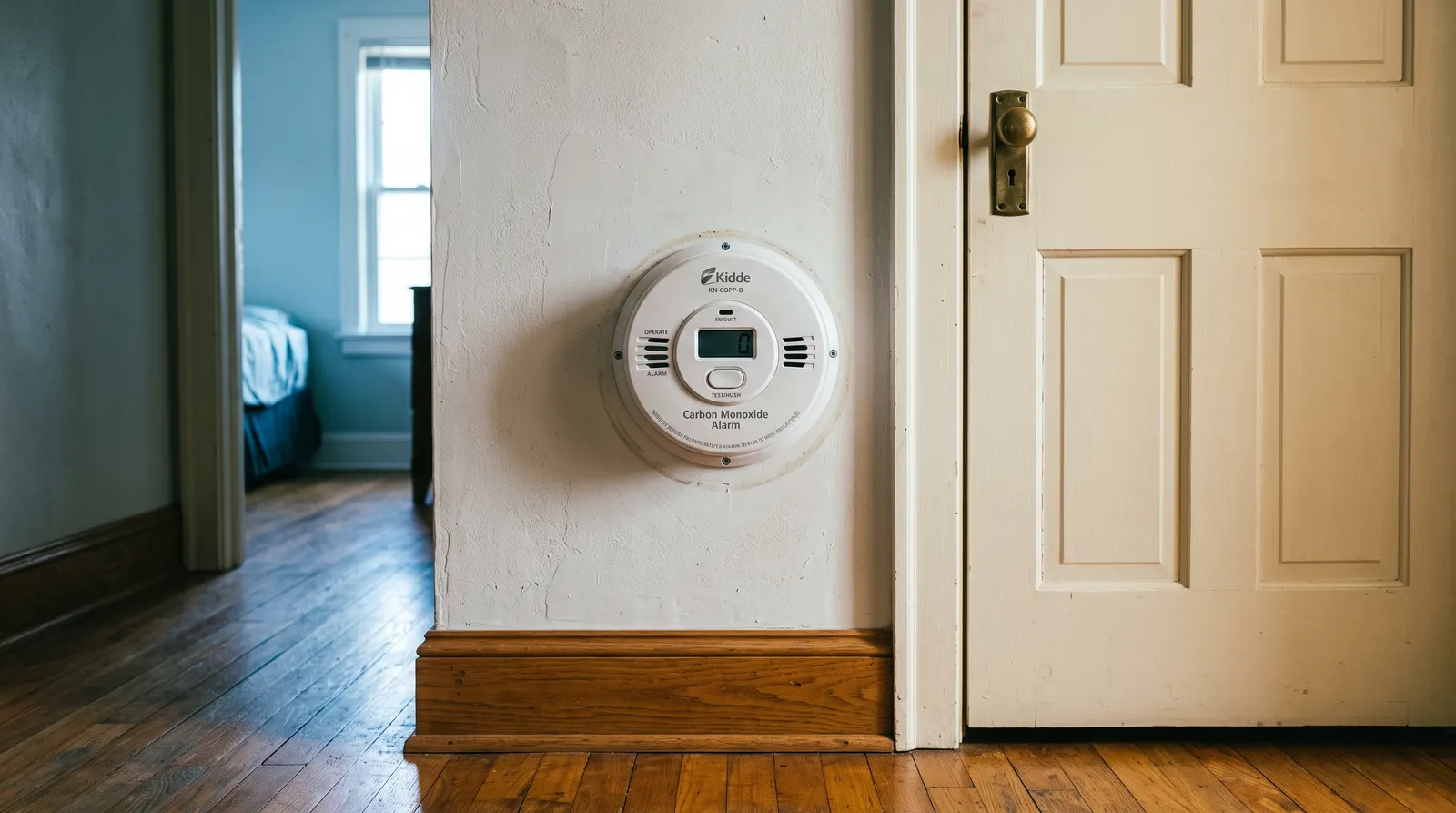
A carbon monoxide furnace fault gives your senses nothing: no color, no smell, and early symptoms that read as flu. Fit alarms on every level, replace them at the 10 year date stamped on the back, and treat one sounding as a reason to leave the building before anything else.
Carbon monoxide furnace leaks happen when combustion products that should leave through the flue enter the house instead. CPSC records more than 200 US deaths a year from non-automotive consumer products, 63 a year of them from heating systems.
Move every person and pet out to fresh air. Not another room, not the porch. Outside.
02
Call 911 from outside
Fire crews carry calibrated CO meters and will say when it is safe to re-enter.
03
Do a head count
CPSC lists this explicitly, because carbon monoxide causes confusion and people get left behind.
04
Do not go looking for it
Searching for the source is what CPSC tells you to avoid. You cannot see or smell what you would walk into.
Cited source7:18–7:34
“carbon monoxide will never let you know that it’s there most people who get poison were never aware that it was occurring in some cases they just don’t wake up”
EJ
Ethan James
Carpenter and home-systems educator
The Honest Carpenter, 2020
An independent source we cite. Not affiliated with Emergency Services 24H, and not a network contractor.
No. It is colorless, odourless and non-irritating. Natural gas smells because a sulphur compound is deliberately added to it so leaks are obvious. Nothing is added to carbon monoxide, because it is a combustion product rather than a supplied fuel.
That drives everything else. If you could smell it, going to look would be reasonable; since you cannot, it means walking toward an invisible source.
The symptom pattern that gives it away
CPSC describes the initial symptoms as similar to flu: headache, fatigue, breathlessness, nausea, dizziness. Individually, each is just a bad week.
What distinguishes it is the pattern rather than the symptom.
Several people at once. Two or more unwell together, with no infection going around.
Pets included. Animals are affected first, being smaller and nearer the floor.
Better outdoors. Symptoms that lift within an hour of leaving and return on coming back are close to diagnostic.
Worse when the heating runs. Correlation with the furnace cycling points at the heating system.
This is not a self-diagnosis page
If anyone is confused, drowsy, unsteady or unconscious, that is a 911 call from outside the building and nothing else. Carbon monoxide poisoning is treated with oxygen and it needs medical assessment. Nothing on this page is a substitute for that, and no symptom checklist should be used to talk yourself into staying.
How a carbon monoxide furnace leak actually starts
A working gas furnace produces carbon monoxide and sends it up the flue. Problems arise when it ends up somewhere else.
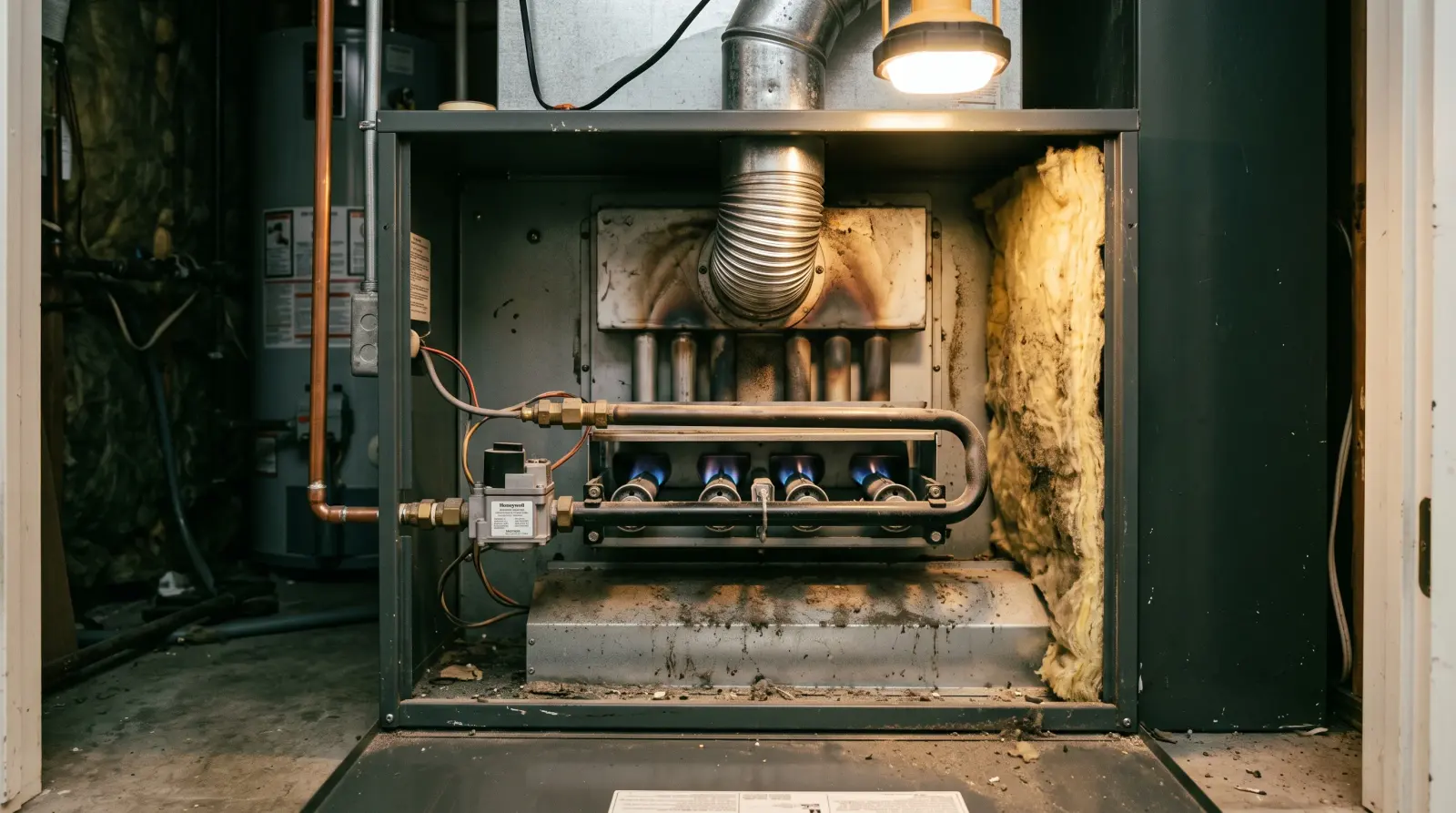
Ethan James of The Honest Carpenter describes the colour change: a clean flame is blue, and an orange flame is starving for air.
Read that as information, not an instruction to go and look.
The failure paths he names are not only old-furnace problems: rust narrowing the heat exchanger, flues clogged by nesting animals, inadequate combustion air, back-drafting, corrosion turning into cracks.
Modern furnaces carry rollout sensors to catch flame leaving the burn chamber, and his instruction is blunt: never mess with them.
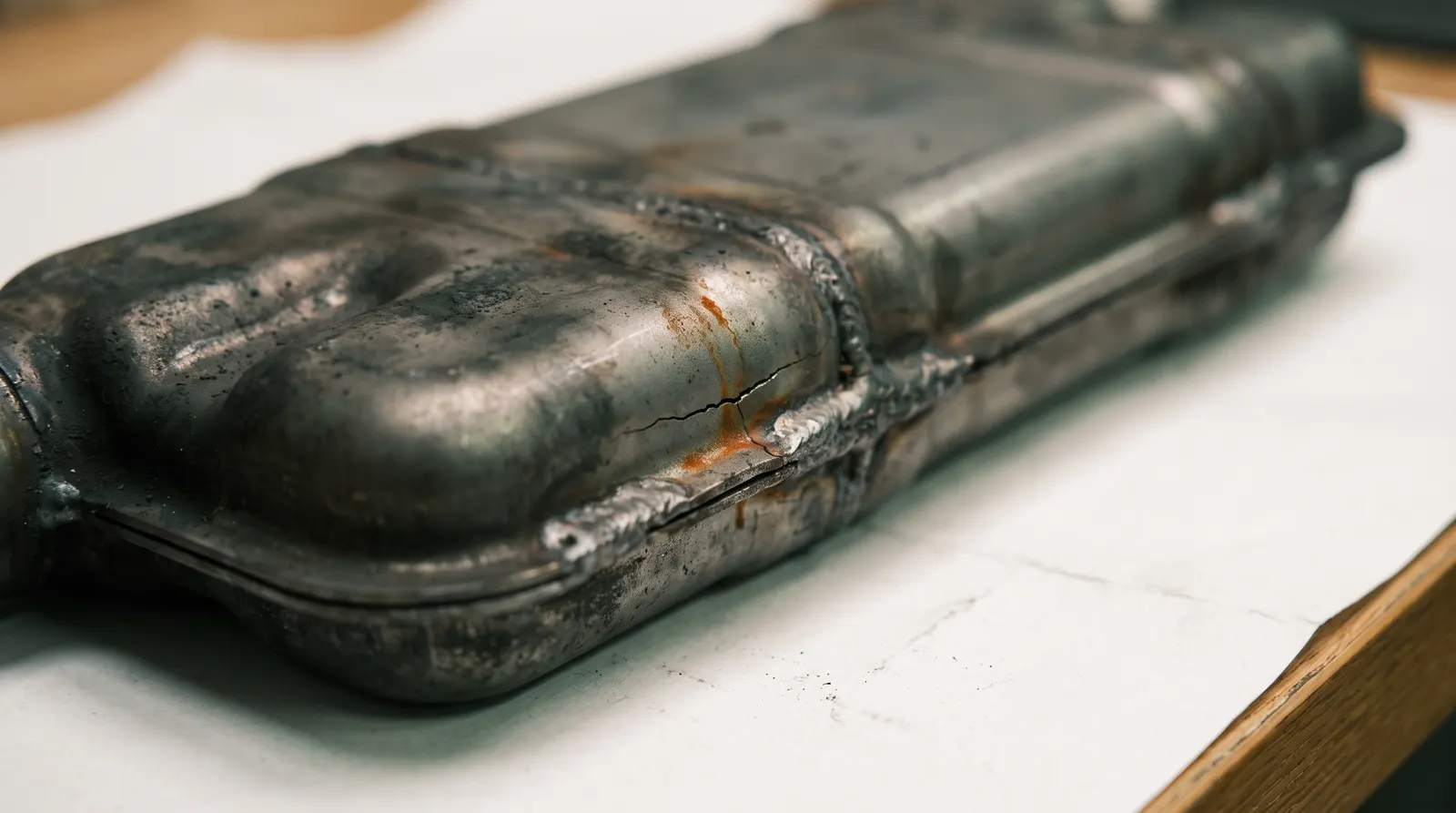
Cracked heat exchanger. The metal wall separating combustion gases from the air blown into your rooms develops a crack through thermal cycling.
Blocked or disconnected flue. A bird nest, a collapsed liner, corrosion, or a vent pipe that has separated at a joint.
Poor combustion. A maladjusted burner, restricted combustion air in a sealed utility room, or a badly fitted conversion produces incomplete combustion and far more CO than a healthy flame.
Back-drafting. A powerful extractor can pull flue gases back down into the house, particularly in tightly sealed homes.
Will opening a window stop carbon monoxide?
Does ventilation fix a carbon monoxide leak?
No. Opening windows dilutes what is already in the air and does nothing about a source that is still producing.
Ventilation helps once the source has stopped, which is why fire crews ventilate after shutting the appliance down.
Can a furnace leak CO when it is switched off?
A furnace not burning fuel cannot produce carbon monoxide, with two caveats worth knowing.
Older furnaces with a standing pilot burn continuously, and the furnace shares its flue with a gas water heater in most homes, so a blocked chimney can spill that heater’s products indoors in summer.
Symptoms out of season point away from the furnace, toward the shared flue, a gas range or a fireplace.
The stakes, in real numbers
Why the first ten minutes matter
Every figure is sourced
51,000
home electrical fires a year in the US
Source: ESFI
48h
window before mold can start after water damage
Source: EPA
200+
US deaths a year from consumer-product carbon monoxide
Source: CPSC
$25,000
damage from just one inch of flood water
Source: NFIP
Where CO alarms go, per CPSC
One on each level of the home. Including the basement if it is a living space.
Outside sleeping areas. The point is to wake people, and CO poisoning during sleep is how most fatal cases happen.
Not in attics or unfinished basements unless those include a sleeping area.
Test monthly and replace on the date. CO sensors have a service life, after which the unit is decorative.
A smoke alarm is not a CO alarm unless it is a combination unit. Check the label tonight.
What a combustion safety inspection involves
CPSC recommends a qualified technician inspect the heating system and its safety switches once a year. This is what that consists of.
The technician inspects the heat exchanger with a borescope, because cracks are invisible from outside, then tests draft and checks for spillage.
That spillage test is the direct check of whether combustion products are actually leaving the building.
Then a combustion analysis of the flue gases. A furnace can pass a visual inspection and fail one, which is why the instrument matters more than the flame.
If the furnace also short cycles, mention it, because incomplete cycles worsen combustion problems.
Know the line
Safe to check yourself, or call a pro now
Safe to check yourself
Fitting and testing CO alarms on every level and outside sleeping areas
Checking alarm expiry dates and replacing expired units
Leaving the building and calling 911 when an alarm sounds
Booking the annual heating system inspection CPSC recommends
Keeping the area around the furnace clear for combustion air
Call a pro now
Any inspection of the heat exchanger or the flue
Combustion analysis, which needs a calibrated instrument
Adjusting burners, gas pressure or the gas valve
Deciding whether a furnace is safe to run again after an alarm
Anything at all while a CO alarm is sounding, other than leaving
24/7 dispatch network
Get a licensed HVAC technician moving on this
A CO alarm that has sounded, or a furnace you want combustion-tested. Send the details and licensed, insured HVAC contractors nearby will contact you. If an alarm is sounding now, call 911 first.
Fire, a gas smell, or an injury? Leave the building and call 911 first, then your gas
utility or power company. Use this form once you are safe.
Leave the building first and call 911 from outside. Do not open the furnace, do not investigate, and do not wait to see whether the alarm stops.
What getting it checked costs
Indicative US ranges. Always get a written quote.
Job
Typical range
Notes
After-hours diagnostic fee, weeknight
$150–$250
Before any repair work
After-hours diagnostic fee, holiday
$225–$500
Top of the band on major holidays
Emergency labor multiplier
1.5×–3×
Applied to the standard hourly rate
Combustion safety inspection
usually 1 hour + diagnostic
Draft test, spillage test, combustion analysis
Annual heating system inspection
standard-hours service call
CPSC recommends this once a year
Source: 2026 emergency HVAC rate aggregator data; HomeGuide 2026 HVAC repair cost guide (retrieved August 2026). Figures vary by region and timing.
Figures last checked
An annual inspection is rare maintenance with a mortality statistic attached to skipping it. Rates sit in our breakdown of emergency HVAC costs.
A cracked heat exchanger means a replace-or-repair conversation, and on an older furnace the economics favor replacement. A contractor telling you to keep running it is giving advice worth declining.
Some cracked-exchanger diagnoses are upsells, and a second opinion on a several-thousand-dollar recommendation is reasonable. Asking to see the borescope footage or the combustion printout is fair.
We will not repeat the DIY test: it bypasses the safety switches, introduces a flame inside a live gas appliance, and misses a crack that only opens hot.
How the matching works, and what we do not do
Emergency Services 24H is a referral service and does not test appliances.
Your request routes to licensed, insured contractors nearby. For an active alarm the fire department is the first call.
The reason this one is treated as evacuate first
A documented first-hand account, not a market pattern.
A named carpenter and home-systems educator, in a 2020 published video about furnace heat-exchanger failure, describing why occupants get no warning before symptoms.
Almost every other fault on this site can wait for daylight. This one cannot: carbon monoxide gives no warning, and the people poisoned by it were unaware it was happening.
That is a physical property rather than a study, and it is enough. There is no smell, no taste, and the early symptoms read as mild illness.
If an alarm sounds or a fuel-burning appliance is suspected, the sequence is out of the building first, phone call second.
What this does not say: A practitioner's statement of a known physical property rather than a study; the CPSC recall corroborates that undetected exhaust leakage occurs in the field, but neither source quantifies household risk.
Do electric, oil and propane furnaces produce carbon monoxide?
An electric furnace burns nothing and produces none. An oil furnace and a propane furnace burn fuel, so both can produce it when venting goes wrong.
What are the signs of carbon monoxide from furnace equipment?
Soot around the cabinet, an orange rather than blue burner flame, heavy condensation on nearby windows, and a household that feels ill indoors and better outdoors. A carbon monoxide detector is the only one of those that works while you sleep.
What carbon monoxide ppm counts as safe levels indoors?
Alarms respond to a rising dose rather than a single number, sounding faster the higher the reading. Treat any sustained reading on a low-level monitor as a reason to ventilate and investigate.
How can I tell if my furnace is leaking carbon monoxide?
By alarm, not by sense. A working CO alarm is the only reliable detector. Soot around the furnace, a yellow rather than blue flame and heavy window condensation are supporting signs, not substitutes.
What are two warning signs of carbon monoxide in a house?
A CO alarm sounding. Second is headache, fatigue, nausea and dizziness affecting several people or pets at once and improving outdoors, which is why the pattern matters more than any symptom.
Why would a furnace release carbon monoxide?
Because combustion products that should leave through the flue enter the house instead: a cracked heat exchanger, a blocked flue, poor combustion air, or a burner out of adjustment.
How quickly will you know if you have carbon monoxide poisoning?
It depends on the concentration: high levels cause unconsciousness within minutes, low-level exposure produces headaches over days. That is why the response to an alarm is to leave rather than assess how you feel.
Will opening a window stop carbon monoxide?
No. Ventilation dilutes the concentration and does nothing about the source. Open windows on the way out if convenient, but leaving is what matters: CPSC guidance is to move everyone outside, call 911, and do a head count.
Can a furnace leak carbon monoxide when it is turned off?
A furnace burning nothing cannot produce carbon monoxide. Two caveats: a standing pilot is still combustion, and a water heater often shares the flue.
Where the alarm belongs
A cracked heat exchanger
The CPSC attributes over 200 US deaths a year to consumer-product carbon monoxide. The cheapest row on this chart is the one that prevents them.
Independent, publicly published sources, quoted with attribution and linked in full.
None is affiliated with Emergency Services 24H, reviewed this page, or works in the referral network.
Ethan James: Carpenter and home-systems educator, The Honest Carpenter - “This Furnace Malfunction KILLS PEOPLE!” (2020)
Tell us what has failed and how soon you need someone. We route your request to licensed, insured contractors covering your area, and they contact you directly.
Fire, a gas smell, or an injury? Leave the building and call 911 first, then your gas
utility or power company. Use this form once you are safe.