A toilet overflowing is halted in seconds by two off switches, and doing it yourself saves the $100 to $200 an hour a plumber charges before the after-hours multiplier. The flapper inside the toilet tank first, then the shut-off valve at the base.
A toilet overflowing is stopped in two moves: push the rubber flapper down inside the tank, then turn the shut-off valve at the base clockwise.
With the water stopped, the useful question starts. A clog, a fill valve and a sewer backup look identical from the bathroom door, and they need three different responses.
The two moves that stop an overflowing toilet
How do I stop a toilet from overflowing?
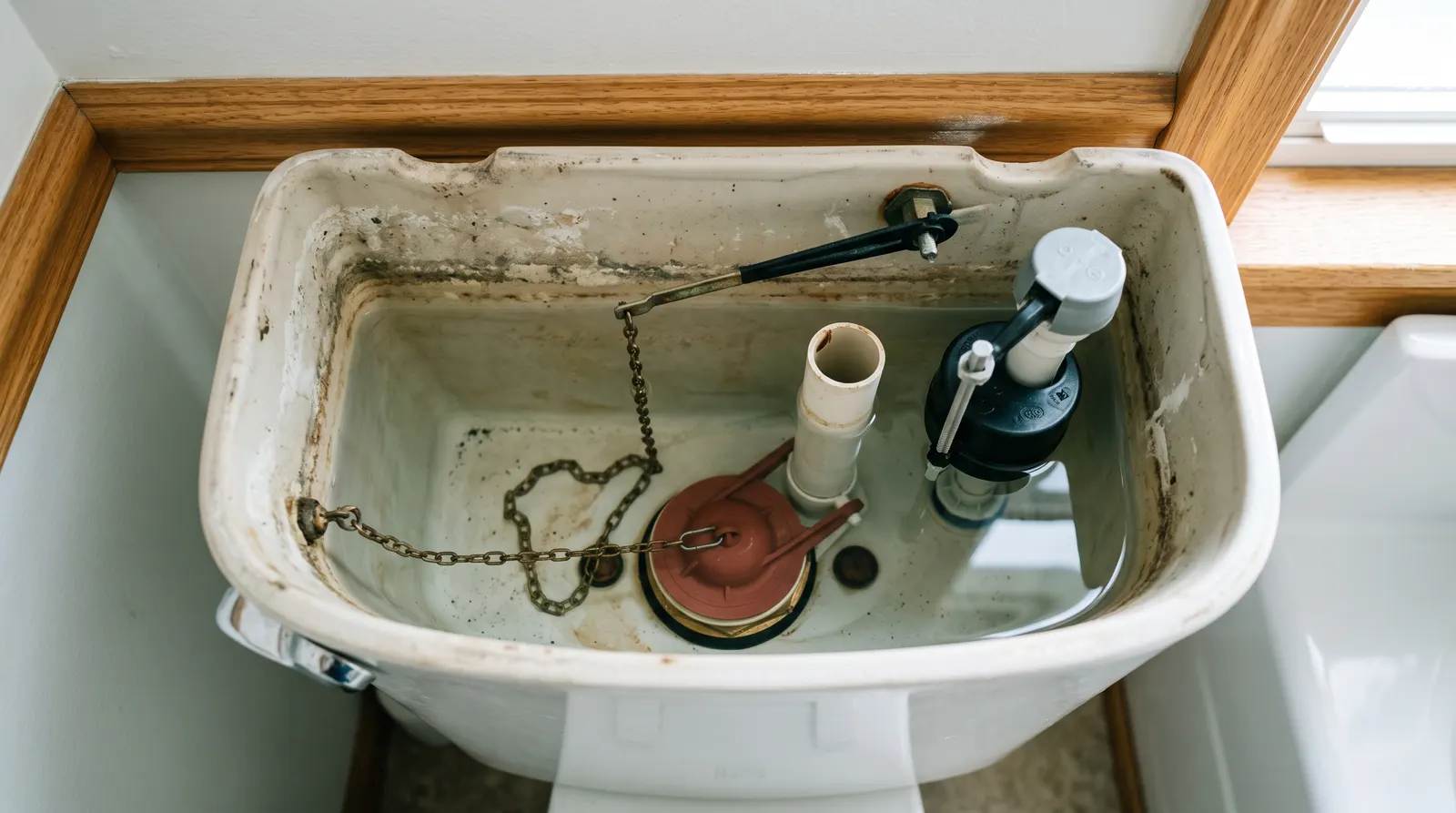
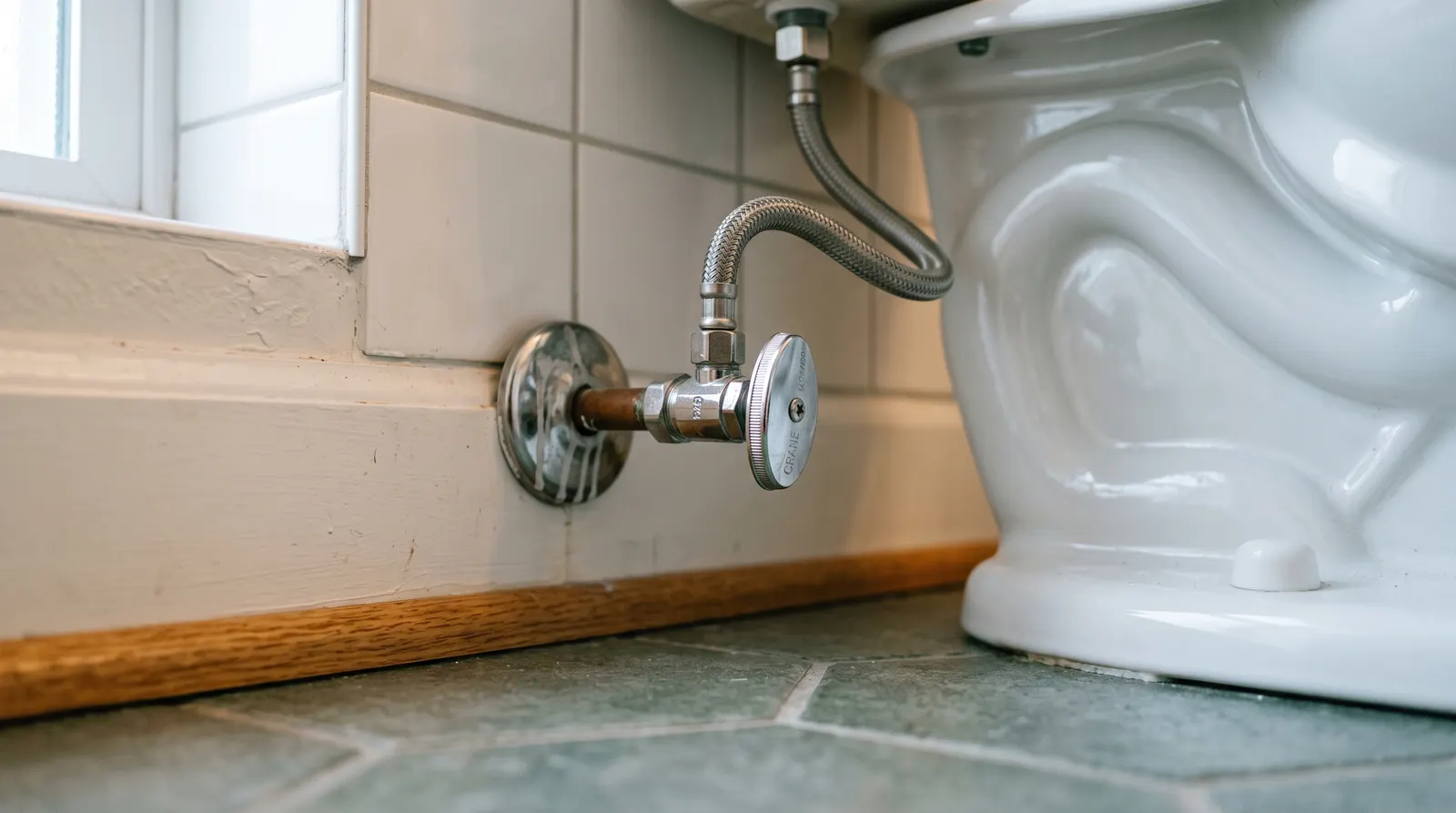
Take the tank lid off and push the rubber flapper down, which ends the flush immediately. Then turn the shut-off valve on the wall or floor behind the toilet clockwise until it stops, which cuts the supply. Do not flush again while the bowl is high.
The flapper stops the water; the valve keeps it stopped. Service Stars put the shutoff on the left of the bowl.
With the supply off the toilet still works, filled by hand. A bucket poured into the bowl buys a morning appointment instead of an after-hours rate.
If you rent, contact the landlord: in many apartments the valves are out of a tenant’s reach.
If the valve is seized or weeping, close the property main instead. Our guide to the main shut-off valve covers where it sits and how each valve type closes.
Thirty-second diagnosis
Clog, fill valve or sewer line?
01
Stop the water first
Tank lid off, flapper pushed down, then the shut-off valve at the base of the toilet turned clockwise. Nothing else happens until this is done.
02
Watch the tank
If the tank is still trying to fill with the valve closed, the fault is the fill valve or float rather than a clog in the drain.
03
Run a nearby tap
Fill a bath a few inches, then watch the toilet. Water rising in the bowl when another fixture drains means the blockage is downstream of both.
04
Check other drains
Gurgling in a tub, a shower or a floor drain, or waste appearing in them, means the main line and not the toilet. Stop plunging and call.
Cited source3:38
On isolating one fixture instead of closing the whole house down.
“If your toilet's leaking, your shutoff valve is located right on the left side of your toilet.”
SS
Service Stars field technicians
Licensed plumbing and HVAC contractor, Connecticut
Service Stars, 2023
An independent source we cite. Not affiliated with Emergency Services 24H, and not a network contractor.
Toilet overflowing but not clogged: what that means
This is the highest-volume follow-up search on this problem, and it has four distinct causes rather than one.
Fill valve not shutting off. The tank keeps feeding the bowl regardless of how well the drain works. You will hear it running continuously.
Float set too high or waterlogged. The tank overfills, spills into the overflow tube, and the bowl rises with it.
Blocked vent stack. Without air, the drain cannot pull, so the bowl gurgles and backs up even though nothing is physically stuck.
Sewer line surcharging. Water arrives from the wrong direction entirely, pushing back up through the lowest fixture in the house.
The tank test separates them. With the supply valve closed, a tank still trying to fill is supply-side; one sitting quiet while the bowl rises is drain-side.
How to plunge properly, and when to stop
Most failed plunging is a tool problem. A flat cup plunger is for sinks and cannot seal a toilet outlet; a flange plunger has an extended rubber sleeve that seats inside the drain.
Get the level right. Enough water to cover the plunger head, not so much that it will slop out. Bail some out if you have to.
Seat it, then push gently first. The first push should be slow, to expel air rather than blast water back at you.
Then steady strokes. Fifteen to twenty firm pushes without breaking the seal, then lift sharply to pull as well as push.
Stop after two rounds. If two full rounds change nothing, more force will not help and you risk splashing contaminated water around the room.
Never plunge after chemical drain cleaner
If drain cleaner has already gone into the bowl, do not plunge and tell the plumber before they arrive. Plunging aerosolises caustic liquid into the face of whoever is leaning over it. Chemical cleaners also rarely work on a toilet, because the trap holds them away from the blockage and simply keeps them in contact with the china.
Is an overflowing toilet a biohazard?
Is overflowing toilet water dangerous?
It depends which side of the trap it came from. Clean water spilling from the tank is low risk. Anything that has come back up the drain, sewage in particular, is contaminated Category 3 water and needs gloves, ventilation, and disposal of porous materials it soaked.
The distinction is not fussiness. Drain-side water carries bacteria from the whole waste system, and it soaks into grout, subfloor, bath mats and the underside of vanity units where it stays.
The EPA’s cleanup guidance is the reference: porous items that absorbed contaminated water are discarded, and the area dried inside the 24 to 48 hour window.
Cleaning up safely after an overflow
Ventilate first, then protect yourself, then work outward from the toilet so you are not walking contamination through the house.
Gloves at minimum, and eye protection if you are working close to standing waste water.
Open a window and run the extractor. Do not use a fan pointed out of the room until the floor is clean, or you will move aerosol around.
Extract standing water first, then clean hard surfaces, then disinfect.
Discard bath mats, rugs and anything porous that soaked. Drying does not decontaminate them.
Get air moving over the floor afterwards and check under the vanity and behind the pan.
Why it will probably happen again tonight
A partially cleared clog is the normal outcome of successful plunging. The bowl drains, everyone relaxes, and the same restriction catches the next flush.
Give it one test flush; draining slowly means unresolved. A sewer backup gets likelier the more water the household uses.
Until it is properly cleared, keep the fixture out of use and warn everyone in the house. Whether that justifies an after-hours call is covered in whether this counts as a plumbing emergency.
Know the line
Safe to check yourself, or call a pro now
Safe to check yourself
Pushing the flapper down and closing the shut-off valve
Plunging a single blocked toilet with a flange plunger
Checking whether the tank is still filling with the supply off
Running a nearby tap to test whether other fixtures are involved
Cleaning up a small volume of clean overflow water promptly
Call a pro now
Raw sewage backing up into the home
Several fixtures backing up at once, which points at the main line
A bowl that keeps rising after the supply valve is closed
Anything already treated with chemical drain cleaner
Contaminated water that has spread beyond the bathroom floor
24/7 dispatch network
Get a licensed plumber moving on this
A toilet that keeps overflowing, or waste appearing in other fixtures. Send the symptoms and licensed, insured plumbers covering your area will contact you directly. No obligation to hire.
Fire, a gas smell, or an injury? Leave the building and call 911 first, then your gas
utility or power company. Use this form once you are safe.
Close the angle stop behind the bowl before anything else. Waste backing up from several fixtures means the main line, not the toilet.
What clearing it costs, and who to call
Indicative US ranges. Always get a written quote.
Job
Typical range
Notes
Emergency trip fee
$75–$500
Charged to attend and diagnose
Labor, standard hours
$100–$200 / hr
Bowl clog clearing is usually well inside an hour
Labor, after hours
up to $350 / hr
1.5×–2× the base rate
Main line clearing
separate job, separate quote
Different equipment from a bowl clog
Sewage cleanup if it spread
$1,000–$2,000+
Category 3 water, professional restoration
Source: HomeGuide 2026 emergency plumber cost guide; Angi 2026 emergency plumber cost data (retrieved August 2026). Figures vary by region and timing.
Figures last checked
A bowl clog and a main-line blockage need different equipment: an auger for the first, a drain machine or jetter for the second.
Ask which job is being quoted before the van is dispatched, because the answer changes the number substantially. Rate structure is broken down in our guide to what an emergency plumber charges.
How the matching works, and what we do not do
Emergency Services 24H is a referral service, and the plumbing section covers the rest of the fixtures. We do not employ plumbers and we do not perform drain clearing or cleanup.
Your request routes to licensed, insured contractors nearby. Tell them whether other fixtures are affected, because that decides which equipment is sent.
Straight answers
Frequently asked questions
The questions homeowners actually search for on this problem, answered in plain language.
How do I stop a toilet overflowing without a shut-off valve?
To fix toilet overflow fast, lift the lid, push the flapper down, then hold the float up to stop the toilet refilling.
Will a toilet auger clear what a plunger will not?
Usually. An auger will unclog toilet blockages past the bend a plunger only pushes against.
How do you fix a toilet that is overflowing?
To fix an overflowing toilet: lift the lid, push the flapper down, then turn the shut-off valve clockwise to stop toilet water arriving. Once the level drops, a plunger; then a toilet auger.
Can a toilet overflow without being clogged?
Yes. A fill valve that will not shut off, a float set too high, or a failed tube in the toilet reservoir gives an overflowing tank and an overflowing toilet bowl without a clog.
Is an overflowing toilet a biohazard?
It depends which side of the trap the water came from. Clean tank water is low risk; anything back up the drain is Category 3: keep people clear, ventilate, wear gloves, discard porous materials.
Why is my toilet overflowing but not clogged?
Water is arriving faster than the drain takes it, or from the wrong direction: a failed fill valve feeds a toilet without a clog, and a sewer surcharge pushes it back up.
Does pouring hot water in a toilet help unclog it?
Warm water and dish soap sometimes clear a paper clog. A toilet overflow tube that has cracked is a different fault, and an overflow tube replacement is a cheap part.
What do I do if the toilet overflows when I flush?
Do not flush again. Push the flapper down, close the shut-off valve, and wait before plunging.
Inside the tank: flapper and float
The shut-off behind the bowl
If a plunger and an auger both fail, the blockage is past the pan and pricing moves to the main-line row.
Independent, publicly published sources, quoted with attribution and linked in full.
None is affiliated with Emergency Services 24H, reviewed this page, or works in the referral network.
Service Stars field technicians: Licensed plumbing and HVAC contractor, Connecticut, Service Stars - “Water Main Shut-Off: The Ultimate Guide for Homeowners” (2023)
Tell us what has failed and how soon you need someone. We route your request to licensed, insured contractors covering your area, and they contact you directly.
Fire, a gas smell, or an injury? Leave the building and call 911 first, then your gas
utility or power company. Use this form once you are safe.