Sewage backup cleanup: what has to go, and what it costs
This is the one water event where the instinct to start cleaning is wrong. Category 3 water is a containment problem before it is a cleaning problem.
Sewage backup cleanup is Category 3 black water work, priced at roughly $7 to $7.50 per square foot, about double clean-water restoration. That difference is not margin: it is containment, protective equipment, disposal and the volume of material that has to be thrown away rather than dried.
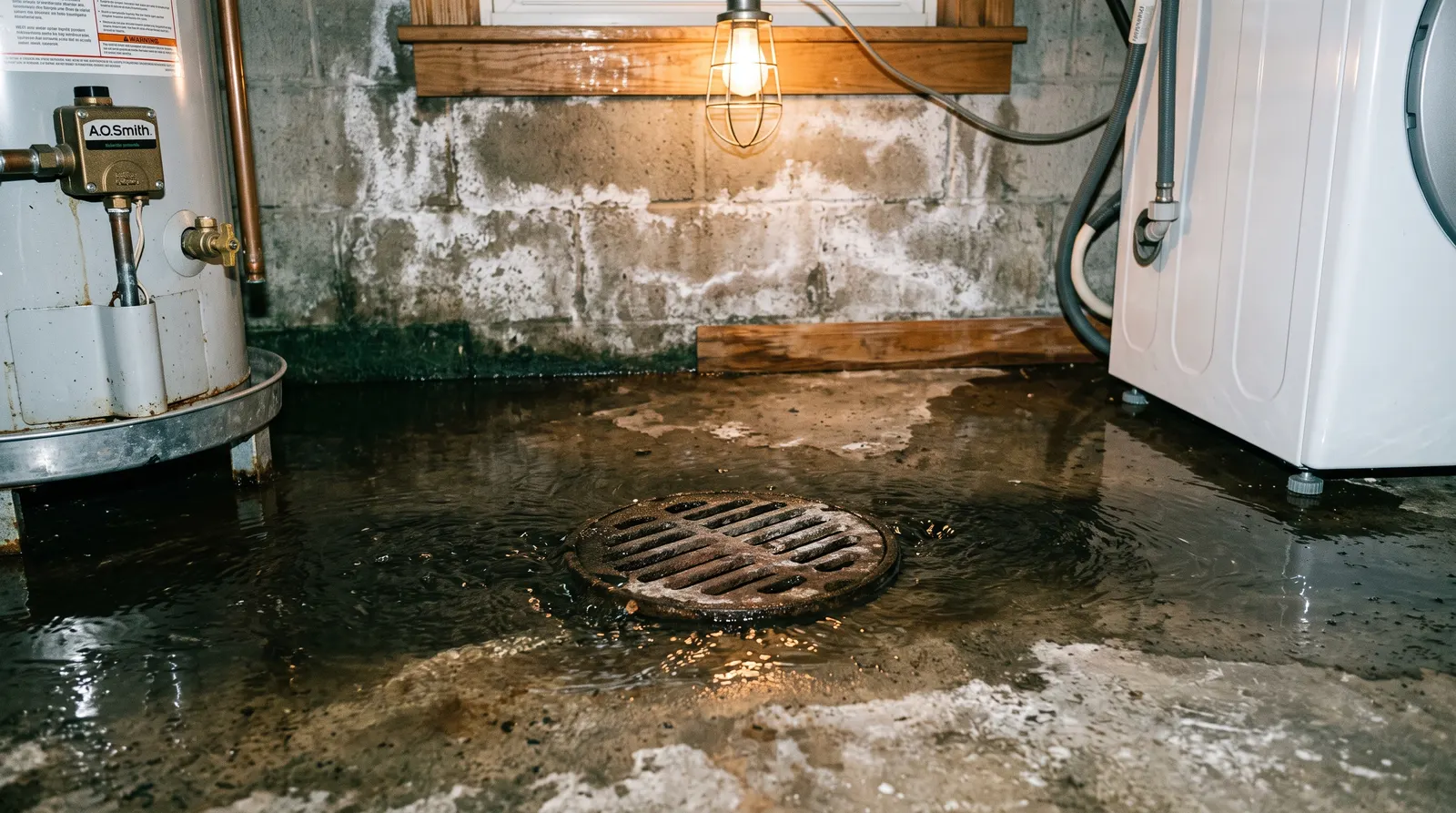
This is Category 3 water
How bad is sewage backup, really?
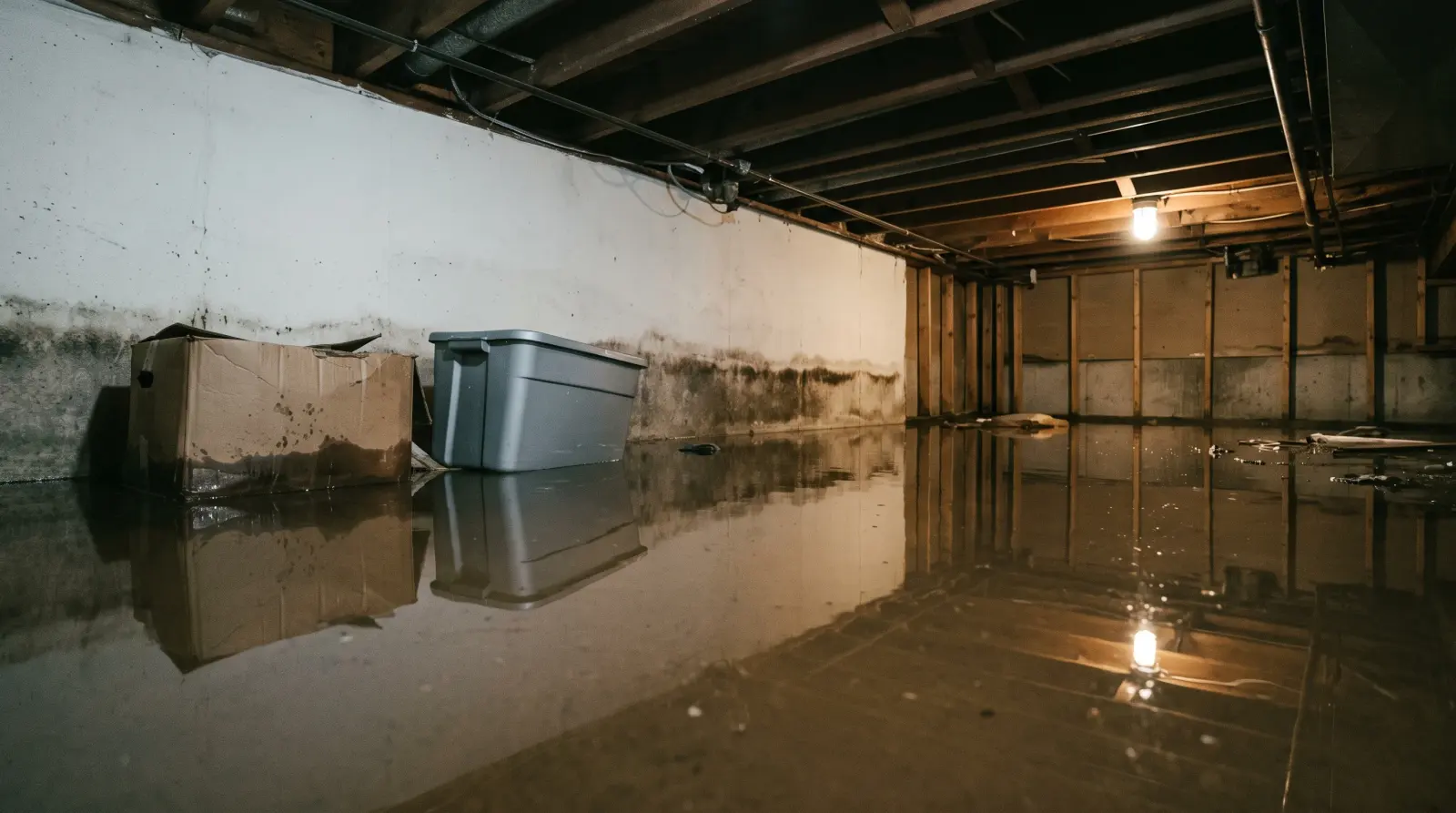
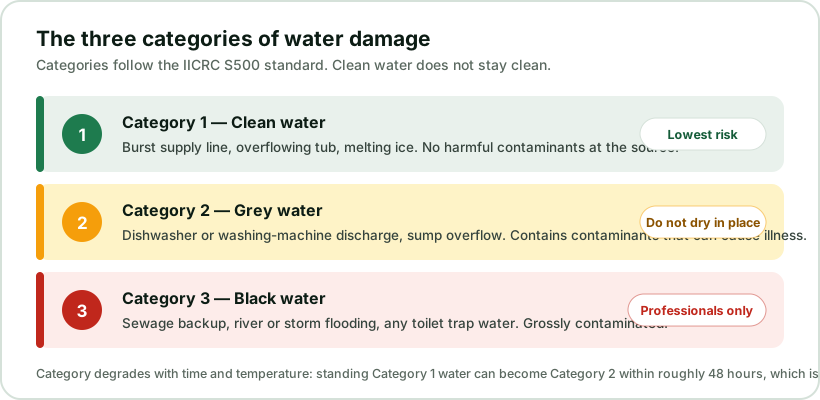
It is the worst of the three water classifications. Category 3 black water carries biological contamination from the waste system, and porous materials that absorb it are discarded rather than cleaned. Treat it as a containment problem first and a cleaning problem second.
The practical consequence is that almost every instinct is wrong. Mopping spreads it. Walking through it distributes it. Running the HVAC circulates it. Doing nothing for an hour while you organise properly is genuinely better than starting immediately.
The first ten minutes
Contain it before you clean it
01
People and pets out of that level
Not just the room. Contamination travels on shoes and paws, and children and pets are the most likely to end up in contact with it.
02
Ventilate outward, not inward
Open a window in the affected space and use a fan pointed out. Do not blow contaminated air into the rest of the house.
03
Switch off HVAC serving that space
A ducted system running through a contaminated basement distributes the problem through every room it serves.
04
Photograph, then stay out
Document from the doorway for the claim and the landlord, then close the door. This is not a room to work in without proper protection.
What has to be discarded
This is the list nobody publishes, and it is the one people most need. The rule underneath it is porosity: if the material absorbed contaminated water, it is waste.
Carpet and padding. Both, always. Padding in particular acts as a sponge and cannot be decontaminated in place.
Upholstered furniture and mattresses. Foam and fabric hold contamination through any cleaning a homeowner can do.
Insulation. Fibreglass and cellulose behind a wall that got wet come out with the drywall.
Drywall below the water line. Standard practice is a cut line above the highest point the water reached.
Cardboard-stored belongings and any exposed food. Cardboard wicks, and food is not worth the risk.
Hard, non-porous items survive: sealed plastics, metal, glass, glazed tile and finished hardwood if it is caught quickly. Those get cleaned and disinfected rather than discarded.
What protection is actually required
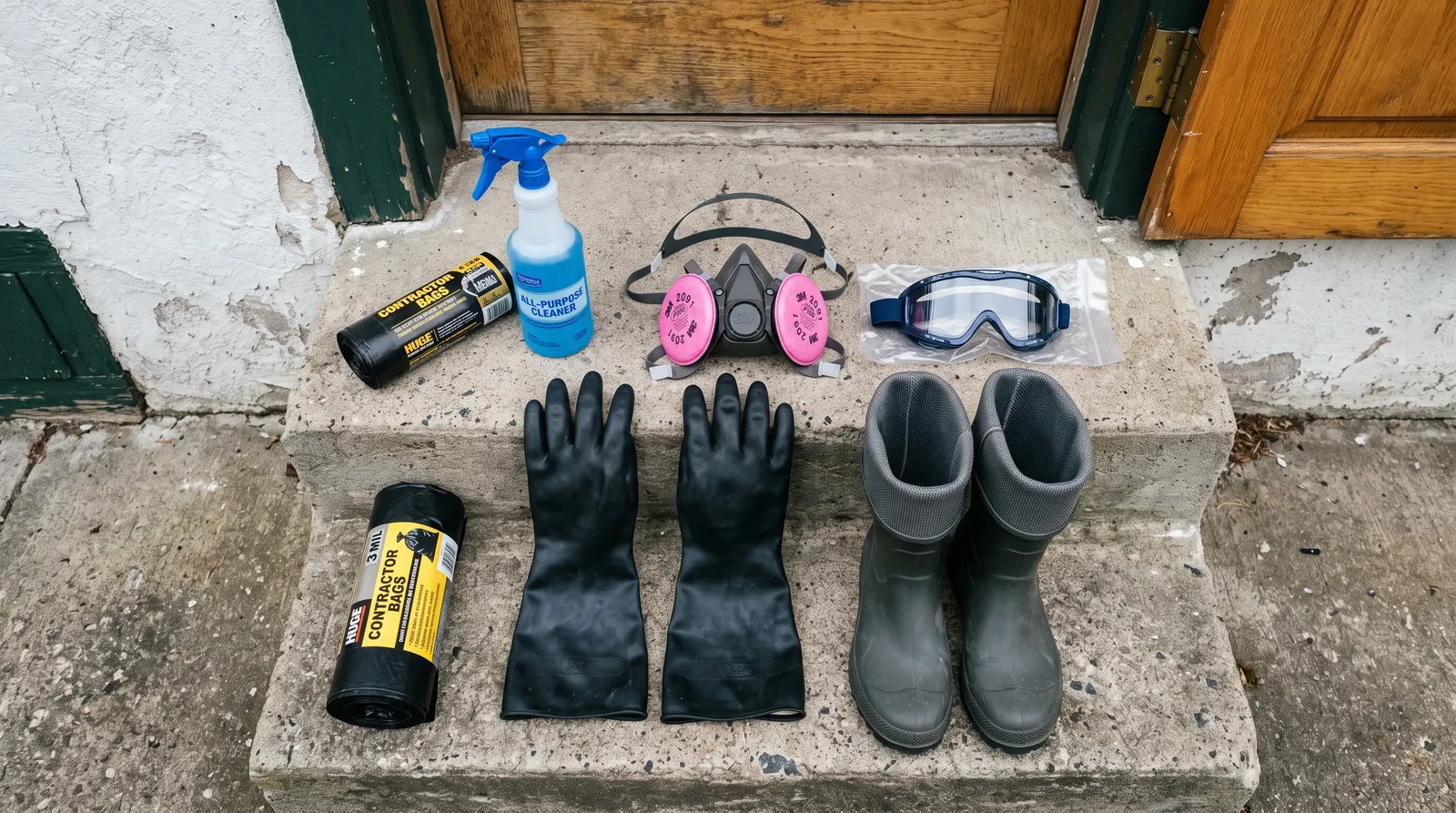
Competitor pages say protective gear. Here is what that means, per CDC guidance on handling contaminated water and mold.
Waterproof gloves and boots, not gardening gloves and trainers.
Eye protection, because splashing is the realistic exposure route.
A rated respirator rather than a dust mask, particularly once things start drying and aerosolising.
Clothing you can remove at the door and wash separately from everything else.
Who should not be doing this at all
The CDC identifies people with asthma, a mold allergy, immune suppression or chronic lung disease as being at higher risk from contaminated environments, and advises they should not carry out this kind of cleanup. That is a category, not a caution. If that describes anyone in the household, the work is somebody else's job.
Why it costs roughly double
Category 1 clean water restoration runs about $3 to $4 per square foot. Category 3 runs $7 to $7.50. Same room, same square footage, roughly twice the price, and every dollar of the difference is explainable.
Category 3 pricing reflects containment, protective equipment, antimicrobial treatment, disposal fees and the volume of material discarded rather than dried.Source: Emergency Services 24H original diagram, figures per Bob Vila 2026 cost data
Containment barriers and negative air machines, disposal of contaminated material as waste rather than as rubbish, antimicrobial application across every surface, and far more demolition. Full cost structure sits in our guide to restoration costs by category.
Category 3 water carries pathogens that survive ordinary cleaning. Porous materials it has touched are removed, not cleaned.
What sewage backup cleanup costs
Indicative US ranges. Always get a written quote.
Job
Typical range
Notes
Category 3, black water restoration
$7–$7.50 / sq ft
Roughly double clean-water work
Category 1, clean water, for comparison
$3–$4 / sq ft
Same room, different water
Flooded basement cleanup
$2,000–$7,000
Category 3 lands in the upper half
Drywall replacement
$1.50–$3 / sq ft
Below the water line, always removed
Mold remediation, if it followed
~$2,200 average
A separate job again
Source: Bob Vila 2026 water damage restoration cost data; consumer-reported figures from published cost aggregators, marked as reported (retrieved August 2026). Figures vary by region, severity and after-hours timing.
Figures last checked
The insurance endorsement most people lack
Will my policy pay for a sewage backup?
Usually not by default. Sewer and drain backup is normally excluded from standard homeowners policies and offered as a separate endorsement. Where that endorsement exists, it frequently carries its own limit, and that limit is often below what a Category 3 cleanup costs.
This is the coverage gap that this specific scenario exposes, and the moment people find out about it is almost always the moment it is too late to buy it.
If you are reading this without a backup right now, checking whether you have the endorsement and what its limit is takes one phone call. Full coverage detail is on our page on what homeowners insurance covers.
If you rent: who is responsible
A large share of sewage backups happen in rented property, and the ranking pages are written entirely for owners.
The landlord is generally responsible for the drainage system serving the property and for making the property habitable, but the timescales and the specifics vary by state. Report it in writing the same day even if you also phone, document everything from the doorway before anything is cleaned, and keep every message.
If the property is uninhabitable, say that explicitly in writing rather than implying it. That phrase carries weight in most state frameworks in a way that a description of the mess does not.
Stopping it happening again
Sewage backups repeat, because the cause is usually structural rather than incidental.
A backwater valve on the main line. The single most effective preventative there is, and it is a plumbing job rather than a restoration one.
A camera survey. Root intrusion and collapsed sections are the two common causes, and both are invisible until someone looks.
No fats or wipes down the drain. The two things that turn a marginal line into a blocked one.
Check the endorsement now, while the memory of this is fresh enough to make the call.
If the backup came up through a toilet rather than a floor drain, our page on a toilet that keeps overflowing covers the multi-fixture test that distinguishes a bowl clog from a main-line problem.
Know the line
Safe to handle yourself, or call a pro now?
Safe to check yourself
Getting people and pets off the affected level
Ventilating outward and switching off HVAC to that space
Photographing from the doorway for the claim
A very small spill on a hard floor, with proper protection
Bagging clearly contaminated porous items for disposal
Call a pro now
Any sewage that has spread across a room
Anything that has reached carpet, insulation or drywall
Any household with asthma, immune suppression or lung disease
A backup that recurs, which points at the main line
Anything you would be claiming on, where documentation matters
24/7 dispatch network
Get a licensed restoration contractor moving on this
Tell us where the sewage came up and your ZIP code. Licensed, insured restoration contractors covering your area will contact you directly. No obligation to hire.
Fire, a gas smell, or an injury? Leave the building and call 911 first, then your gas
utility or power company. Use this form once you are safe.
How the matching works, and what we do not do
Emergency Services 24H is a referral service. We do not employ restoration technicians, we do not perform decontamination, and nothing on this page is medical or insurance advice.
Your request routes by ZIP code to licensed, insured contractors covering your area, and they contact you directly. Say the word sewage when you send it, because it changes the equipment, the crew and the quote.
Straight answers
Frequently asked questions
The questions homeowners actually search for on this problem, answered in plain language.
Yes. It is classified as Category 3 black water, meaning it carries biological contamination, and it is not a mop-and-bleach situation. Keep people and pets out of the affected level, ventilate to outside rather than into the rest of the house, and treat anything porous that absorbed it as waste rather than as cleanable.
What do I have to throw away after a sewage backup?
Carpet and padding, upholstered furniture, mattresses, insulation, drywall below the water line, cardboard-stored belongings and any food that was exposed. Hard non-porous surfaces can be cleaned and disinfected. The rule is porosity: if it absorbed contaminated water, it goes.
How much does sewage backup cleanup cost?
Category 3 restoration runs roughly $7 to $7.50 per square foot, about double clean-water work, because far more material is discarded rather than dried and the job requires containment, antimicrobial treatment and disposal. A flooded basement at that category commonly lands in the upper half of the $2,000 to $7,000 band.
Is sewage backup covered by insurance?
Usually not under a standard policy. Sewer and drain backup is normally excluded and available as a separate endorsement, which many people discover only after a backup. Where the endorsement exists, it frequently carries its own limit that is lower than a full Category 3 cleanup costs.
Can I clean up sewage myself?
A very small amount on a hard, non-porous floor, with waterproof gloves and boots, eye protection and a rated respirator rather than a dust mask. Anything that has soaked into materials, spread across a room, or reached a wall cavity is a professional job with containment and disposal.
Who is responsible if I rent?
The landlord is generally responsible for the drainage system serving the property and for making it safe, but timescales and obligations vary by state. Report it in writing immediately, document everything before anything is cleaned, and keep copies of every message.
Why category 3 water is different
The protective equipment this job requires
A backwater valve is the one preventive item here that reliably stops a repeat, and it costs a fraction of a second cleanup.
Tell us what has failed and where you are. We route your request to licensed, insured contractors covering your ZIP code, and they contact you directly.
Fire, a gas smell, or an injury? Leave the building and call 911 first, then your gas
utility or power company. Use this form once you are safe.