How to tarp a roof, and the conditions that mean stay off it
The procedure is four steps and every page has them. The part that decides the outcome is whether you should be up there at all, and nothing on the results page asks.
Learning how to tarp a roof is straightforward, and deciding whether to do it is the part that matters. The tarp itself costs roughly $0.10 to $0.40 per square foot against an installed emergency rate of $1.00 to $2.80, which tells you exactly what you would be taking on.
Go or no-go: read this before the ladder
Any one of these means do not climb
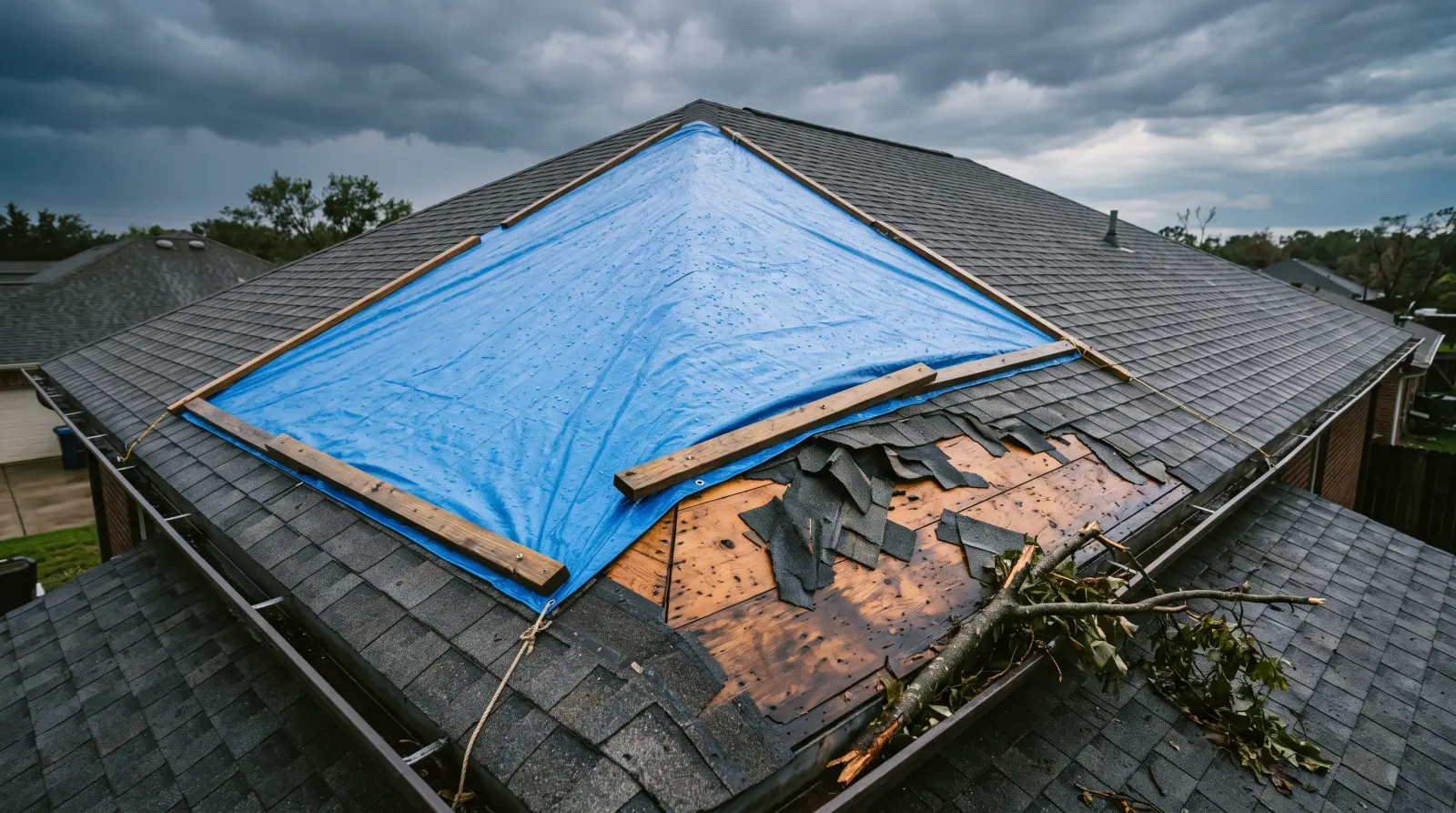
Wind, rain, or a wet or icy surface. A steep pitch. Decking that may have been compromised by impact from a tree or debris. Darkness. Working alone. A damaged service mast or any line nearby. Each of those alone is enough, and after a storm several of them usually apply at once.
None of the pages ranking for how to tarp a roof put that gate before the procedure, which is how a how-to becomes an injury.
If the conditions are right
Four steps, done properly
01
Run the go or no-go check
Dry, calm, low pitch, sound decking, second person present. If any of those is missing, this is a phone call rather than a ladder.
02
Size it generously
The tarp needs to reach from above the ridge to well below the damage with margin on both sides. Undersized tarps fail at the edges.
03
Anchor above the ridge
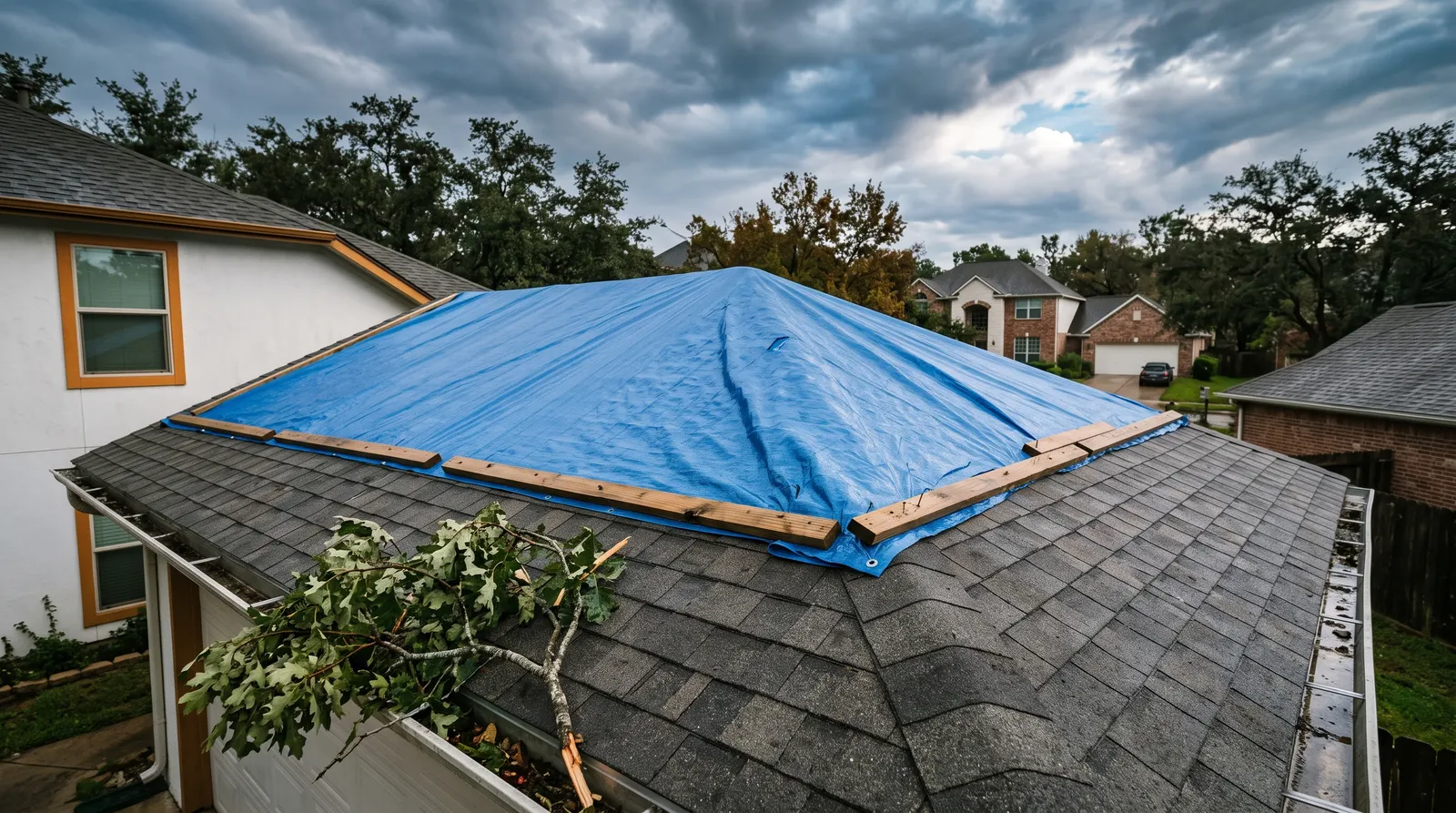
Water runs downhill and under any edge facing uphill. Running the tarp over the ridge removes the upslope seam entirely.
04
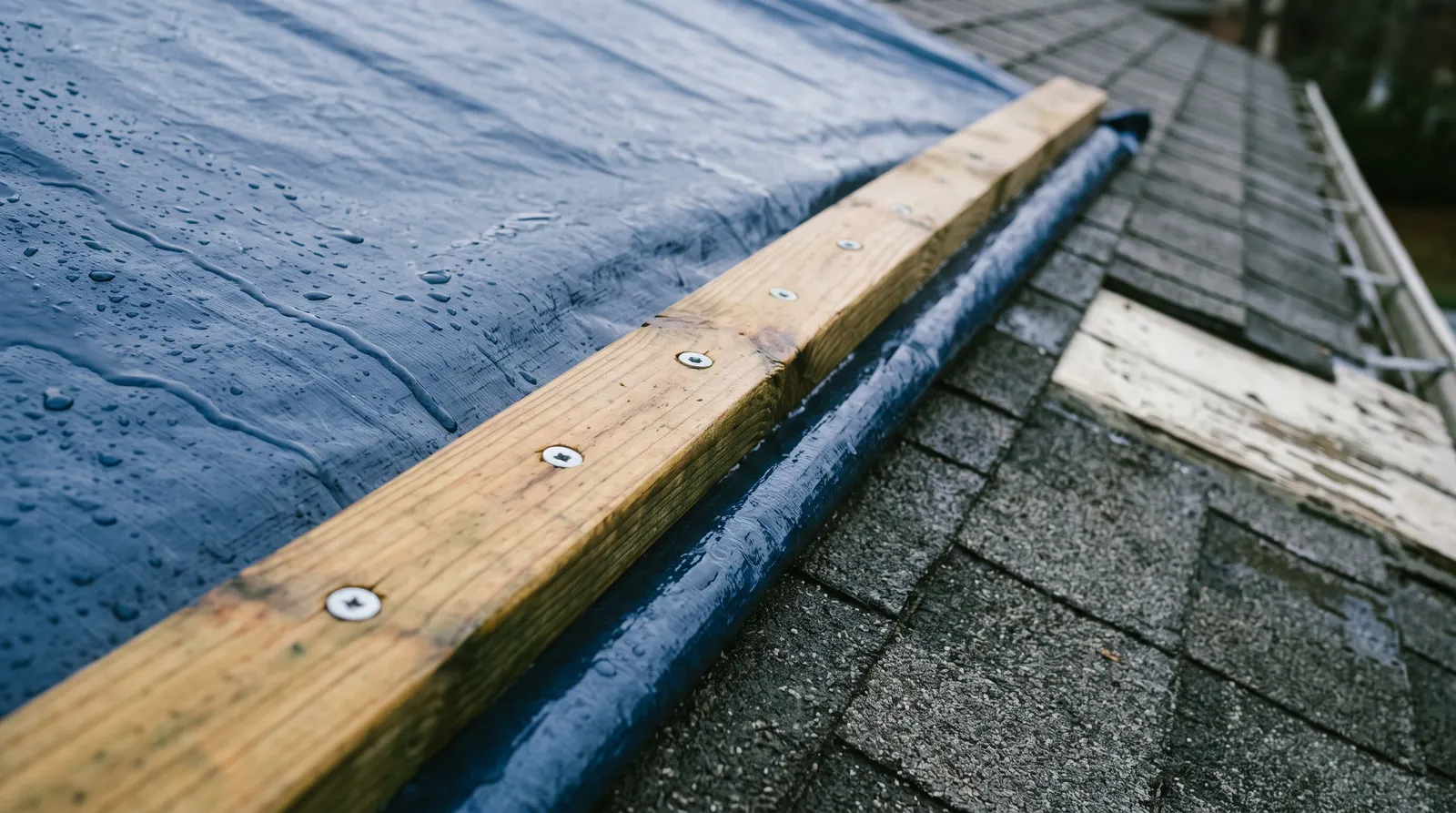
Batten the edges, do not nail through
Wrap the tarp edge around a furring strip and screw through both. A nail through open tarp becomes a tear on the first windy night.
What it costs to have it done
What does professional tarping cost?
Emergency after-hours tarping runs $1.00 to $2.80 per square foot, averaging around $450 per job with a typical range of $150 to $3,300. Standard scheduled tarping is $0.70 to $2.00 per square foot, and an after-hours call-out adds roughly $100 to $200.
That figure is the other half of the DIY decision, and it is missing from every how-to on this topic.
The tarp is the cheap part
Tarp material runs about $0.10 to $0.40 per square foot. Installed emergency work runs $1.00 to $2.80.
Almost the entire difference is labour, ladders, fall protection and the experience to anchor a large sheet so it survives the next storm instead of becoming a sail. That is the honest argument for paying someone, and it is a better argument than any safety warning.
How to tarp a roof: what you actually need
A heavy duty tarp sized well beyond the damage in every direction.
Furring strips or battens, because the tarp edge wraps around them.
Cap nails or screws appropriate to the deck, and a driver.
A properly footed ladder and a second person on the ground.
Why the tarp must run over the ridge
This is the mechanical detail that separates a tarp that works from one that quietly channels water underneath itself.
Water runs downhill and finds any edge facing uphill. A tarp that stops short of the ridge presents exactly that edge, and rain running down the slope above it goes under the tarp rather than over it. Carrying the tarp over the ridge and anchoring it on the far side removes the upslope seam entirely.
Securing it so it survives the next storm
Most failed tarps fail at the edges rather than in the middle.
Wrap the tarp edge around a furring strip, roll it once, and screw through the strip and both layers of tarp. That spreads the load along the whole edge instead of concentrating it at individual fixings. Loose flapping edges tear and lift, and sandbags are a supplement rather than an anchoring method.
How long a tarp actually lasts
How long will a tarped roof hold?
Weeks to a few months, depending on material quality and exposure. UV degradation and wind fatigue are the limiting factors rather than water. Re-check the anchoring after every significant weather event and treat the tarp as protection rather than as a repair.
A tarp that has been up through a summer is usually brittle. Planning the permanent repair around that timeline avoids a second emergency.
If you should not climb: what to do instead
This is the section the whole search results page is missing, and it serves most of the people reading.
Contain from inside with buckets on towels and sheeting over what cannot be moved.
Relieve a bulging ceiling deliberately, after clearing the space beneath it.
Book emergency tarping and ask for the call-out fee separately.
Photograph everything now, because the tarp will change the evidence.
Roof height work causes serious falls every year. If the pitch is steep, the surface is wet, or you are unsure, this is a professional job.
DIY against professional tarping
Indicative US ranges. Always get a written quote.
Job
Typical range
Notes
Emergency tarping, after hours
$1.00–$2.80 / sq ft
Average job ~$450, range $150–$3,300
Standard tarping, scheduled
$0.70–$2.00 / sq ft
When it can wait for daylight
Tarp material alone
$0.10–$0.40 / sq ft
The rest is labour and safety
After-hours call-out fee
$100–$200
Charged on top of the work
Battens, screws and rope
modest DIY spend
Cheap next to a fall
Source: Angi 2026 cost to tarp a roof data, including emergency, standard and material-only figures (retrieved August 2026). Figures vary by region, severity and after-hours timing.
Figures last checked
Row three against row one is the entire decision. You are not buying a tarp, you are buying somebody else's ladder work in bad conditions.
How the matching works, and what we do not do
Emergency Services 24H is a referral service. We do not employ roofing contractors, we do not install tarps, and we do not sell materials.
Your request routes by ZIP code to licensed, insured contractors covering your area, and they contact you directly. If the conditions are genuinely fine and you want to do it yourself, the steps above are the right ones.
What homeowners actually ask
What people ask, and the figure that answers it
Drawn from real public forum threads and reported prices, summarised and attributed as patterns.
These are not reviews of this site, and no names or ratings have been invented.
“Can you tarp your own roof?”
SourceA People Also Ask question on this SERP. Every ranking page answers it as a procedure, and almost none of them answer it as a decision with conditions attached.
“How long will a tarped roof last?”
SourceAnother People Also Ask question. Weeks to a few months is the honest answer, with UV and wind fatigue as the limiting factors rather than rain.
“Tarp material alone is roughly $0.10 to $0.40 per square foot”
SourceAngi 2026 cost data, against an installed emergency rate of $1.00 to $2.80. That gap is the single most useful figure on the topic.
1 / 3
The material cost is the fact that reframes the question. Once you know the tarp is a few dollars and the rest is labour, deciding whether to climb is a clearer calculation.
Know the line
Reasonable to attempt, or call someone?
Safe to check yourself
A low pitch roof in dry, calm daylight conditions
Sound decking with no impact damage
A second person present and a properly footed ladder
A small, reachable area of damage
Working from inside instead, in every other case
Call a pro now
Any wind, rain, ice or wet surface
A steep pitch or a two storey roof
Decking compromised by tree or debris impact
Darkness, or a deteriorating forecast
Anything near a damaged service mast or a downed line
24/7 dispatch network
Get a licensed roofing contractor
Tell us the size of the damaged area and whether it is still raining, plus your ZIP code. Licensed, insured contractors covering your area will contact you directly. No obligation to hire.
Fire, a gas smell, or an injury? Leave the building and call 911 first, then your gas
utility or power company. Use this form once you are safe.
Straight answers
Frequently asked questions
The questions homeowners actually search for on this problem, answered in plain language.
Sometimes, on a low pitch roof in dry, calm conditions with a second person and proper ladder footing. Never during a storm, in wind, on a wet or icy surface, on a steep pitch, or where the decking may be compromised by impact. If any of those apply, the answer is no.
What is the best way to put a tarp on a roof?
Run it from above the damage over the ridge so there is no seam facing uphill, then secure the edges by wrapping them around furring strips and screwing through both. Water travels downhill and under any upslope edge, which is why a tarp that stops short of the ridge fails.
How long will a tarped roof last?
Weeks to a few months, depending on tarp quality, sun exposure and wind. UV degradation and wind fatigue are the limiting factors rather than rain. Re-check the anchoring after every significant weather event and treat it as protection rather than a repair.
How much does professional roof tarping cost?
Emergency after-hours tarping runs about $1.00 to $2.80 per square foot, with an average job near $450 and a typical range of $150 to $3,300. Standard non-emergency tarping runs about $0.70 to $2.00 per square foot, and an after-hours call-out may add $100 to $200.
Why is professional tarping so much more than the tarp?
Because tarp material is only about $0.10 to $0.40 per square foot. Nearly the entire installed price is labour, working at height safely, and getting the anchoring right so the tarp survives the next storm rather than becoming a sail.
What if I cannot safely get on the roof?
Work from inside. Contain the water with buckets and sheeting, move valuables, relieve a bulging ceiling deliberately with a small hole and a bucket underneath, and book emergency tarping. Photograph everything while you wait, because that evidence supports the claim.
Anchoring the tarp with battens
Running the tarp over the ridge
A tarp is a temporary measure with a life measured in weeks. Book the permanent repair while the tarp is going on.
Tell us what has failed and where you are. We route your request to licensed, insured contractors covering your ZIP code, and they contact you directly.
Fire, a gas smell, or an injury? Leave the building and call 911 first, then your gas
utility or power company. Use this form once you are safe.