Skip to content
Emergency Services 24H

Storm, Roof and Tree → Claims

Roof Insurance Claim Documentation Done Right

Roof insurance claim documentation is the part that decides the payout, and it takes 20 minutes with a phone. Insurers commonly give you 12 months from the storm to file.

A storm damage roof claim turns on evidence created before anything is covered, moved or dried, and it costs nothing to produce.

Roof insurance claim documentation is what turns storm damage into a paid claim: photographs, dates, and a record of what you did to stop the loss. The storm and roof guide covers the damage itself, a leak in heavy rain is often the first sign, and Emergency Services 24H routes storm damage repair to licensed roofers nearby.

What is considered storm damage depends on the peril: wind damage, hail damage and impact are covered events on most policies, while granular wear is not.

Photograph granule loss, damaged shingles and any water leaks inside.

Different types of roof show damage from storm events differently, which is why the adjuster measures rather than eyeballs.

Photograph granule loss, damaged shingles and any water leaks inside. Storm damage roof repair is judged on evidence: what insurance pays turns on what you can show rather than on how the roof looks to you.

Storm damage roof insurance coverage differs by peril and by policy age, and whether they pay for roof repair or replacement is the argument most claims turn on.

The signs of storm damage the adjuster looks for are the ones worth photographing first. Different types of roof show damage from storm events differently, which is why a roof storm inspection measures rather than eyeballs.

Photograph before you cover anything

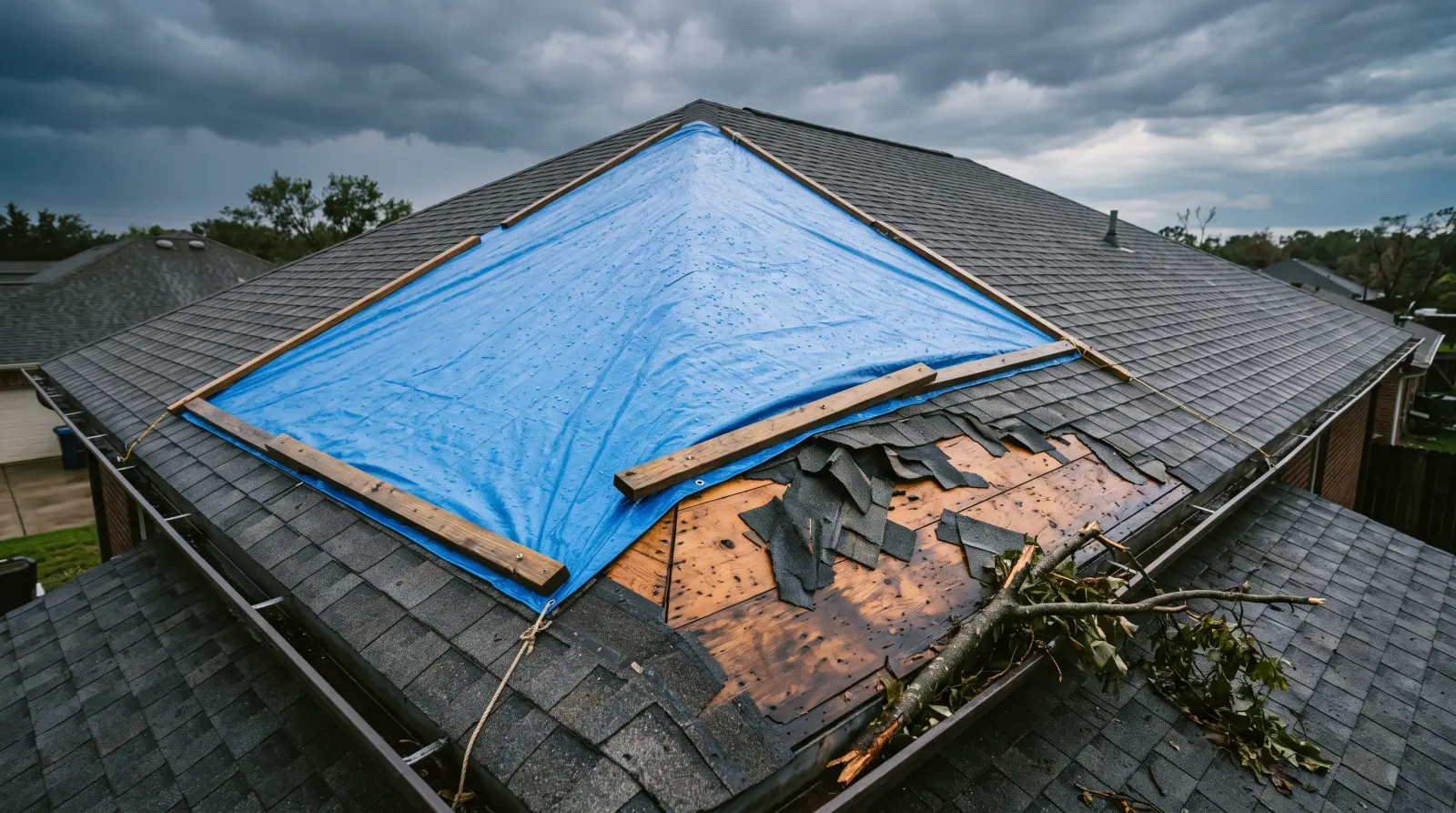
The tarp changes the evidence

Temporary protection is necessary and it also hides exactly what the adjuster needs to see. Take the photographs first, then tarp.

That sequence is the single most consequential thing on this page, and it is missing from every page ranking for storm damage roof queries.
A fixed order beats a good memory

Four passes, and none of them take long

  1. 01

    Photograph before you cover anything

    Temporary protection changes the evidence permanently. The camera comes out before the tarp goes on, without exception.

  2. 02

    Work outside in, then up

    Elevations, then close damage, then the interior, then the attic. Working in a fixed order stops you finishing with gaps.

Homeowner photographing a damaged roofline from ground level
  1. 03

    Write down what photos cannot show

    Date, time, the weather event, and a log of every call with names and outcomes. That log is frequently more useful than any single image.

  2. 04

    Keep every receipt

    Tarps, buckets, fans, emergency call-outs and contractor invoices. Reasonable emergency mitigation costs are normally claimable.

Cited source0:23
On phoning your insurer to “just ask” whether storm damage is covered.
“You're filing a claim when you do that.”
Homestead Roofing, Inc
Roofing contractor and inspector, Colorado Springs
Homestead Roofing, Jul 2023
An independent source we cite. Not affiliated with Emergency Services 24H, and not a network contractor.
Watch the source : Roof Inspections After A Massive Hail Storm For Insurance Claims (opens in a new tab)

The exterior list

  • Wide shots of each elevation, showing the whole roof plane and its context.
  • Close shots of missing, lifted or creased shingles, from the ground or a window.
  • Gutters and downspouts, including any accumulated granules.
  • Vents, flashing and penetrations, plus any visible impact point.
  • The surroundings: fallen branches, debris, and damage to fences or outbuildings.

Ground level and a zoom lens beat a ladder on a damaged roof. Nothing in this list is worth a fall.

The interior list

Insurers see far more roof photographs than interior ones, and the interior is where the loss actually lands.

  • Ceiling staining, with a ruler, a coin or a hand for scale.
  • Damaged contents, flooring and personal property, individually rather than as one wide shot.
  • Wet insulation anywhere it is visible.
  • Any daylight visible through the roof structure from inside.

The attic is where the claim is won

Why photograph the attic?

Because it shows the breach rather than the symptom. Daylight through the decking proves an opening exists, and wet rafters and insulation help establish when water started entering. A stain on a ceiling shows only that something happened somewhere.

Do it before drying equipment runs, because a dry rafter photographed three days later proves considerably less than a wet one photographed today.

What to write down

Photographs establish what. Notes establish when and why, and those are the two things a disputed claim argues about.

  • Date and time you first noticed each item of damage.
  • The weather event, including locally reported wind speeds or hail if available.
  • Every call: who you spoke to, when, what was said and what was agreed.
  • Anything a contractor tells you about the cause, in their words, ideally in writing.

What to keep

Receipts turn into reimbursement, and the ones people throw away are the small ones.

Keep receipts for tarps, buckets, fans, dehumidifier rental and any emergency call-out. Keep the written scope and invoice from every contractor.

Roof insurance claim documentation for the adjuster visit

This is the conversation People Also Ask is worried about, and preparation is most of it.

Have the photographs, notes and receipts in one place before they arrive. Walk the property with them rather than waiting inside, because you know where the water went and they do not.

It helps to know what the adjuster is actually doing on the roof, because it is a sampling exercise rather than a hunt for the worst spot.

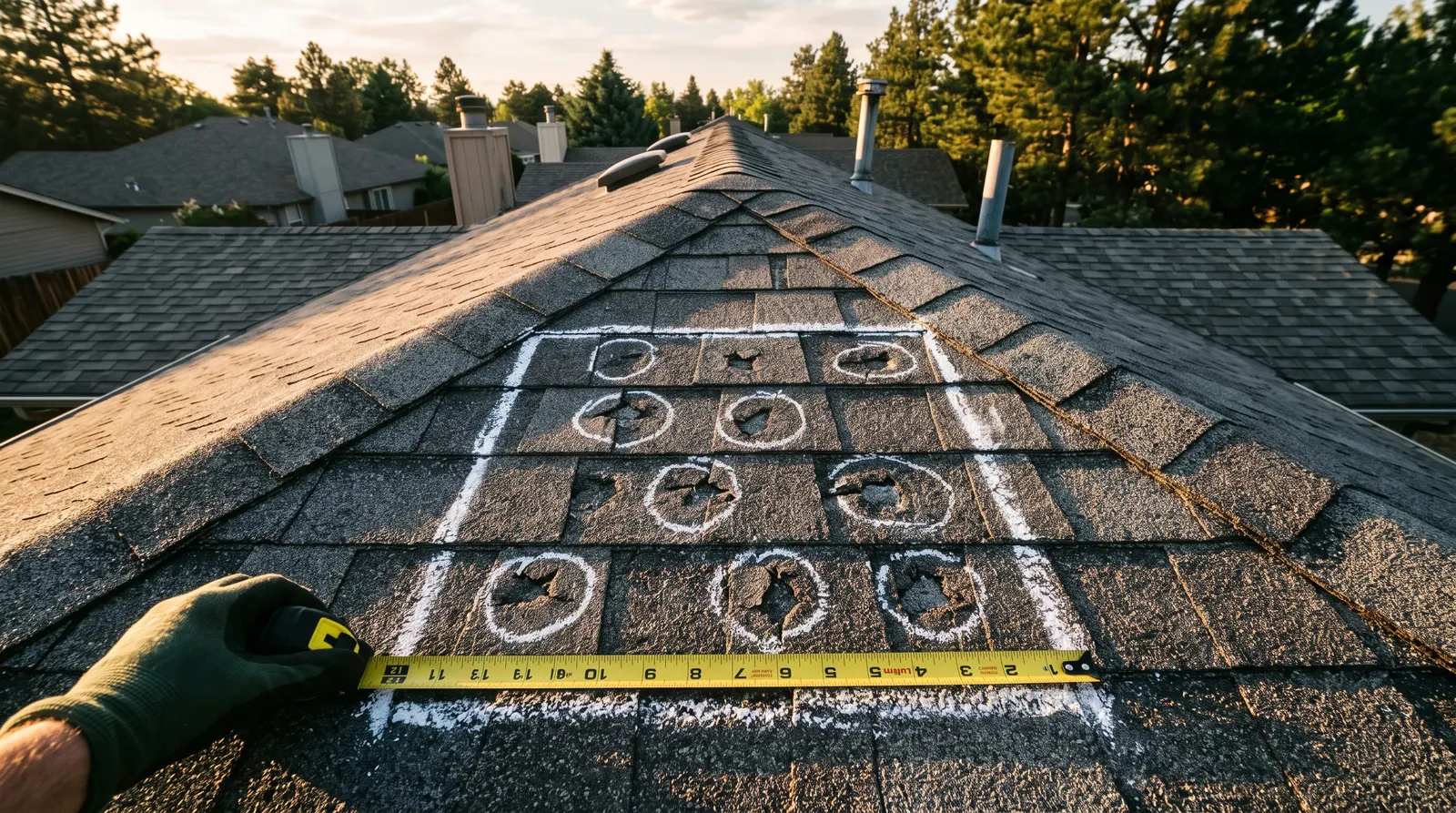
A roofer from Homestead Roofing describes the method: a ten-foot by ten-foot test square chalked out, usually one on each major roof slope, with the assessment made on the density of hits inside it.

He does not state the hit-count threshold and we are not going to supply one - it varies by carrier and region.

Two details make photographs read as evidence rather than as advocacy. Fresh hits show black asphalt under the disturbed fibres while older ones have weathered grey, so a date-stamped photo showing black is doing real work.

One convention worth adopting from the trade: contractors mark hail hits with a small dot rather than a circle, so that the adjuster’s own chalk circles and photographs stay legible and uncontaminated.

How long you have to claim

Policies require prompt notice, and prompt is not defined uniformly.

Deadlines vary by policy and by state, and some carriers apply specific windows to wind and hail claims.

Documentation urgency Stop. Call 911 first: Any situation needing 911 or the utility first. Contractor tonight: Photographing before emergency repairs begin; Meeting an insurer notification deadline; Documenting before weather worsens the damage. Can wait for an appointment: Compiling a full claim file; Getting comparison repair quotes; Requesting a re-inspection; Disputing a settlement Documentation urgency Stop. Call 911 first Leave the building Any situation needing 911 or theutility first Contractor tonight Damage is compounding Photographing before emergencyrepairs begin Meeting an insurer notificationdeadline Documenting before weather worsensthe damage Can wait for an appointment Book in normal hours Compiling a full claim file Getting comparison repair quotes Requesting a re-inspection Disputing a settlement When in doubt, treat it as the more serious lane. A false alarm costs nothing.
Photograph before you tarp, and photograph the tarp going on. Mitigation without a before-photo is the most common reason a claim gets reduced.

What this stage costs, and what to keep receipts for

Indicative US ranges. Always get a written quote.

Job Typical range
Documenting properly costs nothing
Emergency tarping, after hours $1.00–$2.80 / sq ft
After-hours call-out fee $100–$200
Tree debris removal cover ~$500–$1,000 cap
Independent inspection often free from a local contractor

Source: Angi 2026 cost to tarp a roof data and Insurance Information Institute guidance on debris removal and claim documentation (retrieved August 2026). Figures vary by region and timing.

Figures last checked

The first row is the point of the page. An hour spent on photographs and notes is the cheapest line in the whole event and frequently the most valuable.

How the matching works, and what we do not do

Emergency Services 24H is a referral service and not an insurance adviser. We do not employ contractors, we do not adjust claims, and we do not act for your insurer.

Your request routes to licensed, insured contractors covering your area, and they contact you directly. Everything on this page is descriptive, and your own policy and adjuster remain the only authority on your claim.

What homeowners actually ask

What people ask, and what nobody answers

Drawn from real public forum threads and reported prices, summarized and attributed as patterns. These are not reviews of this site, and no names or ratings have been invented.

Daylight visible through damaged roof decking seen from inside an attic
“What not to say to insurance adjuster roof”
Source A People Also Ask question on this SERP. It exists because homeowners feel unprepared for that conversation, and none of the ten ranking pages prepares them for it.

1 / 3

The adjuster question is the honest one in that set, and preparation answers most of it. People who arrive at that conversation with organized evidence do not need to worry about phrasing.

Know the line

Safe to check yourself, or call a pro now

Safe to check yourself

  • Photographing from ground level and from windows
  • Attic photographs where access is safe and dry
  • Writing the timeline and call log
  • Collecting and organizing receipts
  • Requesting a free contractor inspection

Call a pro now

  • Any roof access after storm damage
  • Attic access where the ceiling structure is compromised
  • Assessing whether decking or framing is damaged
  • Disputes where the adjuster estimate looks incomplete
  • Anything involving structural or electrical safety

24/7 dispatch network

Get a licensed storm damage contractor moving on this

Tell us what happened and where you are. Licensed, insured contractors covering your area will contact you directly. No obligation to hire, and no obligation to file a claim.

Fire, a gas smell, or an injury? Leave the building and call 911 first, then your gas utility or power company. Use this form once you are safe.

By submitting this request you agree that Emergency Services 24H and the licensed contractors in its network may contact you at the phone number and email you provided, including by automated dialing system, prerecorded message, or text.
  • Consent is not a condition of purchase.
  • Message and data rates may apply.
  • You can opt out at any time.
See our privacy policy and terms.
Free to submit. No obligation to hire.

Straight answers

Frequently asked questions

The questions homeowners actually search for on this problem, answered in plain language.

Browse all guides
Does insurance cover roof repair or a full replacement?

Repair when the damage is localised, replacement when it is general across the slope. The adjuster measures test squares to decide which.

What documentation does a storm damage insurance claim need?

Dated photographs of the exterior, the interior and the attic, the storm date, receipts for any emergency work, and the roofing company estimate.

What should I photograph after storm damage to my roof?

Wide shots of each elevation, close shots of missing or creased shingles, gutters and flashing, then interior ceiling staining with something for scale, wet insulation, damaged contents, and the attic including any daylight visible through the decking. Take all of it before any tarp goes on.

Should I document before or after tarping?

Before, always. Temporary protection changes what the adjuster can see, and the photographs taken before it are the evidence that the damage existed and what caused it.

Why does the attic matter for a roof claim?

Because it shows the opening rather than the symptom. Daylight visible through the decking proves a breach, and wet rafters and insulation help establish when the intrusion happened.

What should I write down as well as photograph?

The date and time you first noticed each item of damage, the weather event including any locally reported wind or hail, and a log of every call: who you spoke to, when, and what was agreed. That log is frequently more useful than any single photograph.

How long after a storm can I claim roof damage?

Policies require prompt notice, and what counts as prompt varies by policy and by state. Notify your insurer early even if you have not decided whether to proceed, because a delayed notification is one of the more common reasons a valid claim runs into trouble.

What should I have ready for the adjuster?

Photographs, your written notes and all receipts in one place, and a walk of the property with them rather than a conversation in the kitchen. Ask what is in the estimate and what has been excluded, and ask for that in writing rather than verbally.

Chalked ten-by-ten test square marked on a hail-damaged roof slope
Marking test squares
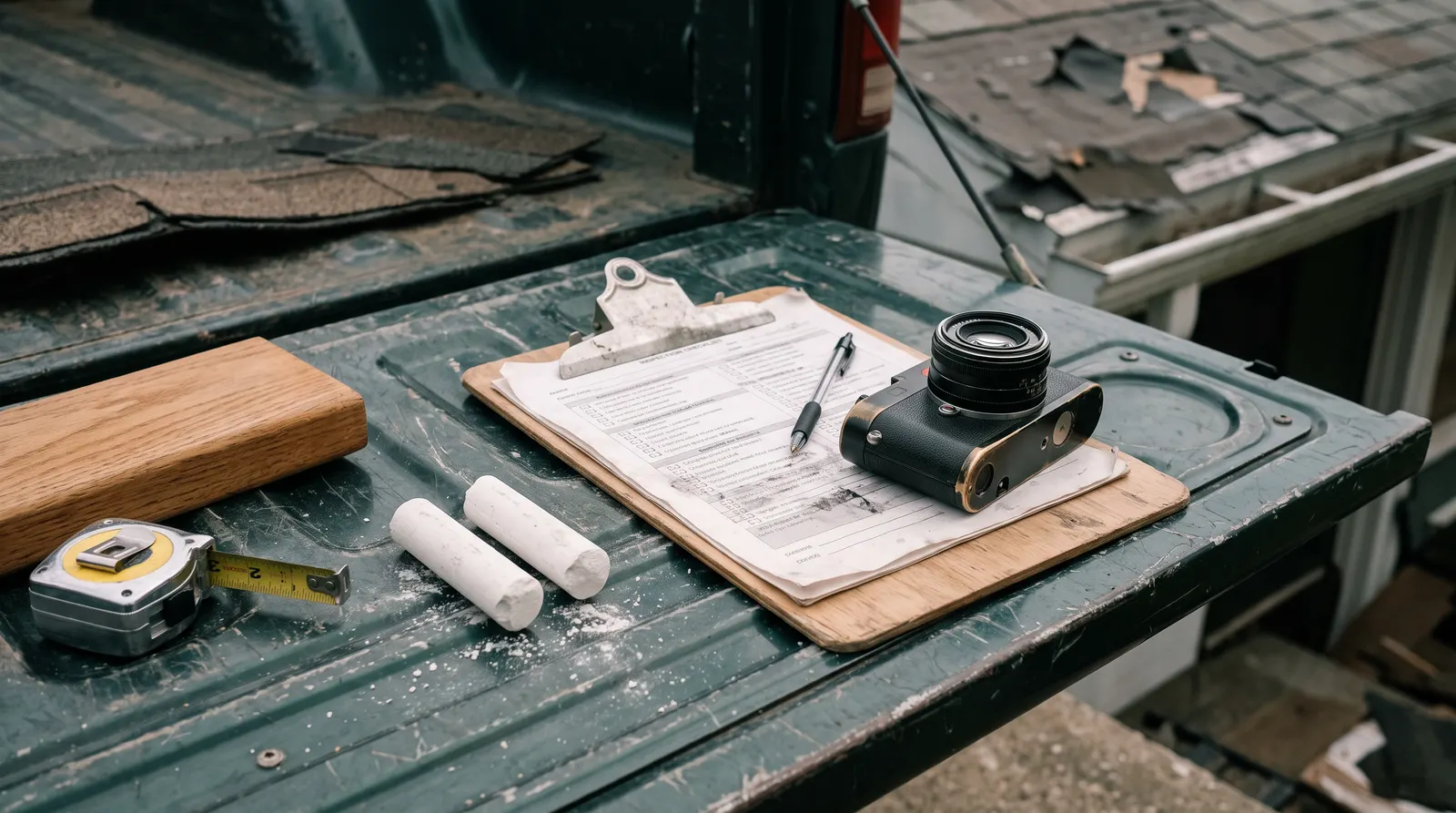
Clipboard checklist and camera laid on a tailgate before a roof inspection
Photographing to a system
Documentation and claim costs DIY photo documentation: $0 to $0. Independent roof inspection: $150 to $600, most often around $350. Public adjuster, share of claim: $5 to $20, most often around $10. Engineer structural report: $400 to $1,500, most often around $800. Source: Aggregated 2026 US cost guides (HomeGuide, Angi, This Old House), cross-checked against UGC-reported prices. Documentation and claim costs $0 $200 $400 $600 $800 $1k $1.2k $1.4k $1.6k DIY photo documentation $0–$0 Independent roof inspection $150–$600 Public adjuster, share of cl… $5–$20 Engineer structural report $400–$1,500 Most commonly reported figure Source: Aggregated 2026 US cost guides (HomeGuide, Angi, This Old House), cross-checked against UGC-reported prices
The public adjuster row is a percentage of the settlement, not dollars. Worth it on large disputed claims, rarely on small clear ones.

Sources for this page

Experts quoted on this page

Independent, publicly published sources, quoted with attribution and linked in full. None is affiliated with Emergency Services 24H, reviewed this page, or works in the referral network.

  • Homestead Roofing, Inc: Roofing contractor and inspector, Colorado Springs, Homestead Roofing - “Roof Inspections After A Massive Hail Storm For Insurance Claims” (Jul 2023)

Reviewed on . If a figure here no longer matches its source, that is a bug, so tell us and we will correct it.

24/7 dispatch network

Tell us what has failed and where you are

Tell us what has failed and how soon you need someone. We route your request to licensed, insured contractors covering your area, and they contact you directly.

Fire, a gas smell, or an injury? Leave the building and call 911 first, then your gas utility or power company. Use this form once you are safe.

By submitting this request you agree that Emergency Services 24H and the licensed contractors in its network may contact you at the phone number and email you provided, including by automated dialing system, prerecorded message, or text.
  • Consent is not a condition of purchase.
  • Message and data rates may apply.
  • You can opt out at any time.
See our privacy policy and terms.
Free to submit. No obligation to hire.