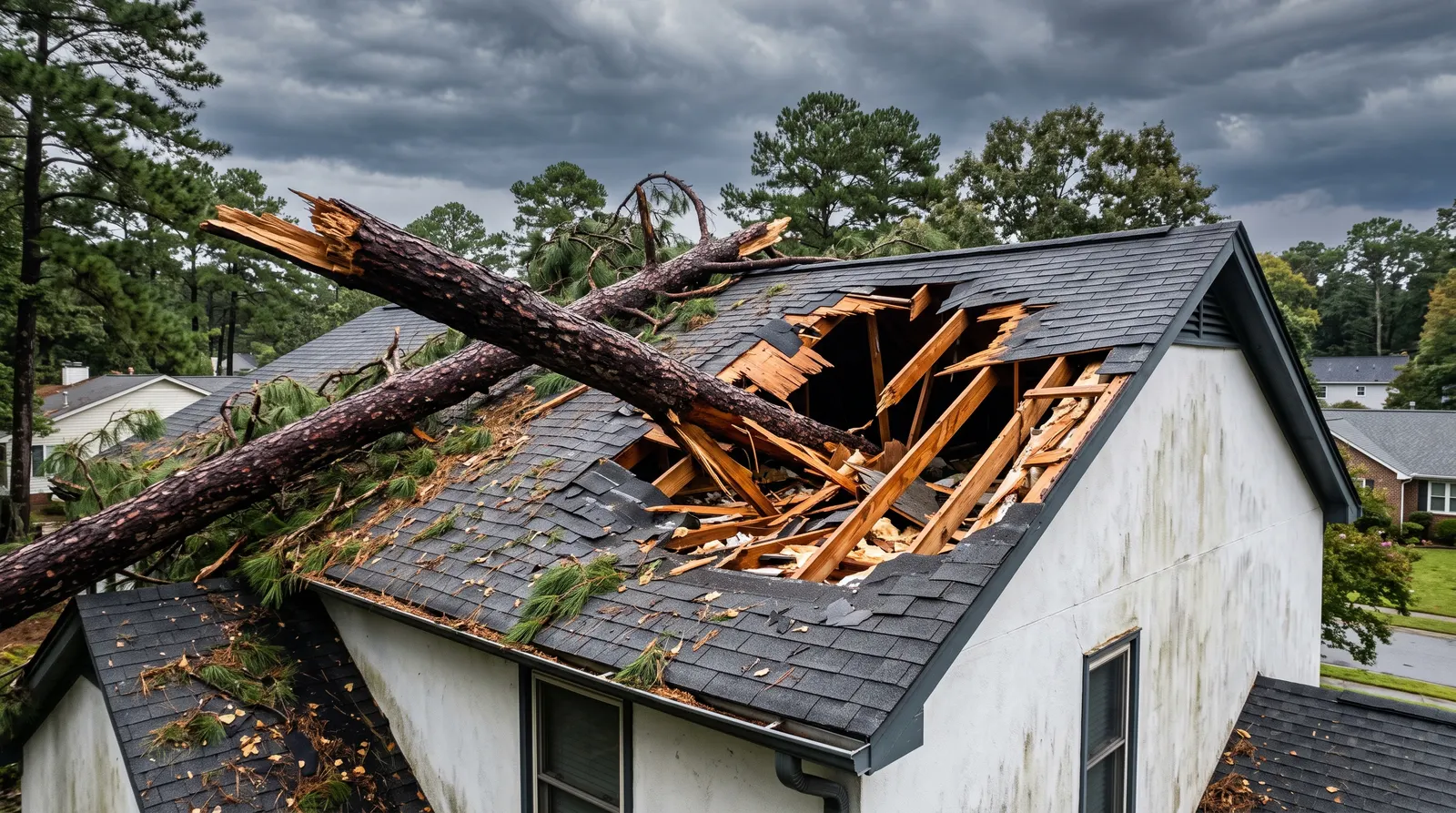
A tree fell on house damage is a safety problem before it is an insurance one. Emergency tree removal runs two to three times standard, commonly $500 to $3,000, and debris cover is capped near $500 to $1,000.
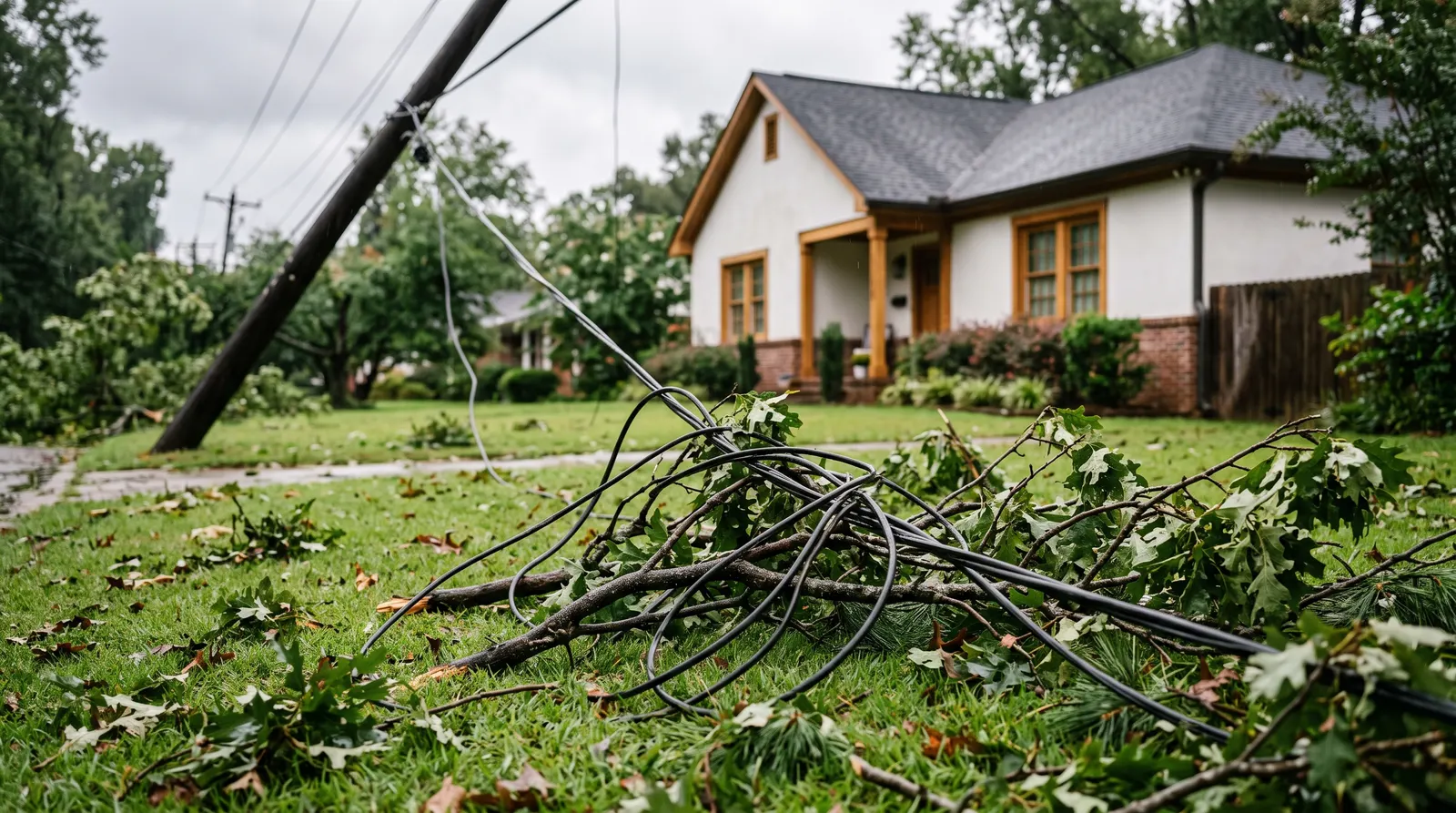
A tree fell on the house is an electrical and structural emergency before it is an insurance question, because a tree large enough to hit a roof frequently brings a service drop down with it.
A tree fell on my house what do I do, in order: get everyone clear, treat every line as live, then photograph before anything moves. The storm and tree guide covers the rest, the leak that follows is the next problem, and Emergency Services 24H routes emergency tree work to licensed crews nearby.
Whose tree it was matters less than people expect.
Whose tree it was matters less than people expect: a neighbours tree, a dead tree on the boundary, or a tree branch brought down in the same storm all run through your own policy first.
Policies do not cover preventative tree removal, so a leaning neighbor tree is your problem until it falls. Tree work is dangerous enough that the trade tracks deaths per year, which is the reason a chainsaw on a loaded trunk is not a homeowner job.
The first ten minutes
Lines, people, then everything else
Get everyone out from under the impact area.
CDC and NWS guidance is unambiguous on the electrical point, and it is the part that conversion-first pages summarize into a single sentence below the claims section.
Searches for tree fell on house climb after every major storm, and almost all of them are read by someone who has just heard the impact.
Right now, in this order
Four things before anyone calls a contractor
01
Get out from under it
Move everyone away from the impact area and out of any room with a loaded or sagging ceiling. Structural damage is not always visible from below.
02
Assume every line is live
Do not approach the tree if any line is touching it, and do not touch anything the tree is touching. Call the utility and keep everyone well clear.
03
Call 911 if anyone is hurt
Also for fire, or if you smell gas. Gas means leave the building first and call from outside rather than investigating.
04
Photograph before anything moves
Wide shots of the tree and the building, close shots of the damage, and the date, time and weather. That evidence disappears the moment removal starts.
Cited source2:04
On the neighbor’s tree that landed on your roof.
“You're not going to be able to go straight to the policy of your neighbor.”
MR
Mark Russell
ISA Certified Arborist (TRAQ) and licensed insurance adjuster, as stated on camera
770 Arborist Emergency Tree and Crane Service, Jan 2021
An independent source we cite. Not affiliated with Emergency Services 24H, and not a network contractor.
Leave if a ceiling is sagging or loaded, if there is structural impact nobody has assessed, or if there is any gas or electrical concern.
A loaded ceiling is the specific risk people underestimate. Drywall holding water and insulation gets heavy fast, and it fails all at once rather than gradually.
Structural impact needs an engineer or a building inspector rather than a roofer. That is a different phone call and it comes first.
Gas, water and power inside the building
Gas: a smell means leave and call the utility from outside. Do not operate switches on your way out.
Power: isolate circuits serving wet areas from a dry position, or ask the utility to cut supply at the meter.
Water: if plumbing has been hit, close the main valve.
Generators: outdoors only, well away from doors, windows and vents. Never in a garage.
Document before anything is moved
Once a crane arrives, the evidence changes permanently.
Take wide shots of the tree and the building together, showing scale and position.
This is where the insurer pages are genuinely useful and where restoration pages go quiet.
Your own homeowners policy generally covers damage to your home from a fallen tree regardless of who owned it.
Insurance broker Mark Russell frames the default the same way, and his summary is the one to hold onto while a neighbor is telling you otherwise on the driveway: either you or your insurance company is responsible, with one exception.
The thing he is explicit about is the route people assume exists: you are generally not going to be able to go straight to your neighbor’s policy.
The exception he names is deferred maintenance - a maintenance issue that was known about and not acted on.
This is recorded here as what a named broker says about how these policies generally work.
If subrogation succeeds, your deductible is often reimbursed. That is a possible outcome rather than a plan.
Who pays: your tree, their tree, or nobody
The debris removal cap people discover late
Does insurance pay to remove the tree?
Generally up to about $500 to $1,000 when the tree hit an insured structure.
Against emergency removal quoted at $500 to $3,000 and above, that cap is worth knowing before you approve a scope.
What emergency tree removal costs
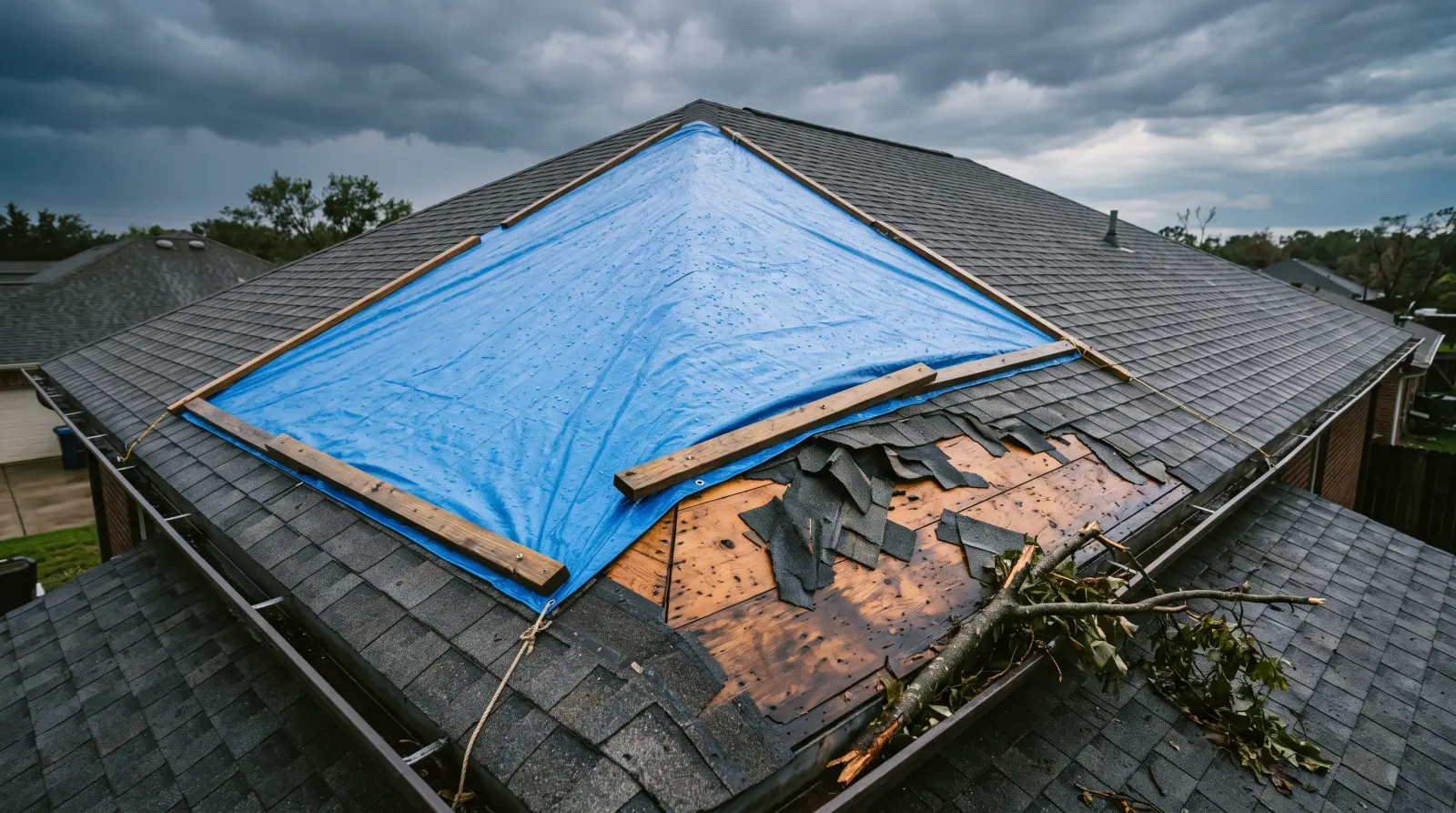
Temporary protection while you wait
Once the tree is off and the structure has been checked, the building needs to be weathertight before anything else.
Emergency after-hours tarping runs about $1.00 to $2.80 per square foot.
Sequencing the trades
Getting this order wrong wastes money and occasionally repeats work.
Utility first, for any line involvement.
Tree removal second, by a crew equipped for a structure strike.
Structural assessment third, before anyone reroofs over a compromised frame.
Roofing and interior last, usually after the adjuster has seen it.
Leave the building if there is any structural damage. Do not attempt to cut a tree that is under tension against a structure; it moves unpredictably.
What removal and protection cost
Indicative US ranges. Always get a written quote.
Job
Typical range
Notes
Emergency tree removal
2x–3x standard rates
Storm work, after hours, structure involved
Commonly quoted range
$500–$3,000+
Large or complex jobs run higher
Insurance debris removal
~$500–$1,000 cap
When an insured structure was hit
Tree that hit no structure
generally no debris cover
The gap people find out about late
Emergency roof tarping
$1.00–$2.80 / sq ft
After-hours, to make it weathertight
Source: GoTreeQuotes 2026 emergency tree removal cost data, Insurance Information Institute debris removal guidance, and Angi cost to tarp a roof data (retrieved August 2026). Figures vary by region and timing.
Figures last checked
Read rows three and four together.
How the matching works, and what we do not do
Emergency Services 24H is a referral service. We do not employ tree crews or roofing contractors, we do not perform removal, and we are not an insurance adviser.
Your request routes to licensed, insured contractors covering your area, and they contact you directly.
What homeowners actually ask
What the sources say
Drawn from real public forum threads and reported prices, summarized and attributed as patterns.
These are not reviews of this site, and no names or ratings have been invented.
“If a tree falls on your house, are you covered?”
SourceInsurance Information Institute. Their answer contains the two facts most homeowners find out late: the debris removal cap of roughly $500 to $1,000, and the no-structure-hit rule.
“Do not touch downed power lines or objects in contact with downed lines”
SourceNational Weather Service post-storm guidance. Relevant here because a tree large enough to hit a house is frequently large enough to bring a service drop down with it.
“Should I stay home if a tree fell on my house?”
SourceA People Also Ask question on this SERP, dominated by insurers and restoration firms whose pages lead with claims rather than with the occupancy decision.
1 / 3
The stay-or-leave question is asked directly in People Also Ask and answered by pages whose first instinct is to discuss coverage.
Know the line
Safe to check yourself, or call a pro now
Safe to check yourself
Moving people and pets away from the impact area
Photographing the damage from ground level
Containing water from inside once it is safe to be there
Closing the main water valve if plumbing was hit
Contacting your insurer and starting a claim log
Call a pro now
Any tree in contact with a power line
Tree removal of any kind after a structure strike
Structural assessment of the roof or frame
Climbing onto a roof that has taken an impact
Cutting anything under tension, including a leaning trunk
24/7 dispatch network
Get a licensed storm damage contractor moving on this
Tell us what the tree hit and whether a power line is involved. Licensed, insured contractors covering your area will contact you directly. No obligation to hire.
Fire, a gas smell, or an injury? Leave the building and call 911 first, then your gas
utility or power company. Use this form once you are safe.
Straight answers
Frequently asked questions
The questions homeowners actually search for on this problem, answered in plain language.
Get everyone out from under the impact area, treat any line touching the tree as live, and call 911 if there is gas, fire or an injury. Photographs come after safety.
Will insurance pay to remove a dead tree before it falls?
No. Homeowners policies cover damage from a fallen tree, not preventative removal, which is why a dead tree near the house is worth paying to take down.
What should you do if a tree falls on your house?
Get everyone out from under the impact area first, assume any downed line is live, and call 911 for injuries, fire or a gas smell. Call the utility for lines.
Should I stay in the house if a tree fell on it?
Not if a ceiling is sagging or loaded, not if there is structural impact that has not been assessed, and not if there is any gas or electrical concern. Most policies include additional living expenses cover for exactly this situation, so leaving is rarely the expensive choice.
Whose insurance pays if a tree falls on your house?
Your own homeowners policy generally covers the damage regardless of who owned the tree. If the tree came from a neighbor and was already dead or decaying, your insurer may pursue theirs through subrogation, which can result in your deductible being reimbursed.
Is tree debris removal covered by insurance?
Generally up to about $500 to $1,000 when the tree has hit an insured structure. If the fallen tree did not hit an insured structure, there is generally no coverage for debris removal at all, which is the gap people discover after a large tree comes down in the yard.
How much does emergency tree removal cost?
Emergency removal typically runs two to three times standard removal pricing, with commonly quoted ranges of $500 to $3,000 and above. Large or complex storm jobs involving a crane or a structure strike can run considerably higher.
Can a house survive a tree falling on it?
Frequently yes. Impact is often confined to the roof structure and one or two rooms, and repair is a matter of structural assessment, roofing and interior work.
What not to approach
A limb through the roof plane
Homeowners policies generally cover removal where the tree hit a covered structure, and often not where it fell clear. That distinction drives the bill.
Insurance Information Institute: What standard homeowners insurance covers, including storm perils and the ~$500 per-item cap on trees, shrubs and plants
Independent, publicly published sources, quoted with attribution and linked in full.
None is affiliated with Emergency Services 24H, reviewed this page, or works in the referral network.
Mark Russell: ISA Certified Arborist (TRAQ) and licensed insurance adjuster, as stated on camera, 770 Arborist Emergency Tree and Crane Service - “My neighbor's tree fell on my house! Who Is responsible?” (Jan 2021)
Tell us what has failed and how soon you need someone. We route your request to licensed, insured contractors covering your area, and they contact you directly.
Fire, a gas smell, or an injury? Leave the building and call 911 first, then your gas
utility or power company. Use this form once you are safe.