Water damage restoration cost, by category and by area
Water damage restoration cost runs about $3 to $4 per square foot for clean water, $4 to $6.50 for grey water and $7 to $7.50 for sewage. The national average job is near $3,455, with a typical cost range of $1,305 to $5,707 (Bob Vila, read 2026-07-22).
That is the water damage restoration cost per square foot the trade quotes. The rest of this page is how to read your quote against it.
The short answer on restoration cost
What is the average cost of restoration?
Restoration costs run $3 to $4 per square foot for clean water and $7 to $7.50 for black water, with an average water damage job near $3,455 (Bob Vila, read 2026-07-22). Mold remediation is separate and averages about $2,200.
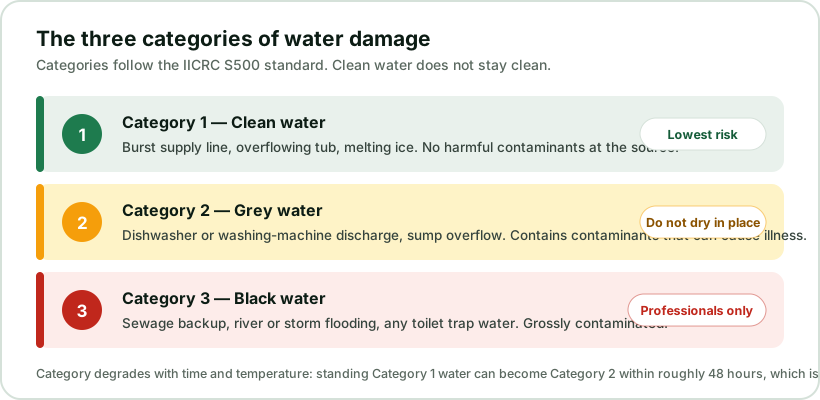
The category tells you which row you are in. There is no water damage price list or national restoration price sheet: a toilet supply line failure and a sewer backup are not the same water damage price.
The jump from Category 1 to Category 3 roughly doubles the price per square foot, and it is not a margin decision. Black water means protective equipment and more material discarded.
Category decides the equipment, what gets discarded and roughly double the price. It also degrades with time, so a Category 1 spill left for three days may be quoted as Category 2.Source: Emergency Services 24H original diagram, figures per Bob Vila 2026 cost data
A clean-water spill in a warm room becomes grey water within days, and the repair cost per square foot moves with it.
Cost by area and by job type
Indicative US ranges. Always get a written quote.
Job
Typical range
Notes
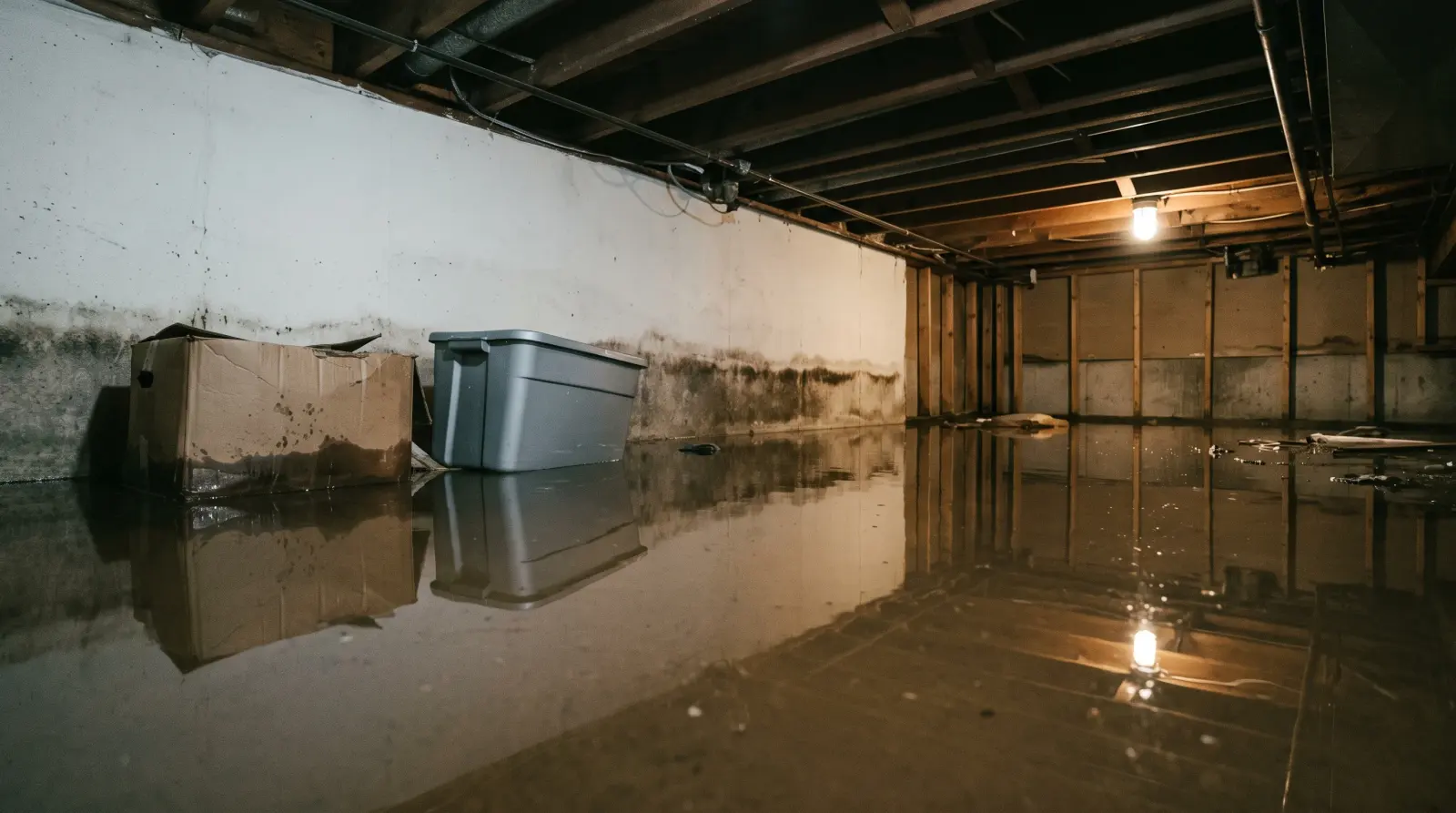
Flooded basement cleanup
$2,000–$7,000
Average around $4,000; largest square footage
Mold remediation
~$2,200 average
A separate job from drying, read 2026-07-22
Drywall replacement
$1.50–$3 / sq ft
Where cavities were wet
Reported homeowner spend, restoration
$1,361–$6,270
Consumer-reported range, read 2026-07-22
Severe standing-water jobs
can exceed $100,000
Reported extreme cases, read 2026-07-22
Source: Bob Vila 2026 water damage restoration cost data; consumer-reported spend from published cost aggregators, marked as reported (retrieved August 2026). Figures vary by region and timing.
Figures last checked
How to read a restoration quote
Restoration quotes have a consistent structure once you know what you are looking at, and almost nobody explains it.
Extraction is usually a single line, priced by area or by volume of water removed.
Equipment is per unit per day: so many air movers and so many dehumidifiers, for so many days.
Antimicrobial application is separate, and is standard on Category 2 and 3 work.
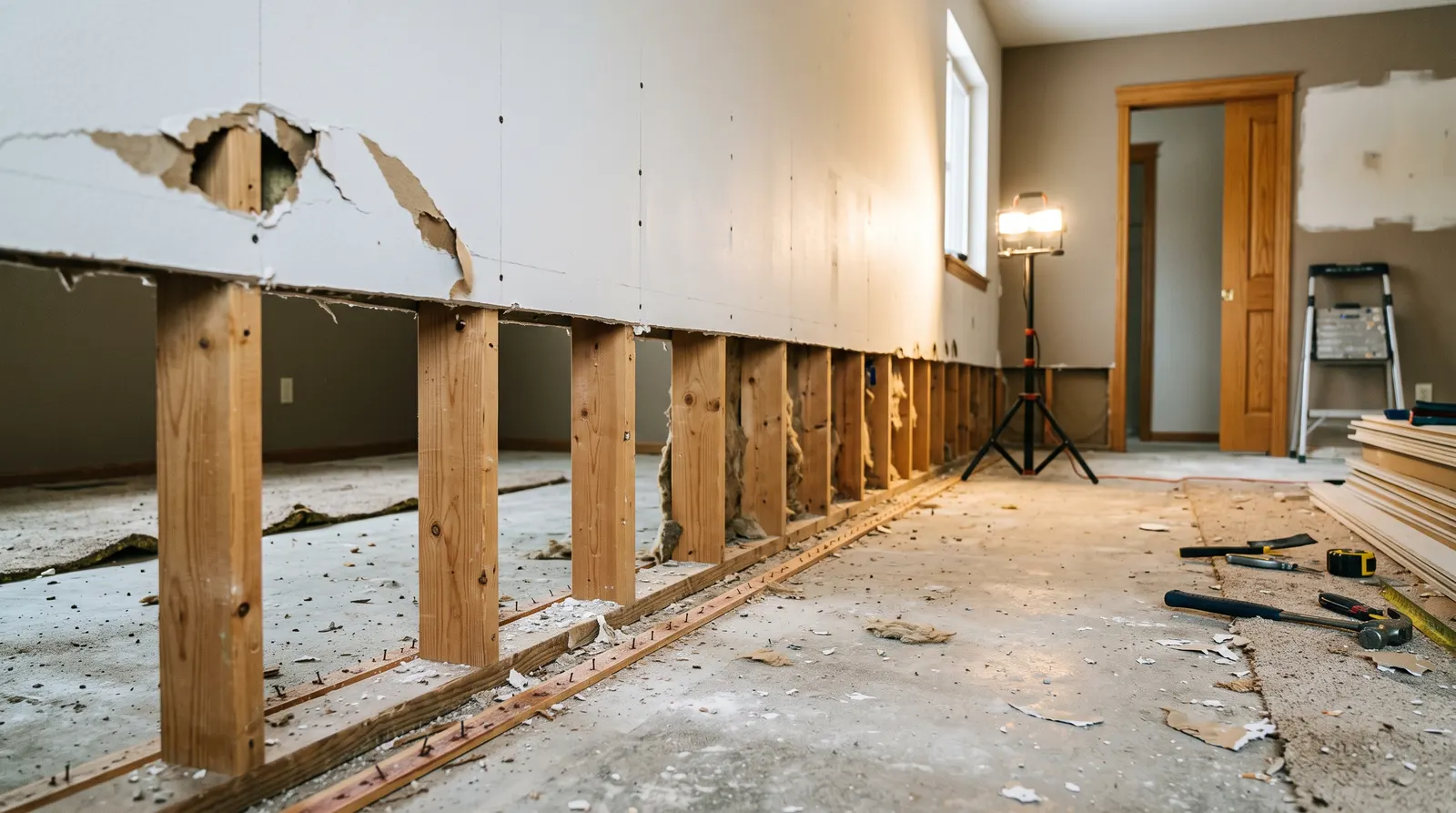
Demolition covers baseboard removal, drilled wall bases and any cut line, and is priced by linear or square foot.
Rebuild is a different phase entirely and frequently a different quote.
Why equipment is billed daily
Why am I paying per day for fans?
Because air movers and dehumidifiers are rented per unit per day, and the number of units is set by room volume and how wet the materials are. Daily moisture readings are what justify each additional day, so ask to see them.
This line surprises people on day four and is legitimate. Equipment sitting in a dry room accruing days is not, which is why moisture logs exist.
Ask for the readings at the start. Treat the four questions below as your water damage restoration checklist.
Mold remediation is a separate job
Drying prevents mold. Water damage remediation removes it once established: different scopes, different damage costs, different crews.
Remediation averages around $2,200 as its own job, on top of a $3,455 average restoration, and drying inside the EPA’s 24 to 48 hour window avoids most of it.
Where mold has started, the EPA puts about 10 square feet as the homeowner limit. The timeline is on our page about how fast mold grows.
What emergency mitigation costs separately
The first invoice usually arrives before the claim settles, covering extraction and drying rather than the full repair.
That is normal, and often claimable under homeowners insurance. Keep the professional restoration bill separate from rebuild, because insurers treat the two differently.
Do not wait for a claim decision before drying
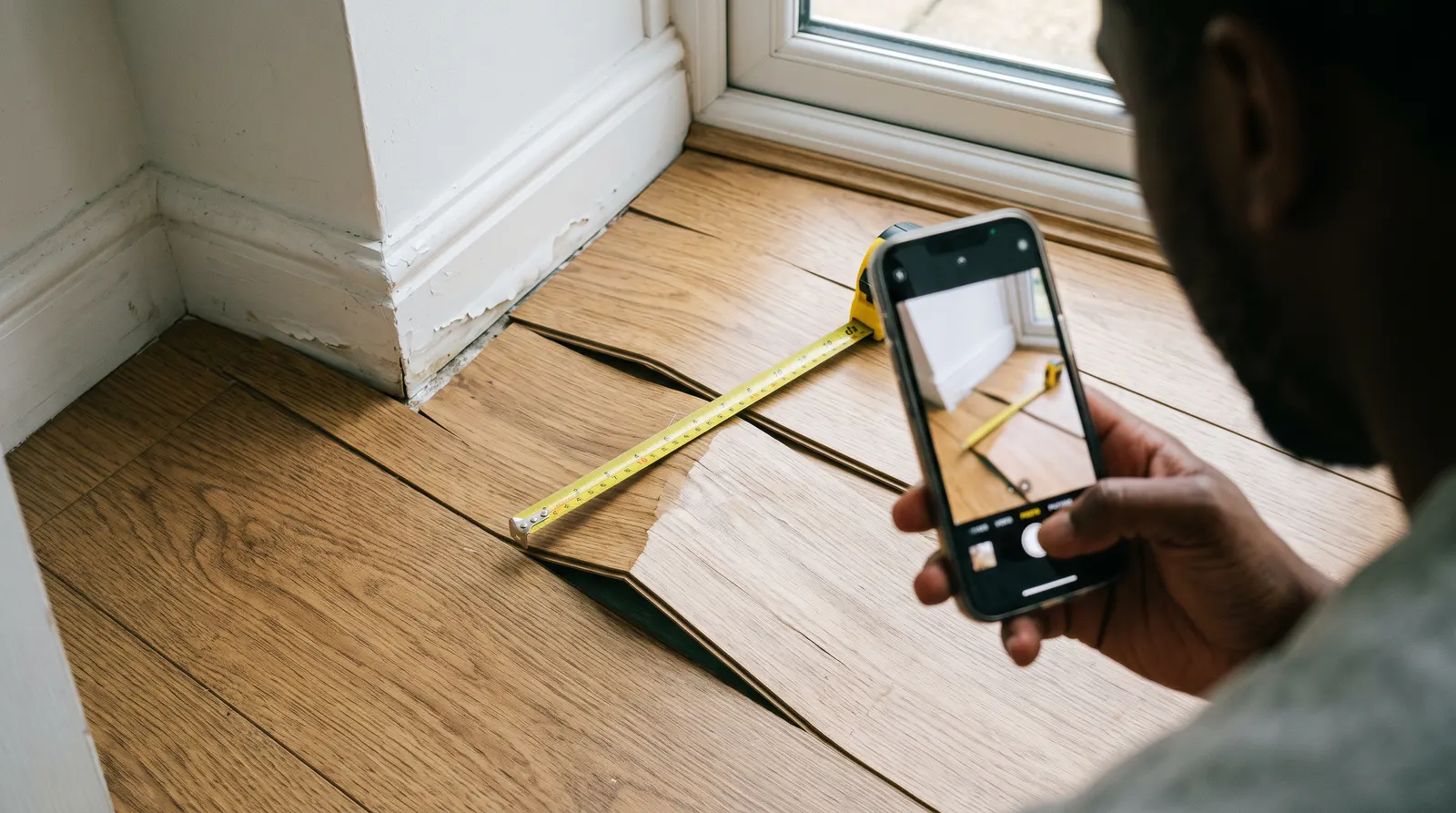
Every day of delay increases both the damage and the category. Policies generally expect prompt mitigation, and a homeowner who waited a week for an adjuster before starting has usually weakened their own position rather than protected it. Photograph thoroughly, then dry.
What is not in a drying quote
Rebuild and redecoration. Replacing drywall, flooring and paint is a separate phase at $1.50 to $3 per square foot for drywall alone.
Contents cleaning and storage. Furniture, belongings and any off-site storage while drying runs.
Mold remediation if growth has already started.
The repair that caused it. The plumbing, roof or appliance fault is a different trade and a different bill.
Why two quotes differ on the same room
Almost never because one contractor is dishonest. Four assumptions account for most of it.
Different category. One assessing Category 2 and one Category 3 produces roughly a two-fold difference on the same square footage.
Different demolition scope. A two-foot flood cut against drilling wall bases and drying in place.
Different drying duration. Three days assumed against six.
Rebuild included or not. The single largest source of apparent difference between two totals.
Compare the assumptions rather than the bottom line, and ask both contractors to state category and square footage explicitly.
The first moves the number most. Under ANSI/IICRC S500 the category decides whether the crew works with containment, and what leaves the room: at Category 3, drywall and ceiling tiles go, and carpet water damage at that grade is never dried in place.
Restoration instructor Darren Foote tells restorers to state the reason for the category, not the category alone: a dishwasher discharge, therefore Category 2.
His red flag: billing at Category 3 while the site photographs show crews in sneakers and shorts. Category 3 is a cost tier and a safety tier at once.
Two of the standard’s positions can remove lines from a quote. Antimicrobial application is not automatic: the wording, quoted by Foote and Scott McFadzen of the consensus body, is that not all intrusions warrant antimicrobials.
Drying duration is meant to be evidenced. Readings should be recorded daily with the same meter, against comparable unaffected material in the same building. A quote with fixed equipment days and no drying log is a schedule, not a plan.
Questions to ask before signing
Four questions, and they take a minute.
What category and square footage is this priced at. What is the daily equipment rate, and for how many days. What triggers demolition, and is rebuild included.
How that total sits against your deductible is covered on our page about what insurance covers.
What homeowners actually ask
What homeowners report paying
Drawn from real public forum threads and reported prices, summarized and attributed as patterns.
These are not reviews of this site, and no names or ratings have been invented.
“Homeowners report paying roughly $1,361 to $6,270 for professional restoration (reported range, read 2026-07-22)”
SourceConsumer-reported spend from published cost aggregators, not a quote for any job.
“Flooded basement cleanup commonly $2,000 to $7,000, average around $4,000 (reported range, read 2026-07-22)”
SourcePublished aggregator figures for basement work, where square footage is largest.
“New homeowner here, please help, my basement is flooding”
SourceThread title, r/homeowners. The advice centers on renting equipment versus calling a firm, the real cost decision.
“My basement has flooded a bit, what do I do?”
SourceThread title, Home Improvement Stack Exchange. The DIY line lands where the category table does.
1 / 4
24/7 dispatch network
Get a licensed restoration contractor moving on this
Send the affected area and licensed, insured restoration contractors covering your area will contact you directly. Compare what you are quoted against the tables above. No obligation.
Fire, a gas smell, or an injury? Leave the building and call 911 first, then your gas
utility or power company. Use this form once you are safe.
Know the line
Safe to check yourself, or call a pro now
Safe to check yourself
A small clean-water spill caught within hours
A mold patch under about 10 square feet, per EPA guidance
Extracting standing water with a rented wet vacuum
Running rented fans and a dehumidifier on a hard-floor room
Call a pro now
Any Category 3 water, which is priced at roughly double for good reason
Water that reached wall cavities, insulation or subfloor
Anything a claim will be made on, where documentation matters
Mold over about 10 square feet
Any occupant with asthma, mold allergy or immune suppression
How the matching works, and what we do not do
Emergency Services 24H is a referral service. We do not employ restoration technicians and never quote the job.
Your request routes to licensed, insured contractors nearby. The tables exist so the conversation starts informed.
The deposit a contractor is allowed to ask for
Large up front payments are least questioned in this trade, because the work starts the same day.
California puts a number on it: the deposit on a home improvement contract may not exceed $1,000 or ten percent of the contract, whichever is less (California Business and Professions Code s. 7159.5, read 2026-09-05).
On a five figure job, thirty percent up front is something the statute prohibits rather than something to haggle over.
What this does not say: California only, and the cap is on the DOWNPAYMENT; a lawful progress-payment schedule tied to work performed is a different thing. Other states set their own limits or none at all.
Water category is the biggest number on the invoice
A documented first-hand account, not a market pattern.
An IICRC instructor and expert witness, and a member of the S500 consensus body, describing water categories and antimicrobial use on real restoration jobs in published training material from 2023 onward.
Mitigation is priced by the class of water, and the highest class costs most because of what is discarded. An IICRC instructor warns against judging by eye: you can have pristine and beautifully clear water that could kill you.
A member of the standard’s consensus body adds the limit in the other direction: not all water intrusions warrant antimicrobial treatment, a line on many a water damage restoration invoice. Ask which category was assigned, and what supports it.
What this does not say: Both speak from inside the restoration industry and both teach it commercially; the ANSI/IICRC S500 itself is a paywalled private standard this research could not read, so the classification rule is reported as these practitioners state it.
How do I check a water damage estimate line by line?
Ask for line items, not a total. A water damage estimate written in Xactimate prints category, square footage, equipment days and demolition separately. There is no standard damage estimate template, which is why two quotes rarely line up.
What does a toilet supply line failure cost to dry out?
A toilet supply line is clean water when it fails, so it prices at the Category 1 rate of $3 to $4 per square foot. It moves to Category 2 once it has sat.
Is there a reliable water damage repair cost calculator?
No free water damage calculator knows your square footage, category or drying days, the three inputs that set the cost to repair. Use the rates here instead.
Does the quote include putting the room back?
Often not. Mitigation is drying and removal; rebuild replaces what came out, usually a separate contract. Ask which you are being quoted.
How much does water damage restoration cost?
$3 to $4 per square foot for Category 1 clean water, $4 to $6.50 for Category 2 grey water and $7 to $7.50 for Category 3 black water. The national average job is around $3,455, typical range $1,305 to $5,707 (Bob Vila, read 2026-07-22).
Why is my quote priced per square foot?
That is how the trade estimates: affected square footage times a category rate, plus equipment per unit per day and demolition. Ask for both before comparing quotes.
Why is drying equipment billed daily?
Air movers and dehumidifiers are rented per unit per day, and the count follows room volume and how wet the materials are. Daily readings justify keeping them running.
Is mold remediation included in restoration?
Usually not. Drying prevents mold; remediation removes it once established, averaging around $2,200 as a separate job (Bob Vila, read 2026-07-22). Under about 10 square feet is often a homeowner job.
Why do two restoration quotes differ so much?
Almost always because they assume different things: a different category, different demolition, different drying days, or rebuild included in one and not the other. Compare assumptions, not totals.
Does insurance pay restoration directly?
Often, where the claim is accepted. The scope is then negotiated between contractor and adjuster rather than with you, so ask to see it in writing.
What restoration crews actually remove
Documenting for the claim
Restoration is billed by scope and equipment days, not by a flat rate. An itemised scope of work is the document to insist on.
Independent, publicly published sources, quoted with attribution and linked in full.
None is affiliated with Emergency Services 24H, reviewed this page, or works in the referral network.
Shane O'Dazier: Restoration company owner, 1,000+ water damage claims, RestorationProfits - “Water Restoration Business – Estimates” (2023)Declared bias: Coaches restoration contractors on maximising payouts - the figures are business targets, not homeowner quotes.
Tell us what has failed and how soon you need someone. We route your request to licensed, insured contractors covering your area, and they contact you directly.
Fire, a gas smell, or an injury? Leave the building and call 911 first, then your gas
utility or power company. Use this form once you are safe.