Wet drywall is replaced at roughly $1.50 to $3 per square foot (Bob Vila, read 2026-07-22), so most save-or-toss questions end in a cut line. Two variables decide the rest: how porous the material is, and what was in the water. Carpet and padding are two separate decisions.
What actually decides whether a material can be saved?
Porosity and water category, in that order. Non-porous materials like tile, sealed concrete and metal clean up and survive almost anything. Porous materials hold water in their structure, and once the water was dirty they cannot be decontaminated, only replaced.
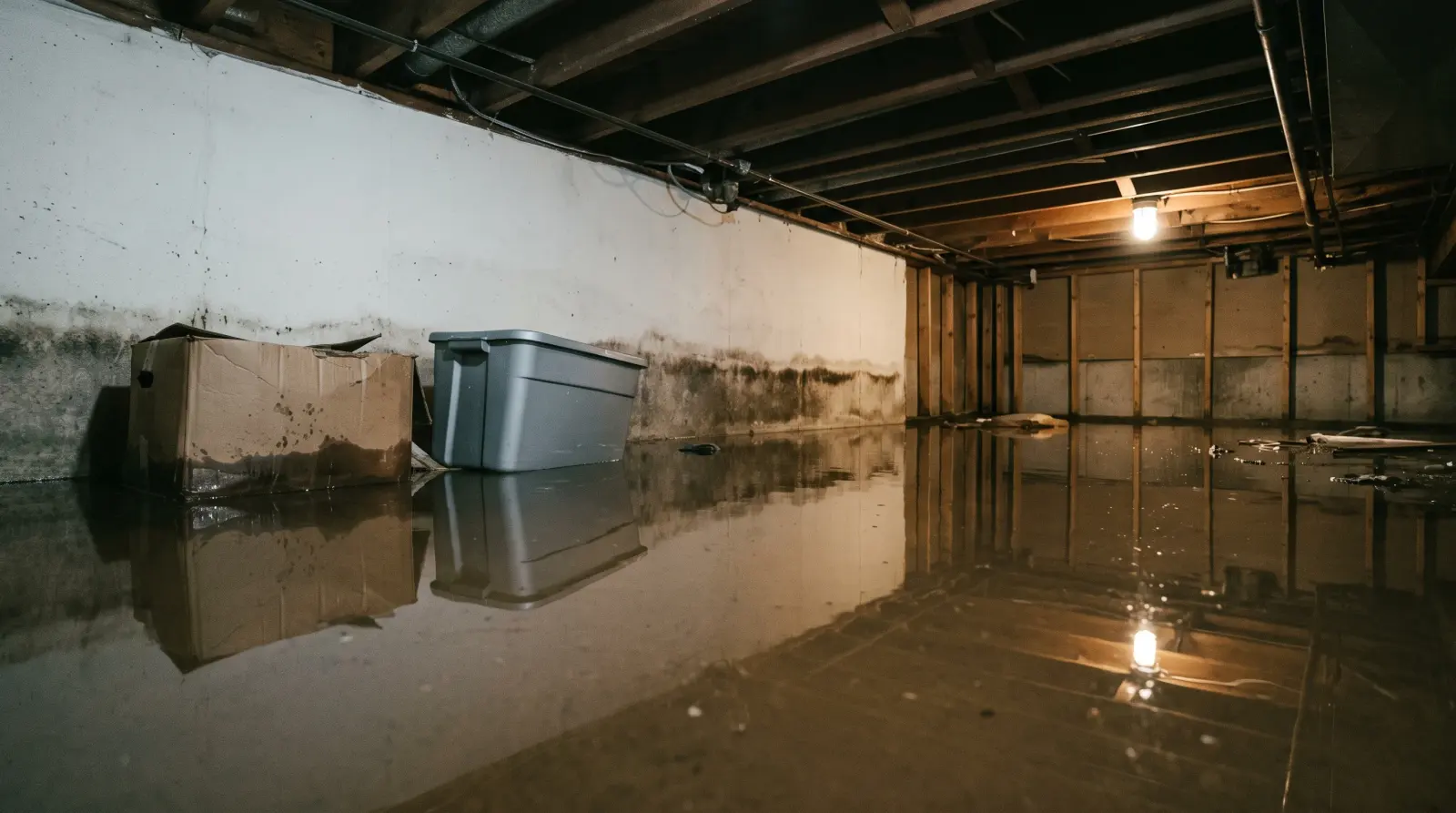
Category 1 is clean supply water. Category 2 is greywater from a washing machine, dishwasher or shower. Category 3 is blackwater: sewage, or floodwater from outside.
The rule most restoration contractors work to is simple. Porous material plus Category 2 or 3 water equals removal, regardless of how quickly you got to it.
Those categories come from ANSI/IICRC S500, and the wording matters on your scope of works.
Restoration instructor Darren Foote sets the boundaries: a broken supply line, a clean tub overflow, snow or rain are Category 1. Washing-machine discharge is Category 2. Anything backing up from beyond a trap is Category 3.
One widely repeated belief costs homeowners money. Clean supply water does not automatically change category because it has touched carpet or the back of a sheet of drywall.
Foote is explicit that no time-based automatic escalation exists in the current standard. A contractor upgrading a clean-water loss because a day has passed is making a judgement, not applying a rule.
The order that gets it right
How professionals decide the cut line
01
Identify the category
Clean supply water, greywater from an appliance, or blackwater. Category decides before porosity.
02
Find the wick line
Water climbs. Meter upward until it reads the same as an unaffected wall.
03
Cut above it
Cut 12 to 24 inches above the highest wet reading, to a clean line.
04
Verify with a meter
Dry means a reading matching an unaffected baseline, not a dry-feeling surface.
Cited source~13:34
Reading the IICRC S500 standard aloud.
“Not all water intrusions warrant the use of antimicrobials.”
SM
Scott McFadzen
Member of the ANSI/IICRC S500 2018 consensus body
Coach8, 2022
An independent source we cite. Not affiliated with Emergency Services 24H, and not a network contractor.
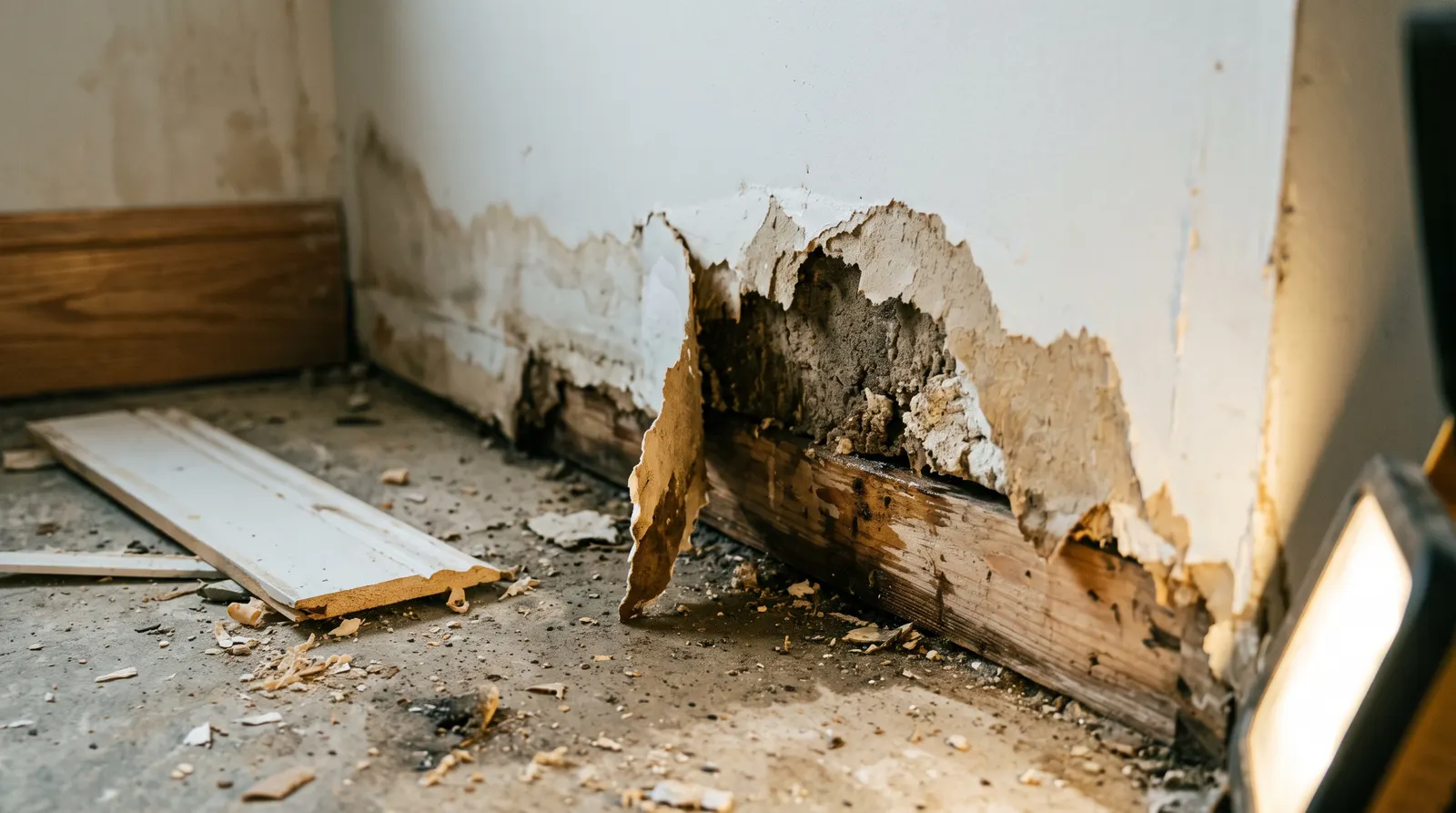
Gypsum board is a paper-faced mineral core that behaves like a slow sponge, and water at the base of a wall does not stay there.
Capillary action pulls it up through the core, often a foot above the waterline, and the paper facing hides it. People dry the height they can see.
Insulation holds water against the back of the board long after the surface dries, producing a wall that feels fine and grows mold in the cavity.
Where the cut line goes
How high should the cut be?
Twelve to twenty four inches above the highest wet meter reading, cut to a clean horizontal line. That is above the wick, not above the stain, and the extra height costs very little compared with reopening the wall later.
Cut to a convenient height rather than the damage line, because a straight cut patches faster. Many contractors default to two feet or four.
Pull the insulation out with it: wet insulation in a closed cavity is why a wall smells six weeks later.
Carpet and padding are two different decisions
These get treated as one item almost everywhere, and they are not.
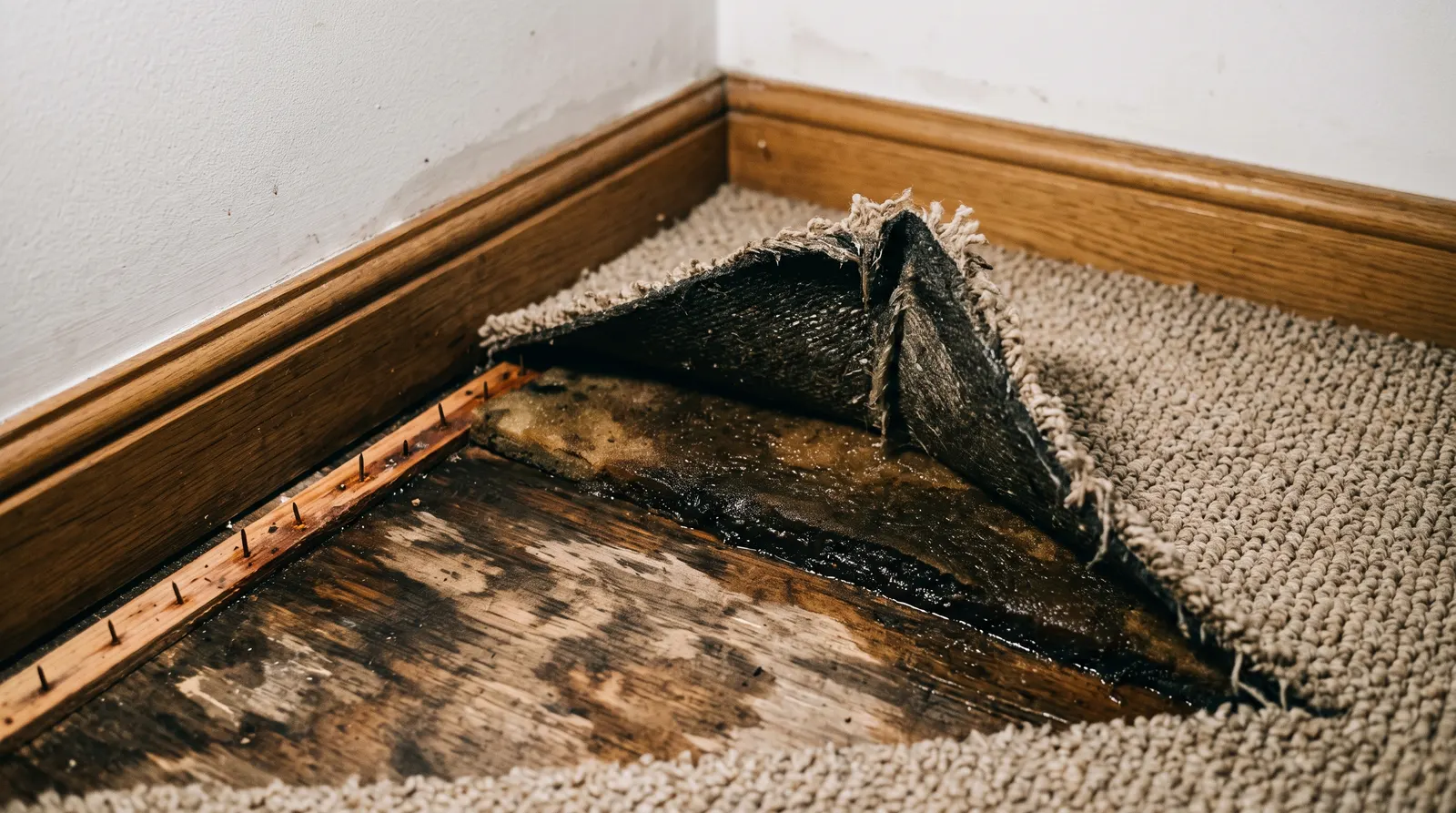
Carpet, Category 1 water: often salvageable with extraction and drying if addressed within roughly 48 hours.
Padding, any category: normally pulled and replaced. It is an open-cell sponge, cheap to buy, and very hard to dry in place.
Carpet, Category 2 water: possible with professional cleaning and antimicrobial treatment, and often not worth the cost.
Anything, Category 3 water: both go. Sewage-contaminated porous material is not salvageable.
Padding is the cheapest component, so drying it in place is a poor trade against the mold risk.
What never survives
Some materials come off the list immediately, whatever the category.
Carpet padding
Particleboard and MDF furniture
Most insulation types
Mattresses and upholstered foam
Ceiling tiles
Anything porous touched by sewage
Particleboard swells, delaminates and never recovers, so a soaked flat-pack cabinet is finished even if it dries looking passable.
Sewage changes the answer entirely
Category 3 water carries bacteria and viruses that survive drying. Porous materials it has touched cannot be decontaminated in place, and the cleanup needs protective equipment and containment. Our page on sewage backup cleanup covers what that involves.
How to know when it is actually dry
Touch is useless: a surface dries in hours while the core stays saturated for days.
Read an unaffected wall, then the affected material; matching means dry. Keep humidity below about 60 percent while drying runs (EPA mold guidance, read 2026-09-05).
Scott McFadzen, who sat on the S500 consensus body, describes the dry standard as the moisture content of similar unaffected materials in the same building, with a goal within about 10 percent of it.
Readings should be recorded daily with the same meter, because calibration differs. A log with two readings a week apart is fair to question.
On the bottles beside the fans: the standard’s position, quoted by Foote and McFadzen, is that not all water intrusions warrant antimicrobials, and for an unchanged Category 1 intrusion their use is generally not warranted.
The mold clock applies to materials, not rooms
EPA guidance puts mold growth on wet materials at 24 to 48 hours, per material, which is why a room can smell fine while a panel behind the baseboard is colonised.
How quickly does mold grow on wet material? Fast enough that material still wet at 48 hours is a removal decision.
Carpet can often be saved; the pad underneath almost never is. Drywall wet above about half its height is replaced, not dried.
What replacement actually costs
Indicative US ranges. Always get a written quote.
Job
Typical range
Notes
Drywall replacement
$1.50–$3 / sq ft
Material and labor, per affected area
Category 1 drying, clean water
$3–$4 / sq ft
Structural drying with equipment
Category 2 cleanup, greywater
$4–$6.50 / sq ft
Cleaning plus drying, read 2026-07-22
Mold remediation if it started
about $2,200 average
The cost of drying too slowly
Carpet padding
replace, do not dry
Cheap to replace, near impossible to dry in place
Source: Bob Vila 2026 water damage restoration cost data and published restoration industry per-square-foot ranges (retrieved August 2026). Figures vary by region and timing.
Figures last checked
Read the first row against the last: replacing a section of board is a fraction of remediation once mold is established.
Emergency Services 24H is a referral service. We do not employ restoration technicians or sell drying equipment.
Your request routes to licensed, insured restoration contractors nearby. A meter on the wall early prevents the expensive version of this.
Know the line
Safe to check yourself, or call a pro now
Safe to check yourself
Extracting clean water from carpet within the first day
Pulling and binning carpet padding
Running fans and a dehumidifier on a Category 1 loss
Cutting out a small section of clean-water drywall
Metering the wall against a dry baseline
Call a pro now
Any Category 3 or sewage contact
Water that has been sitting more than 48 hours
Wet insulation inside a closed wall cavity
Visible mold beyond a small surface patch
An insurance claim that needs documented drying logs
24/7 dispatch network
Get a licensed restoration contractor moving on this
Describe what got wet and how,. Licensed, insured restoration contractors covering your area will contact you directly. No obligation to hire.
Fire, a gas smell, or an injury? Leave the building and call 911 first, then your gas
utility or power company. Use this form once you are safe.
An emergency in an older house does not suspend the lead rules
Cutting board out of a house built before 1978 disturbs paint, and the federal lead rule treats an unplanned failure differently from a remodel, not as an exemption.
Emergency renovations are relieved of the information, signage and containment requirements only as the emergency requires. They are expressly not relieved of the specified cleaning, of verification by a certified renovator, or of the recordkeeping.
A crew may skip signage while water is running and still owes a verified clean and a record of it, which is a reason to photograph the work.
What this does not say: Federal minimum; several states run authorised programs with their own requirements. The exemption's scope turns on what was genuinely necessary to respond, which is judged after the fact.
How do I fix drywall anchor holes once the wall is dry?
A drywall anchor repair is the last job. Patch anchor holes after the readings match the unaffected wall, because filler over a wet core traps water.
Does drywall always need replacing after getting wet?
No. Clean water caught inside a day, dried and verified with a meter, often leaves the panel serviceable. A panel that stayed wet or took grey water is replaced, and the drywall repair cost is small next to remediation at about $2,200 (Bob Vila, read 2026-07-22).
How long does it take wet drywall to dry?
Days rather than hours, and only with air movement and dehumidification. What matters is the meter reading against unaffected material in the same building.
Can I wet sand a patch instead of sanding drywall dry?
Yes. A drywall sponge or wet sander knocks a joint down with less dust than when you sand drywall dry. Sponge for wet work, once the readings are clear.
Does black mold behind the wall change the job?
It changes who does it. Growth over about 10 square feet is a professional remediation, and the rebuild waits for verification.
Can wet drywall be saved?
Sometimes, if the water was clean and the panel dried quickly. Drywall that stayed wet for days or is soft when pressed gets cut out: gypsum loses structural integrity once saturated.
Can wet carpet be saved?
Two decisions. Carpet soaked by clean water can be extracted, dried and re-laid within about 48 hours. The padding is a sponge, cheap to replace and hard to dry, so it is binned.
How much does drywall replacement cost?
Drywall replacement runs $1.50 to $3 per square foot including labor. A ceiling repair cost runs higher for access, and mold remediation averages around $2,200 if drying was slow.
Carpet, pad and the tack strip beneath
Drywall that cannot be dried in place
Drying is cheaper than replacing right up until the material has been wet too long, at which point drying it just delays the replacement.
Independent, publicly published sources, quoted with attribution and linked in full.
None is affiliated with Emergency Services 24H, reviewed this page, or works in the referral network.
Scott McFadzen: Member of the ANSI/IICRC S500 2018 consensus body, Coach8 - “Reviewing the ANSI/IICRC S500 2021 Standard, 5th Edition” (2022)
Tell us what has failed and how soon you need someone. We route your request to licensed, insured contractors covering your area, and they contact you directly.
Fire, a gas smell, or an injury? Leave the building and call 911 first, then your gas
utility or power company. Use this form once you are safe.