How fast does mold grow after water damage? 24 to 48 hours
How fast does mold grow after water damage? In 24 to 48 hours on wet material, and the clock starts when the material gets wet rather than when you notice. Keep humidity below 60 percent afterwards, because missing the window costs about $2,200 in remediation (Bob Vila, read 2026-07-22).
How fast does mold grow after water damage? Within 24 to 48 hours: the EPA states that materials dried inside that window will in most cases not grow mold.
The window, quoted exactly
How long do I have before mold starts?
24 to 48 hours from the material becoming wet. The EPA phrasing matters: materials dried within that window will in most cases not grow mold. It is a probability rather than a guarantee, and it counts from wetness rather than from discovery.
How fast does mold grow after water damage starts: the trigger
How long does mold take to grow in walls? A pipe weeping into a cavity started its clock when it started weeping, and even a one-time water leak can cause mold.
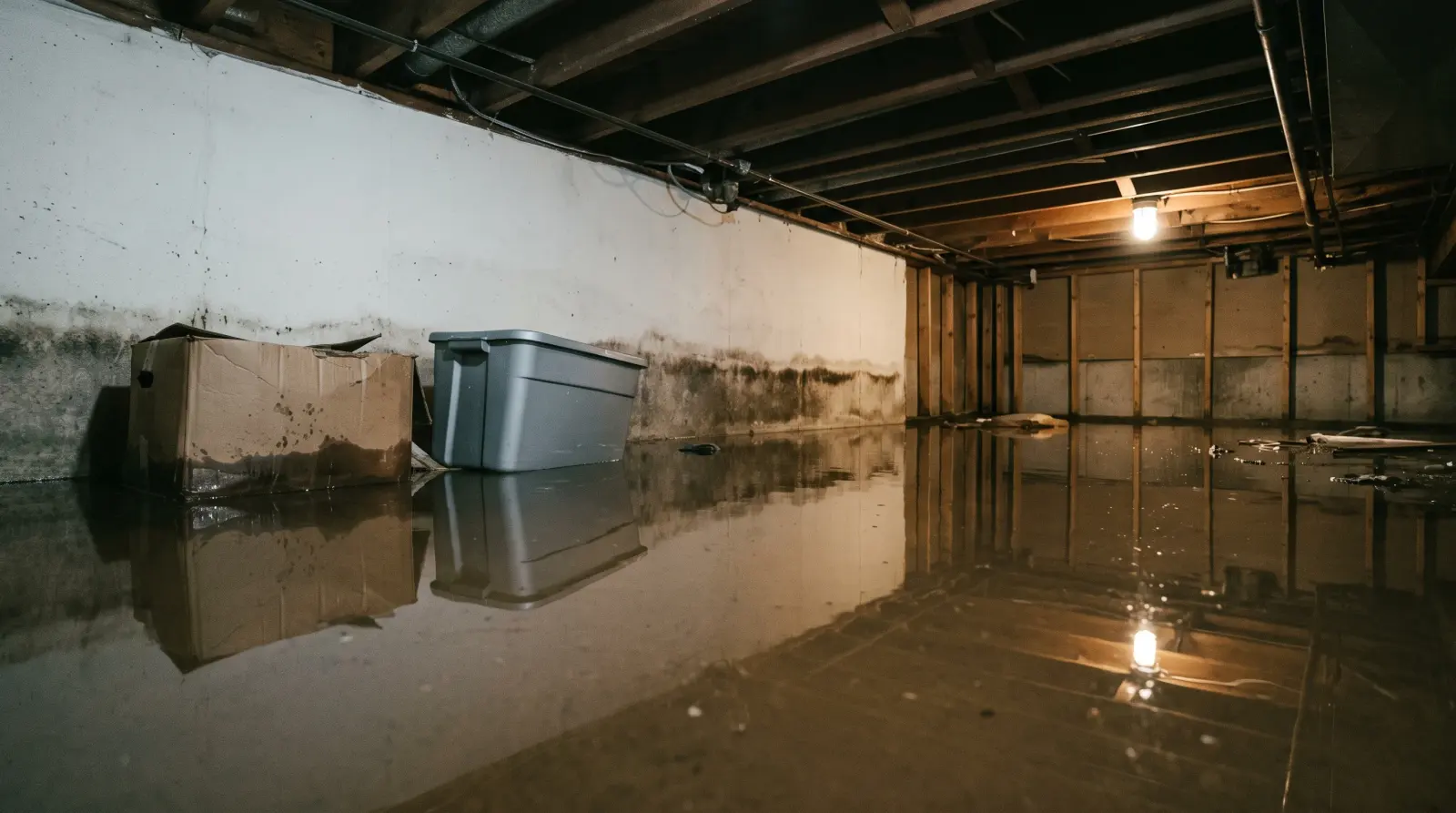
Three conditions accelerate it: warmth, organic content, stillness. A warm unventilated room with paper-faced drywall describes most finished basements.
Where to look
Mold appears here first
01
Pull a baseboard
The cheapest inspection available. Baseboards trap water against paper-faced drywall.
02
Lift a carpet corner
Padding holds water long after the carpet feels dry.
03
Check the insulation
Fibreglass holds moisture longer than any other common building material.
04
Follow your nose
A musty smell with no visible mold means it is behind something.
Cited source~8:12
“It wasn't going to dry out before mold started forming.”
HI
"How I Do Things"
Homeowner documenting his own flooded basement - not a professional
Wisconsin, 2025
An independent source we cite. Not affiliated with Emergency Services 24H, and not a network contractor.
Behind baseboards, where water wicks up into paper-faced drywall and stays.
Under carpet padding, which holds moisture for days after the carpet surface feels dry.
Inside insulation, which retains water longer than any other common building material.
Inside closed wall cavities, where there is no airflow to carry moisture away at all.
The humidity number that prevents regrowth
What humidity stops mold coming back?
Below 60 percent, ideally 30 to 50 percent. That is EPA guidance for preventing mold growth after materials have been dried, and it is the only number you need to monitor once the standing water is gone.
A hygrometer costs a few dollars. Run one rather than judging by feel, because a room can feel dry at 70 percent relative humidity (EPA mold guidance, read 2026-09-05).
Opening windows is not always the answer, because in humid weather outdoor air can be wetter. A dehumidifier in a closed room beats a fan in an open one.
If you are already past 48 hours
Dry it anyway. Past 48 hours, inspection is necessary: pull a baseboard, lift a carpet corner.
Restoration instructor Darren Foote points out that ANSI/IICRC S500 contains no time-based automatic escalation: an older edition carried an hours chart, and it was removed.
What remains is that time and temperature affect the category. The window is a drying target; looking at the material is the diagnosis.
Foote cites an independent professional as finding genuine reclassification of clean water rare. Field observation rather than research, so ask what an upgrade is based on.
A dry surface is not evidence of a dry wall
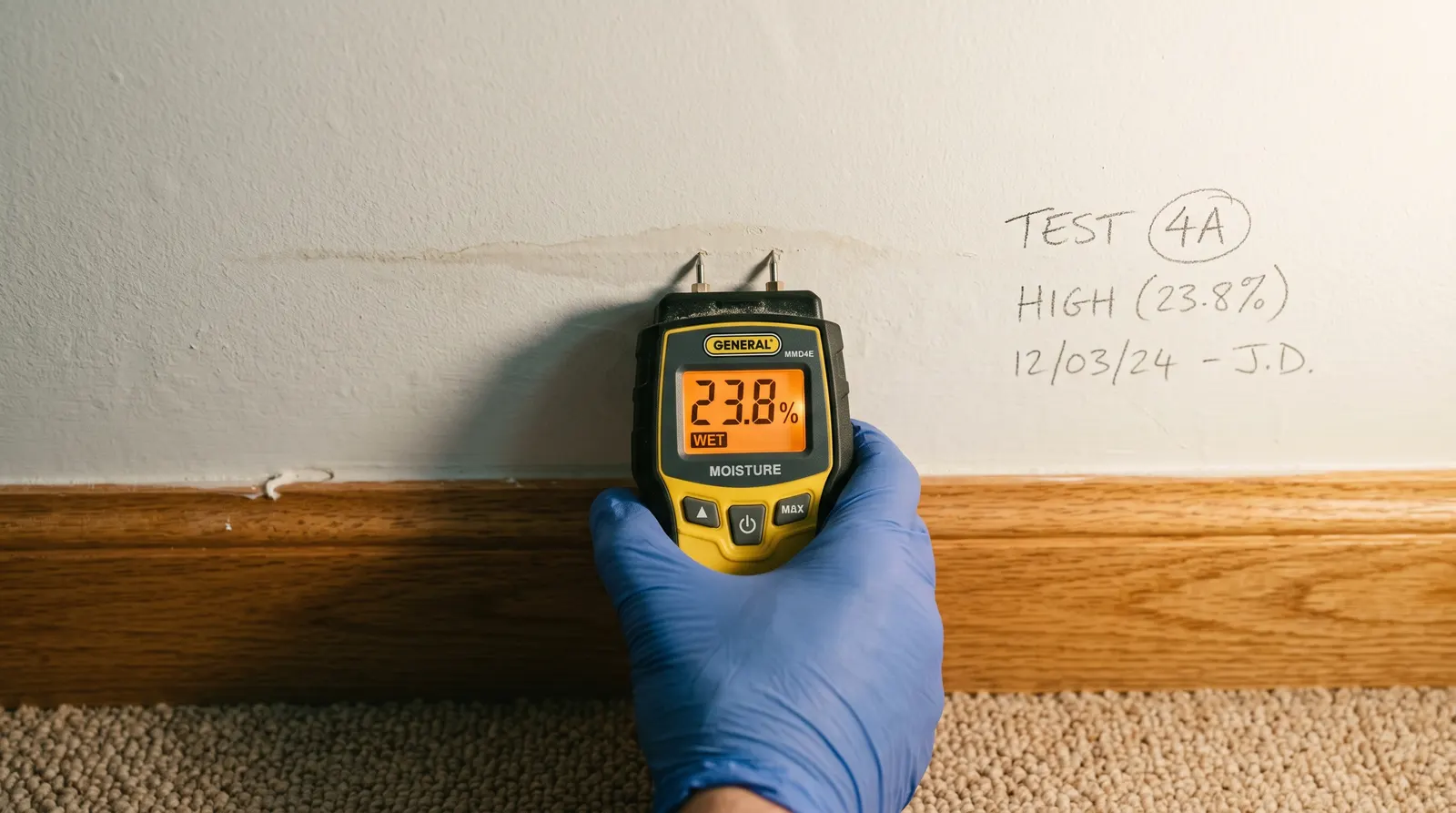
Touch tells you about the paint. Moisture meters exist because water sits in the cavity, in the insulation and in the bottom inch of drywall long after the visible surface has dried, and that is exactly where mold establishes. If water reached a wall base, the wall base is what needs checking.
When you can clean it yourself
Under about 10 square feet is usually a job you can handle; larger areas mean containment and disposal.
Who should not do this work
People with asthma, a mold allergy, immune suppression or chronic lung disease should not carry out mold cleanup at any size.
The standard brings independent eyes in at the end of a job.
Scott McFadzen of the S500 consensus body describes a post-remediation evaluation on every Category 2 and 3 project, with an independent professional where occupants are high-risk.
An evaluation is done by the restoration contractor; an assessment by an independent professional who reads the lab data.
Foote’s own contract required an independent professional to verify his work on every mold job, so asking who signs off is reasonable.
The CDC dilution is one cup of household laundry bleach per gallon of water, never with ammonia. Wet carpet and wet drywall get discarded instead.
Know the line
Safe to check yourself, or call a pro now
Safe to check yourself
Water found and drying started within hours
Hard surfaces only, no porous material soaked
Air movers and a dehumidifier already running
Humidity holding below 60 percent
A mold patch under about 10 square feet
Call a pro now
Water that sat for more than 48 hours
Any musty smell with no visible source
Damp insulation or drywall below the water line
Mold over about 10 square feet
Any occupant with asthma, mold allergy or immune suppression
24/7 dispatch network
Get a licensed restoration contractor moving on this
Tell us when the water happened. Licensed, insured restoration contractors covering your area will contact you directly. Moisture readings beat guesswork, and there is no obligation to hire.
Fire, a gas smell, or an injury? Leave the building and call 911 first, then your gas
utility or power company. Use this form once you are safe.
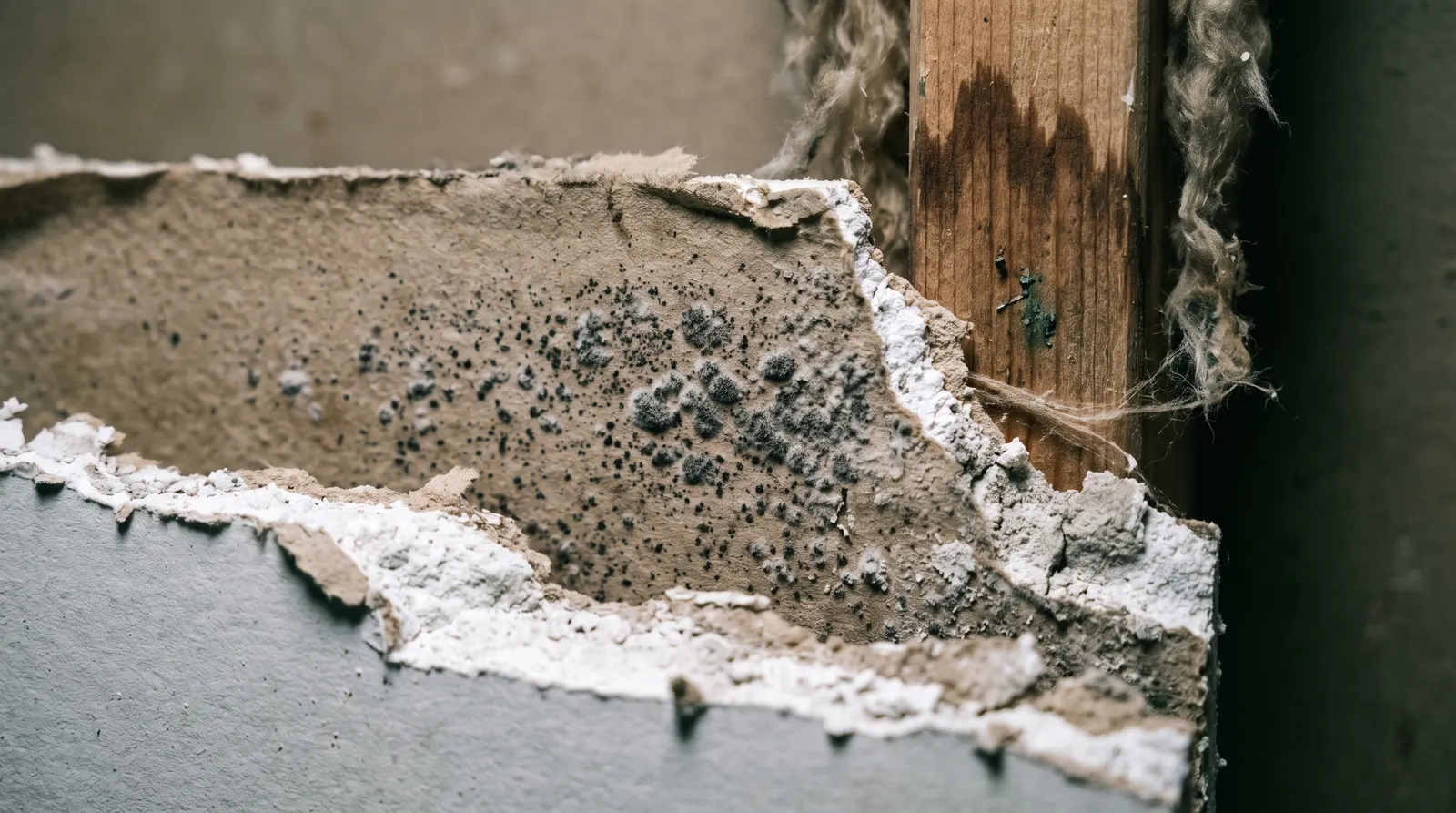
The 24 to 48 hour figure is the window before growth begins, not before it becomes visible. By the time you can see it, the clock ran out days ago.
What missing the window costs
Indicative US ranges. Always get a written quote.
Job
Typical range
Notes
Mold remediation
~$2,200 average
Separate from drying and extraction
Drywall replacement
$1.50–$3 / sq ft
Where cavities were affected
Category 1 restoration, drying only
$3–$4 / sq ft
What you pay if you beat the clock
Category 2 restoration
$4–$6.50 / sq ft
Read 2026-07-22. What clean water becomes if left
Hygrometer
a few dollars
The entire toolkit for the humidity target
Source: Bob Vila 2026 water damage restoration cost data; EPA drying and humidity guidance (retrieved August 2026). Figures vary by region and timing.
Figures last checked
Drying inside the window is $3 to $4 per square foot; missing it adds a remediation job averaging about $2,200.
Emergency Services 24H is a referral service and does not test for mold. Nothing here is medical advice.
Your request routes to licensed, insured contractors nearby. If anyone is in a CDC at-risk group, say so when they call.
There is no federal mold license to check
“EPA certified mold remediation” appears on many quotes. The agency does not certify or license mold contractors, so the phrase describes nothing verifiable.
What EPA gives you is a size threshold: under ten square feet is a homeowner job, above it points to its remediation guide and to ACGIH and IICRC guidelines.
That leaves two questions: how large is the area, and which written guideline does this professional mold contractor work to. Some states license remediators; the federal one does not.
What this does not say: Some states do license mold assessors or remediators; the absence is federal. The 10-square-foot figure is EPA's practical threshold, not a health-based limit.
The 24-48 hours figure is quoted as a deadline before mold appears. In its source it is guidance: dry the materials inside that window, because moisture control controls mold (EPA mold guidance, read 2026-09-05).
A crew that arrives quickly and leaves air movers running is doing the part that matters. The mold growth timeline is a guideline that material, temperature and humidity all move.
What this does not say: A general guideline for typical indoor conditions; actual growth depends on material, temperature, humidity and contamination, and porous items may be unsalvageable well inside the window.
A mold free home promises what the science does not allow: spores are normal in any house, and the key to mold control is moisture control (EPA mold guidance, read 2026-09-05).
A contract can commit to a dried structure, the reservoir removed and the water fixed. Promising the absence of spores describes an outcome nobody can deliver.
What this does not say: General guidance for typical residential settings; occupants with asthma, allergy or immune compromise may need clinical advice this source does not give.
Is mold after water damage dangerous, and what does remediation actually look like?
Mold symptoms are the health signs you shouldn’t ignore: a cough or headaches that ease outdoors. What remediation actually looks like is containment, removal of wet porous material, drying and verification, whether it grows on wet drywall, on food or in a water bottle.
What are the warning signs of mold after a water leak?
A musty smell, staining that spreads rather than dries, swelling at the base of a wall. Health signs come later, and go to a doctor.
Is black mold more dangerous than other mold types?
Colour is not a guide to mold toxicity, and no water damage mold types list changes the method: find the moisture and use the size threshold.
How fast does mold grow after water damage?
Within 24 to 48 hours, and the clock starts when the material gets wet rather than when you notice it.
What if I am already past 48 hours?
Dry it anyway, and start inspecting behind baseboards and under carpet padding. Mold can start inside the window or later, because it is a probability rather than a switch.
What humidity should I aim for while drying?
Below 60 percent, ideally 30 to 50 percent (EPA mold guidance, read 2026-09-05). A cheap hygrometer is the whole toolkit.
Can I clean mold myself?
Under about 10 square feet is usually a homeowner job, though the CDC says people with asthma, a mold allergy, immune suppression or chronic lung disease should not do it at all.
What is the right bleach dilution for mold?
One cup of household laundry bleach per gallon of water on hard surfaces, per the CDC, never mixed with ammonia. Porous materials get discarded instead.
How much does mold remediation cost?
Around $2,200 (Bob Vila, read 2026-07-22), separate from drying, plus $1.50 to $3 per square foot of drywall. Insurance coverage follows the water, not the mold.
What growth looks like at 48 hours
Reading moisture rather than guessing
Drying properly in the first 48 hours costs a few hundred dollars in equipment hire. Every row on this chart is what that decision avoids.
Independent, publicly published sources, quoted with attribution and linked in full.
None is affiliated with Emergency Services 24H, reviewed this page, or works in the referral network.
"How I Do Things": Homeowner documenting his own flooded basement - not a professional, Wisconsin - “Basement Flooded!? Do This First!” (2025)
Tell us what has failed and how soon you need someone. We route your request to licensed, insured contractors covering your area, and they contact you directly.
Fire, a gas smell, or an injury? Leave the building and call 911 first, then your gas
utility or power company. Use this form once you are safe.