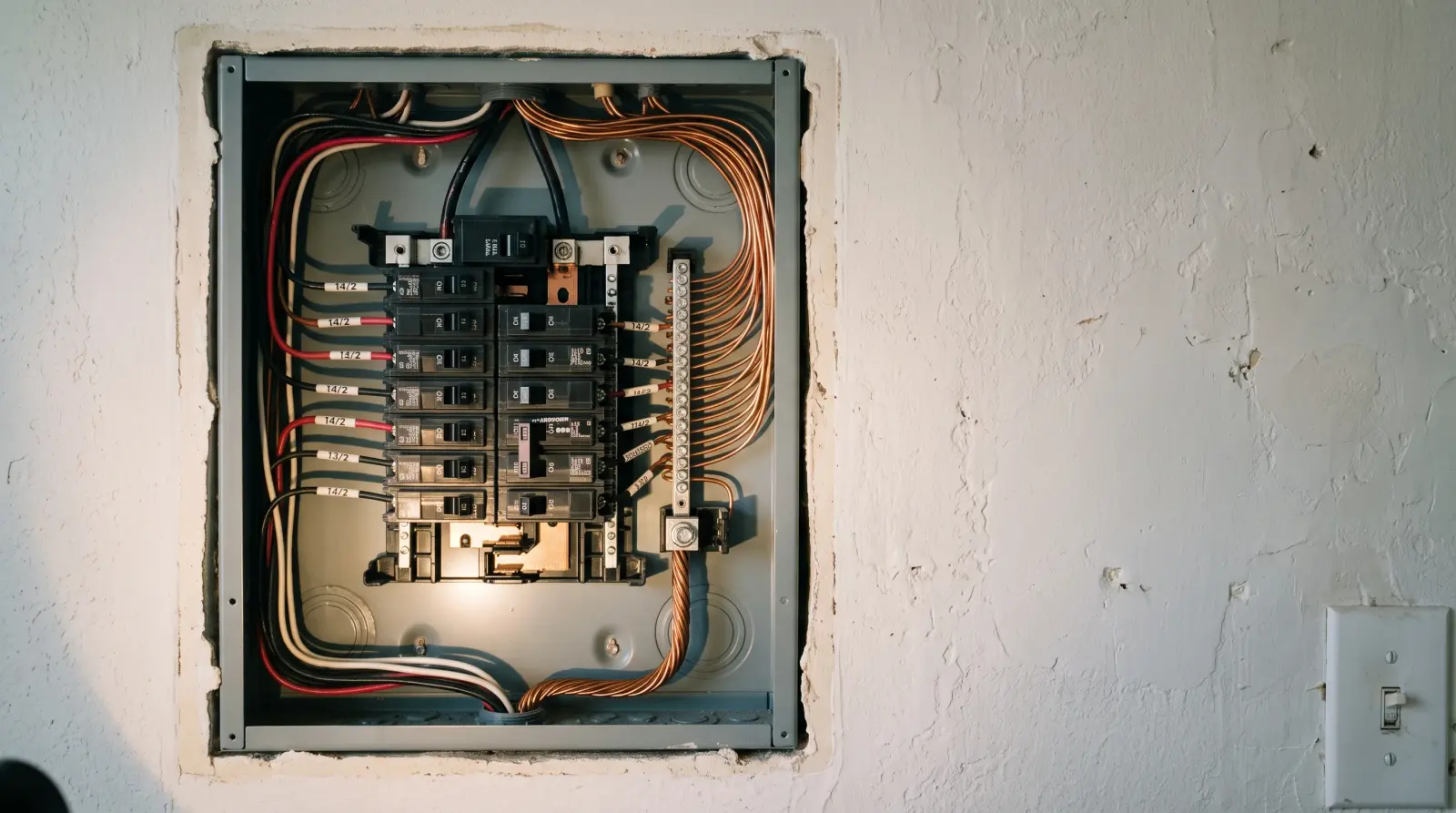
No power to outlet breaker not tripped means the protection that operated was not in the panel. Arcing at a loose termination is the version that matters, and ESFI ties it to more than 28,000 home fires a year (ESFI, read 2026-07-22).
No power to outlet breaker not tripped almost always means the device that cut the power is not in the panel.
The phrasing people search with, no power to outlet breaker not tripped, already contains the useful clue.
What “no power to outlet breaker not tripped” rules out
Why are outlets dead when nothing is tripped at the panel?
Because a GFCI receptacle elsewhere on the circuit has tripped and cut power to everything wired downstream of it.
Fifteen-minute hunt
Where to look, in this order
01
Map the dead zone
Test every socket in the room and the rooms either side. Knowing whether one outlet, three outlets or half a floor is dead changes the whole diagnosis.
02
Hunt the GFCI
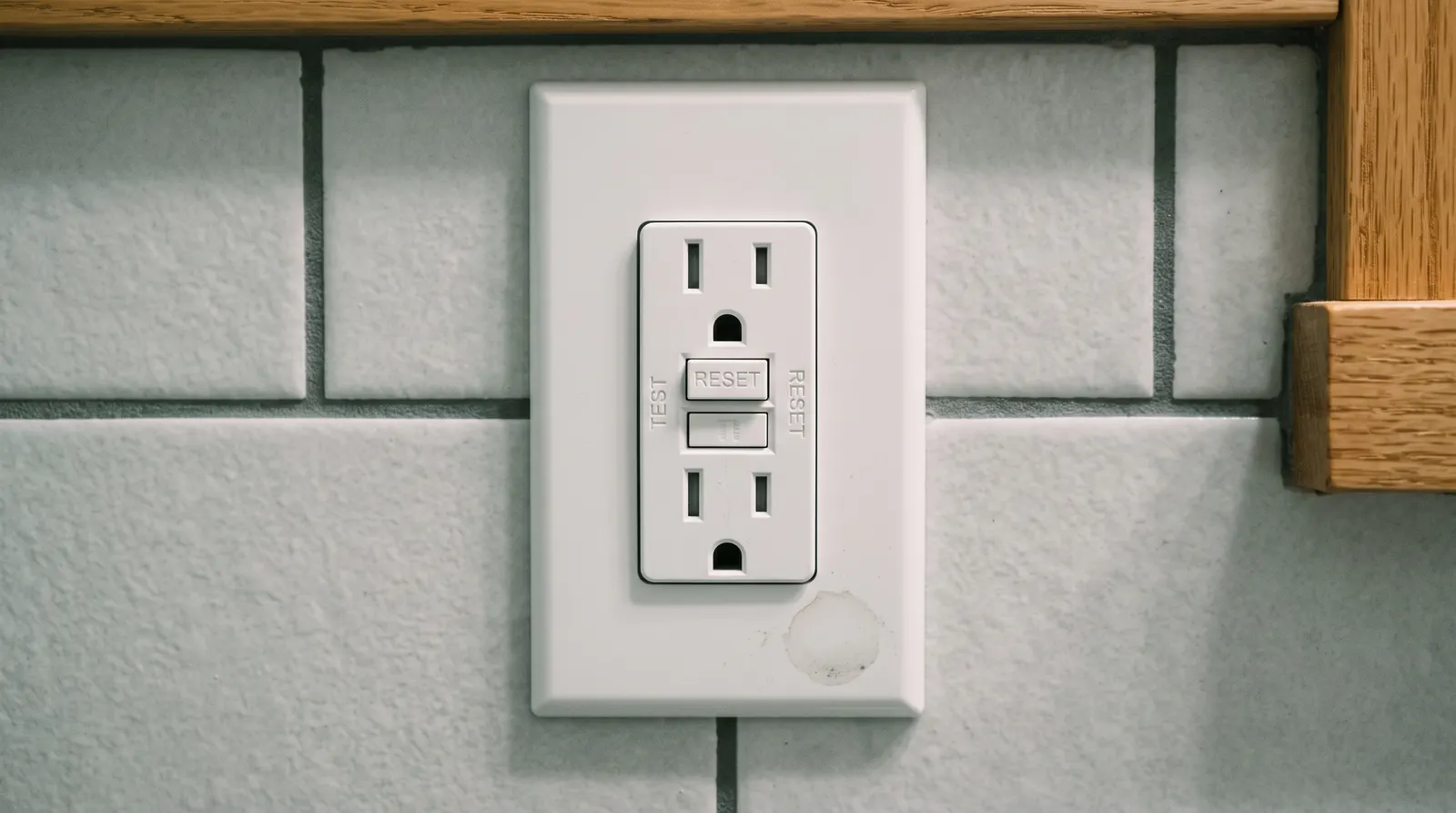
Bathrooms first, then kitchen counters, garage, basement, laundry and outdoors. You are looking for a receptacle with test and reset buttons, often behind stored boxes.
03
Press reset firmly
A GFCI reset needs a definite push until it clicks and stays in. If it pops straight back out, there is a genuine ground fault downstream.
04
Try every wall switch
Including unlabelled ones and the ones that appear to do nothing. Half a receptacle wired to a wall switch is the second most common cause of a mysteriously dead outlet.
Cited source~10:13
“a lot of times you can't tell that a breaker is bad before you start pulling a multimeter out”
DS
Dustin Stelzer
Electrician and electrical instructor
Electrician U, 2021
An independent source we cite. Not affiliated with Emergency Services 24H, and not a network contractor.
The comparison table below sets the causes side by side, because a faulty circuit, panel issues and environmental damage to outdoor wiring all end with non-working outlets and only one of them is safe to chase yourself.
Start with the hidden GFCI
Why a GFCI in the garage kills an outlet in the bedroom
Household outlets are not individually fed from the panel.
A GFCI receptacle has line terminals for the incoming supply and load terminals for the rest of the chain.
Physical distance is irrelevant to that.
The room-by-room GFCI hunt
Search in the order these devices are normally installed, because that is roughly the order of likelihood.
Bathrooms. Almost always GFCI-protected, often the first device on a circuit that continues elsewhere.
Kitchen counters. Every counter receptacle is required to be protected, and one device frequently covers several.
Garage and basement. The classic hiding place. Check behind shelving, boxes and the freezer.
Laundry and utility areas. Including any receptacle serving a washing machine or sink.
Outdoors. Under a weatherproof cover, often at the back of the house or beside a hose bib.
Look for the two small buttons.
Switched receptacles and the lamp problem
The second most common benign cause is a socket that was always meant to be switched.
In many American living rooms and bedrooms, half of one receptacle is wired to a wall switch so a floor lamp can be controlled from the door.
Work every switch in the room, including the ones that appear to do nothing, and watch the socket while you do it.
When a GFCI will not reset
What does it mean if the GFCI will not reset?
One of three things. No power is reaching it, so the fault is further upstream. There is a genuine ground fault downstream, so it trips again instantly.
The three are distinguishable.
No click and no response at all suggests no incoming power. A click followed by an immediate pop-out is a live ground fault.
GFCIs have a service life, and one installed twenty years ago may simply be finished.
Where the hunt comes up empty and the breaker looks fine, the panel may be lying to you.
Stelzer is also candid about the limits of looking.
Half the house has no power
This is a genuinely different fault that shares the same search, and it deserves its own answer.
US homes are fed by two 120-volt legs.
The loss can be at the main panel, at the meter, or on the utility side of it, and that last case is common after storms.
Lights brightening in some rooms while dimming in others points at the same underlying cause, which our page on flickering lights covers.
The loose backstab, and why it fails
When the GFCI hunt and the switch hunt both come up empty, the remaining cause is usually a connection that has failed open somewhere in the chain.
Cheaper receptacles allow the installer to push a conductor into a hole in the back of the device rather than wrapping it under a screw terminal.
A failed connection was arcing before it failed
This is why a dead outlet gets investigated rather than left. A termination does not go from perfect to open instantly: it goes intermittent first, arcing each time the contact makes and breaks, and generating heat inside a closed wall box. ESFI attributes more than 28,000 home fires a year to arcing faults (ESFI, read 2026-07-22).
The practical clue is sequence.
Know the line
Safe to check yourself, or call a pro now?
Safe to check yourself
Testing sockets to map how much of the circuit is dead
Hunting for and resetting a GFCI anywhere in the house
Trying every wall switch in the affected room
Checking the panel again for a breaker sitting mid-position
Switching the circuit off at the panel if anything is warm
Call a pro now
Removing a receptacle to inspect its terminations
Replacing a GFCI, a switch or an outlet
Any dead circuit with a burning smell, warmth or scorching
Half the house dead, which needs the utility involved as well
A GFCI that resets and trips again under load
24/7 dispatch network
Get a licensed electrician moving on this
Dead outlets that survive the GFCI hunt, or anything warm on the circuit. Send the symptoms and licensed, insured electricians covering your area will contact you directly. No obligation.
Fire, a gas smell, or an injury? Leave the building and call 911 first, then your gas
utility or power company. Use this form once you are safe.
Look for a tripped GFCI first, including in bathrooms, garages and outdoors. One GFCI commonly protects outlets in several rooms downstream of it.
What tracing this costs
Indicative US ranges. Always get a written quote.
Job
Typical range
Notes
Service-call fee
$100–$200
Usually covers the first hour on site
Standard labor
$50–$130 / hr
Weekday business hours
Emergency / after-hours labor
$100–$250 / hr
Typically 1.5×–2× standard
Tracing a dead circuit
often 1–2 hours
Every device on the chain may need opening
Receptacle or GFCI replacement
inside one hour + parts
The tracing is the cost, not the part
Source: HomeGuide 2026 electrician cost per hour; Angi 2026 electrician cost data (retrieved August 2026). Figures vary by region and timing.
Figures last checked
The part is cheap and the tracing is the bill.
You can shorten it substantially by writing down which outlets work and which do not before they arrive. That map is the same information they would spend the first half hour collecting. Full rate detail sits in our the cost of an emergency electrical call-out.
How the matching works, and what we do not do
Emergency Services 24H is a referral service. We do not employ electricians and we do not carry out electrical work.
Your request routes to licensed, insured contractors covering your area, and they contact you directly.
Straight answers
Frequently asked questions
The questions homeowners actually search for on this problem, answered in plain language.
Why is there no power to outlets but the breaker is not tripped?
Because the protection that operated is not in the panel. In most homes it is a GFCI receptacle somewhere else on the circuit, which cuts power to every standard outlet wired downstream of it.
What would cause no power to an outlet?
A tripped GFCI upstream in the chain, a wall switch controlling that receptacle, a loose termination in the outlet before it, a failed receptacle, or a break in the conductor. The first two account for the large majority and both are things you can check yourself in a few minutes.
Why does half my house have no power but no breaker tripped?
That pattern usually means one of the two incoming legs has been lost, either at the main panel or on the utility side of the meter. Half the breakers go dead while the other half work normally.
What to do if power goes out but the breaker is not tripped?
Work outward from the dead outlet. Test other sockets in the same room, then adjacent rooms, to establish how much is affected.
Why will my GFCI not reset?
Three reasons. There is no power reaching it, which means the fault is further upstream.
Why are outlets not working but breaker not tripped?
Because a GFCI outlet upstream, a wall switch or a loose termination took the circuit out instead. A house breaker that isn’t tripped tells you the panel is fine, so the fault sits between the panel and the electrical outlet that stopped working.
Why do the garage and outdoor outlets die together?
One GFCI usually protects the garage circuit and the outdoor outlets from the same point, so a trip there kills the garage electricity, the garage door opener and every outdoor outlet downstream. Check the garage breaker last and the GFCI first.
What are the common reasons multiple outlets stop working?
A tripped GFCI, a switched receptacle, damaged wiring at a backstab, or an overloaded circuit that took out a device rather than the breaker. A wall outlet that died alone points at its own termination; a circuit without power anywhere points upstream.
Is a dead outlet dangerous?
The dead outlet itself is not, but the cause can be. A loose termination that has stopped conducting was arcing before it failed open, and arcing inside a wall box generates heat with nowhere to go.
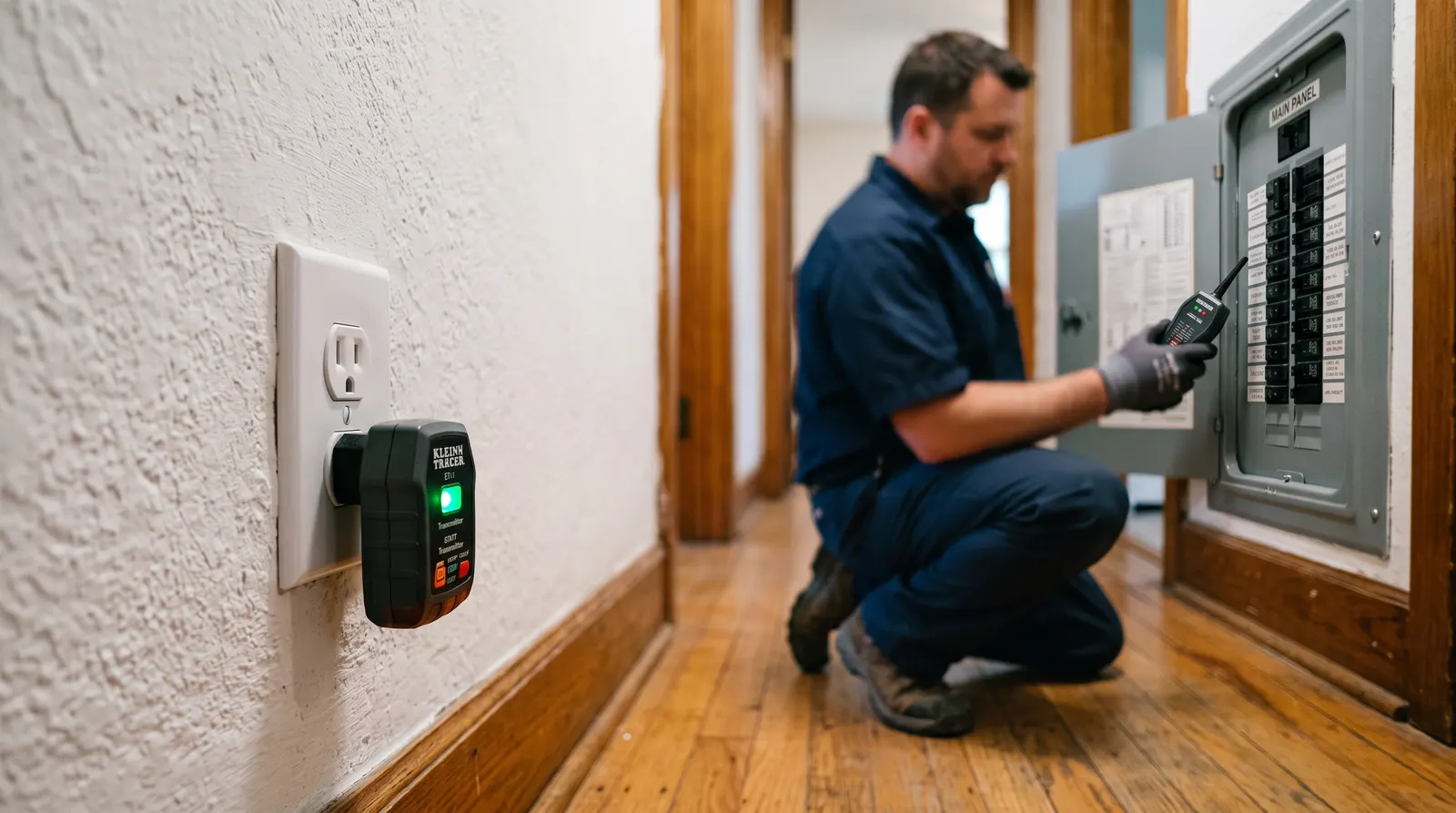
The GFCI that feeds downstream
Tracing the circuit
Tracing is where the labor goes on this fault. A circuit map made once saves that cost on every future call.
Independent, publicly published sources, quoted with attribution and linked in full.
None is affiliated with Emergency Services 24H, reviewed this page, or works in the referral network.
Dustin Stelzer: Electrician and electrical instructor, Electrician U - “How to Tell if a Breaker is Bad” (2021)
Tell us what has failed and how soon you need someone. We route your request to licensed, insured contractors covering your area, and they contact you directly.
Fire, a gas smell, or an injury? Leave the building and call 911 first, then your gas
utility or power company. Use this form once you are safe.